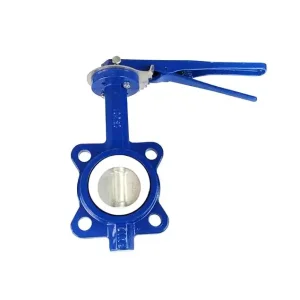
High-Quality PTFE Lined Pinless Butterfly Valve Supplier, Factories
Product Details →
Explore our core industrial valve line, featuring certified pressure handling, specialized resilient seats, and high-performance casting.
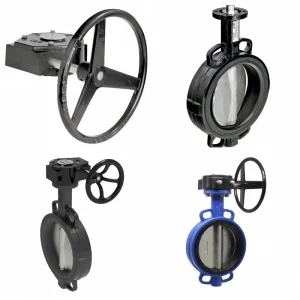
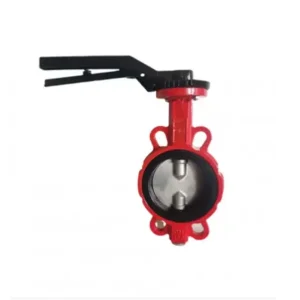
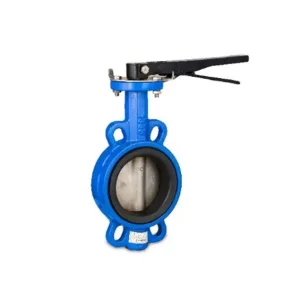
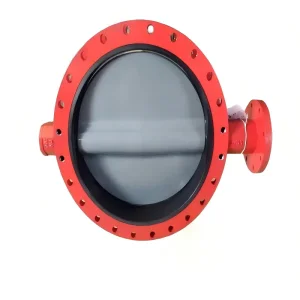
An authoritative analysis of technical shifts toward natural refrigerants (R717) and chemical transmission standards.
With stringent global F-gas regulations phasing out hydrofluorocarbons (HFCs), anhydrous ammonia (R717) has solidified its position as the premier zero-ODP, zero-GWP natural refrigerant. This demands high-integrity, straight-through globe valves built to eliminate fugitive emissions completely.
Ammonia's toxicity and corrosiveness toward copper alloys require rigorous metallurgy. Leading straight-through globe valves leverage specialized cast carbon steel (WCB/LCB), stainless steel (CF8M), and deep PTFE/flexible graphite stem packing matrices rated for sub-zero operational endurance down to -46°C.
Rapid expansion of cold-chain logistics across Southeast Asia, North America, and Europe has accelerated the capital expenditure on industrial blast freezers, centralized chilling plants, and maritime reefer carriers, significantly elevating wholesale valve procurement requirements.
Eliminating third-party subcontracting risks through in-house foundries, proprietary elastomer compounding, and precision CNC finishing.
Operating dedicated foundry infrastructure enables microscopic spectroscopic verification of low-temperature ductile iron, LCB, and stainless cast alloys before rough machining, securing defect-free grain boundaries resistant to cryogenic embrittlement.
With elastomeric expertise dating back to 1987, our specialized vulcanization processes produce chemical-grade PTFE and modified synthetic seat rings tailored precisely to handle anhydrous ammonia without sweller-deterioration or decompression cracking.
Each straight-through globe valve undergoes helium mass spectrometer sniffer trials, high-pressure nitrogen submerged testing, and bi-directional shell proofs, guaranteeing zero drop leakage at valve seat interfaces.
| Evaluation Parameter | Standard Market Globe Valve | Top Valve Straight-Through Ammonia Valve | Strategic Engineering Advantage |
|---|---|---|---|
| Casting Integrity | Outsourced standard commercial sand casting | In-house controlled low-temperature LCB/WCB casting | Eliminates micro-porosity and ensures zero shell seepage under high cryogenic pressure. |
| Stem Sealing System | Standard single-ring virgin PTFE packing | Chevron V-ring multi-stack PTFE with graphite safety backing | Extends duty cycles past 50,000 actuations without stem readjustment. |
| Pressure Drop (Delta P) | Convoluted high-tortuosity flow path | Optimized straight-through profile with contoured disc | Reduces turbulence and dynamic head loss by over 24%. |
| Traceability & Testing | Batch sampling (1 in 20 units) | 100% individual pressure, back-seat, and air testing | Full material test certificates (EN 10204 3.1) furnished directly. |
Architecting reliable fluid boundary containment across critical infrastructure sectors.
Suction line shut-off, liquid overfeed circuits, and hot gas defrost stations requiring instant bubble-tight closure during automated cycling.
Anhydrous ammonia transfer manifolds, urea synthesizing skids, and bulk storage distribution headers requiring corrosive chemical containment.
Tuna trawler blast units, container reefer chillers, and ammonia cargo handling skids demanding marine-grade protective exterior epoxy coating.
Next-generation green ammonia bunkering ports, cracking infrastructure, and hydrogen vector transportation networks needing PN40 endurance.
Clear criteria for EPC contractors and stocking distributors preparing technical datasheets.
Avoid all copper, brass, and zinc-bearing alloys. Specify ASTM A352 LCB for cold environments down to -46°C, or ASTM A216 WCB for standard systems. Disc surfaces should feature hardened stainless steel (SS304/SS316) or Stellite overlays to stop cavitation wire-drawing.
For fine throttling duty, select parabolic or needle-profile plugs. For absolute bi-directional shut-off on liquid lines, integrate PTFE/RPTFE soft inserts clamped mechanically in stainless disc holders to allow field replacement without torch-cutting pipework.
Standardize flange connections to EN 1092-1 PN16/25/40 or ASME B16.5 Class 150/300. Butt-weld configurations according to ASME B16.25 prevent joint relaxation caused by severe cyclic thermal variations between refrigeration and defrost cycles.
In-depth technical answers regarding ammonia globe valve design, testing, and lifecycle operation.
Straight-through (in-line) globe valves allow for continuous, direct axial piping arrangements without altering pipeline direction. This simplifies structural piping design in compact equipment rooms, simplifies insulation lagging, and minimizes structural thermal expansion moments compared to elbow/angle patterns.
Our straight-through ammonia globe valves feature a back-seat design. When the valve is back-seated in the fully opened position, the secondary internal seal relieves pressure from the gland packing, enabling safe emergency repacking under pressure while drastically reducing fugitive micro-leakage risks.
Yes. The materials utilized (cast carbon steel, stainless steel trim, and pure virgin PTFE seals) remain chemically inert in the presence of both mineral and synthetic polyolester (POE) and polyalkylene glycol (PAG) refrigeration lubricants, withstanding cyclic sludge deposits without seat degradation.
Every shipment is supported by comprehensive EN 10204 3.1 material test certificates, CE-PED conformity files, ISO 9001/14001 factory documentation, hydrostatic shell proof test logs (1.5x PN), and high-pressure nitrogen bubble tests (1.1x PN) verifying zero seat leakage.
Yes. Utilizing our in-house CNC pattern shop and machining center, we manufacture straight-through bodies to match legacy DIN, JIS, and ASME face-to-face dimensions, enabling plant retrofits without modifications to surrounding structural headers.
Standard carbon steel flanged and butt-weld valves (DN15 through DN200) have an ex-factory turnaround of 20 to 35 calendar days due to our continuous casting production and in-house component stockpiling, directly loaded for sea dispatch via Tianjin Port.
Full portfolio valves ready for project pairing: single flange, semi lug, electric actuators, and sanitary options.