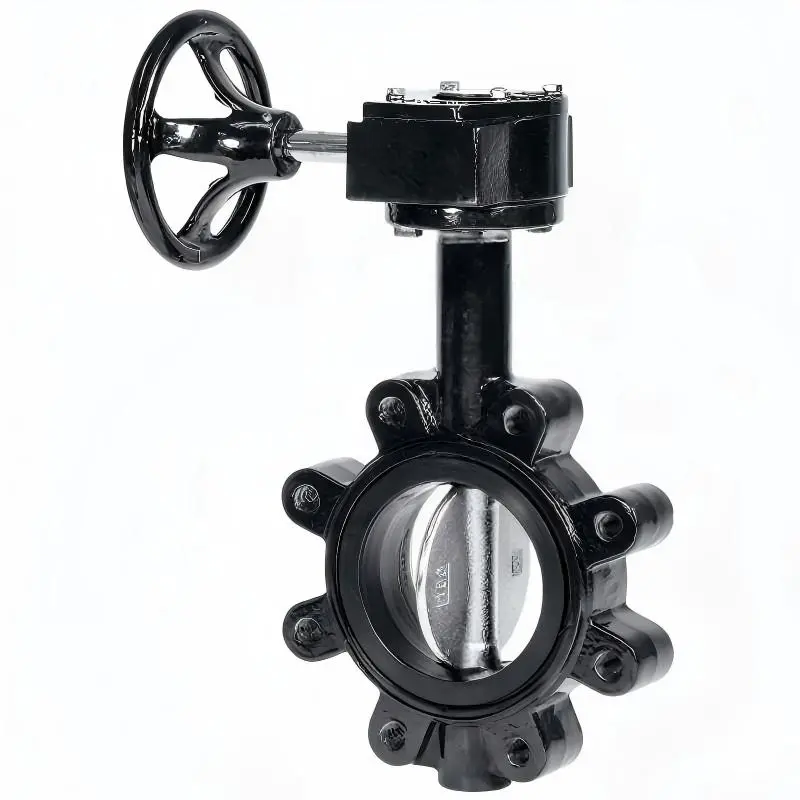
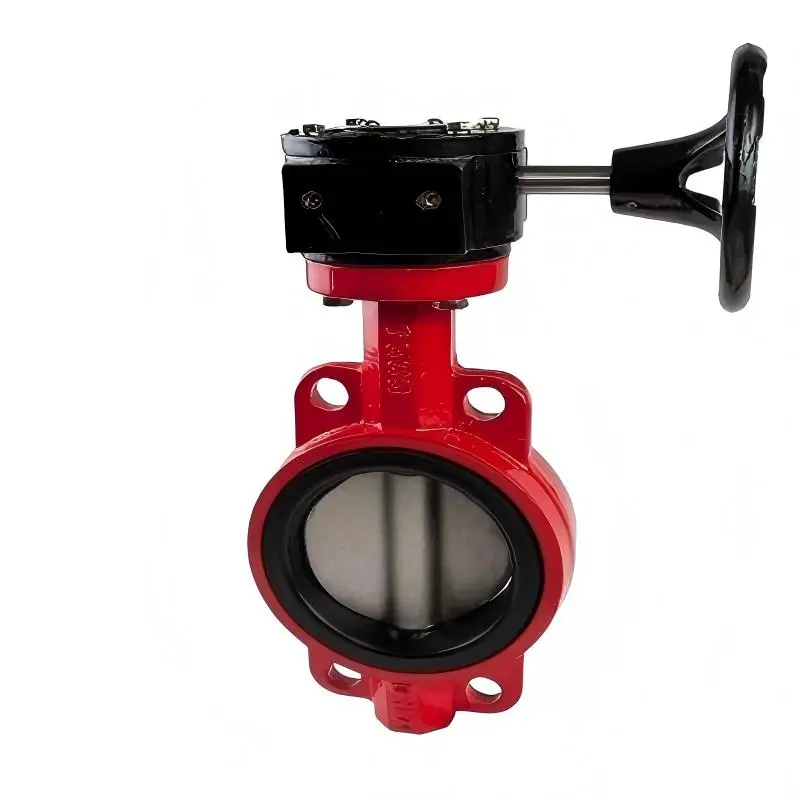
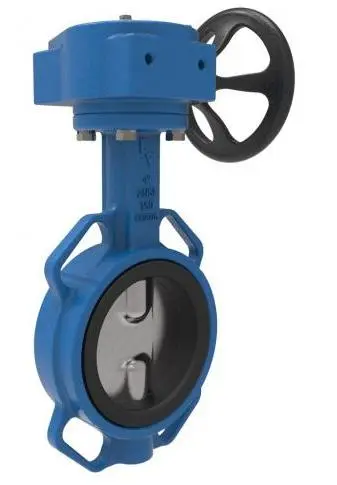
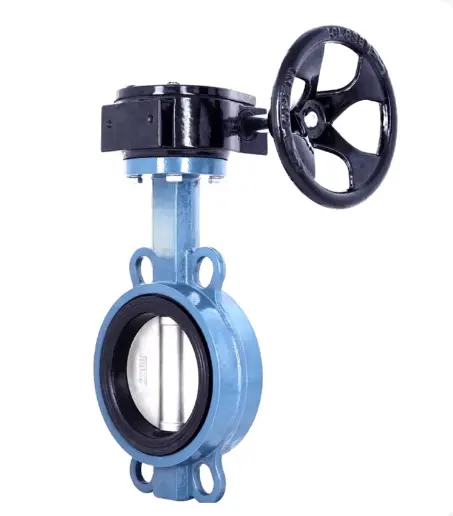
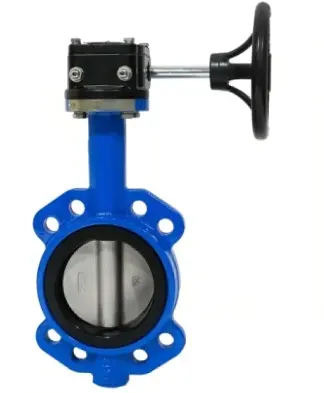
CE Certification Gear Operated Butterfly Valve - Durable & Reliable Supplier Supplier, Factory
Product Description
Advantages
Cost-effectiveness
These valves are often more affordable due to their simple design and fewer components. Their manufacturing cost is relatively low, and they also require less maintenance over time, making them an attractive option for large-scale installations where multiple valves are needed.
Compact and Lightweight
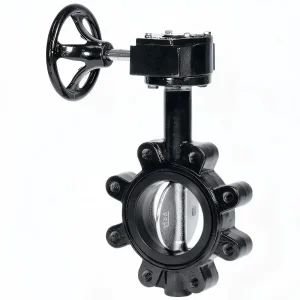
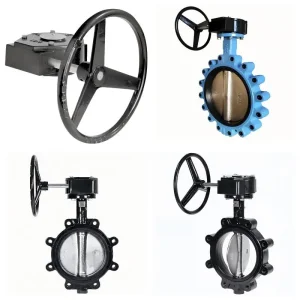
Turbine operated butterfly valves have a compact structure and are lightweight. This feature makes them ideal for installations with limited space or where weight restrictions are a concern. Their compactness also simplifies transportation and storage.
Quick Operation
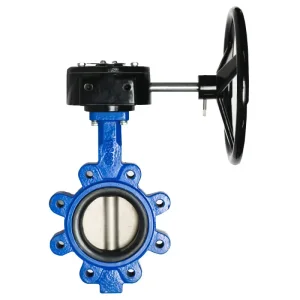
They can be operated rapidly. With a quarter-turn of the turbine, the valve can change from fully open to fully closed or vice versa, enabling efficient and precise flow control. This is especially beneficial in applications that demand frequent adjustments or an immediate response to changing flow conditions.
Low-Pressure Drop
The streamlined design of the butterfly valve disc allows the flowing medium to pass with minimal pressure drop. This characteristic reduces energy consumption, as less energy is required to push the fluid through the valve. It also helps maintain system performance and can minimize the need for additional pumping power.
Good Sealing Performance
Many turbine operated butterfly valves are designed with high-quality sealing materials, such as rubber or PTFE. This ensures a tight shut-off when the valve is closed, preventing leakage and ensuring the integrity of the system.
Specifications
Turbine operated butterfly valves are available in a wide range of nominal diameters, typically from DN50 to DN2000. This wide size range makes them suitable for use in small-scale and large-scale pipelines.
They can withstand different nominal pressures, commonly ranging from 0.6MPa to 1.6MPa. However, valves with higher pressure ratings are also available for specific applications.
The applicable temperature range varies depending on the materials used in the valve construction. Generally, they can operate in temperatures from -20°C to +150°C. Special materials may extend this range for high-temperature or low-temperature applications.
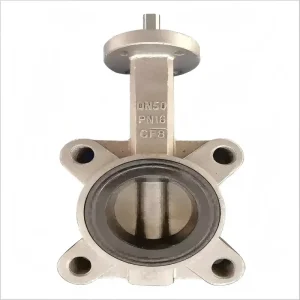
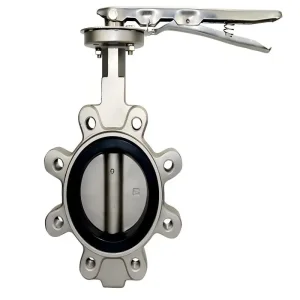
The valve body can be made from various materials, including cast iron, ball-ductile iron, cast steel, and stainless steel. Each material has its own properties, such as corrosion resistance and strength, making them suitable for different media and operating conditions.
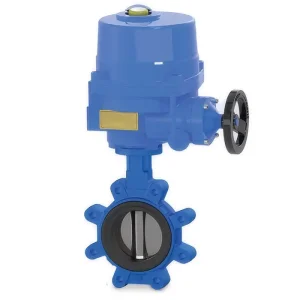
In addition to turbine operation, they can also be equipped with manual, electric, or pneumatic actuators, providing flexibility in operation according to the requirements of the system.
Market Applications
Water and Wastewater Treatment
Turbine operated butterfly valves are widely used in water supply systems to control the flow of clean water. In wastewater treatment plants, they are used to manage the flow of sewage and sludge. Their ability to handle large volumes of fluid with low-pressure drop makes them suitable for these applications.
HVAC Systems
In heating, ventilation, and air-conditioning systems, these valves are used to regulate the flow of air and water. Their quick operation and precise flow control capabilities help maintain comfortable indoor environments.
Chemical and Petrochemical Industries
Due to their corrosion-resistant body materials and good sealing performance, they are used in the chemical and petrochemical industries to control the flow of various chemicals, gases, and oils.
Power Generation
In power plants, whether thermal, hydro, or nuclear, turbine operated butterfly valves are used in water-steam cycles, cooling water systems, and fuel handling systems. They play a crucial role in ensuring the efficient operation of power generation equipment.
Food and Beverage Industry
In this industry, where hygiene and cleanliness are of utmost importance, the smooth-surfaced and easy-to-clean design of these valves makes them suitable for controlling the flow of food-grade fluids.
In conclusion, turbine operated butterfly valves, with their numerous advantages, diverse specifications, and wide-ranging market applications, are an essential part of modern industrial infrastructure.
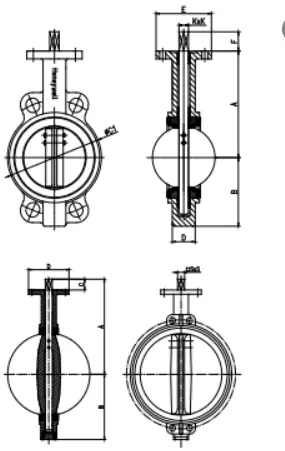
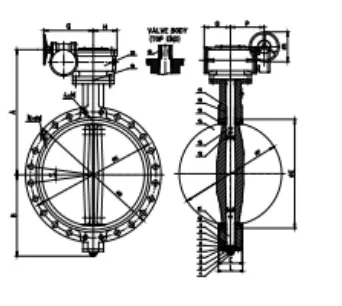
Dimensions & Engineering Data
| Size | A | B | C2 | D | E | F | KxK | Top PCD | Plate HOLE N-Dia |
|---|---|---|---|---|---|---|---|---|---|
| DN50 | 140 | 70 | 105 | 41 | 90 | 30 | 11x11 | 70 | 4-θ9 |
| DN65 | 152 | 76 | 117 | 44 | 90 | 30 | 11x11 | 70 | 4-θ9 |
| DN80 | 159 | 91 | 130 | 44 | 90 | 30 | 11x11 | 70 | 4-θ9 |
| DN100 | 178 | 102 | 162 | 51 | 90 | 30 | 14x14 | 70 | 4-θ9 |
| DN125 | 191 | 119 | 187 | 54 | 90 | 30 | 14x14 | 70 | 4-θ9 |
| DN150 | 203 | 133 | 216 | 54 | 90 | 30 | 17x17 | 70 | 4-θ11 |
| DN200 | 241 | 170 | 271 | 64 | 125 | 30 | 17x17 | 102 | 4-θ11 |
| DN250 | 273 | 210 | 330 | 64 | 125 | 30 | 22x22 | 102 | 4-θ11 |
| DN300 | 308 | 243 | 376 | 76 | 125 | 30 | 22x22 | 102 | 4-θ11 |
| Size | A | B | C2 | D | E | F | K | SxS/d | Top Plate Data PCD |
|---|---|---|---|---|---|---|---|---|---|
| DN350 | 413 | 267 | 45 | 150 | 80 | 525 | 470 | 22x22 | 125 |
| DN400 | 451 | 309 | 45 | 175 | 90 | 585 | 525 | 27x27 | 140 |
| DN450 | 467 | 318 | 45 | 175 | 109 | 650 | 585 | 27x27 | 140 |
| DN500 | 525 | 350 | 45 | 175 | 127 | 720 | 650 | 36x36 | 140 |
| DN600 | 607 | 410 | 45 | 210 | 154 | 850 | 770 | 36x36 | 165 |
| Size | A | B | C | L | фD | фK | Nxфd | 4xM | фE | фF | a° | G | H | O | P | фR | Weight(Kg) |
|---|---|---|---|---|---|---|---|---|---|---|---|---|---|---|---|---|---|
| DN700 | 784 | 581 | 163 | 169 | 895 | 840 | 24xф31 | / | 741 | 695 | 15 | 355 | 146 | 146 | 228 | 400 | 361 |
| DN800 | 832 | 655 | 188 | 195 | 1015 | 950 | 24xф34 | / | 847 | 794.7 | 15 | 355 | 146 | 146 | 228 | 400 | 444 |
| DN900 | 974 | 745 | 203 | 211 | 1115 | 1050 | 24xф34 | 4xM30 | 943 | 864.7 | 12.857 | 377 | 170 | 170 | 243 | 450 | 660 |
| DN1000 | 1054 | 803 | 216 | 224 | 1230 | 1160 | 24xф37 | 4xM33 | 1049 | 965.7 | 12.857 | 377 | 170 | 170 | 243 | 450 | 830 |
| Size | A | B | C | L | фD | фK | Nxфd | 4xM | фE | фF | a° | G | H | O | P | фR | Weight(Kg) |
|---|---|---|---|---|---|---|---|---|---|---|---|---|---|---|---|---|---|
| DN700 | 784 | 581 | 163 | 169 | 910 | 840 | 20xф37 | 4xM33 | 741 | 695 | 15 | 355 | 146 | 146 | 228 | 400 | 396 |
| DN800 | 926 | 655 | 188 | 195 | 1025 | 950 | 20xф40 | 4xM36 | 847 | 794.7 | 15 | 377 | 170 | 170 | 243 | 450 | 573 |
| DN900 | 974 | 745 | 203 | 211 | 1125 | 1050 | 24xф40 | 4xM36 | 943 | 864.7 | 12.857 | 377 | 170 | 170 | 243 | 450 | 690 |
| DN1000 | 1110 | 803 | 216 | 224 | 1255 | 1170 | 24xф43 | 4xM39 | 1049 | 965.7 | 12.857 | 476 | 180 | 250 | 302 | 450 | 1025 |