1987
In-House Elastomer Plant
100%
Bi-Directional Bubble Tight
50+
Countries Export Footprint
WRAS
Certified Potable Water Safe
Direct Engineered Solutions
Primary Water Flow Isolation Portfolio
Factory-direct industrial butterfly valves engineered for continuous hydraulic cycles, potable distribution lines, chemical water treatment, and commercial fire response infrastructure.
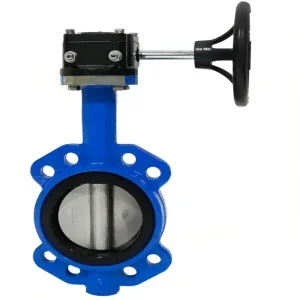
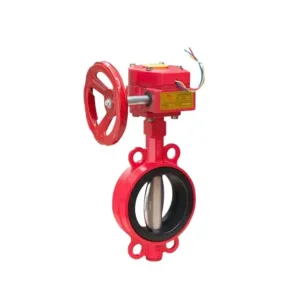
Wholesale Low - Pressure Wafer Type Butterfly Valve Supplier, Manufacturers
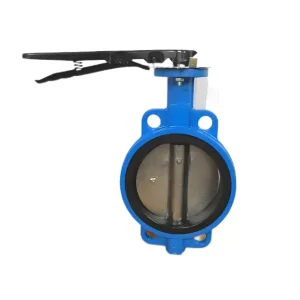
Explore Model Specs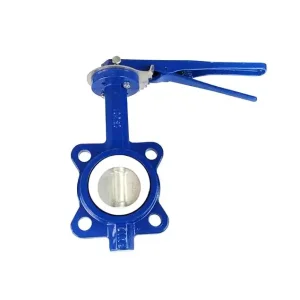
High-Quality PTFE Lined Pinless Butterfly Valve Supplier, Factories
Explore Model Specs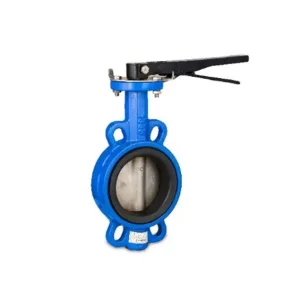
High-Quality Rubber Lined Pinless Butterfly Valve Supplier, Factories
Explore Model Specs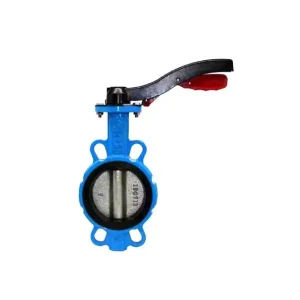
CE Certification Duplex Type Pinless Butterfly Valve Factories, Factory
Explore Model Specs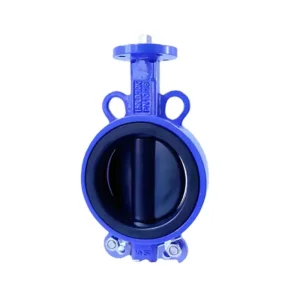
Wholesale Halar Lined Pinless Butterfly Valve Supplier, Manufacturer
Explore Model Specs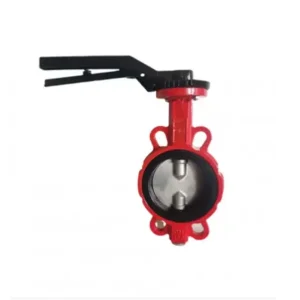
High-Quality Double Half Shaft Wafer Butterfly Valve Supplier, Manufacturer
Explore Model Specs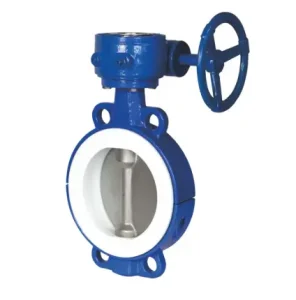
Wholesale PTFE Lined Butterfly Valve - Durable & Corrosion Resistant Manufacturers, Manufacturer
Explore Model Specs
Technical Whitepaper: Sector Trajectory
State of Water Butterfly Valve Engineering: 2026+ Outlook
Water conveyance is undergoing a rapid transition from basic mechanical shut-off components to computational hydraulic nodes requiring micro-friction profiles, predictive telemetry, and zero carbon-leach standards.
1. Pinless & Double Half Shaft Geometries
Traditional through-pin configurations create primary through-disc leak paths when exposed to high cyclic pressures. Modern engineering prioritizes pinless splined connections and double-half-shaft architectures. By isolating the stem entirely from the flow path, our foundry completely mitigates galvanic corrosion between the disc and the shaft.
2. Polymer Science & In-House Compounding
Elastomeric failure accounts for over 82% of field valve replacements. Operating our dedicated compounding subsidiary—Tianjin Dongfang Rubber Factory since 1987—enables molecular control over EPDM and NBR polymers. Our proprietary formulations achieve exceptionally low compression set ratings (<18% after 100,000 continuous open-close cycles).
3. Ultra-Low Head Loss Hydrodynamics
Pumping stations globally absorb billions of kilowatt-hours annually countering fluid friction. Our advanced flow-streamlined disc contours reduce the flow resistance coefficient ($C_v$ gain of up to 14%). This thermodynamic advantage yields substantial cumulative energy reductions over municipal valve life expectancies of 25+ years.
Enterprise Procurement Framework
What Tier-1 EPCs Demand from Water Valve Manufacturers
Procurement directors and chief utility engineers have evolved past baseline cost evaluation. Modern supply-chain verification emphasizes structural audit integrity, trace certification, and full-stack manufacturing sovereignty.
Autonomous In-House Foundry Sovereignty
Third-party casting procurement introduces erratic metallurgy, hidden porosity, and wall-thickness variances that cause disastrous hydro-burst failures. Operating Tianjin Donglian Valve Factory (since 1996) guarantees complete metallurgical spectroscopy verification from molten heat through final hydro-testing.
Actuation Precision & Interface Adaptability
Global specifications dictate universal drive integration. Whether accommodating electric quarter-turn multi-turn intelligent actuators via standardized ISO 5211 mounting flanges or integrating fire sprinkler double-tamper supervisory switches, physical precision is machined under sub-millimeter CNC execution.
Full EN 10204 3.1 Traceability
Contractors require non-negotiable risk mitigation. Every valve delivered is documented back to the initial molten charge number, detailing physical yield strength, elongations, Charpy V-notch impact values, and micro-hardness profiles, eliminating counterfeit alloy threats entirely.
System-Level Field Architectures
Macro-Engineering Infrastructure Solutions
Bridging component science with real-world infrastructure. How specific water butterfly valve configurations resolve mission-critical pipeline challenges across global civil and industrial sectors.
Potable Distribution Networks
Water networks face stringent non-leaching criteria. Utilizing our WRAS-approved resilient-seated models ensures zero microbial colonization, no volatile organic compound off-gassing, and uninterrupted laminar flow across urban supply arteries operating at PN10/PN16 thresholds.
HVAC District Cooling & Chilled Water
Chilled water systems demand zero condensation creep and tight thermal boundary retention. Wafer and lug butterfly valves featuring specialized extended necks clear thick pipeline insulation jackets while maintaining ultra-low operational torque under high-cycle modulate control.
Desalination & High-Salinity Brine
Raw seawater and high-temperature reverse osmosis brine dissolve standard 304/316 alloys rapidly. We engineer specialized solutions incorporating Duplex Stainless Steel (2205/2507) and Aluminum Bronze (C95800) discs paired with inert bonded virgin PTFE or Halar-coated body liners.
International Engineering Standards Matrix
Comprehensive Quality & Dimensional Alignment
Global infrastructure projects span divergent regional standard bodies. Our manufacturing campus operates under universal certified tolerances for rapid seamless deployment across international contracts.
| Standard Jurisdiction | Design Code Reference | Face-to-Face Dimension | Pressure Class / Ratings | Verified In-House Testing Protocol |
|---|---|---|---|---|
| European Union / BS EN | EN 593 / BS 5155 | EN 558-1 Series 20 (Wafer/Lug) | PN6, PN10, PN16, PN25 | EN 12266-1 Rate A (Zero Leakage Hydro) |
| North American / ASME | ASME B16.34 / API 609 Cat. A | API 609 / ASME B16.10 | Class 125, Class 150 | API 598 Bi-Directional Hydrostatic & Resilient Seat |
| German / Industrial DIN | DIN EN 593 | DIN 3202-K1 | PN10, PN16 | DIN 3230 Part 3 (Shell 1.5x, Seat 1.1x PN) |
| Japanese / Industrial JIS | JIS B2064 / B2067 | JIS B2002 | 5K, 10K, 16K | JIS B2003 Pressure Testing Protocol |
| Australian / Oceanic AS | AS 4795.1 / AS 4795.2 | AS 4795 Dimensions | PN16, PN21 | Hydrostatic burst, shell strength & cyclic seal checks |
Research & Innovation Trajectory
Engineering Roadmap: Towards Autonomous Flow Cells
How Tianjin Top Valve is integrating smart metallurgy, composite barrier science, and edge sensing directly onto the pipeline valve assembly.
Phase 01: Materials Optimization
Graphene-Infused Elastomers
Formulating nano-engineered graphene platelets within proprietary EPDM compounds to boost tensile endurance by 35% and drastically reduce natural dynamic operational wear.
Phase 02: Digital Intelligence
Embedded Edge Diagnostics
Mounting wireless, self-powered micro-sensors directly within the valve drive yolk to track operational torque decay and notify maintenance crews before seat failure occurs.
Phase 03: Manufacturing Tech
Additive Flow Shaping
Employing selective laser sintering to develop internal vortex-nullifying disc topologies that eradicate cavitation damage in high-pressure velocity-drop zones.
Phase 04: Net-Zero Life Cycle
Eco-Circular Valve Castings
Executing an electrified foundry melt cycle converting 100% clean wind power into precision ductile iron castings with verified third-party lifecycle declarations (EPDs).
Technical Clarifications & Buyer FAQs
Frequently Addressed Valve Engineering Queries
Practical, transparent engineering insights directly addressing sealing mechanics, dynamic operating conditions, and factory manufacturing assurances.
What is the structural difference between concentric and eccentric water butterfly valves?
Concentric valves feature a centered stem where the disc continuously presses into the rubber seat during operation, providing high-efficiency low-cost isolation up to PN16. Eccentric (double or triple offset) valves lift the disc cleanly away from the seat on opening, reducing mechanical friction and extending lifecycle durability in high-cycle high-pressure lines.
Why is a pinless shaft configuration superior in treated water environments?
Pinless connections eliminate drilled taper-pin holes through the disc edge. Pins often loosen under vibration and form micro-galvanic cells that trigger localized crevice corrosion and leakage. Splined or polygon internal drives isolate fluid completely from the shaft, ensuring structural integrity and zero stem corrosion.
How does in-house rubber seat compounding directly impact valve life?
Most valve assemble plants purchase third-party rubber liners prone to carbon-filler inconsistency, which leads to premature hardening or tear failure. Producing rubber via Tianjin Dongfang Rubber Factory (since 1987) allows full control over polymer purity, cure kinetics, and elastic memory for consistent low break-torque.
Can your water butterfly valves perform reliable dead-end service?
Yes, but specifically when using full threaded Lug-type or Double-Flanged configurations. Wafer butterfly valves rely on compression between opposing pipe flanges and should not be used in end-of-line isolation unless equipped with downstream retaining flanges.
Complete Hydro Portfolio
Advanced Water Isolation & Control Lineup
Engineered with high-grade ductile iron castings, precision pinless joints, and high-performance bonded elastomers for harsh water conditions.
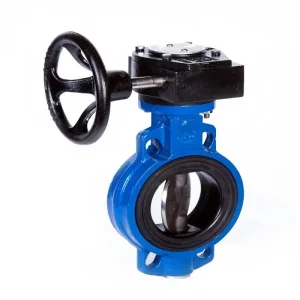
High-Quality Wafer Butterfly Valve – worm gear rubber lined butterfly valve Manufacturer, Factories
Explore Model Specs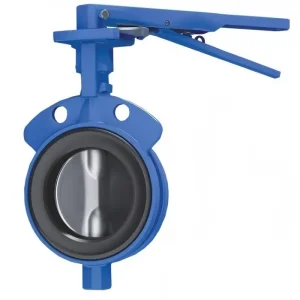
High-Quality EPDM Lining Butterfly Valve - Durable & Corrosion Resistant Suppliers, Manufacturers
Explore Model Specs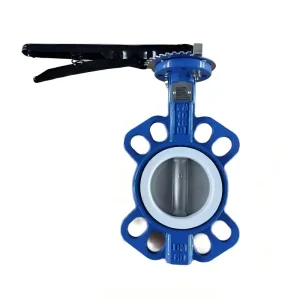
Wholesale PTFE Lined Cast Body Butterfly Valve Suppliers, Factory
Explore Model Specs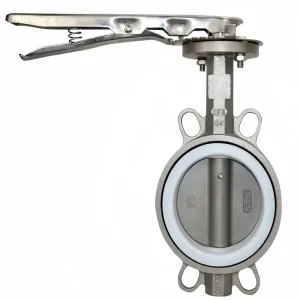
CE Certification PTFE Lined Stainless Steel Butterfly Valve Manufacturer, Factory
Explore Model Specs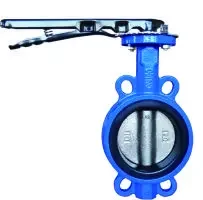
Wholesale Wafer Butterfly Valve - Durable & Efficient Flow Control Solution Suppliers, Factory
Explore Model Specs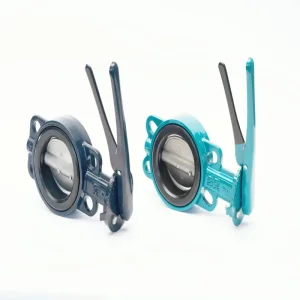
CE Certification Water-Safe Butterfly Valve for Efficient Flow Control Manufacturers, Manufacturer
Explore Model Specs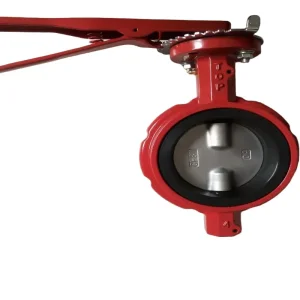
Wholesale Lugless Semi-Shaft Wafer Butterfly Valve - Durable & Reliable Manufacturer, Factory
Explore Model Specs