Direct Sourcing Catalog
Featured High-Pressure & Miniature Flow Control Assemblies
Procure certified industrial-grade ball, butterfly, check, and globe valves direct from our precision casting and machining foundries.
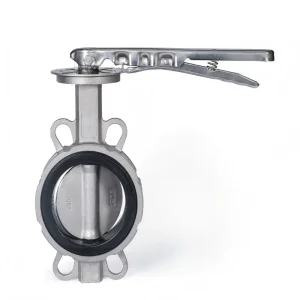
Wholesale Stainless Steel Butterfly Valve - Corrosion-Resistant
Request Factory Quote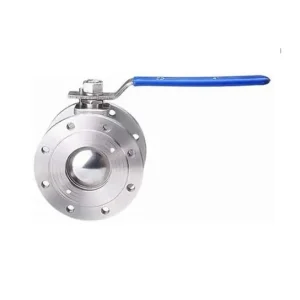
Wholesale Stainless Steel Ultra - Thin Ball Valve with Fire - Safe Design
Request Factory Quote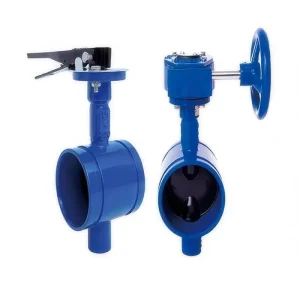
High-Quality Grooved End Butterfly Valve - Reliable Flow Control
Request Factory Quote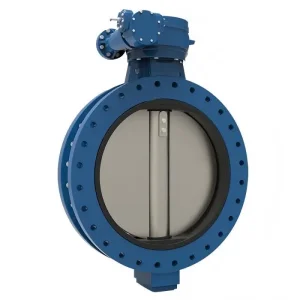
CE Certification Flanged Butterfly Valve - Efficient Pipeline Control
Request Factory Quote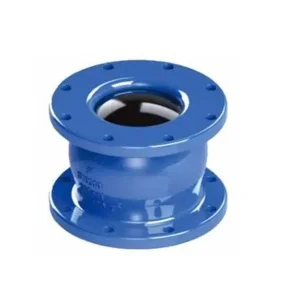
High-Performance Silent Check Valve for Urban Water Systems
Request Factory Quote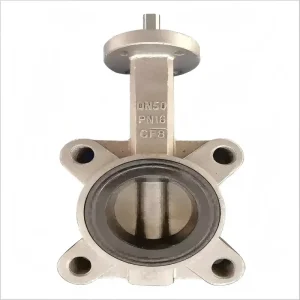
Wholesale Semi Lug Butterfly Valve - Durable Flow Control
Request Factory Quote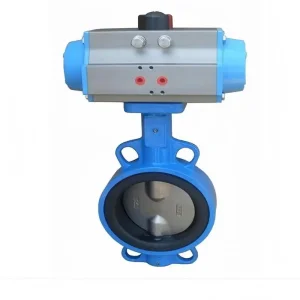
High-Quality Pneumatic Butterfly Valve - Automated Process Series
Request Factory Quote
Industry Intelligence & Whitepaper
Macro Commercial Status & Engineering Paradigms of Small Sizes Ball Valves
An authoritative analysis of technical specifications, global micro-flow demands, and precision manufacturing economics.
Global Market Status & Micro-Bore Flow Control Shifts
Small-bore ball valves (typically classified under nominal diameters ranging from DN6 / 1/4" up to DN50 / 2") form the functional bedrock of instrumentation, chemical sampling loops, cryogenic transport, HVAC sub-metering, and compressed air networks worldwide. As modern industrial facilities accelerate migration toward automated Distributed Control Systems (DCS) and compact modular process skids, miniature valve dynamics have transitioned from simple manual utility taps into safety-critical, high-cycling control nodes.
Across North America, the European Union, and the Asia-Pacific corridor, stringent environmental directives—including the EPA Clean Air Act Title V regarding fugitive emissions, and the European IPPC Directive—have mandated ultra-tight stem packing standards (ISO 15848-1 and API 641). Small sizes ball valves must maintain helium leak rates below 10-4 mbar·l/s while handling aggressive chemical corrosives, superheated steam, and hydraulic spikes up to 6,000 PSI (414 bar). Consequently, OEMs and engineering procurement teams are abandoning low-tier uncertified casting valves in favor of certified, fully traceable, precision-machined flow systems.
| Valve Dimension Range | Standard Pressure Class | Core Sealing Matrix | Primary Application Environment | Governing Testing Protocols |
|---|---|---|---|---|
| DN8 - DN15 (1/4" - 1/2") | 1000 WOG to 6000 PSI | Virgin PTFE, PEEK, Delrin | Analytical chromatography, instrument manifolds, sampling taps | API 598, MSS SP-99, ISO 5208 |
| DN20 - DN32 (3/4" - 1-1/4") | PN16 to Class 600 | R-PTFE (15% Carbon), TFM 1600 | Chemical metering skids, pneumatic actuators, pilot steam systems | API 607 (Fire-Safe), EN 12266-1 |
| DN40 - DN50 (1-1/2" - 2") | ANSI Class 150/300, PN40 | Filled PTFE, Stellite Metal-to-Metal | Pump discharge bypass, boiler feeds, industrial water isolation | ISO 10497, API 6D, CE/PED 2014/68/EU |
Vertical Supply Integration
Unlike regional assemblers reliant on third-party raw castings, Tianjin Top Valve's heritage leverages direct in-house foundry operations (since 1996) and elastomer compounding facilities (since 1987). Raw melt metallurgy (CF8, CF8M, WCB) is spectro-analyzed prior to pouring, eliminating porosity defects at the micro-molecular level.
Sub-Micron CNC Precision
Small-bore ball sphericity dictates torque consistency and seat abrasion. Our multi-axis CNC machining suites achieve mirror ball roundness within ±0.005mm and Ra 0.2 surface roughness, reducing breakaway operational torque by up to 32% for electrical and pneumatic automated packages.
100% Dual-Direction Pressure Proof
Every single unit undergoes rigorous high-pressure hydrostatic body testing at 1.5× design rating alongside zero-bubble air-under-water seat integrity tests at 80 PSI. Material test reports (EN 10204 3.1) and spectrometer chemistry logs accompany export orders systematically.
23,000m²
Integrated Factory Campus in Tianjin
100%
Shell & Low-Pressure Seat Testing
50+
Export Destination Countries Served
< 0.005mm
Precision CNC Ball Tolerance
Industrial Deployment
Mission-Critical Application Scenarios for Small Sizes Ball Valves
Engineered to operate reliably across volatile thermal shifts, corrosive slurries, and micro-bubble vacuum isolation lines.
Instrumentation & Gauge Racks
For pressure transmitter manifolds, impulse lines, and analyzer feed loops. Our 1/4" to 1/2" NPT/BSPT threaded mini ball valves deliver leak-proof blow-out proof stems, enabling line isolation without interrupting plant operations.
Chemical Injection & Dosing Skids
Engineered with CF8M (316 SS) or Hastelloy bodies paired with chemically inert PTFE/TFM virgin seats. Guarantees long-term chemical resilience against polymers, caustic wash downs, sour crude additives, and industrial oxidizers.
HVAC Hydronics & Solar Thermal
Handling circulating chilled water, glycols, and high-temperature thermal fluids. Full-port designs maintain maximal flow coefficients (Cv values) to eradicate cavitation and reduce pump amperage across multi-zone facilities.
Compressed Gas & Pneumatic Systems
High-cycle quarter-turn design compatible with ISO 5211 direct-mount automation pads. Delivers instant 90-degree shut-off for robotic manufacturing arms, paint spray assemblies, and pneumatic conveyor lines.
Cryogenic & Vacuum Isolation
Extended bonnet configurations paired with specialized micro-kelvin polymeric materials isolate liquefaction lines, ensuring handle operation remains free from ice freezes and vacuum degradation.
Fire Protection & Water Deluge
API 607 and ISO 10497 compliant designs featuring graphite secondary stem packing and metal backup seats that maintain positive seal even after thermal destruction of soft polymeric rings.
Global Procurement Analysis
Procurement Criteria & Engineering Trends Shaping 2026–2030
How Tier-1 engineering EPCs and distribution networks are transforming their small-valve vendor qualifying matrices.
Critical Shifting Drivers in Global Small Valve Procurement
Procurement departments across Europe, the Americas, and the Middle East are re-architecting their valve vendor vendor lists (AVL) based on three fundamental shifts: Total Cost of Ownership (TCO), digital smart-actuator integration, and full lifecycle ESG traceability.
- Direct-Mount Actuation Standardization (ISO 5211): The market is moving aggressively away from cumbersome bracket-and-coupling mounting assemblies for small sizes ball valves. Direct-mount ISO 5211 pads eliminate hysteresis, reduce assembly labor by 40%, and deliver streamlined mechanical profiles for tight skid enclosures.
- Fugitive Emission Elimination: Live-loaded Belleville spring packing systems are now routinely requested in standard wholesale inquiries, compensating automatically for wear and thermal fluctuation over millions of duty cycles.
- Direct Foundry Verification: To mitigate counterfeit mill test reports and non-compliant scrap smelting, global buyers partner directly with vertically integrated Chinese manufacturers capable of providing melt-furnace heat numbers stamped directly onto body castings.
- Digital Traceability (QR & RFID Tagging): Valves are increasingly dispatched with laser-engraved QR matrices linking technicians directly to 3D CAD dimensions, hydro-test pressure charts, and elastomer batch certificates in the field.
Direct Clarifications
Frequently Asked Questions on Small Sizes Ball Valve Wholesale
Comprehensive engineering insights for procurement managers, distributors, and technical specifying engineers.
What size specifications define "Small Sizes Ball Valves"?
Typically, small sizes cover nominal pipe diameters from DN8 (1/4") up to DN50 (2"). These include 1-piece reduced bore, 2-piece full bore, and 3-piece swing-out maintenance bodies in threaded (NPT, BSPT, BSPP), socket weld, butt weld, or sanitary tri-clamp configurations.
How does your factory ensure casting integrity in small-bore bodies?
Because small-bore valves have thinner wall sections subject to intense hydraulic shock, we employ investment silica sol precision casting rather than sand casting. This prevents slag inclusions, achieves smooth internal fluid waterways, and ensures wall thickness meets ASME B16.34 standards.
What seat materials are available for corrosive or high-temperature lines?
We formulate virgin PTFE, 15% glass-filled PTFE, 25% carbon-graphite PTFE, TFM 1600, PEEK, and Delrin. For severe temperatures exceeding 260°C (500°F), we supply metal-to-metal seated ball valves featuring satellite or chrome carbide thermal spray hard coatings.
Do you support OEM branding and customized thread/end machining?
Yes. As an established direct factory, we execute private labeling with custom body cast logos, laser etched serial markings, tailored handle sleeve colors, and custom flange drillings (ANSI, DIN, JIS) tailored to regional market standards.
Comprehensive Valve Solutions
Certified Industrial & Process Pipeline Assemblies
Explore our high-performance wafer check, ceramic disc, U-section, and actuated butterfly valve designs.
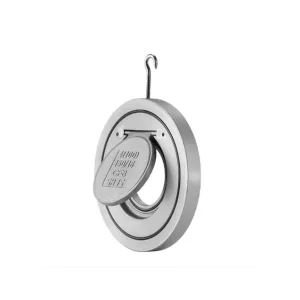
CE Certification Stainless Steel Single Disc Wafer Check Valve
Request Factory Quote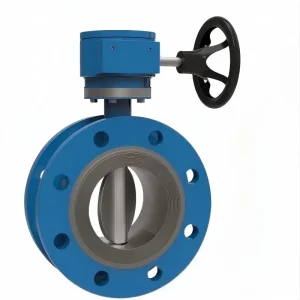
High-Quality Flange Type Butterfly Valve - Efficient Flow Control
Request Factory Quote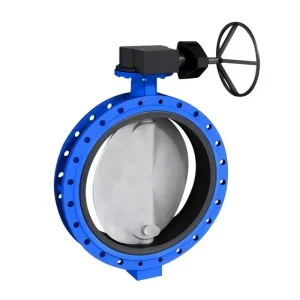
Wholesale High-Quality U Section Butterfly Valve - Heavy Duty
Request Factory Quote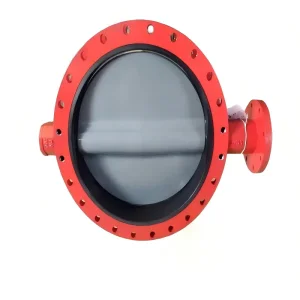
Wholesale Ceramic Disc Wafer Butterfly Valve - Abrasive Media Design
Request Factory Quote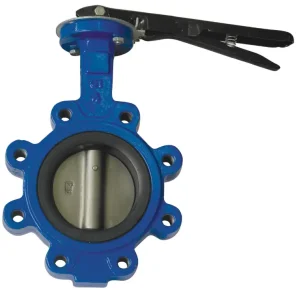
High-Quality Lug Type Manual Operated Butterfly Valve
Request Factory Quote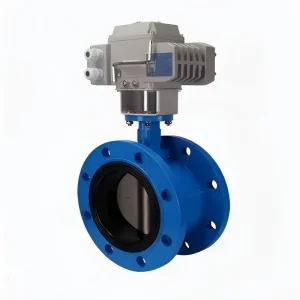
High-Performance Electrical Butterfly Valve for Seamless Control
Request Factory Quote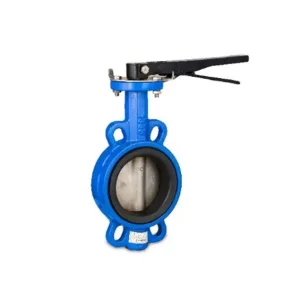
High-Quality Rubber Lined Pinless Butterfly Valve - Zero Leakage
Request Factory Quote