High-Performance Industrial Fluid Control Solutions
Direct-from-foundry engineered valves optimized for rigorous hydraulic duty, corrosive chemical barrier applications, and mission-critical municipal infrastructure.
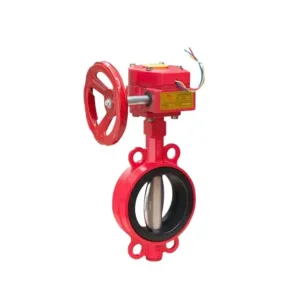
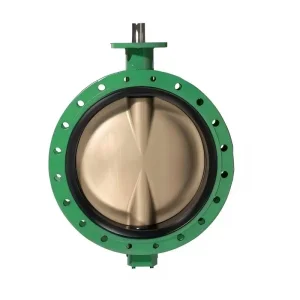
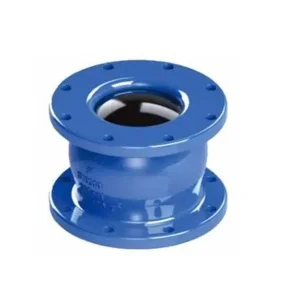
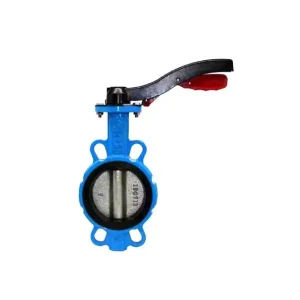
Anatomy of Pure PTFE/PFA Lining in Water Handling Infrastructures
Why resilient seated elastomeric valves fail where virgin Polytetrafluoroethylene (PTFE) excels under severe fluid mechanical stress, chlorination, and bio-pure specifications.
Molecular Chemical Inertness
Unlike standard EPDM or NBR elastomers prone to degradation from aggressive hypochlorite dosing, chlorine dioxide sanitization, and variable pH ranges (1–14), fully lined virgin PTFE seats present a non-reactive molecular boundary. This prevents swelling, softening, and premature embrittlement across continuous cyclic operation.
Dual-Resilience Energized Core
PTFE alone is susceptible to cold flow plastic deformation. Our specialized manufacturing incorporates a vulcanized silicone or fluoroelastomer (FKM) backing cushion behind a 3mm minimum thickness virgin PTFE liner. This composite arrangement ensures continuous elastic memory, bubble-tight Class VI shutoff, and automatic thermal expansion compensation.
Manual Operation & Torque Mastery
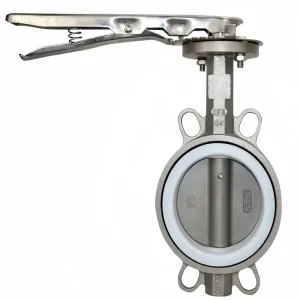
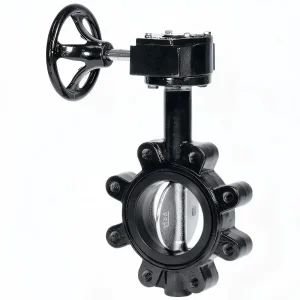
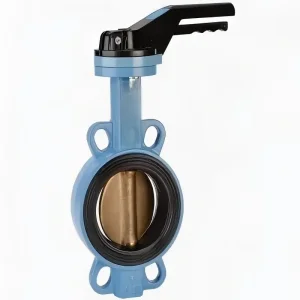
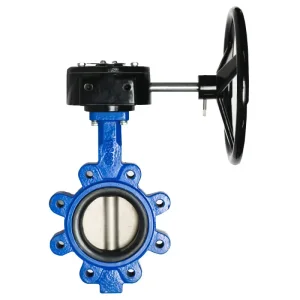
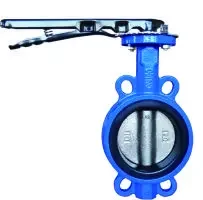
Manual gear and lockable hand-lever operators are paired with polished, low-friction spherical disc geometries. Because virgin PTFE possesses one of the lowest coefficients of friction among solid polymers (µ = 0.04 to 0.10), operational torque remains reliably low, eliminating stem binding and minimizing operator fatigue during emergency isolation.
Chinese Factory Advantages: Vertical Metallurgy to Precision Polymer Cladding
Decoupling supply chain bottlenecks through fully integrated casting foundries, automated fluoropolymer compression sinter molding, and dedicated testing laboratories under one industrial roof.
Captive Group Foundries
By producing ductile iron (QT450-10 / EN-GJS-400-15), cast steel (WCB), and austenitic stainless steel castings in-house, Chinese manufacturing campuses eliminate third-party markup, retain direct control over metallurgical grain structure, and guarantee zero porosity prior to lining operations.
Integrated Fluoropolymer Compounding
Operating dedicated polymer sintering and compression facilities since legacy decades enables strict control over PTFE crystallinity, tensile strength (≥ 29 MPa), and elongation (≥ 300%). No reprocessed or filler-diluted polymers are introduced, safeguarding clean-water sterility.
CNC Dimensional Reproducibility
Automated multi-axis CNC machine centers mill split-body profiles, two-piece disc shafts, and mounting flanges to ISO 5211 precision. This guarantees interchangeability of manual worm gearboxes, pneumatic cylinders, and smart multi-turn actuators across international job sites.
Global Logistics Proximity
Positioned within the Tianjin port industrial corridor, direct maritime container shipment mitigates overland freight risks. Export crating utilizes hermetic moisture-proof wrap, internal flange seat cushions, and heavy export timber compliant with ISPM 15 standards.
Engineering Parameters: Manual PTFE Lined Valves for Water Service
Standardized engineering data formulated to assist piping design engineers, MEP contractors, and municipal procurement directors in specifying exact bill of materials (BOM).
| Component Element | Standard Specification | Corrosive / High-Purity Water Upgrade | Compliance Reference |
|---|---|---|---|
| Nominal Diameters | DN50 – DN600 (2" to 24") | Up to DN1200 (Custom engineered split-body) | EN 558 Series 20 / API 609 |
| Pressure Rating | PN10 / PN16 / Class 150 | Full Vacuum capability (≥ 0.1 mbar abs) | ASME B16.34 / EN 12266-1 |
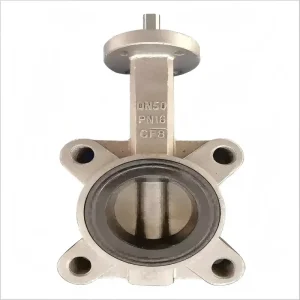
| Body Metallurgy | Ductile Iron GGG40 / ASTM A395 | Stainless Steel CF8 (304) / CF8M (316) | EN 1563 / ASTM A351 |
| Liner Material | Virgin PTFE / Modified PTFE (TFM) | Molded PFA (Perfluoroalkoxy) with locked tabs | ASTM D4894 / FDA 21 CFR 177.1550 |
| Disc Substrate | CF8M Stainless Core + 3mm PTFE Encapsulated | Hastelloy C276 / Titanium Grade 2 Disc Core | ASME Section II / DIN 17440 |
| Working Temperature | -29°C to +150°C (-20°F to 302°F) | -40°C to +200°C (Specialized resilient backing) | MSS SP-67 / ISO 10631 |
| Leakage Rate | Rate A (Zero visible leakage, bubble-tight) | Class VI Tight Shut-Off | ISO 5208 / API 598 |
| Operation Interface | 10-position notched throttle lever with lock | IP67 Enclosed Worm Gearbox with Handwheel | ISO 5211 Direct Mounting Pad |
Global Trajectory: Transition from Conventional Elastomers to Fluoropolymers
Decarbonization, desalination scale, and micro-pollutant mitigation are fundamentally redesigning valve material specifications across global water engineering landscapes.
Hyper-Saline SWRO Desalination Expansion
Global sea water reverse osmosis (SWRO) facilities operate under severe chloride aggression where duplex and super duplex stainless steels exhibit localized pitting under stagnant biofilms. Fully encapsulated PTFE discs and PFA lined bodies eliminate all wet metallic contact, presenting an ultra-durable barrier that drastically lowers plant lifecycle CapEx/OpEx.
Semiconductor Ultrapure Water (UPW) Systems
Advanced mega-fabs require 18.2 MΩ·cm ultrapure water with zero total organic carbon (TOC) leaching, heavy metal contamination, or ionic shedding. Standard synthetic rubbers cannot conform to these parameters. Virgin high-purity, hot-sintered PTFE lined butterfly valves are the industry standard for reliable isolation without compromising fluid purity.
Zero-Liquid Discharge (ZLD) Effluent Processing
Stricter global environmental compliance mandates factories treat industrial wastewater to zero effluent discharge. Circulating brines carry concentrated crystallizer slurries, severe acid washing chemicals, and thermal surges. PTFE lined valves offer dependable non-stick release characteristics that prevent scaling and premature seat seizure.
Demanding Application Environments for Manual PTFE Lined Valves
Proven hydraulic reliability across municipal sanitization systems, thermal power water circuits, chemical injection skids, and agricultural saline pipelines.
Municipal Water Chlorination
Mounted directly on primary disinfection manifolds where hypochlorite concentrations oxidize standard elastomers within 12–18 months. Manual PTFE lined wafer valves run leak-free for years without stem packing deterioration or seat swelling.
Deionized (DI) Cooling Loops
Installed inside power electronics and data center heat rejection loops. Deionized water aggressively leaches ions out of bronze, cast ductile iron, and standard carbon steels. Full PTFE isolation maintains water resistivity and stops galvanic circuit decay.
Mining Acid Mine Drainage (AMD)
Low-pH drainage water heavily laden with suspended solids and sulfuric acid components. The polished fluoropolymer disc prevents ferric scaling build-up, and manual gear operators give operators positive mechanical leverage during maintenance.
Coastal Seawater Aquaculture
Open sea circulation lines demand materials that resist barnacle adhesion and seawater salinity. PTFE linings exhibit extreme non-stick lubricity, minimizing biofilm formation and significantly cutting biological fouling purge frequency.
Global Procurement Criteria: How International EPCs Audit Valve Manufacturers
Critical engineering milestones, inspection and test plans (ITP), and statutory certifications mandated by tier-one multi-national engineering contractors.
EN 10204 3.1 Traceability
Procurement teams demand fully documented heat analysis and mechanical test certificates for every pressure boundary casting. Every valve body carries an indelible laser or cast heat number linked back to raw ingot spectral analysis, tensile testing, and Charpy V-notch energy reports.
Electrostatic Spark Integrity
To ensure total absence of microscopic pinholes or micro-porosity across the polymer boundary, every single PTFE lined valve disc and body undergoes dry spark testing at 20,000 Volts (20kV) per NACE SP0188 / ASTM G62 standards prior to mechanical hydrostatic shell testing.
Lockable Manual Overrides
Occupational safety mandates require lock-out tag-out (LOTO) security. Factory lever handles and heavy-duty enclosed IP67 gearboxes incorporate integrated padlock tabs and open/closed mechanical position stops to prevent unauthorized hydraulic line tampering.
Frequently Asked Technical Questions
Real engineering solutions addressing fluoropolymer cold flow, permeation resistance, vacuum capability, and manual gear sizing.
How does a manual PTFE lined butterfly valve prevent "cold flow" or permanent deformation over time?
Virgin PTFE alone exhibits plastic movement under continuous mechanical compressive load, commonly known as cold flow or creep. To eliminate this issue in water isolation valves, our engineering layout features a split-body valve shell design with an elastomeric energizing pad (typically high-grade Silicone or FKM) positioned precisely behind the PTFE liner. This elastomeric core continuously applies dynamic radial force against the polished perimeter of the disc. Additionally, the body features circumferential machined dovetail lock-in grooves that mechanically anchor the molded PTFE liner in place, completely preventing longitudinal and radial shifting even under full vacuum or continuous thermal cycling.
Can manual PTFE lined valves handle full vacuum service in high-velocity pump suction pipelines?
Yes. Standard loose fluoropolymer liners will collapse inward under vacuum conditions. For full vacuum duties (down to 0.1 mbar absolute pressure), we employ either high-density PFA transfer-molded liners mechanically keyed through dedicated anchoring holes in the ductile iron or stainless casting, or thick-wall sintered modified PTFE liners with integral T-slot body retention. When requesting quotes, specify "Full Vacuum Duty" so our design team can furnish computational FEA stress models and wall thickness verification.
What is the typical operating life difference between an EPDM seated valve and a PTFE lined valve in chlorinated drinking water?
In standard potable water with mild chlorination (< 1-2 ppm), EPDM provides good service life (approx. 5 to 7 years). However, in high-dose chlorination lines, shock treatment zones, or water containing trace chloramines (3–5 ppm or higher), EPDM suffers rapid oxidative cross-link breakdown, surface hardening, micro-cracking, and loss of sealing elasticity within 12 to 24 months. Manual virgin PTFE lined valves do not undergo oxidative polymer degradation in municipal chlorination chemistries, regularly exceeding 10 to 15 years of maintenance-free service life while maintaining bubble-tight shutoff.
How are manual operators sized to overcome PTFE seating break-away torque?
Although PTFE has an exceptionally low coefficient of dynamic sliding friction, break-away torque can rise when a valve remains in the closed position under differential pressure for long periods of time. Our engineering practice sizes lever handles for sizes ≤ DN100 (4") with an ergonomic safety multiplier of 1.3x. For valves ≥ DN125 (5") or high differential pressures (> 10 bar), we mandate multi-turn high-ratio self-locking worm gear operators with nodular iron housings and bronze drive gears. This setup guarantees that maximum handwheel rim pull forces remain well below OSHA and European safety standards (≤ 250 N) under full design differential pressure.
What documentation and test records are supplied with wholesale factory orders?
Every wholesale factory shipment includes a comprehensive Quality Dossier containing: (1) EN 10204 3.1 Material Test Reports for all casting components, disc inserts, and body bolts; (2) Raw PTFE Resin Certificate of Purity conforming to FDA 21 CFR 177.1550; (3) 100% 20kV Spark Test Report proving zero liner porosity; (4) Hydrostatic Shell (1.5x PN) and Hydrostatic/Pneumatic Seat Leakage (1.1x PN) inspection data sheets to ISO 5208 / API 598; (5) Protective Coating Dry Film Thickness (DFT) and adhesion reports.
Heavy-Duty Isolation & Infrastructure Control Valves
Broaden your fluid management architecture with our certified high-temperature, power plant, and anti-corrosive industrial valves.