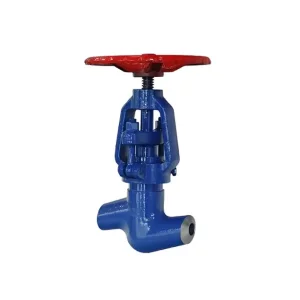
High-Precision Flow Control Components & Automated Pipeline Units
Explore our core product portfolio, manufactured under unified ISO 9001, CE, and WRAS quality systems with complete traceability from raw casting to hydrostatic pressure certification.
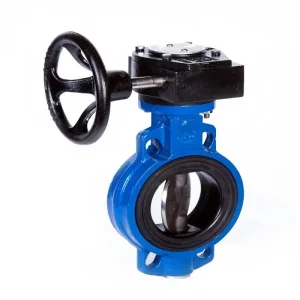
High-Quality Wafer Butterfly Valve – Worm Gear Rubber Lined
Explore Product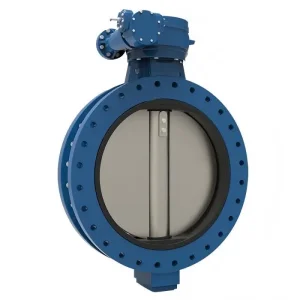
CE Certification Flanged Butterfly Valve – Efficient Flow Control
Explore Product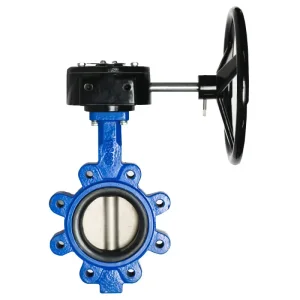
High-Quality Lug Type Butterfly Valve – Industrial Standard
Explore Product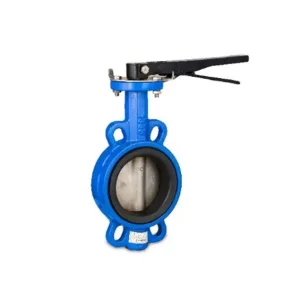
Rubber Lined Pinless Butterfly Valve – Leak-Proof Design
Explore Product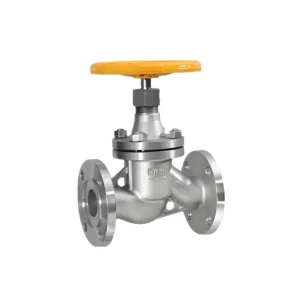
Wholesale Straight-Through Ammonia Globe Valve
Explore Product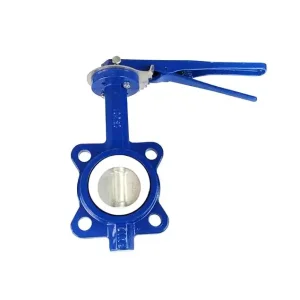
High-Quality PTFE Lined Pinless Butterfly Valve
Explore Product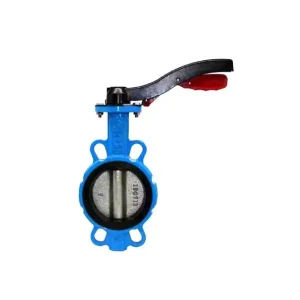
CE Certification Duplex Type Pinless Butterfly Valve
Explore Product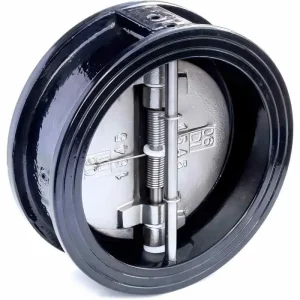
High-Quality Wafer Check Valve for Secure Fluid Control
Explore ProductMacroeconomic Dynamics & The Evolution of Modern Throttling Technology
In automated process industries, pneumatic globe control valves serve as the final control element (FCE) that dictates thermodynamic stability, plant throughput, and carbon intensity.
Global Energy Transition
The push for decarbonization and energy efficiency across LNG regasification, hydrogen processing, and green ammonia synthesis has heightened the demand for globe control valves engineered for extreme differential pressures (ΔP) and severe cryogenic thermal cycling.
Traditional quarter-turn valves often fall short in high-pressure drop throttling due to localized cavitation and supersonic acoustic vibration. Linear globe control valves, characterized by streamlined S-shaped flow paths, remain the baseline specification across global engineering, procurement, and construction (EPC) firms.
Digital Smart Positioners
The global industrial valve ecosystem has pivoted from analog pneumatic actuation to electro-pneumatic intelligence. Modern pneumatic globe control valves are paired with microprocessor-controlled positioners supporting HART, Foundation Fieldbus, and Profibus PA protocols.
These smart positioners perform continuous partial stroke testing (PST), dynamic travel logging, online friction diagnostics, and supply pressure monitoring, eliminating unscheduled plant shutdowns and facilitating Safety Instrumented System (SIS) integration up to SIL 3 architecture.
Stringent Fugitive Emission Norms
With environmental compliance policies tightening globally—such as EPA Method 21 in North America and TA-Luft / ISO 15848-1 Class AH/BH standards across the European Union—stem packing integrity has become an engineering focal point.
Globe control valves require specialized live-loaded stem seal assemblies, utilizing calibrated Belleville spring washers and engineered PTFE V-ring sets or reinforced expanded graphite packing rings to maintain zero dynamic leakage over tens of thousands of continuous operational cycles.
Why Tier-1 EPCs Partner with Vertically Integrated Chinese Valve Factories
Analyzing the operational, metallurgical, and economic efficiencies of industrial valve manufacturing clusters in Tianjin, China.
In-House Foundry & Metallurgy
Unlike asset-light assembly shops that purchase commercial rough castings from third-party foundries, fully integrated manufacturers maintain their own induction melting and molding lines. Our group foundation combines Tianjin Donglian Valve Factory (established 1996) with complete in-house casting oversight.
- Direct control over chemical composition via optical emission spectrometers (OES).
- Radiographic (RT), ultrasonic (UT), and magnetic particle testing (MT) conducted on-site.
- Elimination of micro-porosity and grain boundary defects in ASTM A216 WCB, A351 CF8M, and duplex alloys.
Elastomer Formulations Since 1987
The primary point of degradation in resilient seated valves and pneumatic actuator diaphragms is elastomer aging. Having established Tianjin Dongfang Rubber Factory in 1987, our group formulates, compounds, and vulcanizes elastomers in-house.
- Proprietary compound recipes for virgin EPDM, NBR, Viton (FKM), and PTFE blends.
- WRAS-approved potable water formulations certified against microbiological extraction.
- Fabric-reinforced neoprene and nitrile actuator diaphragms with verified flex-life exceeding 2,000,000 full strokes.
Precision CNC Machining & Quality Loop
Precise Cv control requires strict machining tolerances on linear valve plugs, contoured throttles, and cage windows. Our 23,000 m² campus in Wuxia Industrial Park utilizes 5-axis vertical machining centers.
- Seat ring and plug micro-lapping ensuring ANSI/FCI 70-2 Class IV, V, and Class VI bubble-tight shut-off.
- Laser-guided stem runout testing mitigating packing friction and stick-slip phenomena.
- Automated batch tracking connecting every finished valve to its original melt heat and rubber lot.
Engineering Architecture: Trim Geometry, Cavitation & Aerodynamic Noise Mitigation
A rigorous engineering analysis of internal flow path contours, multi-stage pressure breakdowns, and acoustic energy dissipation in pneumatic globe control valves.
| Trim Architecture | Guiding Mechanism | Flow Characteristics | Inherent Recovery Factor (FL) | Best-Fit Application Profile |
|---|---|---|---|---|
| Contoured Parabolic Plug | Top Guided / Post Guided | Linear, Equal Percentage (EQ%) | 0.80 – 0.90 | General HVAC, low-viscosity petrochemical utilities, clean steam, non-cavitating water transfer. |
| Perforated Cage Retainer | Heavy-Duty Cage Guided | Linear, EQ%, Modified Parabolic | 0.88 – 0.94 | High differential pressure lines, hydrocarbon refining, boiler feedwater regulation, gas pressure reduction. |
| Multi-Stage Cavitation Trim | Sleeve Guided / Drilled Cage | Linear, Characterized Custom | 0.96 – 0.98 | Superheated boiler feed pump recirculation, high-pressure amine systems, subsea choke manifolds. |
| Tortuous Path Low-Noise Labyrinth | Multi-Disc Stack Guided | Equal Percentage, Linear | 0.92 – 0.97 | High-pressure gas letdown stations, steam turbine bypass, compressor anti-surge, refinery hydrogen headers. |
| Micro-Flow Needle Plug | Body Guided / Bonnet Guided | Linear, Splined Equal % | 0.65 – 0.75 | Pilot chemical plants, laboratory dosing, catalyst injection systems, low Cv precision chromatography. |
Combating Cavitation & Flashing
When the localized static pressure drops below the fluid's saturation vapor pressure (Pv), vapor bubbles form at the vena contracta. As the fluid decelerates and pressure recovers downstream, these bubbles implode violently, generating localized micro-jets with shock pressures up to 100,000 psi.
Our multi-stage pressure reduction trims divide the total differential pressure across multiple concentric stages. By ensuring that at no point does the localized pressure dip below Pv, cavitation erosion on the valve body and trim is eliminated.
Aerodynamic Noise Attenuation
In high-pressure drop compressible gas services (such as steam, natural gas, and ethylene), velocities can approach sonic (Mach 1.0) conditions at the throttling orifice, producing aerodynamic noise in excess of 115 dBA that can cause acoustic fatigue failure.
Using aerodynamic drilled cage technology, we implement small-hole jet acoustic shift. By transforming large turbulent eddies into small, high-frequency jets, the acoustic energy is shifted above audible human frequencies and dissipated quickly through pipeline boundary layers, keeping operating noise below OSHA 85 dBA limits.
Actuator Sizing & Thrust Margins
Pneumatic multi-spring diaphragm actuators (or double-acting pneumatic piston cylinders) must overcome fluid dynamic unbalance forces, stem packing friction, and seat contact seating forces.
We mandate a minimum 1.30 safety factor on fail-closed (air-to-open) and fail-open (air-to-close) actuator sizing. For high-pressure differential applications, pressure-balanced cage trims with internal balancing seals are deployed, reducing required actuator thrust by up to 75%.
Deployment Profiles Across Severe Process & Utility Environments
Real-world integration parameters demonstrating material compatibility, temperature endurance, and operational duty cycles.
Cryogenic & Ammonia
Conditions: -196°C to -40°C, high permeation.
Deep refrigeration and ammonia chemical loops require extended bonnets with vapor column seals. Stainless steel CF8M/CF3M bodies paired with Kel-F (PCTFE) or Stellite hard-faced seats deliver zero leakage without stem packing frost build-up.
Superheated Steam
Conditions: 540°C, ASME Class 900–2500.
Power station main steam bypass and turbine drain systems use ASTM A217 WC9 or C12A chrome-moly alloy bodies. Trim surfaces receive Stellite #6 hardfacing to prevent wire-drawing and high-temperature thermal creep.
Chemical Corrosive Media
Conditions: Concentrated acids, caustic brine.
Severe corrosive fluid handling requires valves lined with virgin PFA/PTFE (minimum 3.5mm thickness) with specialized bellows seals (PTFE or Hastelloy C-276) providing secondary containment against hazardous emissions.
Offshore Marine & Desalination
Conditions: Aerated seawater, chloride stress.
Seawater cooling systems use Nickel Aluminum Bronze (C95800) and Duplex Stainless Steel (2205/2507) globe bodies. High resistance to biofouling, erosion-corrosion, and pitting in extreme marine environments.
Technological Frontiers: Additive Manufacturing, Predictive AI & Zero Emissions
How cutting-edge research, direct laser metal sintering (DMLS), and smart industrial IoT are shaping next-generation control valve manufacturing.
3D Printed Labyrinth Flow Channels
Traditional multi-plate tortuous path trims require extensive wire-EDM cutting, brazing, and mechanical stacking. Additive manufacturing through direct metal laser sintering (DMLS) in Inconel 718 or Hastelloy allows production of consolidated solid trim geometries.
These 3D printed fluid channels utilize customized helical and fractal paths that decelerate fluid kinetic energy uniformly, eliminating internal brazing seam weaknesses and reducing trim weight by 40%.
Edge-AI Diagnostic Edge Positioners
Modern digital electro-pneumatic positioners now feature embedded Neural Network Inference engines on microcontrollers. Rather than relying on centralized control systems for diagnostic routines, the positioner analyzes pressure-travel hysteresis on the valve.
The system detects packing degradation, actuator diaphragm micro-ruptures, and seat galling before performance drops, sending preventative maintenance flags via Industrial Ethernet (PROFINET, Ethernet/IP) to maintenance teams.
Ultra-Low Emission Packing Systems
Stem seal design now incorporates modular composite packing sets. A carbon-fiber-reinforced anti-extrusion bottom ring supports engineered expanded graphite with high-purity PTFE barrier rings, coupled with Belleville live loading.
These configurations comply with ISO 15848-1 tightness Class AH (≤10-6 mg·s-1·m-1 helium leakage) across dynamic thermal cycles from -50°C to 400°C without requiring periodic gland follower retightening.
Engineering Procurement Specification & Vendor Qualification Guide
A reference checklist for EPC piping leads, instrumentation engineers, and technical sourcing teams to evaluate control valve requisitions.
| Evaluation Parameter | Engineering Standard | Technical Verification Criteria | Documentation Required in FAT |
|---|---|---|---|
| Pressure Retaining Shell | ASME B16.34 / EN 12516 | Minimum wall thickness calculation, radiographed critical sections, hydro-tested at 1.5x cold working pressure. | EN 10204 Type 3.1 Material Test Reports (MTR) with heat chemistry & mechanical tension results. |
| Face-to-Face Dimensions | ISA-75.08.01 / IEC 60534-3-1 | Standardized linear globe interchangeability for flanged, socket-weld, and buttweld ends. | Dimensional inspection report, coordinate measuring machine (CMM) dimensional verification. |
| Seat Leakage Verification | ANSI/FCI 70-2 / IEC 60534-4 | Class IV (0.01% of rated capacity via water), Class V (water micro-leakage at ΔP), Class VI (bubble-tight gas shut-off). | Seat leakage calibration certificate with recorded test pressure, medium, and leakage rate. |
| Flow Capacity (Cv/Kv) & Rangeability | IEC 60534-2-1 / ISA-75.01.01 | Sizing calculation verifying Reynolds number factor (FR), expansion factor (Y), and liquid pressure recovery (FL). | ISA valve sizing datasheet confirming no cavitation/flashing at min, normal, and max operational cases. |
| Actuator Dynamics & Hysteresis | IEC 60534-4 | Linearity deviation < ±1.0%, hysteresis plus deadband < 0.4%, step response time (<1.5s for 10% step). | Dynamic calibration travel plot, step response graph from digital positioner test station. |
| Fugitive Emissions Compliance | ISO 15848-1 / API 641 | Helium sniffing detector testing at packing gland under mechanical cycling and thermal gradients. | Type testing certificate from independent third-party laboratory (TÜV, Lloyd's, DNV). |
Critical Insights for Plant Engineers & Sourcing Managers
Addressing engineering, qualification, and operational queries regarding pneumatic globe control valves.
How does an unbalanced plug compare to a pressure-balanced cage plug in severe service?
When should an Equal Percentage (EQ%) flow characteristic be chosen over a Linear trim?
What are the advantages of in-house elastomer compounding for valve longevity?
How does vertical factory integration prevent valve delivery delays?
What is the standard procedure for Factory Acceptance Testing (FAT) on control valves?
Can you provide customized flange drilling and face-to-face dimensions for retrofit projects?
Integrated Industrial Valve Systems for Heavy Industry
Reliable quarter-turn and linear flow solutions engineered to complement process control loops across critical global utilities.
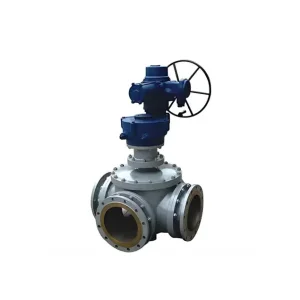
CE Certification Quick-Opening 3-Way Flange Ball Valve
Explore Product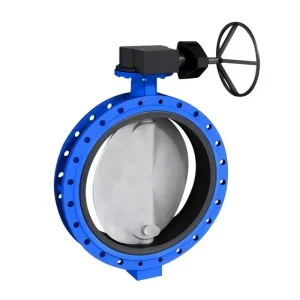
Wholesale High-Quality U-Section Butterfly Valve
Explore Product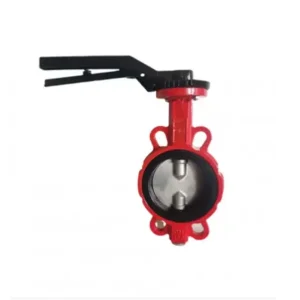
Double Half Shaft Wafer Butterfly Valve
Explore Product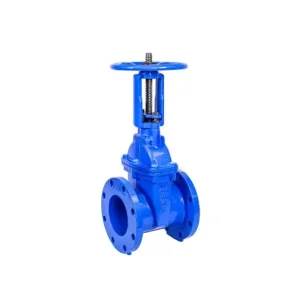
Rising Stem Resilient Seat Gate Valve
Explore Product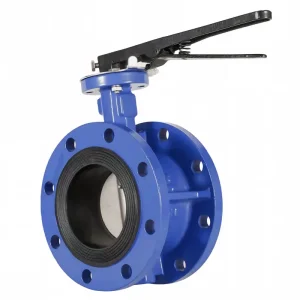
Flanged Butterfly Valve with Lever Actuator
Explore Product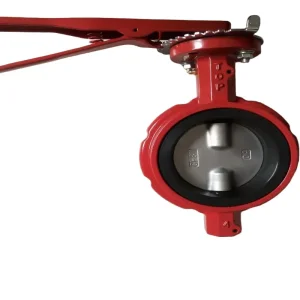
Lugless Semi-Shaft Wafer Butterfly Valve
Explore Product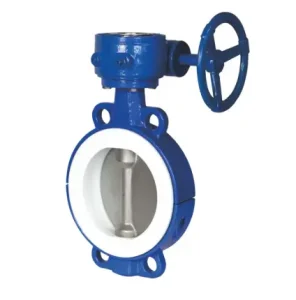
Wholesale PTFE Lined Corrosion Resistant Butterfly Valve
Explore Product