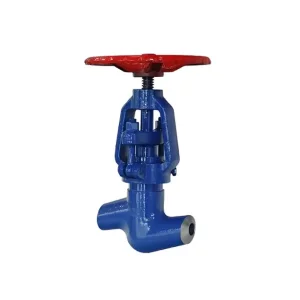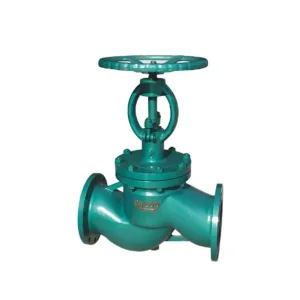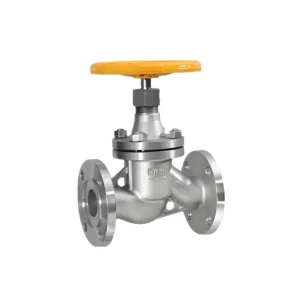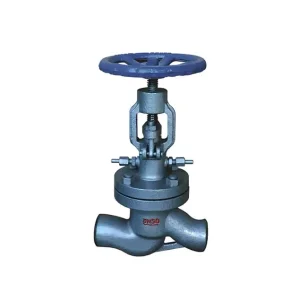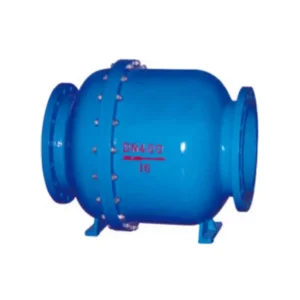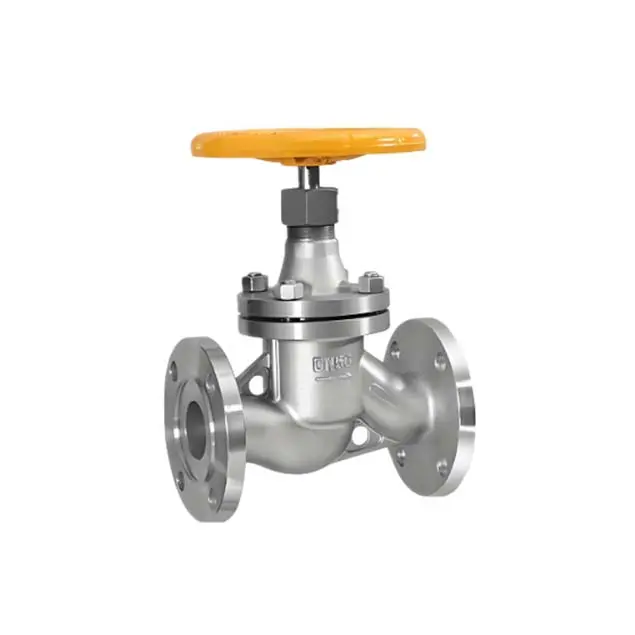
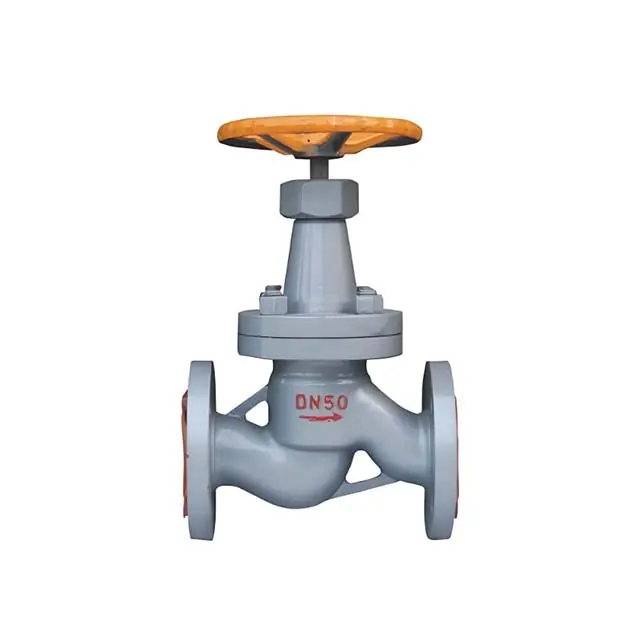
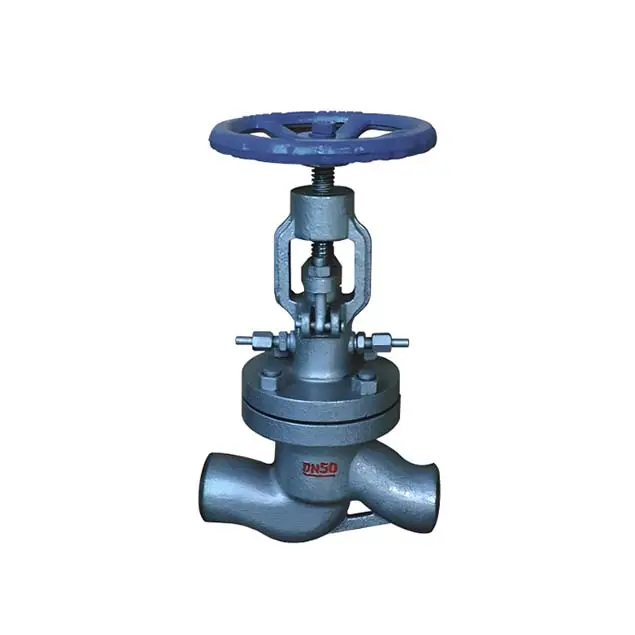
Wholesale Straight-Through Ammonia Globe Valve Manufacturers, Factory
Product Description
Product Usage and Features
This valve is mainly used in freezing and refrigeration systems in food, beer, pharmaceutical, chemical, water conservancy and other industries.
Applicable to pipelines with ammonia and amine liquid media at temperatures from -40 degrees to 150 degrees. This valve has a compact mechanism, reasonable design, smooth passage, good resistance, and a small flow resistance coefficient.
The sealing surface is made of Babbitt metal or PTFE, which has a long service life. In the process of use, when the temperature difference changes, it can naturally achieve chemical treatment performance.
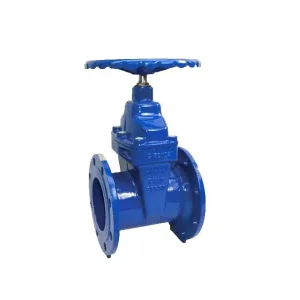
Products include ammonia flange stop valve, ammonia shut-off valve, ammonia angle shut-off valve, ammonia check valve, internal thread, external thread stop valve, etc. The materials include cast iron, cast steel, and stainless steel. Pressure: 1.6, 2.5, 4.0MPa.
- Flow Direction: The valve can be installed at any position of the pipeline, but the flow direction of the medium is consistent with the direction of the arrow marked on the valve body.
- Pre-Installation Check: Before installation, check whether the valve marking and operating conditions meet the requirements of on-site use.
- Cavity Cleaning: The inner cavity of the pipeline valve should be cleaned during installation. No attachment is allowed.
- Operational Test: Before use, an opening and closing test should be carried out to check whether it is normal.
- Storage Requirement: The valve should be stored in a dry and ventilated place. The two ends of the diameter should be closed, and the flange surface and valve stem should be coated with anti-rust oil.
Product Performance Specification
| Nominal Pressure | Shell Pressure | Seal Pressure | Applicable Media | Applicable Temperature |
|---|---|---|---|---|
| 1.6 / 2.5 / 4.0 / 6.4 MPa | PN × 1.5 times | PN × 1.1 times | Ammonia gas, ammonia liquid, etc. NH3 | Babbitt Alloy ≤ -40~150℃ |
| PTFE ≤ -40~200℃ |
Main Component Material
| Valve Body And Valve Cover | Component Name | Seal | Filler | Filler Cover | Valve Disc Valve Stem |
|---|---|---|---|---|---|
| J41B(F)025 C | Cast steel | PTFE | PTFE | Carbon steel, stainless steel | Carbon steel, stainless steel |
| Z | Cast iron | ||||
| P | Stainless steel |
Packaging & Delivery




Frequently Asked Questions
What media and working temperatures are these valves suitable for?
These valves are designed for ammonia gas, ammonia liquid, and amine liquid media. Depending on the sealing material, Babbitt alloy handles temperatures from -40°C to 150°C, while PTFE can operate from -40°C to 200°C.
Which industrial sectors commonly utilize these ammonia valves?
They are widely applied in freezing and industrial refrigeration systems across food processing, beer brewing, pharmaceutical production, chemical engineering, and water conservancy projects.
What body materials and pressure ratings are available?
The valve bodies are available in cast iron, cast steel, and stainless steel, with standard nominal pressure ratings spanning 1.6 MPa, 2.5 MPa, 4.0 MPa, and up to 6.4 MPa.
What key requirements should be followed during installation?
Ensure the medium flow matches the arrow indicator on the body, clean the internal cavity completely of attachments, verify site parameters against markings, and perform an opening/closing test prior to commissioning.
How should the valves be maintained and stored when not in use?
Valves must be stored in a dry, ventilated environment with both port ends securely capped. In addition, anti-rust oil should be coated onto the flange surfaces and valve stem to prevent corrosion.