
Primary Industrial Valve Systems & Actuation Solutions
Engineered in our in-house metallurgical foundry and CNC automated machining plants. Explore specialized butterfly, check, and high-duty isolation valves certified for heavy-duty process containment.
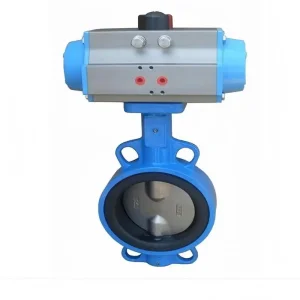
High-Quality Pneumatic Butterfly Valve - Flow Control
Explore Specification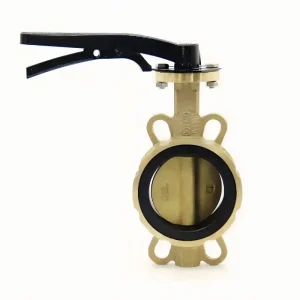
Aluminum Bronze Butterfly Valve - Corrosion Resistant
Explore Specification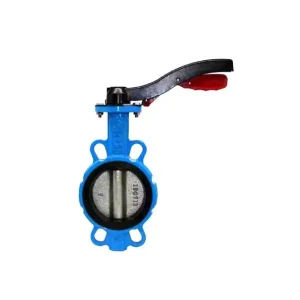
CE Certification Duplex Pinless Butterfly Valve
Explore Specification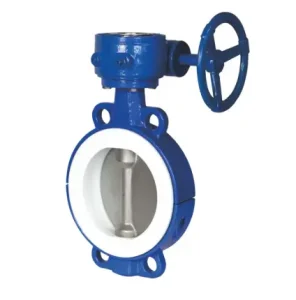
Wholesale PTFE Lined Butterfly Valve - Acid Service
Explore Specification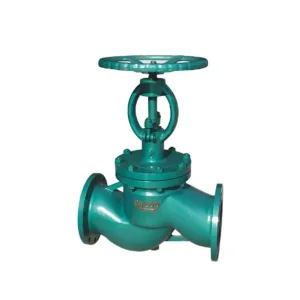
Vacuum Isolation Globe Valve - Thermal Duty
Explore Specification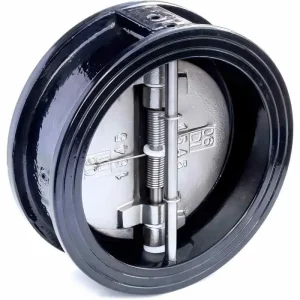
Wafer Check Valve - Secure Fluid Backflow Isolation
Explore Specification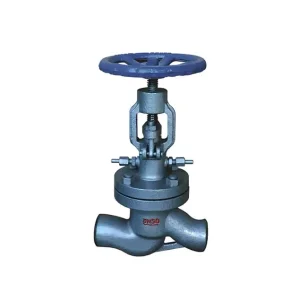
Water Seal Globe Valve - Rapid-Closing Feature
Explore Specification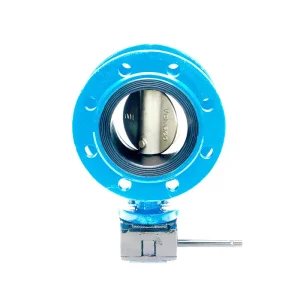
Marine Flange Manual Butterfly Valve - Off-shore Ready
Explore SpecificationGlobal Industrial Landscape of CF8 Stainless Steel Insulation Plug Valves
Overcoming cold spots, crystallization, cross-contamination, and toxic fugitive leakage in highly viscous and temperature-sensitive fluid transport pipelines.
ASTM A351 Gr. CF8 Metallurgical Integrity
Cast austenitic 18Cr-8Ni stainless steel (CF8) offers premier corrosion resistance against organic acids, oxidizing media, sulfurous vapor, and atmospheric contaminants. At our internal foundry in Tianjin, every melt charge is strictly verified using spark optical emission spectrometers to guarantee an optimum ferrite content (typically 5% to 12%), suppressing stress-corrosion cracking while preserving cryogenic toughness and high-temperature ductility.
- Tensile Strength: ≥ 485 MPa | Yield Strength: ≥ 205 MPa
- Thermal Conductivity: Balanced expansion coefficients matching welded jacket chambers
- Chemical Balance: Strict carbon capping (C ≤ 0.08%, Cr 18.0–21.0%, Ni 8.0–11.0%) to preserve intergranular corrosion resistance
Fully Jacketed Thermal Insulation Mechanics
Viscous compounds such as asphalt, molten pitch, liquid sulfur, resins, and terephthalic acid (PTA) rapidly solidify when pipeline temperatures drop below their crystallization thresholds. Our CF8 insulation plug valves incorporate one-piece cast or pressure-retaining welded heat jackets extending from flange to flange, eliminating thermal dead zones.
- Thermal Media Versatility: Saturated steam up to 2.5 MPa, hot thermal oil (HTF) up to 350°C
- Full Oversized Flanges: Jacketed outer dimensions provide oversized bolt patterns so standard flange bolt holes can be torqued without interference
- Zero Dead Cavity: 360-degree cylindrical fluid channel prevents localized stagnant deposits
CE Directive Compliance & PED Module H Rigor
Under the European Pressure Equipment Directive (PED 2014/68/EU), jacketed pressure vessels are classified as high-risk multi-chamber apparatus due to differential pressures between process fluid and jacket heating agents. Our valves comply with Category III/IV Module H full quality assurance certification, verified by independent European notified bodies.
- Dual Hydrostatic Certification: Independent jacket pressure testing at 1.5× jacket design pressure
- Non-Destructive Examination: 100% radiographic or liquid penetrant inspection on jacket fillet welds
- Traceable EN 10204 3.1 & 3.2: Complete heat-number mill tracking from raw ingot to finished actuator
Localized Heavy-Duty Process Applications
Engineered for mission-critical processes where valve freezing, media plugging, or fugitive emissions mean catastrophic unplanned line shutdown.
Bitumen, Asphalt & Heavy Slurry
Viscous binders rapidly solidify below 140°C. Standard gate or ball valves create internal pockets that trap bitumen, resulting in seized stems. The CF8 jacketed plug valve's continuous heating and wiping action maintains a clear path during 90-degree rotary travel.
Claus Sulfur Recovery Units (SRU)
Molten elemental sulfur must remain between 135°C and 155°C to avoid extreme viscosity spikes. Our jacketed CF8 valves provide full steam tracing that eliminates cold bridgings at the gland packing, certified to withstand H2S corrosive partial pressures.
Polymers, Polyesters & Resins
Melt spinning lines for PET, Nylon, and prepolymers demand zero-shear flow and laminar transition. High polish CF8 plug surfaces reduce flow friction, while full-port designs eliminate shear-induced thermal degradation of polymer chains.
Fine Chemicals & Phthalic Anhydride
Aggressive organic crystallizing mediums demand chemical resistance. Cast CF8 body paired with modified virgin PTFE or virgin PFA sleeve provides complete bubble-tight bi-directional isolation with self-lubricating, non-stick performance.
Engineering Specifications & Material Compliance Matrix
Manufactured to API 599, ASME B16.34, and EN 12516-1 standards to ensure seamless interchangeability and operational safety in high-consequence processing environments.
| Engineering Parameter | Specification Detail | International Standard Baseline | Tianjin Top Valve In-House Validation |
|---|---|---|---|
| Nominal Bore Range | DN15 to DN350 (NPS 1/2" to 14") | ASME B16.10, EN 558 Series 1 / 8 | 100% Dimensional Machining Inspection |
| Pressure Rating Class | ASME Class 150, 300; EN PN16, PN25, PN40 | ASME B16.34, EN 12516-1 | 1.5× Hydrostatic Shell Proof Pressure Tested |
| Body & Plug Metallurgy | ASTM A351 CF8 (1.4308), CF8M (1.4408), CF3M | ASTM A351, EN 10213, NACE MR0175 / ISO 15156 | PMI Spectrometric & Melt Chemistry Cert |
| Heating Jacket Design | Full Flanged Welded / Integral Cast (CF8 or SS304) | ASME Sec VIII Div 1, AD 2000 Merkblatt | Independent Jacket Hydrostatic 1.5× Test at 2.4 MPa |
| Sealing Architecture | Non-Lubricated PTFE/PFA Sleeved or High-Temp Lubricated Metal | API 599, API 6D | Zero-Cavity Rotary Anti-Static Spring Loaded |
| Fugitive Emissions Control | Live-Loaded Graphite + Dual O-Ring / Diaphragm Seal | ISO 15848-1 Class AH, TA-Luft VDI 2440 | Helium Mass Spectrometer Sniffing < 1×10⁻⁶ mg/s·m |
| End Connections | Raised Face (RF), Ring Type Joint (RTJ), Butt Weld (BW) | ASME B16.5 (Oversized Jacket Flange Drill Pattern) | CNC Automated Flange Serration Ra 3.2 - 6.3 μm |
| Operating Torque Factor | Low-friction self-lubricating sleeve with adjustable top cap | ISO 5211 Direct Mounting Flange | Multi-Cycle Actuation Verification with Automated Torque Sensor |
Technical Roadmap: Next-Generation Insulation Plug Valves
Meeting Net-Zero decarbonization mandates through advanced composite thermal coatings, smart diagnostics, and ultralow fugitive sealing.
Ultra-Low Emission ISO 15848-1 Class AH Certification Standard
Integrating dynamic dual-diaphragm secondary sealing alongside live-loaded disc spring packings to eliminate atmospheric fugitive leakage across rapid thermal cycling. Standardized automated leak detection using high-vacuum helium mass spectrometry on every CE-marked insulation plug valve.
Aerogel Vacuum Barrier & Direct-Induction Jacketing Hybridization
Developing ultra-thin jacket designs incorporating aerogel micro-cavities to achieve 35% higher thermal retention with a 20% reduction in valve weight. Introducing optional auxiliary electromagnetic induction thermal tracing ports for fast emergency startup without thermal shock.
IoT Smart Valve Condition Monitoring & Predictive Wear Diagnostics
Embedding localized non-intrusive fiber-optic temperature sensors and acoustic emission monitors directly into the CF8 body-jacket interface. Providing plant operators with predictive insights regarding seat sleeve wear, jacket pressure variations, and torque growth before unassisted failure occurs.
Why Engineers Choose Jacketed Plug Valves over Ball & Gate Valves
An unbiased failure mode analysis for engineers selecting final control elements for crystallizing, viscous, and polymerizing process streams.
Elimination of Body Cavities (No Media Trapping)
Ball valves inevitably feature an annular cavity between the exterior of the ball and the internal housing. In molten resins, bitumen, or liquid sulfur, trapped fluid cools, solidifies, or expands during thermal cycles, either locking the valve or bursting the housing. Jacketed plug valves provide continuous metal-to-sleeve contact, leaving zero space for stagnant media accumulation.
Self-Cleaning 360° Rotary Wiping Action
As the tapered CF8 plug rotates within its virgin PTFE or PFA sleeve, it exerts a continuous shearing wipe across the entire seating perimeter. Any film of sticky polymer or viscous sludge is cleanly removed on every operation, preventing the build-up of scale that destroys soft seats in gate or globe valve geometries.
In-Line Sealing Adjustability (Zero Downtime)
Unlike ball valves, which require total line depressurization, removal from service, and complete disassembly when seat wear occurs, the tapered plug can be vertically re-energized into its seat in minutes by tightening top-cap adjuster bolts. This restores bubble-tight shutoff while the valve remains fully welded or bolted in line.
Frequently Asked Questions on CF8 Insulation Plug Valves
In-depth engineering answers addressing standards, thermal jacket ratings, actuation sizing, and delivery QA for EPC contracting teams.
Engineered Butterfly, Globe & Check Pipeline Valves
Explore our complete manufacturing portfolio supplied to water utilities, district cooling networks, power stations, and petrochemical refineries in more than 50 countries worldwide.
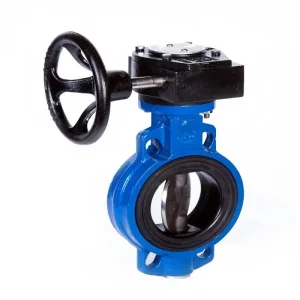
Wafer Butterfly Valve - Worm Gear Rubber Lined
Explore Specification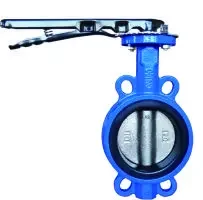
Wafer Butterfly Valve - Resilient Seated Pipeline Control
Explore Specification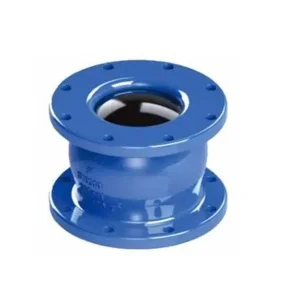
Silent Check Valve - Anti-Water-Hammer Water Supply
Explore Specification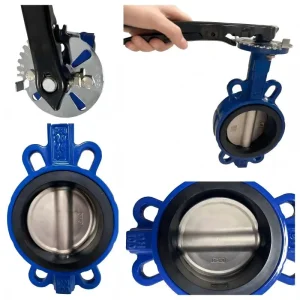
WRAS Approved Butterfly Valve 4020L - Drinking Water
Explore Specification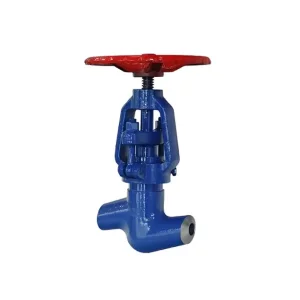
High Temperature High Pressure Power Station Globe Valve
Explore Specification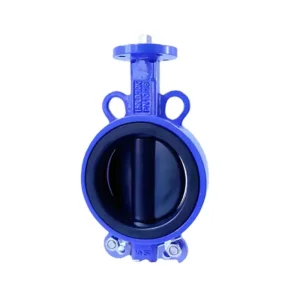
Wholesale Halar Lined Pinless Butterfly Valve - Chemical Service
Explore Specification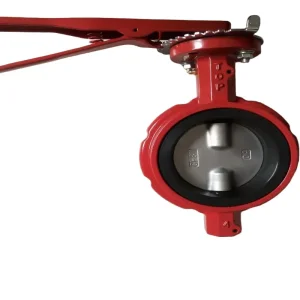
Lugless Semi-Shaft Wafer Butterfly Valve - High Cv Design
Explore Specification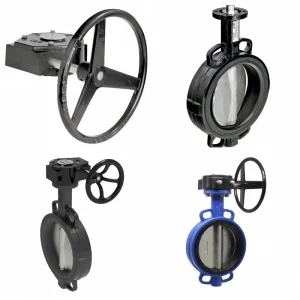
CE Certification WRAS Butterfly Valve 4020G
Explore SpecificationAccelerate Your Critical Pipeline Specifications
Direct access to our senior valve application engineers. Submit your temperature envelope, process media analysis, and flange drilling requirements for custom CAD 3D modeling, sizing calculations, and factory-direct quotation within 24 hours.
