
Engineered Heavy-Duty Industrial Valves Series
From severe wear slurry transport to municipal networks, examine our factory-direct valve assemblies rigorously tested under hydrostatic shell and seat protocols.
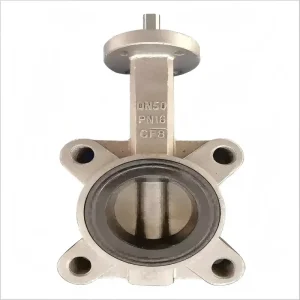
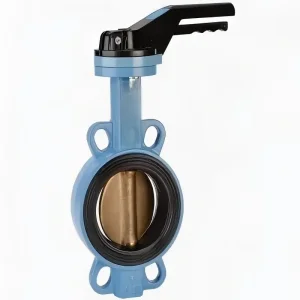
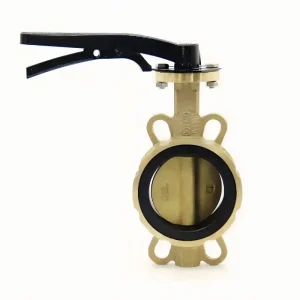
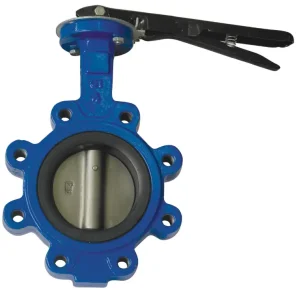
China Factory Ecosystem: The Technical Competitive Edge
Why Tier-1 global procurement leaders partner directly with vertically integrated Chinese manufacturers for severe-service ceramic butterfly valves.
Captive Modern Foundry
Unlike valve assemblers who source cast blanks from third-party suppliers, our in-house facility in Tianjin controls metallurgical chemistry from molten iron to final pour. Every heat batch of Ductile Iron (EN-GJS-400-15/500-7) and WCB Cast Steel undergoes optical emission spectrometry, guaranteeing zero subsurface blowholes, micro-porosity, or mechanical flaws prior to ceramic disc insertion.
Proprietary Rubber Compounding
Inherited from Tianjin Dongfang Rubber Factory (operating continuously since 1987), we compound, vulcanize, and test our resilient seats and elastomeric ceramic-cushioning backers on campus. By precisely calibrating polymer crosslink density in our EPDM, FKM, and NBR formulations, we prevent cold flow and thermal embrittlement, delivering predictable resilience behind rigid structural ceramic rings.
Sub-Micron CNC Diamond Grinding
Sintered structural ceramics like Corundum Alumina ($\mathrm{Al}_2\mathrm{O}_3$ 99.5%) and Zirconia-Toughened Alumina (ZTA) possess Rockwell hardness exceeding HRC 88. Our multi-axis CNC grinding machines use specialized diamond paste tooling to lap ceramic discs and seat faces to within Ra 0.2μm, achieving spherical geometric perfection that guarantees Class VI bubble-tight shut-off under severe differential pressures.
End-to-End European Compliance
Direct manufacturer integration simplifies European Pressure Equipment Directive (CE PED 2014/68/EU Module H) compliance. Full material heat traceability, dimensional cmm verification, non-destructive ultrasonic and dye-penetrant testing, and 100% hydrostatic and pneumatic tests (ISO 5208 / API 598) are performed under one unified ISO 9001, ISO 14001, and ISO 45001 operational regime.
Zero Subcontracting Overhead: Direct Engineering-to-Procurement Collaboration
By bypassing export intermediaries, international engineering houses (EPCs) gain immediate direct access to our materials scientists and mechanical valve designers. Customized Face-to-Face dimensions (EN 558 Series 20, API 609 Table 1), custom ISO 5211 direct-mount automation brackets, and sour-gas NACE MR0175/ISO 15156 metallurgy are finalized quickly with verified CAD and 3D modeling support.
Severe-Service Metallurgy vs. Engineering Ceramics Evolution
Evaluating wear mechanisms, cavitational resistance, and lifecycle economics of ceramic disc butterfly valves against high-nickel alloys and standard Stellite trims.
| Material Designation | Hardness Rating (Mohs / HRC) | Corrosion Resistance (pH 0-14) | Slurry Erosive Wear Index | Thermal Shock Threshold | TCO Lifecycle Expectancy |
|---|---|---|---|---|---|
| 99.5% Alumina ($\mathrm{Al}_2\mathrm{O}_3$) Ceramic Disc | Mohs 9.0 / HRC 85-88 | Exceptional (Immune to all except HF) | 1.0 (Baseline Reference) | Up to 380°C (ΔT = 180°C) | 6x to 10x over Hastelloy C276 |
| Zirconia-Toughened ($\mathrm{ZrO}_2$) Ceramic Disc | Mohs 8.5 / HRC 82-84 | Exceptional across strong acids & alkalis | 0.8 (Superior Impact Resistance) | Up to 450°C (ΔT = 220°C) | 8x to 12x in heavy particle slurries |
| Silicon Carbide ($\mathrm{SiC}$) Engineered Disc | Mohs 9.5 / HRC 90-94 | Impervious to severe oxidizing acids | 0.6 (Ultra-abrasive slurries) | Up to 1000°C (ΔT = 350°C) | 10x to 15x in hyper-abrasive media |
| Duplex Stainless Steel (2205 / 2507) | Mohs 5.5 / HRC 32-36 | Moderate pitting/crevice risk in chlorides | 6.4 (Rapid erosion in high velocity) | Up to 300°C | Routine disc failure within 4-8 months |
| Hastelloy C276 / Titanium Grade 2 | Mohs 5.0 / HRC 28-32 | High chemical resistance, low hardness | 8.2 (Severely prone to scouring wear) | Up to 400°C | Frequent seat replacement required |
Trend 1: Flue Gas Desulfurization (FGD) Scaling
Global environmental mandates in thermal power, waste-to-energy, and smelting facilities require continuous scrubbing of $\mathrm{SO}_x$ compounds. Limestone-gypsum slurries contain high concentrations of abrasive calcium sulfate, unreacted limestone particles, and aggressive chloride ions (up to 60,000 ppm Cl−). Standard metal alloy valves undergo catastrophic pitting and erosive wash-out within months. Ceramic disc butterfly valves offer near-infinite resistance to erosion-corrosion synergy, establishing the new global standard for scrubber absorber isolation.
Trend 2: Lithium Battery Slurry Handling
The rapid ramp-up of gigafactories worldwide for electric vehicle (EV) battery cells demands valve components with zero iron, nickel, or copper contamination. Metallic contact with active cathode pastes ($\mathrm{LiFePO}_4$ or NCM) can lead to micro-short circuits in finished battery cells. High-density alumina and zirconia ceramic discs and liners are chemically inert, electrically insulating, and naturally non-contaminating, making them the preferred flow isolation mechanism in advanced battery manufacturing loops.
Trend 3: Smart Actuation & Predictive Digital Twins
Modern process plants demand digital connectivity. Integrating ISO 5211 top flanges with intelligent digital positioners (HART, Profibus DP, Foundation Fieldbus) enables real-time torque fingerprinting. Because ceramic discs maintain their polished surface roughness throughout their service life without galling or wire-drawing, baseline breakaway torque remains exceptionally constant. Any deviation immediately flags upstream line packing or pipeline blockage before unexpected outages occur.
Severe-Service Operational Field Deployments
Engineered solutions deployed across harsh, abrasive, and corrosive operating environments worldwide.
Mining Tailings & Mineral Beneficiation
In copper, gold, iron ore, and lithium flotation circuits, thickener underflow streams transport jagged mineral slurries with solid densities up to 65% by weight. Standard rubber-lined butterfly valves experience rapid liner peeling, gouging, and disc leading-edge cavitation. Our CE-certified ceramic disc valves employ a hydrodynamic ceramic disc contour that deflects solids away from the sealing perimeter, ensuring positive shut-off over hundreds of thousands of cycles.
Chemical Acid Leaching & Chlor-Alkali
Aggressive acidic media containing hydrochloric acid ($\mathrm{HCl}$), sulfuric acid ($\mathrm{H}_2\mathrm{SO}_4$), and wet chlorine gas rapidly destroy passive oxide films on stainless steels and expensive titanium trims. By utilizing high-purity $\alpha\text{-Al}_2\text{O}_3$ discs backed by PTFE or fluoropolymer seals, our ceramic butterfly valves offer complete chemical inertia across the entire 0–14 pH continuum, preventing costly hazardous fluid releases.
Pneumatic Ash & Pulverized Fuel Conveyance
In thermal generation, cement production, and metallurgical blast furnaces, high-velocity pneumatic conveyance of fly ash, pulverized coal, and silica dust causes high-rate erosive scour at line velocities exceeding 25 m/s. Our ceramic butterfly valves feature full-bore ceramic lining sleeves that eliminate line-of-sight metal impingement, resisting particle scouring and maintaining integrity where knife gate and ball valves wear out prematurely.
Total Cost of Ownership (TCO) Optimization
While procurement managers occasionally hesitate at the initial capital expenditure of ceramic internals compared to basic cast iron or 316SS valves, true lifecycle cost modeling demonstrates an average payback period within 3 to 6 months. By eliminating unbudgeted downtime, heavy scaffolding logistics, line flushing, and hazardous pipe re-entry, plants regularly save tens of thousands of dollars per valve station over a 5-year operating window.
Global EPC & Enterprise Procurement Requirements
Meeting the documentation, metallurgy, and testing criteria demanded by global oil & gas, mining majors, and multinational EPC contractors.
CE PED 2014/68/EU Module H Approval
Full quality assurance certification issued by accredited European Notified Bodies. Covers design, raw material sourcing, casting integrity, precision assembly, and high-pressure shell tests under category III and IV pressure equipment classifications. Validated across pressure classes PN10, PN16, PN25, ASME Class 150, and Class 300 ratings.
EN 10204 Type 3.1 & 3.2 Material Traceability
Every single valve is traceable back to its specific furnace heat. We supply complete Type 3.1 inspection certificates documenting chemical ladle analysis, Charpy V-notch impact testing, tensile strength, elongation, and brinell hardness. Third-party witness inspections (Type 3.2) by agencies such as DNV, Lloyd's Register, BV, or SGS are readily facilitated.
ISO 5208 & API 598 Zero-Leakage Certification
Each valve undergoes rigorous testing prior to crating: hydrostatic shell testing at 1.5x design pressure, high-pressure hydrostatic seat testing at 1.1x design pressure, and low-pressure pneumatic seat testing at 0.6 MPa. With precision-ground ceramic discs and resilient seats, our valves consistently surpass API 598 Rate A and ISO 5208 Rate A (zero visible leakage).
ISO 5211 Direct Automation Top Mount
Designed for effortless automation. Machined top flanges according to ISO 5211 (F05, F07, F10, F12, F14, F16) with standardized double-D or keyed shaft profiles accommodate electric, pneumatic scotch-yoke, and hydraulic actuators without unwieldy custom brackets, reducing assembly hysteresis and ensuring dependable emergency shut-down (ESD) performance.
Complementary Industrial Flow Control Solutions
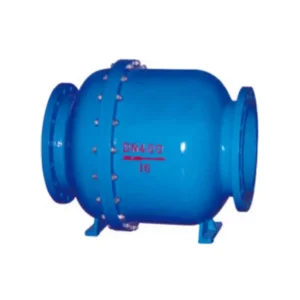
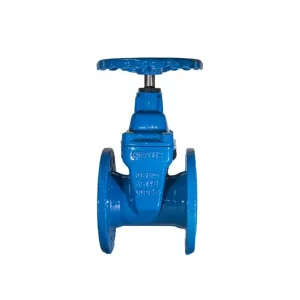
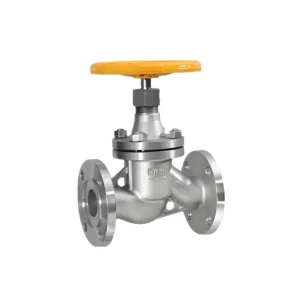
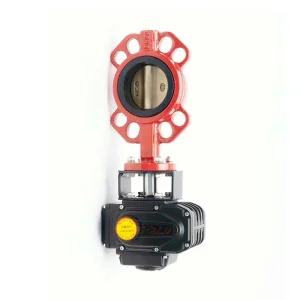
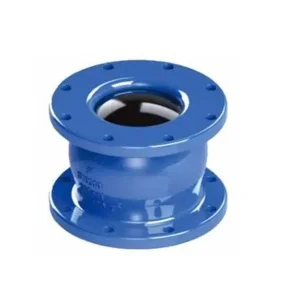
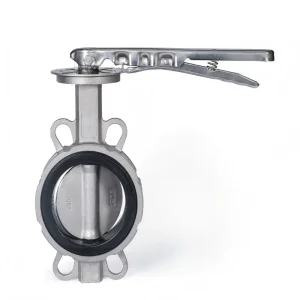
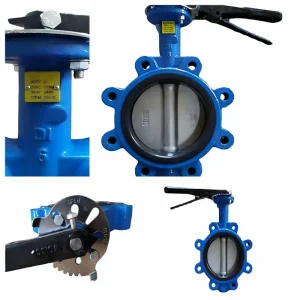
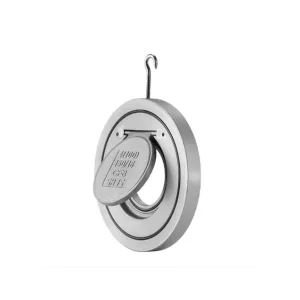
Explore our broader lineup of factory-manufactured check valves, resilient gate valves, and severe-service globe units engineered for heavy process applications.
Frequently Asked Questions for Plant Engineers & Buyers
Direct technical answers addressing installation criteria, mechanical properties, thermal limitations, and quality certifications.
