Direct Marine Inventory Selection
High-Integrity Marine & Industrial Flow Control Portfolio
Engineered to precision standards with internal elastomer molding, casting metallurgy audits, and strict pressure vessel shell-and-seat testing protocols.
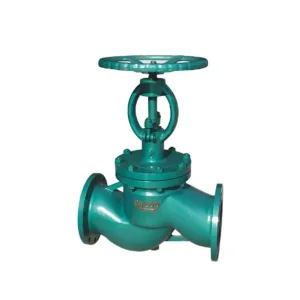
High-Quality High - Temperature - Vacuum Isolation Globe Valve for Vacuum Heat
Request Quotation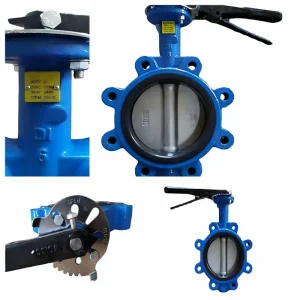
High-Quality WRAS Approved Butterfly Valve Lug Type 4325L Manufacturer
Request Quotation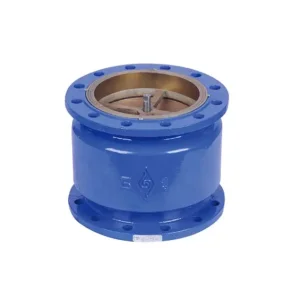
CE Certification Energy-Saving Silencer Check Valve Suppliers
Request Quotation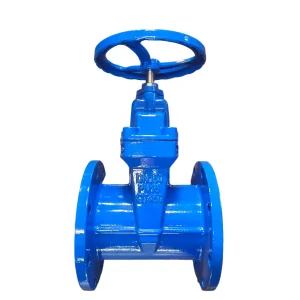
Wholesale High-Quality Gate Valve for Reliable Flow Control
Request Quotation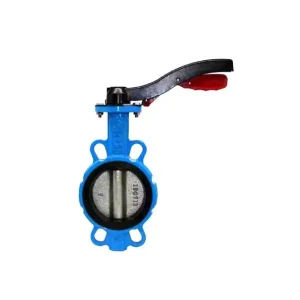
CE Certification Duplex Type Pinless Butterfly Valve Factories
Request Quotation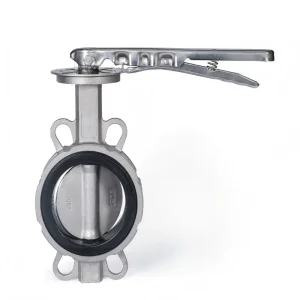
Wholesale Stainless Steel Butterfly Valve - Durable & Corrosion-Resistant
Request Quotation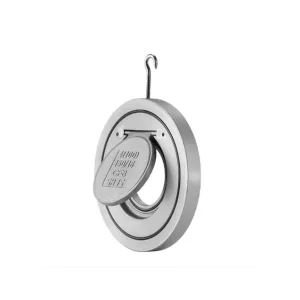
CE Certification Stainless Steel Single Disc Wafer Check Valve
Request Quotation
Industry Macro Solutions
Macro-Industrial Dynamics & Modern Maritime Piping Demands
Balancing structural resilience, space optimization, and galvanic corrosion resistance across international commercial shipping, offshore platforms, and coastal processing hubs.
Global Shipbuilding & Fleet Modernization
Naval architects and marine engineering superintendents operate under stringent international maritime mandates (IMO, SOLAS, MARPOL). Vessel balance, ballast water management systems (BWMS), and scrubber wash-water lines require full-bore, lightweight isolation valves capable of handling hypersaline fluid and variable hydraulic loads with zero internal bypass.
Dead-End Service & Maintenance Safety
Unlike wafer-style valves that rely on downstream flange clamping, centric lug-type valves feature fully threaded bolt eyelets. This configuration provides secure terminal dead-end service, allowing vessel engineers to dismantle downstream pipe segments for pump or meter servicing while retaining full operational line pressure on the upstream side.
Metallurgical Defense Against Cavitation
Seawater environments generate accelerated galvanic degradation and chloride pitting. By utilizing proprietary casting formulations such as Nickel Aluminum Bronze (C95800/AB2), Super Duplex Stainless Steel (2507), and bonded vulcanized synthetic polymers, centric lug valves resist severe cavitation and erosion across high-velocity pipeline transitions.
100%
Bidirectional Bubble-Tight Shut-Off
50+
Export Destination Countries
1987
Polymer Compounding Heritage
23,000 m²
Integrated Manufacturing Base
Whitepaper Technical Matrix
Centric Lug Type Manual Operated Butterfly Valve Engineering Parameters
Detailed breakdown of structural architecture, manual actuation geometry, pressure envelope capabilities, and classification standard alignments.
| Technical Criterion | Standard Specification | Advanced Marine / Custom Variant | Engineering Benefit |
|---|---|---|---|
| Nominal Diameter (DN) | DN50 – DN600 (2" to 24") | Up to DN1200 (48") customized build | Optimized Cv values and minimal fluid pressure drop across main distribution lines. |
| Pressure Envelope | PN10, PN16, Class 150 (ASME B16.5) | JIS 5K, 10K, 16K marine flange drilling | Direct drop-in compatibility across international shipyard retrofits and new builds. |
| Body Metallurgy | Ductile Iron GGG40 / GGG50 (QT450-10) | Cast Steel WCB, Ni-Al Bronze (C95800) | Resistant to mechanical shock, pipeline vibrations, and hydrostatic shockwaves. |
| Disc Profiles | CF8M (SS316), Duplex 2205, SS304 | Aluminum Bronze, Halar Lined, Ceramic Disc | Pinless hydrodynamic contour prevents turbulent wake and minimizes operational torque. |
| Resilient Liner (Seat) | EPDM, NBR (Buna-N), Viton (FKM) | WRAS-approved potable EPDM, PTFE bonded | In-house vulcanized rubber compounding guarantees zero delamination and memory loss. |
| Manual Actuation | 10-Position Lever with Detent Lock | Worm Gearbox with Handwheel & Indicator | Self-locking worm gears eliminate hydrodynamic line feedback and accidental closing. |
| Stem Sealing Design | Primary spherical seat squeeze + O-rings | Blowout-proof stem with secondary packing | Guaranteed zero atmospheric fugitive emissions and protection of gear mechanism. |
Localized Scenarios & Compliance
Mission-Critical Marine Application Environments
Where concentric manual lug butterfly valves deliver fail-safe performance under rigorous marine classification audit protocols.
Ballast Water Treatment (BWTS)
Exposed to active chemical biocides, ozone injections, or electro-chlorination cycles. The combination of high-grade elastomer compounds (NBR/EPDM) and corrosion-proof disc alloys guarantees isolation stability during ballast intake, transfer, and deballasting sequences.
Engine Room Bilge & Auxiliary Lines
Handling oily water mixtures, lubricants, and bilge drain fluids. Lug design allows tight shut-off near hull penetrations, ensuring compliance with SOLAS fire barriers and watertight compartment boundary standards.
Main Engine Cooling Water Circuits
Continuous circulation of raw sea water and treated jacket freshwater requires valves with low pressure drops and thermal stability up to 120°C. Resilient seats dampen mechanical line vibrations generated by propulsion diesels.
FPSO & Offshore Topside Manifolds
Harsh marine atmospheric salt fog induces external oxidation. Lug bodies feature multi-layer fusion-bonded epoxy (FBE) coatings (min 250μm) with 316 stainless steel fasteners, ensuring decades of exposure without atmospheric rust seizure.
Integrated Manufacturing Discipline
Vertical Manufacturing Control: From In-House Foundry to Hydro-Testing
Eliminating third-party supply chain variance through our fully owned foundry, polymer compounding facilities, and precision machining lines.
Independent Metallurgical Foundry
Operating since 1996 (Tianjin Donglian Valve), our casting operations utilize spectral chemical analyzers to verify carbon, silicon, manganese, and nodularity percentages in ductile iron before any mold is poured, ensuring porosity-free pressure casings.
In-House Polymer Formulation (Since 1987)
Unlike competitors who outsource rubber boots, Tianjin Dongfang Rubber compounds elastomer batches in-house. Precise control over cure times, shore hardness (A 70-75), and compression set ensures the valve seat maintains elastic memory across thousands of operational cycles.
100% Shell & Hydrostatic Seat Verification
Every single manual lug valve undergoes ISO 5208 and API 598 pressure compliance tests. Shell hydrostatic testing is maintained at 1.5x nominal pressure, while resilient bi-directional seats are proven at 1.1x working pressure with zero observable leakage.
Technology Roadmap
Future Outlook: Low-Emission Marine Valves & Digital Integration
Anticipating next-generation decarbonization protocols and smart vessel lifecycle tracking.
Digital Gearbox Position Feedback
Transitioning manual worm gearboxes to include ATEX-certified contactless micro-position sensors and RFID traceability tags. This delivers remote digital status feedback to shipboard Integrated Automation Systems (IAS) without requiring heavy motorized actuators.
Advanced Bio-Resilient Elastomers
Developing next-generation vulcanized seat matrices designed to withstand alternative marine fuels, including methanol blends, ammonia fuel cell auxiliary cooling lines, and advanced sulfur capture condensates.
Hydrodynamic CFD Optimized Discs
Iterative finite element analysis (FEA) and computational fluid dynamics (CFD) profiling to reduce flow drag coefficients by up to 18%, directly decreasing vessel auxiliary pumping power demands and overall fuel consumption.
Procurement & Technical FAQ
Frequently Asked Questions on Marine Centric Lug Butterfly Valves
Essential guidance for procurement directors, marine superintendants, and EPC pipeline engineers.
What is the key functional difference between wafer-type and lug-type marine butterfly valves?
While wafer-style butterfly valves are clamped directly between two companion pipe flanges using full-length threaded studs, lug-type butterfly valves feature individual threaded holes (lugs) around the perimeter matching standard flange bolt patterns. This critical engineering detail allows lug valves to be bolted directly to either flange independently, enabling downstream pipe detachment for maintenance while maintaining pressure on the upstream side (dead-end isolation service).
Which disc metallurgy is recommended for raw seawater cooling and ballast applications?
For raw seawater immersion, Aluminum Bronze (ASTM B148 C95800 / EN 1982 CC333G) or Super Duplex Stainless Steel (2507 / 1.4410) is highly recommended. Standard Austenitic Stainless Steel (CF8M / SS316) can suffer localized crevice corrosion and pitting in stagnant, warm chlorinated seawater environments. Aluminum Bronze naturally produces an adherent protective cuprous oxide film that resists marine biofouling and erosive flows.
How does your factory ensure the long-term seating integrity of rubber liners?
Sealing failure in butterfly valves is almost exclusively driven by poor rubber vulcanization or loss of elasticity. Because our corporate parent owns Tianjin Dongfang Rubber Factory (established in 1987), we compound, formulate, and cure our own EPDM, NBR, and Viton liners in-house. Our seats are molded with a rigid phenolic or aluminum backup ring or vulcanized directly to the body, eliminating seat distortion, tearing, or displacement under high flow velocities.
What manual operator should be selected for large diameter marine valves?
As a standard rule of engineering, DN50 to DN150 (2" to 6") valves operating under moderate pressure can be efficiently actuated via a 10-position notched throttle lever with a spring detent lock. For sizes DN200 (8") and above, or high-differential lines, an enclosed worm gear operator equipped with a cast handwheel is mandatory. Gearboxes provide high mechanical advantage, prevent hazardous hydraulic water hammer caused by rapid closure, and include built-in position indicators.
Can your lug butterfly valves be drilled to JIS 5K/10K alongside ASME and EN standards?
Yes. Our CNC machining centers can accurately machine the threaded lug holes to conform with JIS B2220 (5K, 10K, 16K) for Asian shipyard standards, EN 1092-1 (PN10, PN16) for European naval specifications, and ASME B16.5 / B16.47 Class 150 for American marine and offshore infrastructure. Flange drill patterns must be verified during initial PO engineering reviews.
Complementary Pipeline Valves
Extended Industrial & Marine Valve Inventory
Explore specialized industrial models available for project integration, OEM supply, and wholesale procurement.
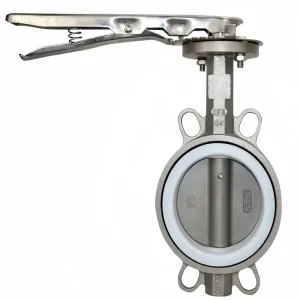
CE Certification PTFE Lined Stainless Steel Butterfly Valve
Request Quotation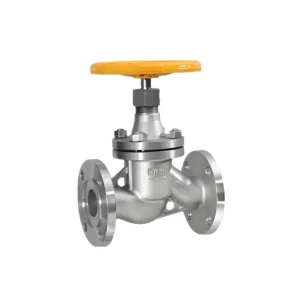
Wholesale Straight-Through Ammonia Globe Valve Manufacturers
Request Quotation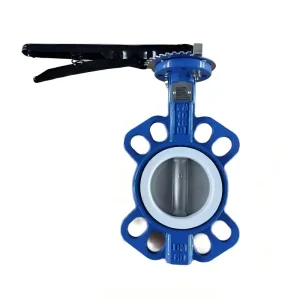
Wholesale PTFE Lined Cast Body Butterfly Valve Suppliers
Request Quotation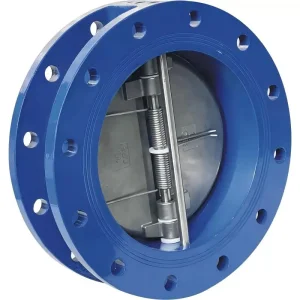
CE Certification Dual Plate Check Valve, Reliable Backflow Prevention Device
Request Quotation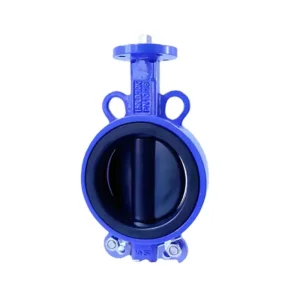
Wholesale Halar Lined Pinless Butterfly Valve Supplier, Manufacturer
Request Quotation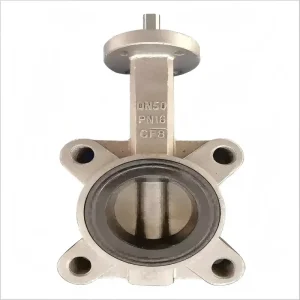
Wholesale Semi Lug Butterfly Valve - Durable & Versatile Flow Control
Request Quotation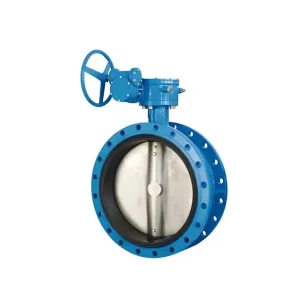
Wholesale Low - Torque Flange Type Butterfly Valve Supplier, Factory
Request Quotation