
High-Performance Industrial Valve Portfolio
Explore our export-grade backflow preventers, high-pressure isolation assemblies, and precision lined units designed for industrial HVAC, municipal waterworks, and process engineering.
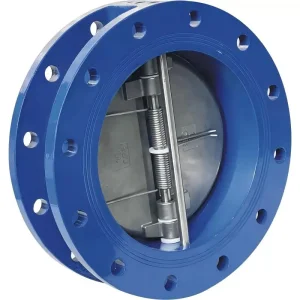
CE Certification Dual Plate Check Valve, Reliable Backflow Prevention Device Suppliers
View Specifications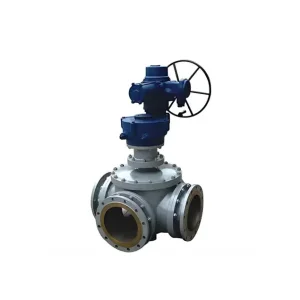
CE Certification Quick - Opening Three - Way Flange Ball Valve for Emergency Fluid Diversion
View Specifications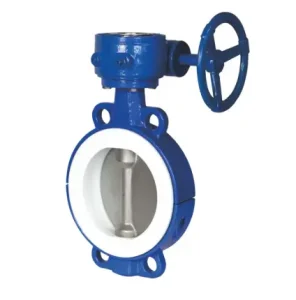
Wholesale PTFE Lined Butterfly Valve - Durable & Corrosion Resistant Manufacturers
View Specifications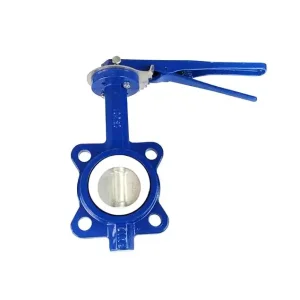
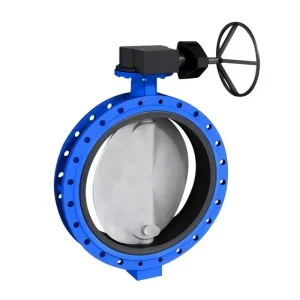
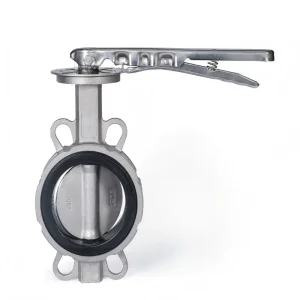
Wholesale Stainless Steel Butterfly Valve - Durable & Corrosion-Resistant Suppliers
View Specifications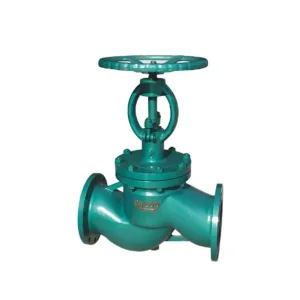
High-Quality High-Temperature-Vacuum Isolation Globe Valve for Vacuum Heat Suppliers
View Specifications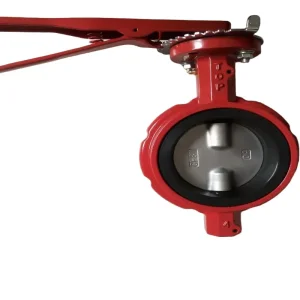
Wholesale Lugless Semi-Shaft Wafer Butterfly Valve - Durable & Reliable Manufacturer
View SpecificationsCast Iron Ball Valve Metallurgy & Structural Engineering
A rigorous examination of gray cast iron (GG25 / ASTM A126 Class B) and ductile nodular iron (GGG40 / GGG50 / ASTM A536) ball valves for critical flow isolation, pressure containment, and extended fatigue life.
Ductile vs. Gray Cast Iron Chemistry
While gray cast iron offers exceptional damping capacity and cost efficiency in steady-state low-pressure lines, ductile iron utilizes spheroidal graphite nodules induced via magnesium inoculation. This metallurgical transformation delivers 12-18% elongation and tensile strength surpassing 400 MPa, safeguarding municipal and HVAC installations against destructive water hammer shocks and seismic pipeline deflections.
Zero-Leakage Seating Mechanics
Our ball valve line features micro-finished solid stainless steel (CF8 / CF8M) or chrome-plated ductile balls paired with virgin PTFE, RPTFE (15% glass filled), or EPDM elastomer seats. Every seat profile is machined with pre-compressed sealing envelopes to achieve bi-directional ISO 5208 Rate A and API 598 bubble-tight shut-off, preventing downstream fluid migration under full differential operating pressure.
Blowout-Proof Stem & ISO 5211 Pad
Engineered with internally loaded blowout-proof valve stems incorporating Belleville spring washers and self-adjusting PTFE V-ring chevron packing. The standardized ISO 5211 direct-mount top flange eliminates bracket alignment tolerances, allowing direct integration of multi-turn electric actuators, double-acting pneumatic pistons, or manual gearboxes without field dismantling.
| Parameter / Dimension | Gray Cast Iron (ASTM A126 Class B) | Ductile Nodular Iron (ASTM A536 65-45-12) | Compliance & Governing Standard |
|---|---|---|---|
| Nominal Diameter (DN) | DN15 to DN300 (1/2" to 12") | DN15 to DN600 (1/2" to 24") | EN 558 Series 1 / ASME B16.10 |
| Pressure Rating | Class 125, PN10, PN16 | Class 150, Class 300, PN16, PN25, PN40 | ASME B16.42 / EN 1092-2 |
| Tensile Strength (Min.) | 210 MPa (31,000 psi) | 448 MPa (65,000 psi) | ASTM A536 / ISO 1083 |
| Seat Leakage Class | ANSI / FCI 70-2 Class VI / ISO 5208 Rate A | ANSI / FCI 70-2 Class VI / ISO 5208 Rate A | API 598 / EN 12266-1 |
| Body Coating System | High-build epoxy coating (250 µm) | Fusion Bonded Epoxy (FBE 300 µm) WRAS-compliant | DIN 30677-2 / EN ISO 12944 |
| Temperature Range | -10°C to +120°C (PTFE seat limit) | -20°C to +180°C (RPTFE / High-temp elastomer) | BS EN 1983 / ASME B16.34 |
China Factory Supply Chain Advantages: Tianjin Top Valve
Unlike export traders who outsource casting and elastomer sourcing to disparate subcontractors, our integrated cluster located in Wuxia Industrial Park controls metallurgy, elastomer compounding, CNC finishing, and acoustic emission testing under one verifiable roof.
Proprietary Metallurgy & In-House Foundry
Founded on the operational heritage of Tianjin Donglian Valve Factory (est. 1996), our dedicated casting division conducts direct optical emission spectrometry on melt charges prior to mold pouring. We verify iron spheroidization ratios (>85%), nodule count, and silicon-to-carbon balancing, eliminating internal casting porosity and shrinkage defects before rough machining begins.
Tianjin Dongfang Rubber Plant (Since 1987)
Elastomer degradation remains the primary failure mode of rotary valves. Because our group operates Tianjin Dongfang Rubber Factory, we formulate and vulcanize custom EPDM, NBR, and FKM compounds with tightly managed compression set resistance, Shore A durometer control, and full immersion test qualification. This guarantees flawless stem sealing and seat resilience across thermal cycles.
Automated CNC Finishing & Maritime Proximity
Our 12,000 m² built workshop utilizes horizontal CNC machining centers to maintain spherical roundness of valve balls within ±0.01 mm and flange face concentricity matching ASME B16.5 and EN 1092-2 tolerances. Located minutes from the deep-water facilities of Tianjin Port (Xingang), we provide rapid container consolidation, direct rail access, and ocean freight logistics to over 50 destinations worldwide.
Localized Support, Compliance & Global Procurement Criteria
International EPC engineering contractors, municipal authorities, and regional valve master distributors face stringent compliance mandates when selecting wholesale Chinese valve manufacturers. We mitigate procurement risk across every contractual touchpoint.
EN 10204 3.1 Material Traceability
Every delivered valve batch is accompanied by genuine Mill Test Certificates (MTR) meeting EN 10204 Type 3.1. We log optical chemical composition (C, Si, Mn, P, S, Mg), Brinell hardness testing, and charpy impact energy figures. Casting heat numbers are permanently stamped onto valve bodies and bonnet flanges for transparent lifecycle traceability.
WRAS, CE-PED & ISO Certification
Our management system is verified under ISO 9001:2015, ISO 14001:2015, and ISO 45001:2018. Selected drinking water valves comply with the UK Water Regulations Advisory Scheme (WRAS) for potable water safety. Fluid systems carrying pressurized steam or flammable gases are fully certified according to European Pressure Equipment Directive (PED 2014/68/EU Module H).
Digital Factory Audits & Expediting
We break geographic boundaries by offering real-time interactive video shop inspections. Overseas procurement teams can witness shell hydrostatic pressure holding (1.5x PN), low-pressure air seat tests (0.6 bar), and electrostatic dry-film coating gauge readings live with our quality assurance engineers before final wooden crate palletizing.
Mission-Critical Application Scenarios for Cast Iron Ball Valves
Engineered to replace cumbersome gate valves and high-torque plug valves, cast iron and ductile iron ball valves excel across municipal, commercial, and industrial pipeline infrastructures.
Municipal Water Treatment & Potable Distribution
Equipped with non-toxic WRAS-certified epoxy coatings and polished stainless steel trim, our flanged ductile iron ball valves eliminate chemical corrosion and lime-scale accumulation in pumping stations, raw water filtration beds, and booster plants. Full-bore configurations deliver zero head loss, dramatically cutting annual pump station electrical expenditure.
District HVAC Chilled & Condenser Water Networks
Large-scale data center cooling networks and commercial towers demand leak-free seasonal isolation. Our cast iron ball valves deliver quarter-turn speed, preventing the stem packing leaks notorious in legacy gate valves. Their compact face-to-face dimensions save valuable spatial footprint in cramped chiller mechanical rooms.
Sludge De-watering & Industrial Wastewater Treatment
For municipal wastewater digesters and industrial effluent transfer containing suspended solids, we supply high-chromium cast iron and PTFE-lined ball valves. Self-cleaning wiper seats displace particulate matter during closing sweeps, preventing seat gouging and preserving cavity seal integrity over thousands of operational cycles.
Emerging Technology Trends Reshaping Industrial Valve Manufacturing
The global industrial valve sector is undergoing rapid transformation driven by carbon mitigation mandates, fugitive emission restrictions, and smart grid automation.
IoT Integration & Real-Time Valve Health Monitoring
Modern flow loops are transitioning toward predictive asset maintenance. Tianjin Top Valve manufactures actuation-ready cast iron ball valves compatible with smart positioners and acoustic vibration sensors. Operators monitor real-time break breakaway torque curves, thermal differentials, and cycle counters over Modbus or wireless LoRaWAN, preventing sudden pipeline outages.
Fugitive Emission Suppression (ISO 15848-1)
As international environmental legislation tightens against volatile organic chemical (VOC) leaks and methane micro-releases, valve stem sealing technologies have evolved. Our live-loaded graphite and low-friction polymer packing designs are tested to meet ISO 15848-1 Class AH/BH standards, ensuring zero atmospheric leakage across extreme pressure excursions.
Sustainable Electric Arc Furnace (EAF) Foundry Casting
Decarbonization starts at the molten metal stage. By shifting cupola foundry operations to induction electric arc furnaces powered by cleaner energy grids, our casting lines minimize slag production and reduce Scope 1 emissions by over 28%, empowering international contractors to satisfy corporate green building and ESG procurement quotas.
Specialized Butterfly, Check & Marine Valve Assemblies
Review additional engineered flow-control models manufactured directly at our Dongli District facility, ready for bulk containerization and project-specific certification.
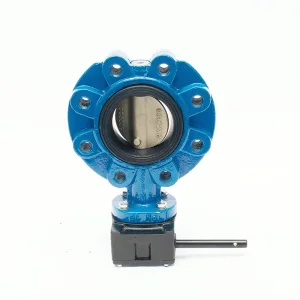
High-Quality Marine Centric Lug type manual operated butterfly valve Manufacturers, Factory
View Specifications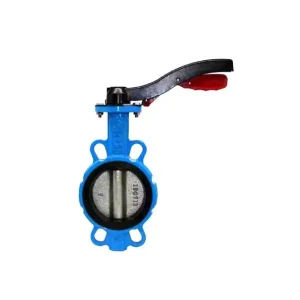
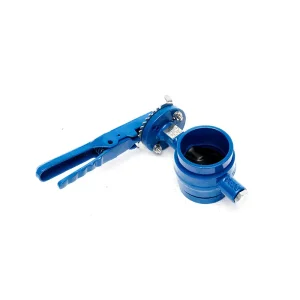
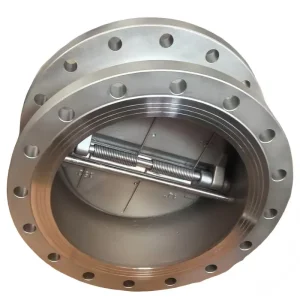
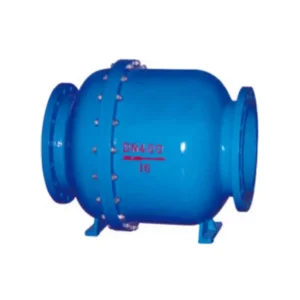
CE Certification Compact Low-Pressure Drop Wafer Lift Check Valve Supplier, Factories
View Specifications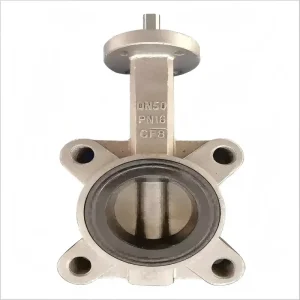
Wholesale Semi Lug Butterfly Valve - Durable Versatile Flow Control Manufacturers
View Specifications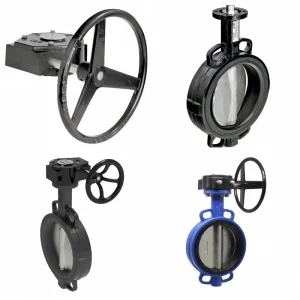
CE Certification WRAS Approved High-Performance Butterfly Valve 4020G Manufacturer
View Specifications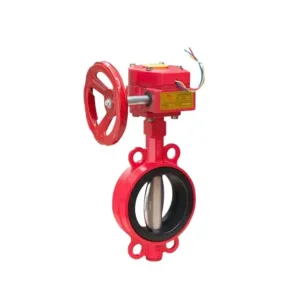
Frequently Asked Questions by Valve Procurement Teams
Direct answers concerning pressure envelopes, casting metallurgy, inspection certifications, custom trim selections, and global export packaging protocols.
What are the key metallurgical differences between Class 125 cast iron and Class 150 ductile iron ball valves?
Class 125 valves are cast from gray iron (ASTM A126 Class B / EN-GJL-250), featuring flake graphite microstructures. While highly economical with superior vibration dampening properties, gray iron possesses low impact resistance and minimal tensile elongation (<1%).
In contrast, Class 150 valves are manufactured from ductile nodular iron (ASTM A536 65-45-12 / EN-GJS-400-15 or EN-GJS-500-7). The nodular graphite structure yields high tensile strength (450+ MPa) and 12-18% elongation, making ductile iron resilient against mechanical hydraulic shocks, water hammer, and freezing expansion in municipal water lines.
How does your factory ensure bubble-tight zero leakage on cast iron ball valves?
Every single valve undergoes pressure testing in strict adherence to ISO 5208 Rate A and API 598. Our dual-step testing protocol consists of:
1. Hydrostatic Shell Testing at 1.5 times the nominal cold working pressure rating (e.g., 24 bar for PN16 / 375 psi for Class 150) to verify casting integrity and stem packing containment.
2. Low-Pressure Pneumatic Seat Leak Testing at 6 bar (87 psi) using submerged bubble or automated digital mass-flow sensors. Because our group produces its own seats at Tianjin Dongfang Rubber Factory, we maintain strict control over PTFE and rubber resilience, ensuring zero measurable leakage.
Can you supply custom flange drillings matching international pipeline standards?
Yes. Our multi-axis CNC drilling centers machine valve flanges to any requested global dimensional standard, including EN 1092-2 (PN10, PN16, PN25), ASME B16.1 Class 125, ASME B16.42 Class 150, BS 10 Table D/E, and JIS B2239 10K/16K. Face-to-face dimensions comply with EN 558 Series 1 (DIN 3202 F1/F4) or ASME B16.10 long and short patterns.
What internal seat, ball, and trim configurations are recommended for corrosive or abrasive fluids?
For standard potable or chilled HVAC water, chrome-plated ductile iron balls with virgin PTFE seats provide cost-effective durability. For mild chemicals, wastewater sludge, or marine environments, we recommend solid stainless steel CF8 (304) or CF8M (316) balls paired with RPTFE (15% glass-filled) or PTFE-lined chambers.
In highly abrasive slurry services, we furnish specialized ceramic disc trims or aluminum bronze disc components engineered to resist scouring and cavity deposition.
What documentation and inspection certificates are included with wholesale OEM orders?
Every commercial shipment includes a comprehensive quality dossier: EN 10204 Type 3.1 Mill Inspection Certificates (incorporating spectroscopic chemistry and tensile/hardness figures), hydrostatic pressure test certifications signed by certified QA inspectors, coating thickness (DFT) verification logs, and CE Declaration of Conformity. Third-party inspections via SGS, BV, or TÜV are welcomed and facilitated on our factory campus.
What are your production lead times and maritime export packaging standards?
Standard production lead time ranges from 25 to 35 calendar days for full 20ft or 40ft high-cube container consignments. For urgent project demands, we maintain casting body blanks in stock for fast-track machining within 10 to 14 days.
All finished valves are capped with polyethylene end protectors, individually sealed in moisture-barrier bubble bags, and secured within fumigated ISPM-15 compliant solid plywood crates equipped with desiccant packs to endure long ocean voyages.
