High-Integrity Isolation & Flow Control Valves
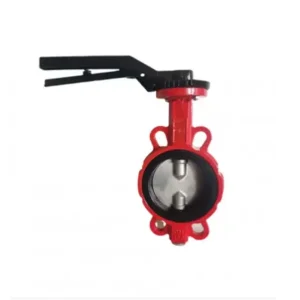
Featured certified pipeline products manufactured with proprietary elastomer vulcanisation and precision CNC dimensional control.
The Strategic Criticality of WRAS Certification in Potable Infrastructure
In modern water distribution networks, material safety and structural reliability are inseparable. Water Regulations Advisory Scheme (WRAS) compliance represents the highest benchmark for non-contamination and zero micro-leaching in drinking water service.
Municipal water authorities across the United Kingdom, the European Union, the Middle East, and APAC regions are enforcing stringent hygiene regulations for potable water distribution systems. As urban populations expand and aged distribution mains undergo modern rehabilitation, the global pipeline engineering sector demands valves that eliminate chemical leaching, water discolouration, and microbial colonization. WRAS (Water Regulations Advisory Scheme) approved butterfly valves have emerged as the paramount flow-isolation mechanism for municipal networks, HVAC chilled/heating loops, desalination off-take manifolds, and commercial building services.
Achieving true WRAS certification requires exhaustive compliance with BS 6920 standards, certifying that every non-metallic component in direct contact with potable water—most notably the elastomeric seat liner (EPDM/NBR) and secondary spindle O-rings—does not impart odor, flavor, toxicity, or support aquatic microbial growth. Concurrently, metallic valve bodies cast from Ductile Iron (EN-GJS-450-10 / EN-GJS-500-7) must feature thermally bonded, non-porous epoxy coatings certified under WRAS guidelines, ensuring zero heavy metal leaching over decades of immersion.
Global Potable Water Mandates
International utilities mandate independent hygiene certification. WRAS approval ensures compliance with the Water Supply (Water Fittings) Regulations, preventing backflow contamination, chemical extraction, and microbiological proliferation across distribution mains.
Elastomer Vulcanisation Control
The operational lifespan of a butterfly valve is governed by elastomer integrity. Inferior generic rubber components degrade under chlorine disinfection. High-grade WRAS EPDM seats maintain elastic memory, preventing compression set and valve disc binding.
Whole-Life Cycle Economy
Valve lifecycle costing (LCC) prioritises long-term isolation reliability over procurement price. Resilient-seated WRAS butterfly valves deliver bi-directional bubble-tight shut-off (Leakage Rate A per ISO 5208) with reduced operating torque and lower actuation sizing requirements.
Why Integrated Chinese Manufacturing Redefines Valve Reliability & Value
Eliminating third-party subcontracting through full-stack ownership: from metallurgy and rubber chemistry to precision machining.
A persistent vulnerability in generic valve sourcing is the fragmented supply chain: third-party foundries pour rough castings, separate vendors supply commercial-grade rubber seats, and trading brokers assemble components without material traceability. Tianjin Top Automation Equipment Co., Ltd. (Tianjin Top Valve) breaks this paradigm by unifying the entire manufacturing process within our modern 23,000 m² industrial facility in Tianjin, China.
Anchored by the technical heritage of Tianjin Donglian Valve Factory (established 1996) and Tianjin Dongfang Rubber Factory (operating since 1987), our manufacturing campus integrates casting, specialized rubber compounding, robotic CNC machining, electrostatic epoxy coating, and rigorous physical-chemical testing laboratories. This complete vertical integration delivers decisive engineering and commercial advantages to global EPC contractors and distributors.
Formulation-Level Rubber Chemistry
Because we compound our own WRAS-grade EPDM and NBR liners internally, we control vulcanisation kinetics, polymer purity, tensile strength (≥14 MPa), and elongation at break. This prevents blistering, premature hardening, and seat tear-out under high-velocity flow.
In-House Foundry & Spectrometry
Every heat of Ductile Iron (QT450-10 / GGG40 / ASTM A536 65-45-12) undergoes optical emission spectrometry before pouring. We ensure nodularity exceeds 85%, eliminating porosity, cold shuts, and core shifting to ensure valve shell integrity under water hammer surges.
Automated CNC & Spherical Disc Polishing
Our multi-axis CNC machining centers finish disc sealing edges to mirror finishes (Ra ≤ 0.4 μm) and drill flange holes to exact EN 1092-2 and ASME B16.1 specifications. Symmetrical disc profiles minimize drag coefficients and reduce dynamic operating torque.
Electrostatic Fusion Bonded Epoxy
Valve bodies are blast cleaned to Sa 2.5 standard before electrostatic fluidised bed application of WRAS-approved non-toxic epoxy powder (min. 250 μm DFT). The coating provides continuous dielectric barrier protection against aggressive soil and potable chemicals.
100% Hydrostatic Pressure Acceptance
Zero sampling tolerance: 100% of manufactured valves are hydrostatically shell tested at 1.5× nominal pressure (PN16/PN25) and seat leak tested at 1.1× PN per EN 12266-1 / ISO 5208 Rate A. Calibration certificates and test charts are archived per serial number.
Direct Coastal Logistics Advantage
Located in Tianjin's industrial corridor adjacent to Tianjin Xingang Port, our direct factory-to-berth logistics eliminate inland transshipment delays. Bulk pipeline shipments are packed in rust-inhibitive VCI materials and reinforced fumigated timber crates.
WRAS Butterfly Valve Technical Matrix & Construction Criteria
Comprehensive data guide for pipeline designers, mechanical specifiers, and procurement officers.
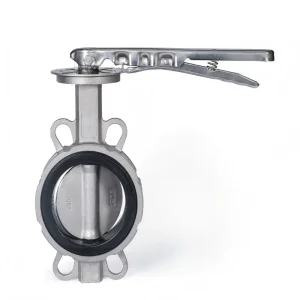
| Parameter / Component | Wafer Pattern (e.g., Model 4020G / 4020L) | Lugged Pattern (e.g., Model 4325G / 4325L) | Double Flanged Design |
|---|---|---|---|
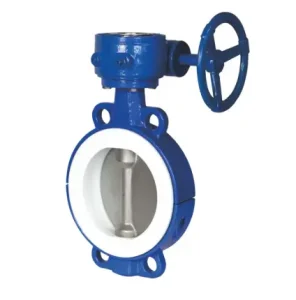
| Nominal Diameter Range | DN40 – DN1200 (1.5" to 48") | DN40 – DN1200 (1.5" to 48") | DN100 – DN2400 (4" to 96") |
| Nominal Pressure Ratings | PN10, PN16, PN25 (Class 125 / 150) | PN10, PN16, PN25 (Bi-directional full dead-end) | PN10, PN16, PN25 |
| Body Materials | Ductile Iron EN-GJS-450-10 / 500-7; Cast Iron | Ductile Iron EN-GJS-450-10; ASTM A536 | Ductile Iron EN-GJS-500-7; Carbon Steel WCB |
| Disc Profiles & Alloys | SS304 (CF8), SS316 (CF8M), Al-Bronze C95800 | SS316 (CF8M), Ductile Iron Nylon-coated, Al-Bronze | Ductile Iron Epoxy/SS316 edge, Duplex 2205 |
| Seat Lining Formulations | WRAS-approved EPDM (-20°C to +110°C), High-temp EPDM | WRAS-approved EPDM / High Purity Nitrile (NBR) | Bonded / Retained WRAS EPDM Profile |
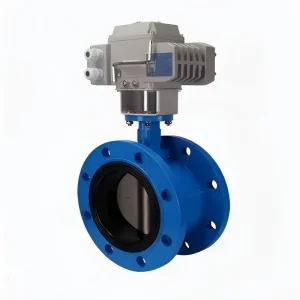
| Flange Compatibility | Universal: EN 1092-2 PN10/16, ASME B16.1, BS 4504 | Drilled & Tapped: EN 1092-2, ANSI Class 150, AS 2129 | EN 1092-2 Type 21, ISO 7005-2, AWWA C207 |
| Sealing Standards | EN 12266-1 Rate A / ISO 5208 Zero Leakage | EN 12266-1 Rate A (Independent Downstream Dead-end) | ISO 5208 Rate A / BS EN 1074-1/-2 |
| Actuator Mounting Pad | ISO 5211 Standard Top Flange with direct mount | ISO 5211 Direct mount for gear/electric/pneumatic | ISO 5211 Standard interface with keyway shaft |
Critical Valve Engineering Note: Lugged Dead-End Service
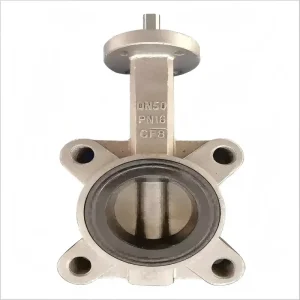
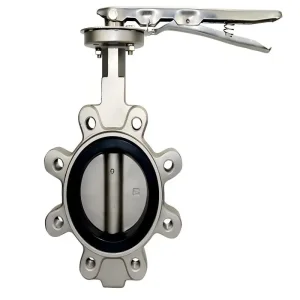
Our WRAS-certified lugged butterfly valves (Model 4325L / 4325G) feature fully threaded lug bodies engineered to maintain full operational working pressure rating (PN16) in downstream dead-end service without needing a companion blind flange. This allows pipeline isolation and downstream pump or equipment removal while the upstream manifold remains under full operating pressure.
Mission-Critical Applications Across Global Water & Process Infrastructure
Real-world integration scenarios where certified safety, low head-loss, and zero-leakage isolation are non-negotiable.
Municipal Potable Water Networks
Installed across urban transmission pipelines, booster pumping stations, and district metered areas (DMAs). The WRAS-certified non-toxic EPDM liner prevents water deterioration and chlorine decay while providing bubble-tight shut-off during routine maintenance.
Desalination & Reverse Osmosis Plants
In seawater intake and permeation headers, our Nickel Aluminum Bronze (C95800 / AB2) disc valves with WRAS liners withstand galvanic pitting and high-chloride conditions, ensuring continuous supply in Middle Eastern and Mediterranean desalination projects.
Commercial HVAC & District Cooling
Used in high-rise central chiller plants, fan coil units, and thermal storage loops. Low opening torques and streamlined contoured discs reduce pressure drops, optimizing pump kilowatt consumption across continuous 24/7 HVAC operations.
Wastewater & Filtration Clarifiers
In secondary effluent loops and membrane bioreactors, resilient-seated valves with abrasion-resistant rubber profiles isolate filter beds and backwash pipelines without jamming from suspended solids or biofilm buildup.
Marine & Offshore Utility Systems
Manufactured to withstand severe vibration, salt spray, and roll-pitch movement. Certified butterfly valves manage ballast distribution, freshwater generation, and sanitary piping aboard commercial cargo vessels and offshore substations.
Fire Protection Standpipe Systems
Supervised isolation valves controlling sprinkler loops and hydrant lines. Grooved and wafer units ensure bi-directional seal integrity, high Cv coefficients, and seamless integration with supervisory microswitches.
Emerging Trends Reshaping the Global Butterfly Valve Sector
From smart IoT predictive diagnostics to advanced polymer coatings and decarbonized foundry operations.
Digital Smart Valves & SCADA Actuation
Modern distribution schemes require connected flow components. We supply WRAS butterfly valves with integrated ISO 5211 direct-mount pads paired with Modbus/Profibus electric actuators, providing position feedback, seat torque monitoring, and leak alerting.
Micro-Pollutant & PFAS-Free Compounding
Upcoming UK and EU water purity regulations target per- and polyfluoroalkyl substances (PFAS). Our chemical laboratory is advancing pure peroxide-cured EPDM matrices that eliminate synthetic plasticizers while extending resistance to chloramine and ozone oxidation.
Green Foundry Decarbonisation
International tenders increasingly weigh embodied carbon footprints. By transitioning to medium-frequency electric induction furnaces and sand reclamation systems, our Tianjin foundry cuts casting emissions while maintaining high nodular iron mechanical strength.
Frequently Asked Questions: WRAS Butterfly Valves
In-depth technical answers addressing material selection, testing regimes, and procurement criteria for international engineers.
What specific tests must an EPDM butterfly valve pass to earn WRAS approval?
1. Taste & Odour: Testing for discernible flavor or odor imparted to potable water after prolonged stagnation periods.
2. Appearance of Water: Assessment of color leaching or turbidity changes caused by the elastomeric compound.
3. Growth of Aquatic Microorganisms: Quantitative measurement of dissolved oxygen absorption over a 7-week cycle to confirm the rubber does not support bacterial colonization.
4. Cytotoxicity: Rigorous cell-culture testing to verify that no toxic chemicals extract into water.
5. Extraction of Metals: Ensuring no toxic elemental leaches occur. Every compound formula used in our WRAS models (such as 4020G, 4020L, 4325G, 4325L) holds formal test documentation verifying BS 6920 compliance.
What is the operational difference between Wafer and Lug type butterfly valves in potable pipelines?
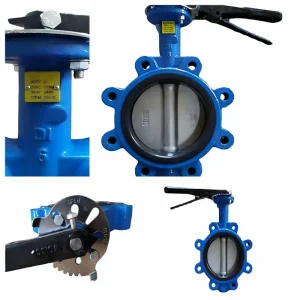
Lug Type Butterfly Valves feature precision-threaded lugs spanning the entire body circumference, matching companion flange drillings (EN 1092-2 PN10/PN16 or ASME B16.1). This design allows either side of the pipeline to be decoupled while maintaining complete pressure containment on the opposite side (full dead-end service). This capability makes lugged valves essential for pump discharge manifolds, water treatment bypass lines, and meter station terminations.
Why is in-house rubber seat manufacturing critical for valve quality and lifespan?
Our group operates Tianjin Dongfang Rubber Factory (since 1987) on the same campus. We formulate proprietary, unadulterated EPDM elastomer mixes using high-molecular-weight raw polymers and precision peroxide vulcanisation. This enables total control over hardness (Shore A 70 ± 5), tensile strength (≥ 14 MPa), and compression set (≤ 18% after 22 hours at 100°C), guaranteeing predictable operating torque and bubble-tight shut-off across millions of cycles.
How does Tianjin Top Valve ensure zero-defect quality across large export orders?
• Foundry Verification: Spectral chemical analysis and micro-structural nodularity evaluations per heat batch.
• Dimensional Inspection: Coordinate Measuring Machines (CMM) and plug gauges verify disc spheres, spindle tolerances, and flange faces.
• Coating Integrity: High-voltage holiday spark testing (zero pinholes) and dry film thickness (DFT) checks on epoxy coatings.
• 100% Pressure Testing: Every single valve undergoes shell hydrostatic testing (1.5× PN) and seat leak testing (1.1× PN bi-directionally) per EN 12266-1 Rate A before packaging.
• Full Traceability: Heat lot numbers, vulcanisation batches, and assembly serials are etched directly on the 304 stainless steel nameplate.
Can valves be actuated and customized to project flange standards?
Body castings and drilling templates can be configured to BS 4504, EN 1092-2 (PN6/PN10/PN16/PN25), ASME B16.1 Class 125, ASME B16.5 Class 150, JIS B2239 10K/16K, and AS 2129 Table D/E standards.
Precision Valves for Municipal, HVAC & Marine Operations
Explore our certified flow products engineered for demanding operating conditions.