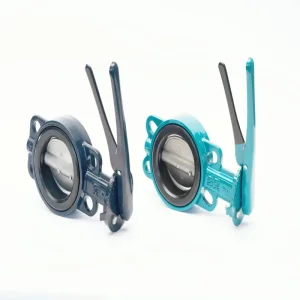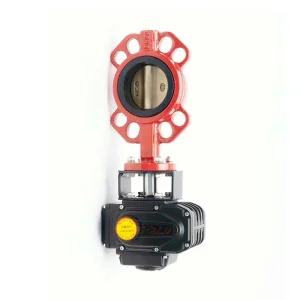
Product Matrix - Tier 1
Primary Flow Control & Actuation Series
Engineered for potable water distribution, industrial effluent control, reverse osmosis isolation, and fire mains protection.
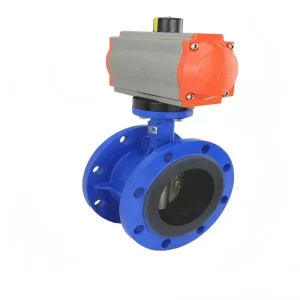
High-Quality Pneumatic Butterfly Valve - Reliable Flow Control Solution- Lug butterfly valve, flanged butterfly valve Suppliers, Manufacturers
View Product Specs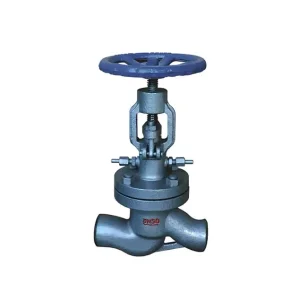
High-Quality Water Seal Globe Valve with Quick - Closing Feature Manufacturers, Manufacturer
View Product Specs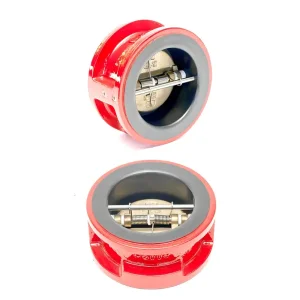
Wholesale Full Rubber Coated Check Valve Supplier, Factories
View Product Specs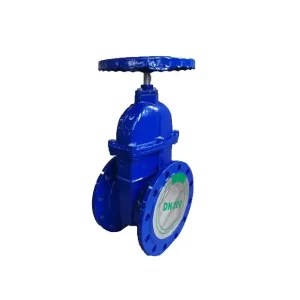
CE Certification German Standard Elastic Seat Gate Valve Manufacturers, Manufacturer
View Product Specs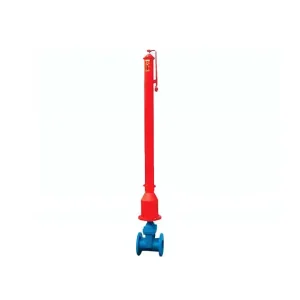
High-Quality Buried Elastic Seat Gate Valve for Reliable Flow Control Supplier, Factories
View Product Specs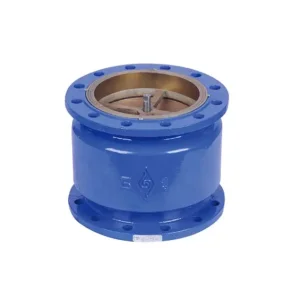
CE Certification Energy-Saving Silencer Check Valve Suppliers, Supplier
View Product Specs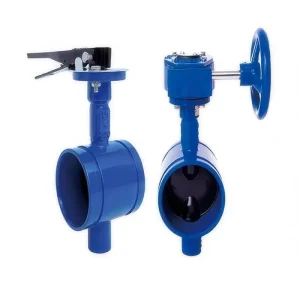
High-Quality Grooved End Butterfly Valve - Durable & Reliable Flow Control Suppliers, Supplier
View Product Specs
Macro Dynamics & Global Supply
The Global Water Treatment Butterfly Valve Landscape
Accelerated urbanization, water stress, and stringent environmental mandates drive the international requirement for resilient flow infrastructure.
6.8%
Global Industrial Valve CAGR
50+
Export Destination Nations
100%
Hydrostatic Leak Testing
Zero
Allowable Seat Leakage (Rate A)
Desalination & RO Systems
High-chloride seawater intake facilities require advanced materials to avoid pitting and crevice erosion. Standard cast iron falls short, pushing modern EPC projects toward Aluminum Bronze (C95800) and Duplex Stainless Steel discs paired with high-purity, vulcanized vulcanized EPDM seats.
Tianjin Top Valve's specialized metallurgical foundry enables full chemical composition testing before body pouring, ensuring seawater service life exceeds 15+ years under continuous high-velocity exposure.
Municipal Potable Standards
Drinking water networks are subject to non-negotiable toxicity and micro-biological extraction parameters. Elastomers cannot leach toxic plasticizers or promote biofilm colonization. Our certified lines adhere strictly to WRAS (Water Regulations Approval Scheme) protocols.
Our in-house compounding plant, operating continuously since 1987, custom mixes raw rubber polymers with peroxide-curing systems to secure minimal organic carbon migration into distribution mains.
Wastewater & Sludge Handling
Secondary aeration tanks and bio-solid transport pipelines exhibit heavy mechanical abrasion alongside hydrogen sulfide presence. Conventional pin-type butterfly valves often fail prematurely due to galvanic corrosion and stem leakage behind the disc pins.
We deploy Pinless Disc Designs with internal splines or double-D shafts, maintaining complete fluid isolation from metallic wetted components, maximizing operational uptime.
Integrated Manufacturing Excellence
The Vertical Factory Edge: Eliminating Trading Arbitrage
Tianjin's coastal valve ecosystem combines raw material proximity, automated casting, and in-house elastomer vulcanization for end-to-end reliability.
Tianjin Industrial Ecosystem & Cost Rationalization
In conventional global procurement, international valve distributors face multi-tiered margins: the foundry casts bodies, a subcontractor molds elastomers, a third party performs CNC milling, and a trading company handles logistics. Each tier adds markup and introduces quality variances.
At Tianjin Top Automation Equipment Co., Ltd. (operating on a 23,000 m² campus), our operational heritage dates back to Tianjin Dongfang Rubber Factory (founded in 1987) and Tianjin Donglian Valve Factory (founded in 1996). By unifying iron melting, CNC machining, rubber vulcanization, and electro-pneumatic actuation integration under one roof, we yield a 15–22% cost rationalization while slashing standard project lead times from 10 weeks to 20–25 days.
Direct proximity to Tianjin Port—one of Asia's primary maritime freight hubs—guarantees uninterrupted container dispatch and optimized ocean logistics rates for tier-1 EPC contractors worldwide.
Material Chemistry & Mechanical Integrity Verification
Valve failure in critical municipal pipelines almost never stems from structural iron weakness; it is typically an elastomer failure (compression set degradation) or stem blowout caused by defective machining tolerances. Our on-site physical and chemical testing laboratory eliminates these fault profiles.
Every heat of ductile iron (EN-GJS-400-15 / ASTM A536 65-45-12) undergoes optical emission spectroscopy to verify nodularity, tensile strength, and elongation before machining. Discs are contour-ground via multi-axis CNC machines to achieve a mirror finish (Ra < 0.4 µm), minimizing rotational operating torque and extending the cyclic seat life past 50,000 full stroke cycles.
Hydrostatic pressure testing complies strictly with EN 12266-1 Rate A and API 598: shell pressure tested at 1.5× PN, seat leakage tested at 1.1× PN with zero observable bubble penetration.
| Evaluation Parameter | Tianjin Top Valve (In-House Production) | Standard Trading Companies / Assemblers | Western Heritage Brands |
|---|---|---|---|
| Supply Chain Traceability | 100% In-house foundry & rubber compounding (Since 1987) | Outsourced across multiple unvetted sub-suppliers | Mixed OEM contracting across diverse global plants |
| Lead Times (Large Bore DN600+) | 3 to 5 Weeks (Rapid mold staging & CNC milling) | 10 to 14 Weeks (Dependent on external casting queues) | 16 to 26 Weeks (Rigid batch scheduling cycles) |
| Potable Water Compliance | WRAS Approved lines (4020G, 4020L, 4325G, 4325L) | Generic certification copies; questionable traceability | Full compliance (NSF/WRAS/ACS) with extreme cost markups |
| Elastomer Quality Control | Proprietary EPDM/NBR formulations; rheometer tested | Purchased low-cost reclaimed rubber seats; high compression set | High elastomer quality; expensive spare kit replacement |
| Actuator Staging Capability | Direct mounting ISO 5211 (Pneumatic & Electric Factory Fitted) | Third-party bracket fabrication; alignment drift risks | Factory fitted; long lead times on actuator inventory |
Technical Engineering Whitepaper
Optimizing Valve Selection: Wafer, Lug, and Flanged Geometries
An authoritative engineering assessment of geometric designs, mechanical loads, hydrodynamic forces, and long-term pipeline survivability.
Wafer Type Butterfly Valves
Designed for compact face-to-face spatial requirements (ISO 5752 series 20). The wafer valve is clamped between companion flanges using long through-bolts passing the valve body perimeter.
Engineering Tradeoffs: Exceptionally lightweight and cost-effective. However, it cannot be utilized for dead-end pipe service. Thermal expansion of long through-studs in unconditioned plant rooms can generate bolt relaxation and subsequent flange gasket seepage.
Full Lug Type Butterfly Valves
Engineered with threaded blind-tapped metal lugs matching international flange drillings (EN1092 PN10/16, ASME Class 150, JIS 10K). Independent bolt sets clamp the valve from each side.
Engineering Tradeoffs: Ideal for pump discharges, bypass headers, and downstream maintenance isolation. Downstream pipe spool dismantling is viable under full pipeline working pressure without breaking primary valve containment.
Double Flanged Butterfly Valves
Characterized by integral flanged body ends (ISO 5752 series 13/14). Primarily standard for large diameter transmission mains (DN500 up to DN2400) where bending moments from ground shifting are high.
Engineering Tradeoffs: Superior mechanical resistance against pipeline tensile shear forces. Enables easy drop-in replacement in buried chambers with extension spindles, delivering zero risk of body distortion under external earth loads.
Technological Evolution
Emerging Trends in Smart Water Distribution & Valve Automation
Integration of low-power IoT sensing, cavitation prevention trims, and resilient bio-based elastomers for zero-emission operations.
Predictive Actuation & Smart Diagnostics
Smart treatment networks demand digital feedback loops. Our high-torque pneumatic and intelligent modulating electric actuators integrate direct 4-20mA, Modbus, or Profibus DP protocol interfaces, reporting torque profile shifts, stroke cycle totals, and seat seal friction changes.
Predictive maintenance teams can diagnose scale accumulation and elastomer hardening long before pipeline pressure breaches develop.
Hydrodynamic Throttling Optimization
Butterfly valves are commonly specified for on/off isolation, but advanced treatment systems leverage them for pressure management and flow control between 25° and 70° disc angles.
Using computerized Computational Fluid Dynamics (CFD), our disc profiles feature streamlined hydrofoil sections that reduce vortex turbulence, suppress localized cavitation pockets, and reduce downstream noise levels by up to 14 dB(A).
Low Carbon Footprint & Eco-Coatings
Water utilities in Europe and North America prioritize life cycle environmental performance. Our facilities utilize electrostatic thermosetting fusion bonded epoxy (FBE) powder coatings applied with zero VOC emissions.
Applied at a standard minimum thickness of 250 µm with zero porosity, the resulting finish passes stringent 3000-hour neutral salt spray tests (ASTM B117) and guarantees high electrical holiday resistance (>1.5 kV).
Technical Due Diligence FAQ
Procurement Engineering Q&A
Detailed answers addressing metallurgical specifications, elastomer compatibility, pressure ratings, and compliance protocols.
What elastomer seat materials are recommended for municipal potable water vs. industrial wastewater?
For municipal drinking water, peroxide-cured EPDM (Ethylene Propylene Diene Monomer) with official WRAS or NSF/ANSI 61 compliance is required. Sulfur-cured alternatives leach volatiles, skew water odor, and risk early ozone degradation. For industrial wastewater containing hydrocarbons, organic fats, or oily effluents, high-grade NBR (Nitrile Butadiene Rubber) or FKM (Viton) is mandatory, as EPDM will rapidly swell and lose compression seal recovery. In aggressive chemical dosing (such as ferric chloride or sodium hypochlorite), PTFE-lined bodies with encapsulating elastomeric cushions must be specified.
How does your factory ensure bubble-tight shut-off across high-cycle operations?
Bubble-tight sealing (EN 12266-1 Rate A / ISO 5208 Rate A) depends on disc-to-seat interference geometry and surface roughness. Our internal CNC disc machining achieves a smooth finish (Ra < 0.4 µm) with precisely calculated radiused disc edges. This reduces friction drag and local elastomer tearing during entry and exit. Combined with in-house rubber compounding that delivers optimal Shore A hardness (68–72) and low compression set (<18% after 24 hrs at 100°C), our valves maintain absolute shut-off integrity exceeding 50,000 full-cycle rotations.
Can Tianjin Top Valve supply products matching multiple flange standards interchangeably?
Yes. Our universal wafer-type butterfly valve bodies feature universal centering lug holes engineered to install seamlessly between EN 1092-2 PN10/PN16, ASME/ANSI B16.1 Class 125, ASME B16.5 Class 150, BS 10 Table D/E, and JIS B2239 10K companion flanges. For full lugged and double-flanged patterns, bolt circles are tapped or drilled specifically to your engineering project schedule (confirmed in technical submittal drawings prior to production casting).
What are the key differences between Concentric, Single-Eccentric, and Double-Eccentric butterfly valves?
Concentric (resilient-seated) valves feature a stem centered directly along the centerline of the body and disc, relying on mechanical elastomeric compression across the entire 90° travel stroke. They are cost-effective and dependable for clean water and HVAC applications up to PN16/PN25. Double-eccentric (high-performance) valves feature a shaft offset from both the disc centerline and body bore. This allows the disc to lift off the seat within the first few degrees of opening, virtually eliminating friction, dramatically lowering operational torque, and extending seat lifespan in high-pressure or continuous throttling duty.
What documentation and Mill Test Certificates (MTR) accompany export orders?
Every shipment includes comprehensive documentation packages: EN 10204 Type 3.1 Mill Test Certificates verifying raw material chemical analysis (spectroscopy) and mechanical tensile/elongation properties, hydrostatic pressure test reports (shell 1.5×, seat 1.1×), coating dry film thickness (DFT) reports, and spark test certification. WRAS and CE conformity declarations are supplied alongside dimensional inspection sign-offs. Third-party inspections (SGS, TÜV, Bureau Veritas) are welcomed and routinely accommodated at our Tianjin testing campus.
Product Matrix - Tier 2
Specialized Engineering & Check Valve Systems
Engineered for anti-water-hammer pump protection, severe chemical isolation, and sanitary potable water pipelines.
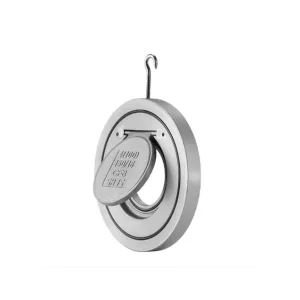
CE Certification Stainless Steel Single Disc Wafer Check Valve with Enhanced Corrosion Supplier, Manufacturers
View Product Specs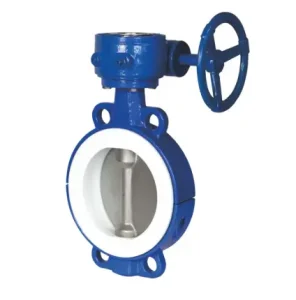
Wholesale PTFE Lined Butterfly Valve - Durable & Corrosion Resistant Manufacturers, Manufacturer
View Product Specs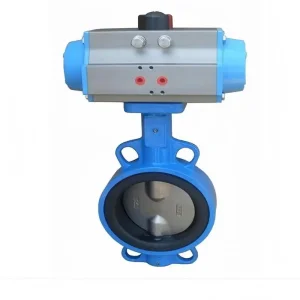
High-Quality Pneumatic Butterfly Valve - Efficient Flow Control Solution Suppliers, Factories
View Product Specs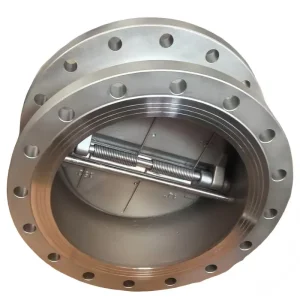
CE Certification Compact Low-Pressure Drop Wafer Lift Check Valve Supplier, Factories
View Product Specs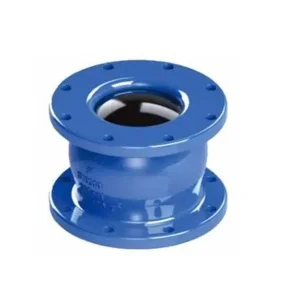
High-Quality High - Performance Silent Check Valve for Water Supply Systems Supplier, Manufacturers
View Product Specs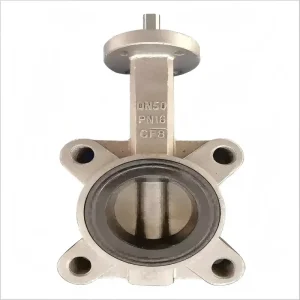
Wholesale Semi Lug Butterfly Valve - Durable & Versatile Flow Control Manufacturers, Manufacturer
View Product Specs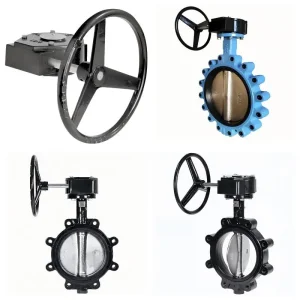
Wholesale WRAS Approved Lug Type Butterfly Valve 4325G Supplier, Factories
View Product Specs