Automated & High-Integrity Pipeline Valves: Featured Catalog (Part I)
Explore our core product lines manufactured directly at our Tianjin foundries and automated production workshops, optimized for severe duty, municipal networks, and petrochemical control.
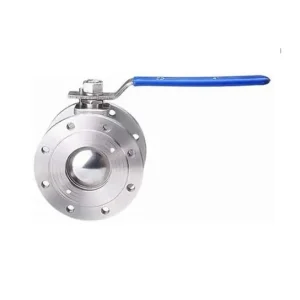
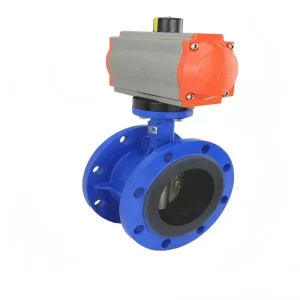
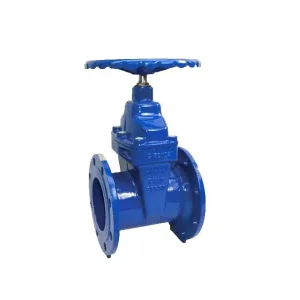
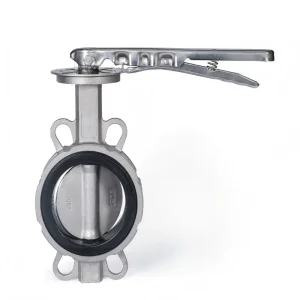
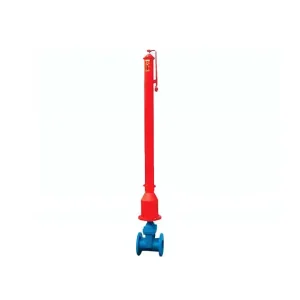
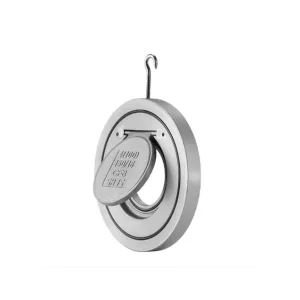
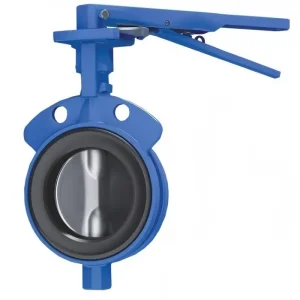
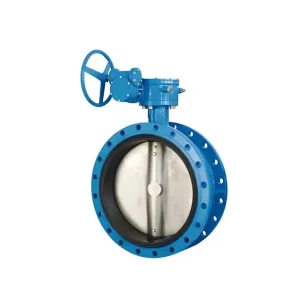
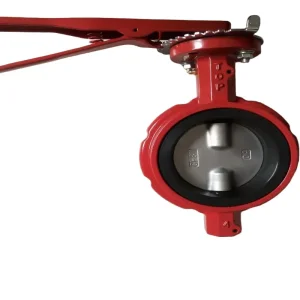
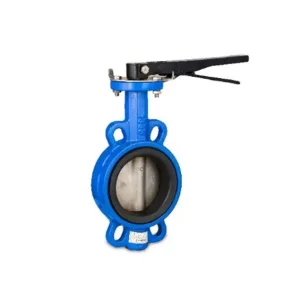
Engineering Architecture: High-Performance Automated Flanged Butterfly Valves
A rigorous examination of hydrodynamics, disc eccentricity mechanics, ISO 5211 direct-mount automation interfaces, and elastic-polymer seat bonding in large-bore fluid isolation systems.
Double-Flanged Rigid Body Design
Unlike wafer or standard lug patterns, full double-flanged butterfly valves provide complete structural self-containment. When pipeline bolts undergo thermal expansion or hydraulic shock (water hammer), flanged valves transfer mechanical loads along the heavy cast ductile iron shell (EN-GJS-450-10 or ASTM A536 65-45-12), totally isolating the internal sealing ring from pipe bending moments.
- Eliminates bolt tension deformation on elastomeric liners
- Enables easy dead-end downstream pipeline maintenance
- Conforms to EN 558 Series 13 & 14 short / long face-to-face dimensions
Dynamic Eccentricity & Torque Minimization
Incorporating double-eccentric (high-performance) geometry, the stem axis is offset both from the centerline of the valve seal and the valve body. Upon opening rotation, the disc cam immediately lifts away from the vulcanized EPDM or PTFE seat profile within 3 to 5 degrees of travel, dramatically decreasing friction, seat abrasion, and operational torque requirements.
- Up to 40% reduction in operating break-away torque
- Significantly downsizes pneumatic and electric actuator sizing
- Triple-offset laminated metal seats available for high-pressure superheated steam
Direct-Mount ISO 5211 Automation Integration
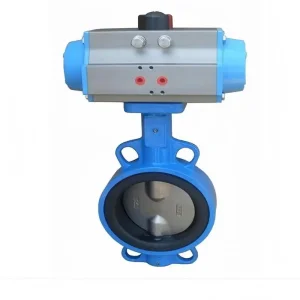
Modern process automation requires flawless torque coupling. Our factory integrates standardized ISO 5211 top flanges with precision double-D or keyed shaft extensions. This completely eliminates bracket flexure, stem backlash, and positioning hysteresis when mating with pneumatic scotch-yoke, rack-and-pinion, or intelligent Modbus/Profibus electric actuators.
- Enables high-frequency throttling control (4-20mA loop signals)
- Integral IP67/IP68 weatherproofing and SIL 3 functional safety
- Emergency spring-return fail-close (FC) or fail-open (FO) configurations
Critical Engineering Note on Auto Valve Sizing
In automated flanged butterfly valve installations, calculating the correct Cv / Kv flow coefficient is crucial to avoid cavitation damage at intermediate throttling openings (15° - 40°). Our engineering department provides hydrodynamic simulation curves and actuator safety torque calculation sheets (applying minimum 1.30x safety margin for clean water and 1.50x for viscous/slurry fluids) prior to custom manufacturing.
Why China's Vertically Integrated Factories Lead Global Auto Valve Manufacturing
Analyzing how Tianjin's integrated foundry heritage, automated elastomer vulcanization plants, and direct maritime logistics provide unparalleled Total Cost of Ownership (TCO) and rapid lead times.
In-House Foundry Control
Unlike trading intermediaries who purchase scrap castings from third-party suppliers, our Tianjin manufacturing base operates dedicated sand-casting and lost-wax investment facilities established in 1996. Each heat undergoes Optical Emission Spectrometry (OES) testing to certify exact carbon-silicon metallurgical stoichiometry before machining.
Dedicated Rubber Compounding
The elastomer seat is the single most vulnerable wear component in an auto butterfly valve. Through Tianjin Dongfang Rubber Factory (operating since 1987), we synthesize and vulcanize custom EPDM, NBR, FKM, and Viton formulations in-house. This ensures WRAS drinking water safety, tensile elongation > 300%, and exceptional compression set resistance under continuous cyclic pressure.
High-Precision CNC Machining
Valve disc sealing rims, dual-shaft bores, and actuator mounting flanges are machined on 5-axis vertical machining centers. Tight micro-tolerances (±0.015 mm) eliminate leakage paths around the stem collar, delivering zero-leakage shut-off under EN 12266-1 Rate A and API 598 hydrostatic testing benchmarks.
Deepwater Port Logistics
Situated within the Dongli industrial corridor directly adjacent to Tianjin Xingang Port (the largest synthetic maritime gateway in Northern China), our shipments depart on direct maritime lanes to Europe, the Americas, the Middle East, and Southeast Asia without inland transfer delay, reducing export logistics overhead by 15-22%.
Macro Industry Trends Reshaping Automated Butterfly Valve Engineering
How digital twins, smart valve positioners, zero-emission fugitive seal standards, and mega-desalination projects are directing technical evolution over the 2025-2035 cycle.
Smart IIoT Actuation & Predictive Diagnostics
Traditional on/off limit switches are rapidly being replaced by microprocessor-driven smart actuators equipped with Bluetooth, HART, and wireless LoRaWAN modules. Real-time telemetry tracks torque profile deviations, opening time latency, motor current transients, and thermal cycling, alerting SCADA systems to impending seat wear or pipeline clogging before catastrophic failure occurs.
Low-Emission Fugitive Packing Standards
Strict international decarbonization accords and volatile organic compound (VOC) directives have forced valve manufacturers to re-engineer stem seals. Modern auto flanged butterfly valves now utilize live-loaded PTFE chevron V-rings and Belleville spring washers compliant with ISO 15848-1 Class AH, ensuring virtually undetectable leakage rates (<100 ppm) over 100,000 continuous cycles.
Super-Alloy Metallurgy for Extreme Seawater Duty
Global investments in coastal SWRO (Seawater Reverse Osmosis) desalination facilities require butterfly valve materials capable of resisting localized crevice corrosion and pitting in ultra-high chloride environments. Industrial foundries are shifting production to 254SMO, Duplex 2205, Super Duplex 2507, and C95800 Nickel-Aluminum Bronze discs equipped with anti-erosion vulcanized rubber liners.
Localized Engineering Application Scenarios & Operating Demands
Specific field configurations across municipal distribution, heavy cooling circuits, chemical pipelines, and district heating plants.
Municipal Drinking Water Distribution
Large-bore auto flanged butterfly valves (DN300 to DN2400) act as automated zone boundary and flow regulation stations. WRAS-certified non-toxic EPDM vulcanized liners and epoxy coatings (minimum 250 μm dry film thickness applied via electrostatic fluidised bed) prevent bacterial biofilms and corrosion while resisting decades of soil-shifting stress in buried chambers.
HVAC & Central Energy Plant Loops
Integrated inside primary and secondary chilled water headers, cooling tower return loops, and heat exchanger bypass banks. Pneumatic spring-return actuators cycle fast (2-4 seconds) to balance chiller refrigeration loads dynamically under building management system (BMS) automation, preserving electrical pump energy.
Thermal & Combined-Cycle Power Plants
Condenser cooling water intake systems handle hundreds of thousands of cubic meters per hour. Automated flanged butterfly valves with Aluminum-Bronze or stainless steel discs withstand severe micro-turbulences and silt ingestion while providing fail-safe bubble-tight isolation during scheduled turbine maintenance.
Auto Flanged Butterfly Valve: Technical Parameter Standard Matrix
Comprehensive engineering reference for piping designers, engineering procurement managers, and mechanical consultants.
| Design Parameter | Concentric Flanged Model | Double-Eccentric (High Perf) | Triple-Eccentric (Metal-to-Metal) |
|---|---|---|---|
| Nominal Diameter Range | DN50 - DN2400 (2" - 96") | DN80 - DN1600 (3" - 64") | DN80 - DN2000 (3" - 80") |
| Pressure Classes | PN6 / PN10 / PN16 / Class 125 / 150 | PN10 / PN16 / PN25 / Class 150 / 300 | PN16 / PN25 / PN40 / PN64 / Class 150 to 600 |
| Body Castings | Ductile Iron (GGG40/50), WCB, SS304/316 | WCB, CF8M (316), Duplex 2205, Al-Bronze | WCB, LCB, CF8M, CF3M, Hastelloy C |
| Sealing Material | Moulded EPDM, High-Temp NBR, Viton | Renewable PTFE / R-PTFE, Flexible Graphite | Laminated SS316 + Graphite, Stellite Inconel |
| Operating Temperature | -20°C to +120°C (-4°F to 248°F) | -40°C to +200°C (-40°F to 392°F) | -196°C to +550°C (Cryogenic to Superheated) |
| Leakage Rate Class | ISO 5208 Rate A (Zero Bubble Leakage) | ISO 5208 Rate A / API 598 | ISO 5208 Rate A (Bi-directional bubble-tight) |
| Actuation Standards | ISO 5211 (F05 to F30 direct-mount) | ISO 5211 with Keyway Shaft Extension | ISO 5211 heavy-duty spline/key coupling |
| Design Standards | EN 593, AWWA C504, ISO 5752 Series 13 | API 609 Category B, EN 593, MSS-SP-68 | API 609 Category B, ASME B16.34, ISO 10631 |
Global Enterprise Procurement: How EPCs & Plant Owners Audit Valve Manufacturers
A rigorous checklist used by international engineering firms to inspect foundries, verify mechanical testing certificates, and evaluate lifecycle risk.
1. Material Traceability & Testing (MTR 3.1)
Tier-1 procurement mandates EN 10204 Type 3.1 inspection certificates for every pressure-retaining casting. Foundries must provide batch-specific ladle chemical analysis (C, Si, Mn, P, S, Cr, Ni, Mo) and physical tensile/yield/Charpy V-notch impact tests. At Tianjin Top Valve, heat numbers are permanently stamped onto valve bodies for lifetime traceability.
2. Hydrostatic Shell & Seat Leakage Testing
Every single valve (100% inspection rate, zero sampling allowance) must undergo factory hydrostatic testing prior to surface treatment. Shell tests are held at 1.5x nominal cold working pressure (e.g., 24 bar for PN16 rating), and high-pressure water seat closure is maintained at 1.1x (17.6 bar) with zero drop over specified holding times per EN 12266-1.
3. Actuation Torque Safety Margins
Auditors rigorously inspect actuator calibration sheets. Electric and pneumatic actuators must maintain adequate breakaway, run, and end-seating torque cushions under full differential pressure (ΔP). Substandard suppliers frequently under-size actuators to quote lower prices, resulting in field stalls during high-velocity line transients.
Frequently Asked Questions: Industrial Auto Flanged Butterfly Valves
Clear, authoritative answers addressing sizing, actuation selection, rubber formulation, and export compliance.
What are the key technical advantages of double-flanged butterfly valves over wafer and lug styles?
How does an in-house rubber factory benefit the reliability of automated valves?
What international flange standards and drillings can your factory supply?
How do you calculate pneumatic actuator torque requirements for high-velocity pipelines?
Are your butterfly valves certified for potable drinking water installations?
What automation communication protocols are supported on your electric actuators?
What surface coating protections are applied for buried or subsea valve service?
What is the typical manufacturing lead time for customized automated flanged valves?
Pipeline Control & Non-Return Solutions: Featured Catalog (Part II)
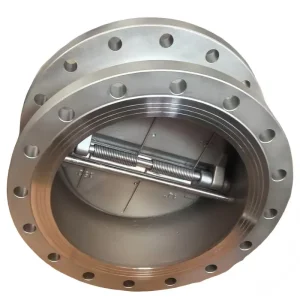
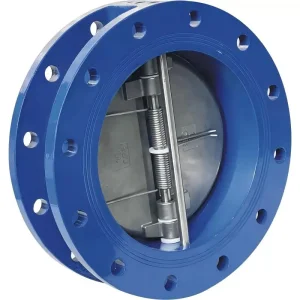
Explore complementary check, wafer, and specialized resilient valve assemblies engineered to safeguard pumps and prevent hydraulic transients across critical distribution circuits.