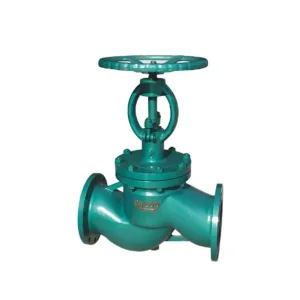
Featured Industrial Pipeline Equipment & High-Integrity Valves
Precision-cast valve bodies, certified elastomer seats compounded in-house since 1987, and 100% hydrostatic testing ensure high operational resilience across critical chemical, power, and marine services.
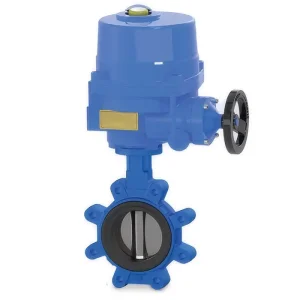
High-Quality Electrical butterfly valve Supplier, Manufacturer
Access Datasheet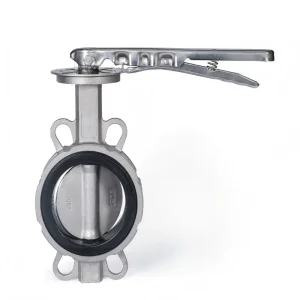
Wholesale Stainless Steel Butterfly Valve - Durable & Corrosion-Resistant Suppliers, Manufacturer
Access Datasheet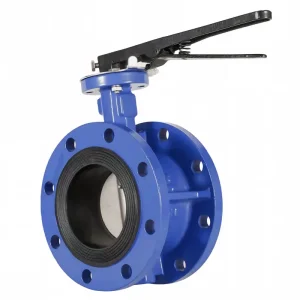
CE Certification Flanged Butterfly Valve with Lever Actuator - Durable & Reliable Manufacturers, Factory
Access Datasheet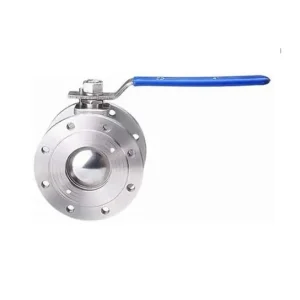
Wholesale Stainless Steel Ultra - Thin Ball Valve with Fire - Safe Design Supplier, Factories
Access Datasheet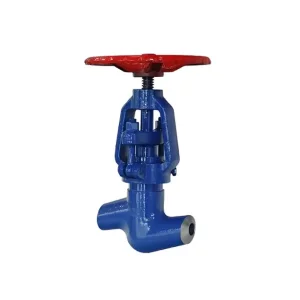
High-Quality High Temperature And High Pressure Power Station Globe Valve Manufacturers, Manufacturer
Access Datasheet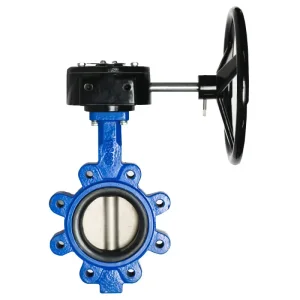
High-Quality Lug type Butterfly valve Suppliers, Manufacturers
Access Datasheet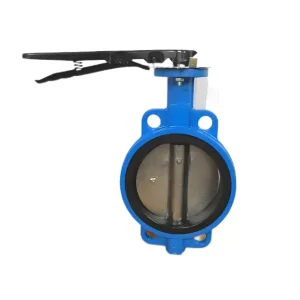
Wholesale Low - Pressure Wafer Type Butterfly Valve Supplier, Manufacturers
Access Datasheet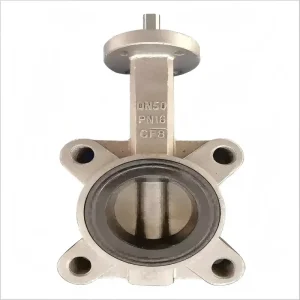
Wholesale Semi Lug Butterfly Valve - Durable & Versatile Flow Control Manufacturers, Manufacturer
Access DatasheetAmmonia in the Global Net-Zero Era: Critical Valve Infrastructure
Anhydrous ammonia (NH3) is transitioning from its traditional role in global agricultural fertilizer synthesis into the vanguard of clean maritime bunker fuels, zero-carbon hydrogen energy vectors, and next-generation low-GWP industrial thermodynamic cycles.
Hydrogen Energy Vector Logistics
Liquefied ammonia possesses a volumetric hydrogen density of 121 kg H2/m³—significantly superior to compressed gaseous hydrogen. Ammonia-resistant globe valves act as primary isolation and metering barriers at deepwater cracking terminals and transshipment hubs, engineered to manage continuous pressure swings from ambient storage to 25.0 MPa cracking stages.
Cold-Chain Natural Refrigerant Cycles
Driven by European F-Gas regulations and the global Kigali Amendment phasing out high-GWP HFCs/HFOs, R717 (natural ammonia) reigns as the premier thermodynamic coolant. Top Valve globe valves eliminate parasitic vapor bypass and fluid entrapment, providing bubble-tight isolation down to -50°C in industrial blast freezing and automated cold storage logistics.
Green Fertilizer & Synthesis Loops
Decarbonized Haber-Bosch synthesis utilizing green electrolytic hydrogen demands globe valves capable of withstanding aggressive cyclic thermal thermal shock and high-velocity gas throttling without seat chattering, cavitation erosion, or micro-cracking across high-pressure syngas compressor headers.
Materials Engineering: Eliminating SCC, Embrittlement & Leaks
Ammonia’s aggressive chemical nature dictates zero copper-bearing alloys, strictly controlled nickel content, low residual ferrite in weld seams, and specialized elastomeric formulation to eliminate Stress Corrosion Cracking (SCC) and explosive decompression.
The Copper-Free Mandate & Ammonia SCC
Gaseous and aqueous ammonia rapidly attack copper, brass, bronze, and copper-nickel alloys through the spontaneous formation of complex cupric ammonium ions [Cu(NH3)4]2+, initiating catastrophically accelerated galvanic corrosion and intergranular dissolution.
Furthermore, carbon and low-alloy steels are susceptible to oxygen-induced Stress Corrosion Cracking (SCC) in liquid ammonia at temperatures above -33°C if trace oxygen contamination (greater than 1 ppm) is present. Top Valve neutralizes this threat through post-weld heat treatment (PWHT) stress-relief annealing, strict yield-strength capping (<350 MPa), and optimized ductile iron QT450-10 or low-carbon austenitic 316L/Duplex 2205 shell metallurgy.
Engineered Polymer & Bellows Hermetic Sealing
Standard valve packing materials degrade under ammonia contact. Pure EPDM compounded in our dedicated group rubber facility (established in 1987) provides exceptional dimensional stability and chemical inertia. For extreme temperature regimes (-50°C to +200°C), virgin PTFE, modified TFM-1600, and ceramic-filled PEEK seats are deployed.
To achieve absolute fugitive emission compliance with ISO 15848-1 Class AH, Top Valve utilizes multi-ply hydroformed Hastelloy C-276 or 316Ti stainless steel bellows capsules backed by an auxiliary secondary safety graphite stuffing box, eliminating stem packing creep and environmental vapor release.
| Component | Standard Metallurgy | Severe Service / Marine Option | Operating Envelope | Resistance Mechanism |
|---|---|---|---|---|
| Valve Body & Bonnet | Ductile Iron QT450-10 / WCB | ASTM A351 CF8M / Duplex 2205 | -40°C to +250°C / PN40 | Zero Copper High impact ductility, normalized grain structure |
| Valve Disc & Stem | AISI 304 / 20Cr13 Nitrided | AISI 316L / 17-4PH Hard Chrome | -50°C to +300°C / Class 300 | Galling Immune Ra < 0.2µm finish prevents micro-abrasion |
| Hermetic Bellows | 316Ti Stainless Steel (Multi-ply) | Hastelloy C-276 (UNS N10276) | -196°C to +350°C / Class 600 | Zero-Emission Cycle fatigue tested > 50,000 actuations |
| Seat & Seal Ring | High-Density PTFE / RPTFE | Stellite No. 6 Overlay + PEEK | -50°C to +180°C / 4.0 MPa | Bubble-Tight Elastic memory recovery, zero swelling in R717 |
| Bonnet Bolting | ASTM A193 Grade B7 | ASTM A193 Grade B8M Cl.2 | Ambient to High Pressure | Tensile integrity with corrosion barrier zinc-nickel plating |
Vertically Integrated Foundry to In-House Rubber Synthesis
Established in 2016 in Dongli District, Tianjin, Tianjin Top Automation Equipment Co., Ltd. consolidates deep technical manufacturing assets rooted in Tianjin Donglian Valve Factory (operational since 1996) and Tianjin Dongfang Rubber Factory (specializing in custom polymer engineering since 1987).
In-House Dedicated Foundry
Independent electric induction melting furnaces and automated resin sand casting lines produce high-density, defect-free iron and alloy shells. Spectrometric chemical verification eliminates trace copper and harmful inclusions before molds are poured, guaranteeing zero porosity and high impact strength.
Group Rubber Compounding (1987)
Unlike valve assemblers dependent on third-party seal brokers, our sister rubber plant compounds, analyzes, and vulcanizes customized EPDM, FKM, and PTFE blends. Compression set, aging kinetics, and volumetric swell are measured in liquid ammonia autoclaves to assure 15+ years of elastomeric life.
Certified Quality Infrastructure
Operating under ISO 9001, ISO 14001, ISO 45001, and CE PED Module H compliance. Our on-site physical and chemical testing laboratory performs Charpy V-notch impact tests at -50°C, positive material identification (PMI), helium mass spectrometer vacuum leak checks, and automated shell burst testing.
Global Standards Harmonization for EPC Contracts
Procurement teams and EPC project directors require uncompromised verification against regional design codes, pressure equipment directives, and hazardous substances control protocols.
European DIN / EN Standards
Engineered to EN 13709 (Industrial valves - Steel globe valves) and DIN 3356. Flange dimensions rigorously adhere to EN 1092-1 PN16, PN25, and PN40 with Type B1 raised face. Fully compliant with Pressure Equipment Directive PED 2014/68/EU Category III/IV, Module H CE conformity.
North American ASME / API Codes
Manufactured in full conformity with ASME B16.34 (Valves - Flanged, Threaded, and Welding End) for Class 150 and Class 300 pressure classes. Face-to-face dimensions conform to ASME B16.10, with stem packing tested to API 624 low-emissions criteria and API 598 inspection standards.
Fugitive Emissions & Marine Type Approvals
Meets ISO 15848-1 Class AH tightness under helium vacuum testing. For clean maritime ammonia fuel systems, our designs adapt to IACS member requirements (including DNV, ABS, Lloyd’s Register) with complete EN 10204 3.1 material traceability from raw melt to finished product.
Engineered Field Solutions Across Critical Sectors
Examine how specialized ammonia globe valves solve severe pressure drops, thermal contraction, and fugitive emission challenges in mission-critical applications worldwide.
Scenario A: Megawatt-Scale Industrial Cold Storage (Rotterdam, Netherlands)
Operating Duty: Circulating subcooled liquid ammonia refrigerant at -42°C with surge pressures of 2.2 MPa.
Engineering Challenge: Conventional gland packing hardened under cryogenic cycle swings, resulting in toxic ammonia micro-leaks and frequent line downtime.
Top Valve Solution: Deployed Straight-Through Ammonia Globe Valves equipped with multi-ply 316Ti bellows hermetic seals and cryogenic stem extension hoods. Achieved over 36 months of zero-leakage continuous operation with zero maintenance callouts.
Scenario B: Maritime Clean Ammonia Bunkering Terminal (Singapore)
Operating Duty: Marine bunkering manifold transfers of anhydrous ammonia fuel under marine atmospheric exposure and rapid emergency isolation protocols.
Engineering Challenge: Severe chloride-laden marine atmosphere exacerbates external stress corrosion cracking while rapid shut-off induces violent hydrodynamic shock waves.
Top Valve Solution: Integrated CF8M stainless steel bodied globe valves with parabolic throttling plugs to damp hydraulic pressure surges, combined with ISO 5211 electric fail-safe quarter-turn / multi-turn actuation packages.
Technology Roadmap: Next-Gen Zero-Leak Architectures
Pioneering developments at Tianjin Top Valve in advanced sensor telemetry, digital twin simulation, and ultra-deep cryogenic valve performance.
Smart Acoustic & Sniffer Telemetry
Embedding piezo-electric acoustic emission sensors directly into the bonnet flange cavity to identify turbulent seat micro-leakage before external sensors trigger alarms. Coupled with IIoT telemetry for predictive valve maintenance in automated chemical plants.
Sub-Zero Cryogenic NH3 (-77°C)
Developing specialized austenitic alloys and Kel-F (PCTFE) composite soft seals capable of maintaining zero-leakage performance under deep thermodynamic freeze regimes without loss of polymer compliance or brittleness-induced stem seizure.
Additive Metal Manufacturing & CFD
Utilizing computational fluid dynamics (CFD) and 3D direct laser metal sintering (DMLS) to sculpt internal fluid flow galleries, slashing pressure drops (zeta coefficient) by 28% compared to traditional S-pattern globe valve body profiles.
Frequently Asked Engineering Questions (FAQ)
In-depth technical answers addressing material integrity, toxic fluid handling, and testing protocols for plant designers and valve specialists.
Why is copper strictly prohibited in all ammonia valve construction?
How does Top Valve prevent Stress Corrosion Cracking (SCC) in liquid ammonia?
What stem seal design offers the lowest risk of ammonia fugitive emissions?
How does group-owned rubber production enhance valve sealing reliability?
Can globe valves provide effective throttling service in high-pressure ammonia loops?
What pressure and non-destructive testing protocols are executed prior to dispatch?
High-Performance Globe, Check & Process Butterfly Valves
Complementing our ammonia-resistant globe valve line with straight-through designs, high-pressure metal seals, PTFE liners, and ceramic disc solutions for aggressive corrosive media.
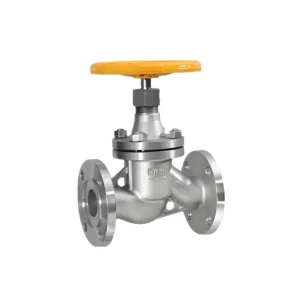
Wholesale Straight-Through Ammonia Globe Valve Manufacturers, Factory
Access Datasheet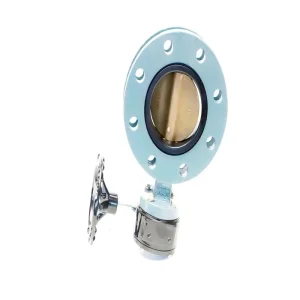
Wholesale CE/ISO/DIN/BS High Pressure Metal Seal Hard Seal Butterfly Valve Manufacturers, Manufacturer
Access Datasheet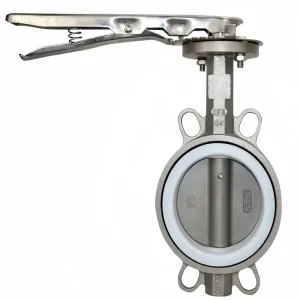
CE Certification PTFE Lined Stainless Steel Butterfly Valve Manufacturer, Factory
Access Datasheet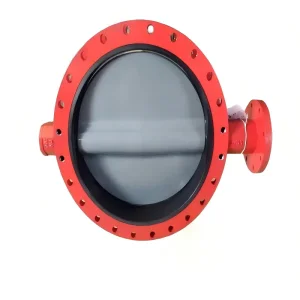
Wholesale Ceramic Disc Wafer Butterfly Valve - Durable & Efficient Design Supplier, Factories
Access Datasheet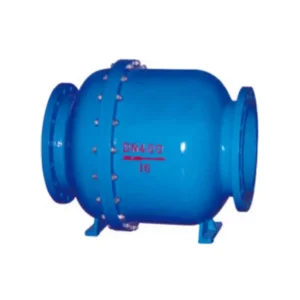
CE Certification Micro-Resistance Ball Check Valve Manufacturers, Factories
Access Datasheet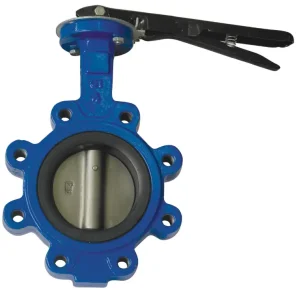
High-Quality Lug type manual operated butterfly valve Manufacturers, Factory
Access Datasheet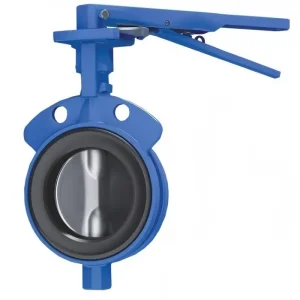
High-Quality EPDM Lining Butterfly Valve - Durable & Corrosion Resistant Suppliers, Manufacturers
Access Datasheet