
Precision Lug & Process Butterfly Valve Solutions
Direct manufacturer supply backed by full material traceability (EN 10204 3.1) and certified zero-leakage factory acceptance testing.
Engineering Fundamentals of CE-Certified Lug Stainless Steel Butterfly Valves
A deep engineering review of mechanical stress resistance, European pressure boundary directives, and metallurgical integrity in critical pipeline loops.
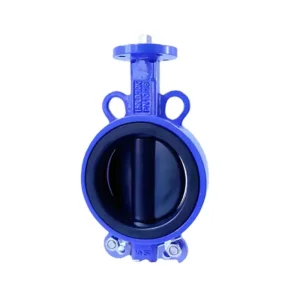
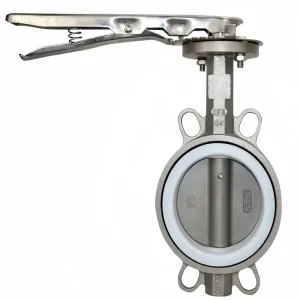
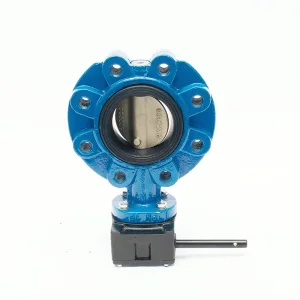
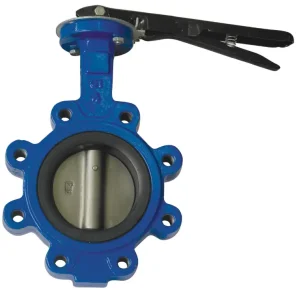
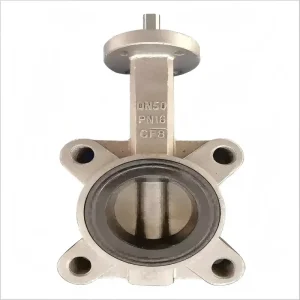
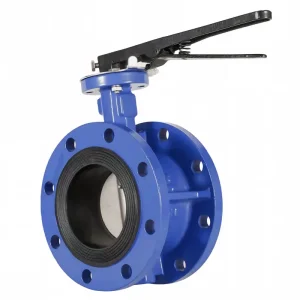
In high-integrity industrial piping, flow isolation is non-negotiable. The CE Certification lug stainless steel butterfly valve serves as a cornerstone flow control component engineered specifically for dual-flange bolted configurations. Unlike wafer-style valves that are sandwiched loosely between adjacent pipeline flanges with long stud bolts, a full-lug butterfly valve features individual threaded tapped eyelets cast directly around the entire circumference of the valve perimeter. This structural execution matches the drilling pattern of EN 1092-1 (PN10/PN16/PN25/PN40), ASME B16.5 (Class 150/300), and JIS B2220 standards, enabling secure, independent fastening from both upstream and downstream piping segments.
Under the European Union's Pressure Equipment Directive (PED 2014/68/EU), CE certification is mandatory for any industrial pressure envelope operating above 0.5 bar gauge. Compliance entails rigorous conformity assessment procedures—most notably Module H (Full Quality Assurance) or Module H1 (Design Examination and Special Surveillance). A genuine CE-marked lug butterfly valve manufactured by an accredited enterprise undergoes hydrostatic shell pressure qualification at 1.5 times the maximum allowable design pressure (PS) and seat leakage tightness tests at 1.1 times PS, strictly governed by EN 12266-1 (Rate A zero-leakage standard) and ISO 5208.
Material science is paramount in harsh industrial environments. Chemical processing, offshore marine infrastructure, and sanitary pharmaceutical water networks cannot tolerate intergranular corrosion or micro-pitting. Consequently, our Tianjin production complex casts bodies and discs from premium austenitic stainless steels—principally ASTM A351 Grade CF8 (AISI 304), ASTM A351 Grade CF8M (AISI 316), and stabilized grades such as CF3M (316L), supplemented by duplex stainless steels like 2205 (UNS S32205 / 1.4462) and 2507 Super Duplex for hypersaline desalination brine lines. Every single heat charge is spectroscopically audited to guarantee low carbon concentrations (< 0.08% for CF8/CF8M, < 0.03% for CF3M), preventing chromium carbide precipitation along grain boundaries during welding or high-temperature cycles.
Blowout-Proof Shaft Architecture
Engineered in compliance with EN 593 and API 609 Cat B. Dual internal snap rings and precision shoulder steps ensure full retention of the stainless steel 17-4PH or 316 shaft even under catastrophic external actuator shearing.
Fugitive Emission ISO 15848-1
Advanced live-loaded PTFE chevron stem packing systems engineered with Belleville spring washers. Provides verified Class AH hermetic sealing, drastically curtailing VOC release in aggressive chemical applications.
ISO 5211 Direct Actuation Mount
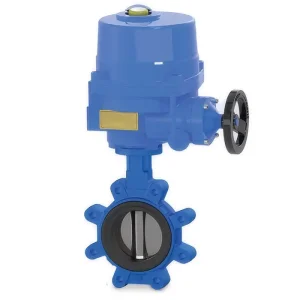
Precision CNC-milled top mounting flange following ISO 5211 geometry. Accommodates standard quarter-turn double-acting/spring-return pneumatic pistons, smart electric modulators, and manual worm gear operators without brackets.
Why Tier-1 EPCs Source Stainless Steel Lug Valves from Our Tianjin Factory
Vertical industrial synthesis: Combining four decades of in-house elastomer vulcanization and automated stainless investment casting on a single 23,000 m² campus.
In-House Casting Foundry
Zero reliance on rough casting brokers. Our automated silica-sol investment casting lines achieve dimensional tolerance according to ISO 8062-3 CT6, ensuring flawless surface finishes without pinholes.
Rubber Compounding Since 1987
Through our dedicated rubber facility, we formulate virgin EPDM, Viton (FKM), and NBR compounds internally. We tightly regulate vulcanization curve, shore hardness (70±5 Shore A), and low compression set.
Ultra-Precision CNC Machining
Multi-axis horizontal machining centers ensure 100% concentricity of valve stem bores and pristine spherical disc sealing edge polishing (Ra < 0.4 µm), minimizing operational torque and seat wear.
100% Pressure & PMI Verification
Every single lug valve undergoes positive material identification (XRF PMI) alongside bi-directional high-pressure hydrostatic seat testing before export crating. Complete EN 10204 3.1 certification provided.
Technical Specification & Global Standards Concordance
Comprehensive design parameters for mechanical piping engineers and international procurement authorities.
| Engineering Parameter | Technical Baseline / Specification Standard | Certified Performance Scope |
|---|---|---|
| Nominal Diameter Range | EN 558 Series 20, ISO 5752 Basic Series 20, API 609 Category A & B | DN40 to DN1200 (1-1/2" through 48" full-lug configurations) |
| Pressure Boundary Ratings | EN 12266-1, ISO 5208, ASME B16.34, EN 1333 | PN10, PN16, PN25, Class 150, Class 300 (Bi-directional bubble-tight) |
| Body Metallurgy Options | ASTM A351 CF8, CF8M, CF3M; EN 10213 1.4408, 1.4308, 1.4462 Duplex | Silica-sol precision casting with full PMI chemical/mechanical heat tracking |
| Disc Profiles & Coatings | 316 / 316L SS, Aluminum Bronze C95800, PTFE encapsulated, Halar (ECTFE) | Hydrodynamically profiled disc edge, mirror-polished to Ra < 0.4 µm |
| Resilient Seat Compounds | WRAS-approved EPDM, FDA virgin PTFE, Viton (FKM), Nitrile (NBR), Hypalon | Continuous thermal envelope from -40°C to +200°C (-40°F to +392°F) |
| Dead-End Service Capability | API 609, EN 593 Clause 4.1.3 (Without downstream counter-flange) | Full working pressure differential holding capacity (Bi-directional) |
| Shaft Sealing & Retention | ISO 15848-1 Class AH, TA-Luft, Blowout-Proof internal mechanical shoulder | Self-adjusting Belleville spring energised PTFE chevron packing sets |
| Actuator Interface | ISO 5211 Top Flange Standard with keyed or double-D stem profile | F05, F07, F10, F12, F14, F16 direct mounting for 100% torque transmission |
Emerging Trends Shaping Industrial Stainless Steel Valve Manufacturing
How digital twins, fugitive emission decarbonization, and smart automation are redefining butterfly valve reliability.
Net-Zero Fugitive Emissions
Global decarbonization mandates have elevated ISO 15848-1 and TA-Luft compliance from niche requirements to baseline industry standards. Advanced stainless lug butterfly valves utilize engineered multi-barrier stem seals combining primary polymer liners with secondary graphite live-loading to guarantee helium leak rates below 10⁻⁴ mg·s⁻¹·m⁻¹.
IoT-Enabled Predictive Actuation
Modern process loops increasingly reject passive mechanical isolation. We now pre-integrate ISO 5211 top flanges with smart digital electro-pneumatic positioners communicating via HART, Profibus, or Modbus protocols. Continuous torque feedback algorithms predict seat elastomer wear long before pipeline leakage occurs.
Advanced Composite Linings (ECTFE / PTFE)
Where pure exotic superalloys (Hastelloy, Monel) impose prohibitive capital costs, fluoropolymer-lined stainless steel provides equivalent chemical immunity at a fraction of the budget. Electrostatic Halar (ECTFE) and isostatic molded virgin PTFE seats offer near-universal resistance to concentrated sulfuric, hydrochloric, and nitric acids.
Macro Pipeline Engineering Solutions & Application Case Studies
How certified lug stainless steel valves perform across specialized industrial duty conditions worldwide.
Municipal Potable Water & Desalination
Challenge: Micro-biological leaching and crevice corrosion under saline seawater exposure.
Solution: CE-certified CF8M lug valves utilizing WRAS-approved virgin EPDM seats. Full dead-end retention allows rapid maintenance of reverse osmosis (RO) membrane racks without depressurizing municipal distribution headers.
Specialty Chemical & Chlor-Alkali
Challenge: Severe media attack on valve bodies and stems from wet chlorine and caustic soda.
Solution: Solid stainless CF8M bodies lined with chemically bonded 3mm virgin PTFE liners and pinless disc geometry. The absence of stem-securing pins completely removes fluid penetration paths into the valve shaft.
HVAC Chilled Water & District Cooling
Challenge: Thermal cycling condensation and tight installation footprints in commercial plant rooms.
Solution: Compact lugged stainless valves installed at pump headers. Threaded holes permit quick pump isolation without draining secondary riser networks, drastically reducing system downtime and building management costs.
International Procurement Checklist for Stainless Steel Lug Butterfly Valves
Key quality verification parameters international EPC contractors and buyers insist on prior to contract sign-off.
Procuring industrial valves for high-consequence infrastructure projects across Europe, North America, and the Middle East requires deep verification beyond simple price-per-unit metrics. A rigorous supply chain assessment evaluates five non-negotiable vectors:
EN 10204 3.1 Certification
Direct mill test certificates verifying ladle chemistry, tensile yield strength, elongation, and impact values. Every valve body bears cast heat codes for full cradle-to-grave metallurgical traceability.
NACE MR0175 / ISO 15156
For sour gas and hydrocarbon services, austenitic stainless disc and stem components must demonstrate complete resistance to sulfide stress cracking (SSC) with verified Rockwell C hardness < 22 HRC.
SIL-3 Functional Safety
Automated safety shutdown loops (ESD) require butterfly valve and actuator assemblies to carry comprehensive PFD (Probability of Failure on Demand) documentation meeting IEC 61508 standards.
Strict Seaworthy Packing
Finished valves must be individually wrapped in heavy-gauge vapor-barrier bubble sleeves with desiccant packs, then secured inside ISPM-15 heat-treated wooden crates to safeguard seating edges during intercontinental ocean transport.
Frequently Asked Questions on CE Lug Stainless Steel Butterfly Valves
Comprehensive engineering insights into flange compatibility, seating mechanics, torque requirements, and international compliance.
What is the exact distinction between wafer and lug type stainless steel butterfly valves?
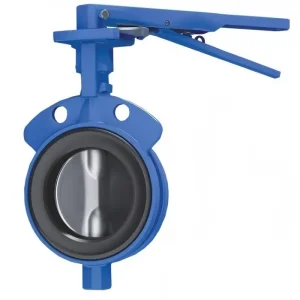
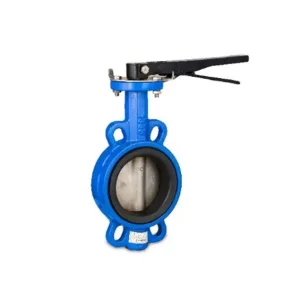
Wafer butterfly valves feature a compact, smooth outer profile without threaded ears (or with simple centering alignment lugs). They are clamped between two companion pipe flanges using long continuous threaded through-bolts. If one side of the piping must be disconnected, the wafer valve cannot hold pressure and drops free. In contrast, lug type butterfly valves have fully threaded, tapped bolt holes matching the mating flange specification. This allows bolts to thread in from each side independently, facilitating dead-end service: one side of the piping can be completely dismantled while the upstream segment remains fully pressurized without leakage.
What does CE Certification mean under the European Pressure Equipment Directive (PED 2014/68/EU)?
CE Certification affirms that our stainless steel lug butterfly valves satisfy the essential health, design, and safety requirements of European Directive 2014/68/EU. Depending on nominal bore (DN) and operational pressure (PS), valves fall into Categories I, II, III, or IV. Conformity under Module H (Full Quality Assurance) signifies that our entire production framework—from raw molten casting analysis to pressure testing and non-destructive examination (NDE)—is audited and certified by an EU Notified Body. It guarantees that the valve's pressure boundary integrity meets stringent European technical harmonized standards such as EN 593 and EN 12516.
How does the in-house rubber factory benefit the sealing life of your butterfly valves?
Over 85% of butterfly valve field failures are attributed to premature elastomer degradation, permanent compression set, or bonding detachment. Because our group operates our own elastomer plant (Tianjin Dongfang Rubber Factory, founded in 1987), we do not buy generic third-party rubber sleeves. We formulate, mix, and vulcanize our EPDM, NBR, and Viton compounds internally using premium virgin polymers. This guarantees optimal tensile elasticity, superior rebound recovery, uniform shore hardness (70±5 Shore A), and certified compliance with potable drinking water standards (WRAS) and chemical compatibility matrixes.
Can lug stainless steel butterfly valves be installed in bidirectional flow lines?
Yes. Concentric resilient-seated and high-performance double-eccentric lug butterfly valves are engineered for bi-directional zero-leakage shut-off conforming to EN 12266-1 Rate A and ISO 5208. The symmetrical disc profile and precision-machined internal seating geometry allow the valve to hold identical maximum differential pressure regardless of flow vector. However, in triple-offset metal-to-metal high-temperature variants, a preferred sealing orientation is often specified on the body cast arrow to optimize sealing wedge action under extreme differential pressures.
What flange standards can be drilled on your lug butterfly valve bodies?
Our computerized multi-axis CNC drilling centers can machine tapped lug bolt holes according to all major worldwide flange conventions, including EN 1092-1 PN10, PN16, PN25, PN40; ASME B16.5 Class 150 and Class 300; BS 10 Tables D and E; and JIS B2220 10K/16K/20K. When requesting quotations, specify the required flange standard to ensure correct metric or imperial UNC/UNF thread execution.
What documentation is delivered with an export order of CE-certified valves?
Every commercial export consignment includes a comprehensive Quality Dossier consisting of: (1) EN 10204 Type 3.1 Material Test Reports (MTR) covering chemical spectrometry and mechanical tensile/hardness tests; (2) Hydrostatic and pneumatic pressure test certificates witnessing shell (1.5x PN) and seat (1.1x PN) holding tests; (3) Official CE Declaration of Conformity referencing PED 2014/68/EU; (4) Painting/coating thickness reports; (5) Dimensional inspection sheets; and (6) General operation, installation, and maintenance manuals (O&M).
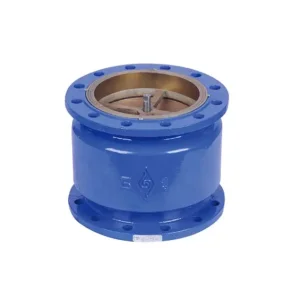
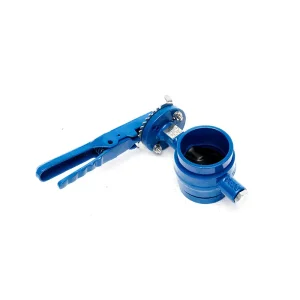
Comprehensive Industrial Valve Product Lines
Explore our specialized range of high-pressure, grooved, marine, and hard-seal valves engineered for global industrial infrastructure.
Initiate Your Engineering Quotation & Specification Audit
Collaborate directly with our senior application engineers in Tianjin. Submit your process media, temperature thresholds, operating pressures, and connection standards for immediate technical review within 24 hours.
