Engineered Flow Control Inventory & Precision Valve Assemblies
Explore our certified selection of industrial pipeline solutions engineered across in-house foundries, CNC machining cells, and pressure-testing bays in Tianjin.
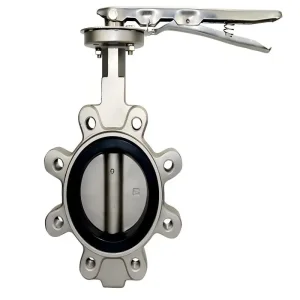
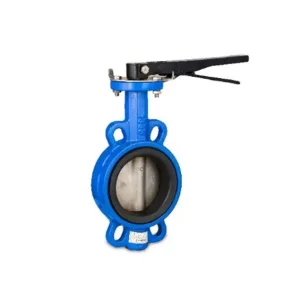
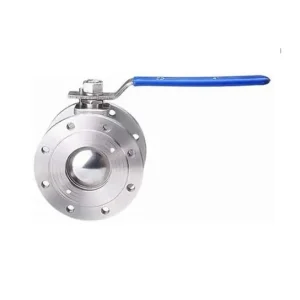
Engineering Architecture of CE Certified Cast Steel Flange Ball Valves
An authoritative analysis of metallurgical integrity, fugitive emission mitigation under ISO 15848-1, fire-safe durability according to API 607, and structural conformance within the European Pressure Equipment Directive (PED 2014/68/EU).
PED 2014/68/EU Module H Compliance
Every cast steel flange ball valve engineered for European distribution undergoes rigorous conformity assessment under Module H (Full Quality Assurance). From casting wall thickness verification to non-destructive examination (NDE) and hydrostatic shell testing at 1.5 times the rated working pressure, our systems ensure complete regulatory immunity for EPC contractors and plant operators.
- CE Marking with Notified Body Identification
- Full traceability to EN 10204 3.1 & 3.2 inspection certificates
- Cryogenic & elevated temperature Charpy V-notch impact validation
Advanced Metallurgical Integrity (WCB / CF8M)
By leveraging the metallurgical capabilities of our corporate foundries operating continuously since 1996, valve shells are cast in ASTM A216 WCB, WCC, LCB, and stainless austenitic grades ASTM A351 CF8, CF8M, and CF3M. Spectrometric chemistry balancing suppresses tramp elements, securing superior weldability, elevated fracture toughness, and resistance to cavitation erosive patterns.
- Strict chemical limitation on Carbon Equivalent (≤ 0.43%)
- Radiographic & Ultrasonic inspection to ASME B16.34 Annex B
- Surface crack detection via Magnetic Particle (MPI) & Dye Penetrant (DPI)
Zero-Leakage Sealing Architecture
Ball valve seating technology incorporates primary polymeric elastomeric seats (Virgin PTFE, RPTFE, Devlon V, PEEK) backed by secondary metal-to-metal emergency fire lip seals. When combined with our group's dedicated elastomeric laboratory running since 1987, custom compound formulations provide exceptional resilience against hydrocarbon decomposition and cyclic mechanical fatigue.
- Bubble-tight shutoff compliant with ISO 5208 Rate A and API 598
- Self-relieving cavities preventing hydrostatic overpressurization
- Bi-directional sealing capability across ASME Class 150 to 2500
Addressing Extreme Dynamic Pipeline Stresses Across the Global Landscape
Global chemical plants, LNG liquefaction hubs, district heating grids, and municipal critical infrastructure require unprecedented valve reliability to prevent catastrophic loss of containment.
Fugitive Emissions Mitigation (ISO 15848-1)
Global environmental mandates—notably the European Green Deal and stringent EPA Subpart W requirements—demand that flow isolation assets limit fugitive methane and volatile organic compound (VOC) emissions. Our cast steel flange ball valves feature dynamically loaded live-loaded packing glands using Belleville spring washers and precision-machined stem superfinishes (Ra ≤ 0.2 μm), achieving Class AH/BH airtightness across extensive thermal cycles.
Severe Cycling & Rapid Depressurization
In midstream gas compression stations and molecular sieve switching units, rapid decompression causes explosive decompression in conventional elastomer seals. Our engineering designs counter this with precision RPTFE or PEEK polymer configurations and metal-seated Stellite #6 laser cladded trims capable of handling extreme velocity surges, slurry abrasives, and pressure drops exceeding 150 bar without seat galling.
TCO Reduction & Lifecycle Economics
Unscheduled refinery shutdowns can incur downtime costs exceeding $250,000 per hour. Sourcing CE-certified flanged ball valves manufactured in vertically integrated facilities—where castings, rubber seating formulation, CNC machining, and testing reside on a singular campus—eliminates supply-chain variance, minimizes procurement lead times, and delivers an average Mean Time Between Failures (MTBF) exceeding 120,000 operational cycles.
Standard Technical Parameters: Cast Steel Flange Ball Valves
Cross-reference manufacturing standards, metallurgy, pressure ratings, and leakage rates across industrial execution lines.
| Engineering Parameter | Floating Ball Design (1/2" - 8") | Trunnion Mounted Ball Design (2" - 36") | Metal-Seated High-Temp Design |
|---|---|---|---|
| Governing Design Standard | API 608 / ASME B16.34 / BS EN ISO 17292 | API 6D / ASME B16.34 / ISO 14313 | API 608 / API 6D / ASME B16.34 |
| Pressure Classification | ASME Class 150, 300, 600 / PN16 - PN100 | ASME Class 150 - 2500 / PN16 - PN420 | ASME Class 150 - 1500 / PN16 - PN250 |
| Body Materials (Cast Steel) | ASTM A216 WCB / WCC, A352 LCB / LCC | A216 WCB, A352 LCC, A351 CF8M, Duplex 4A | ASTM A216 WCB, A217 WC6 / WC9, CF8M |
| Face-to-Face Standards | ASME B16.10 / EN 558 Series 14/15 | ASME B16.10 / EN 558 Series 1 / API 6D | ASME B16.10 / EN 558-1 Long / Short |
| Flange Connection Dimensions | ASME B16.5 RF / RTJ, EN 1092-1 Form B1 | ASME B16.5, ASME B16.47 Series A, EN 1092-1 | ASME B16.5 RF/RTJ, EN 1092-1 High-Temp |
| Seating Material Selections | Virgin PTFE, RPTFE (15% Glass / Carbon) | Devlon V, Nylon 12, PEEK, PFA Lined | Stellite #6, Tungsten Carbide (HVOF), Ni60 |
| Operating Temperature | -46°C to +180°C (-50°F to +356°F) | -196°C (Cryo) to +220°C (+428°F) | -29°C to +550°C (-20°F to +1022°F) |
| Fire Safe Certification | API 607 7th Ed / ISO 10497 Certified | API 6FA / API 607 / ISO 10497 Certified | Inherent Fire Safe (Metal-to-Metal Seal) |
| Fugitive Emissions Integrity | ISO 15848-1 Class BH / TA-Luft VDI 2440 | ISO 15848-1 Class AH / API 641 Certified | ISO 15848-1 Class AH with Graphite Sets |
Mission-Critical Deployment Scenarios in Worldwide Industrial Operations
How our CE-certified cast steel flange ball valves and complementary valve lines perform across high-stakes industrial environments.
Refining & Petrochemical Distillation
Installed on crude atmospheric fractionator bottoms, hydrocracker feed systems, and naphtha reformers. Resilient WCB bodies withstand severe hydrocarbon streams containing trace hydrogen sulfide (NACE MR0175 compliant), eliminating catastrophic stem blowouts via bottom-entry anti-blowout stem design.
LNG Liquefaction & Cryogenic Terminals
Utilizing low-temperature cast steels (ASTM A352 LCC or A351 CF8M) fitted with extended bonnets to create vapor-seal insulation zones. These valves maintain bubble-tight shutoff at -196°C in boil-off gas handling, LNG bunkering skids, and re-gasification manifolds.
Offshore Topsides & Seawater Handling
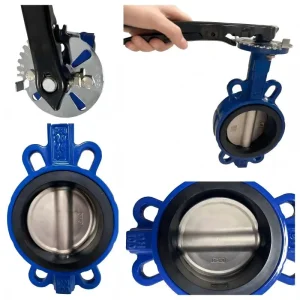
For offshore floating production (FPSO) units and coastal seawater cooling facilities, cast steel valves receive duplex stainless steel trims or are complemented by our in-house aluminum bronze disc butterfly valves. These pairings neutralize aggressive chloride pitting and micro-galvanic corrosion.
District Energy & High-Pressure Steam
Serving municipal central district heating systems and industrial cogeneration plants. Cast steel flange ball valves equipped with high-density graphite stem packing and carbon-filled PTFE seats easily manage cycling superheated hot water (180°C) without torque spikes or seat degradation.
Comprehensive Quality Assurance, In-House Verification & Traceability
How our integrated Tianjin factory guarantees unyielding structural reliability through four vertically controlled manufacturing layers.
Foundry Metallurgy Control
Unlike assembly-only competitors relying on outsourced castings with unchecked porosity, our group's own foundry (founded 1996) maintains automated sand preparation, induction melting furnaces, and direct-reading optical emission spectrometers. Chemical balance (C, Mn, Si, P, S, Cr, Mo) is confirmed on every heat before pouring.
In-House Elastomer Vulcanization
Leveraging Tianjin Dongfang Rubber Factory (operating since 1987), rubber compounding, carbon black dispersion, and compression-set testing are executed internally. This unique vertical integration ensures high mechanical memory, resistance to rapid decompression, and WRAS / FDA compliance for food/potable services.
Sub-Micron CNC Finish
Our modern CNC machining bay finishes valve balls, stem journals, and flange serrated spirals in single-setup operations. Sphericity of the finished ball core is verified via three-coordinate measuring machines (CMM) to within ±0.008 mm, minimizing running torque and avoiding seat micro-abrasion.
100% Dual Testing Protocol
Every single valve undergoes hydrostatic shell testing (1.5x design pressure) and low-pressure pneumatic seat testing (6 bar air under water) according to EN 12266-1 and API 598. Pressure holding durations are computer-logged, and test certificates are tied directly to casting serial numbers.
Fire Safe Certified Integrity
Qualified according to API 607 7th Edition and ISO 10497. In the event of a plant fire incinerating the soft primary seats, the internal secondary metal lip contacts the floating ball under upstream pressure differential, guaranteeing shutoff integrity and preventing fuel from entering conflagration zones.
European PED Documentation
Shipments to European jurisdictions include comprehensive Documentation Dossiers: CE Declaration of Conformity under PED 2014/68/EU Module H, EN 10204 Type 3.1 chemical & mechanical test certificates, NDT operator qualification records, and hydro-test inspection reports.
Technological Roadmap: The Next Era of Industrial Flow Control
Pioneering advancements in digital twins, additive valve trim manufacturing, smart acoustic leak monitoring, and zero-methane emission architecture.
IoT-Enabled Smart Predictive Valve Actuation
Integration of wireless LoRaWAN and HART-enabled acoustic emission sensors embedded directly into valve bracket housings. Real-time diagnostic matrices track stem displacement, breakout breakaway torque profiles, and micro-vibrations, predicting packing relaxation and seat degradation up to 6 months before physical leakage occurs.
Additive Trim Manufacturing & Laser Cladding
Adoption of 3D Laser Metal Deposition (LMD) technology to apply Stellite #6 and Inconel 625 metallurgical coatings to ball spheres and critical seat sealing faces. This process eliminates micro-porosity while achieving surface hardness ratings above 58 HRC, extending operational lifespans in abrasive slurry and catalytic cracking services by 300%.
Ultra-Clean Clean Energy & Hydrogen Service
Engineering specialized cast steel and austenitic stainless steel ball valves designed for 100% pure molecular hydrogen (H2) transport. Upgraded materials feature high-vacuum degassing, electro-polished internal galleries, and hydrogen-embrittlement-resistant metallurgy qualified under ASME B31.12 mandates.
Frequently Asked Questions for Engineering & EPC Sourcing Teams
Authoritative, technically grounded answers regarding certifications, design parameters, factory audits, and international shipping.
Comprehensive Certified Pipeline Equipment Portfolio
Engineered to integrate seamlessly with our cast steel flange ball valve installations across high-pressure petrochemical, water utility, and energy networks.