
High-Performance Wafer & Specialty Flow Control Selection
Explore our industrial-duty valves engineered for water treatment, HVAC chilling circuits, marine piping, and corrosive media handling. Each unit undergoes strict ISO 5208 leak detection.
China Factory 4.0: Supply Chain Resilience & Vertical Integration
Why procurement directors, global EPC contractors, and mechanical OEMs choose our direct manufacturing ecosystem in Tianjin over intermediary trading companies.
Full In-House Chemical Compounding
The operational lifespan of any wafer butterfly valve relies almost entirely on the elasticity and vulcanization chemistry of the seat liner. Unlike tier-3 assemblers who outsource rubber seats, our in-house formulation guarantees low compression set and zero delamination.
- WRAS-certified non-toxic EPDM for municipal potable water
- Abrasion-resistant NBR for wastewater and petroleum hydrocarbons
- Virgin PTFE / PFA encapsulation for aggressive chemical solvents
CNC Multi-Axis Dimensional Stability
Our machining lines utilize high-rigidity CNC machining centers dedicated to valve bodies, disc sealing contours, and drive stems. Spherical disc edge turning guarantees constant low operational torque and extended cycle durability under harsh throttling.
- Stem bore concentricity controlled within ±0.015mm
- ISO 5211 direct-mount actuator flanges for modular automation
- Anti-blowout stem design complying with API 609 Cat. A / EN 593
Integrated Foundry Chemistry Control
By operating our own foundry lines, we eliminate porosities, slag inclusions, and micro-cracking common in lower-cost spot-market castings. Spectrometric batch testing confirms ductile iron nodularity exceeds 90% before mechanical processing begins.
- EN-GJS-400-15 (QT400) and EN-GJS-450-10 ductile iron bodies
- Aluminum Bronze (C95800) discs for extreme marine brine service
- Epoxy coating applied via electrostatic fusion bonding (min 250 µm)
Macro Industry Solutions: Tailored Wafer Valve Engineering
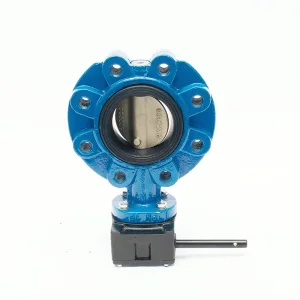
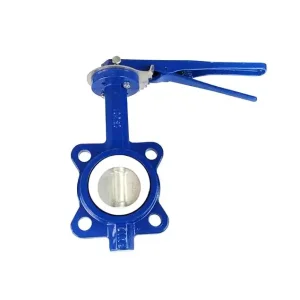
Wafer-style butterfly valves present unmatched space-saving, weight reduction, and economic efficiency. See how Tianjin Top Valve designs customized metallurgy and polymer trims for specific industrial environments.
Potable Water & Municipal Networks
Municipal water treatment plants and urban transmission lines demand zero lead leaching, WRAS approval, and ultra-long service intervals without seat maintenance or degradation.
- Models 4020G / 4020L WRAS-certified potable water liners
- EPDM liner formulated to resist chloramine oxidation
- Stainless steel CF8M / 316 discs with polished spherical profiles
HVAC, District Cooling & Energy Centers
Modern data centers and district cooling loops require high flow coefficients (Cv/Kv) to minimize pump head losses while maintaining bubble-tight shut-off in condensate circuits.
- Streamlined disc profiles generating negligible cavitation vibration
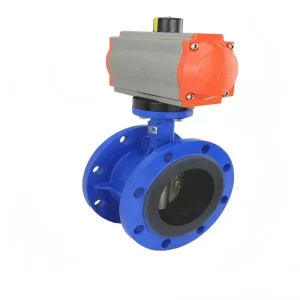
- Direct electric/pneumatic actuator integration for automated BAS
- Universal wafer locating lugs fitting EN 1092-2 and ANSI 150# flanges
Marine, Offshore & Desalination Facilities
Seawater handling, ballast exchange systems, and reverse osmosis plants cause severe pitting and crevice corrosion on standard iron or 304 stainless steels.
- Nickel Aluminum Bronze (CuAl10Fe5Ni5 / C95800) disc and trim
- Duplex 2205 / Super Duplex 2507 disc options for brine streams
- Vulcanized or bonded heavy-duty NBR seats resisting hydrocarbons
| Application Sector | Recommended Body / Disc | Seat Elastomer | Pressure Rating | Key Engineering Consideration |
|---|---|---|---|---|
| Potable Water Supply | Ductile Iron QT450 / SS316 | WRAS Approved EPDM | PN10 / PN16 / Class 150 | Zero microbiological contamination, non-toxic migration, NSF/WRAS standard adherence. |
| Chilled Water & HVAC | Cast Iron GG25 / Ductile Iron | Commercial EPDM (-20°C to +120°C) | PN16 (232 PSI) | High Kv capacity to minimize auxiliary chiller pumping consumption over 25+ year lifecycle. |
| Seawater & Ballast Systems | Ductile Iron / Al-Bronze C95800 | Seawater Grade NBR / FKM | PN10 / PN16 / JIS 10K | Prevention of galvanic pitting, cathodic protection compatibility, and biofouling resistance. |
| Corrosive Process Chemistry | WCB Carbon Steel / CF8M Disc | Full Virgin PTFE / PFA | PN10 / Class 150 | Complete chemical inertness, pinless stem design preventing fluid contact with shaft alloy. |
| Abrasive Slurry & Mining Flotation | Ductile Iron / Ceramic Disc Trim | Reinforced Natural Rubber / Polyurethane | PN10 / PN16 | Extreme micro-cutting wear protection, erosion-resistant spherical edges on opening cycle. |
Future Outlook: Smart Flow Control & Low-Emission Manufacturing
How our R&D engineering center in Tianjin adapts next-generation metallurgical simulations, smart telemetry, and decarbonization to modern wafer valve architecture.
Smart IoT Valve Actuation & Telemetry
The valve of the future is not merely a mechanical restrictor, but a data node. Our group is piloting factory-integrated edge sensors embedded in the upper flange cavity to log real-time torque profiles, cycle frequency, and thermal excursions.
- Early warning of elastomer seat degradation via predictive torque trends
- Wireless LoRaWAN / Modbus connectivity for automated plant dashboards
- Optimized emergency shutdown (ESD) response without water hammer
ISO 15848-1 Ultra-Low Fugitive Emissions
Global environmental mandates (such as EPA Method 21 and European TA-Luft) are tightening stem leak allowances. Our next-generation stem seal stacks employ energized dual O-rings combined with secondary PTFE live-loaded chevron packings.
- Compliance with Class AH and Class BH fugitive emissions limits
- Zero shaft blowout mechanism under extreme differential line pressure
- Elimination of VOC emissions in gas processing and district heating
Green Foundry Decarbonization
Modern EPC tenders place substantial evaluation weight on supplier Scope 1 and Scope 2 carbon footprints. Our Tianjin foundry transition focuses on medium-frequency electric induction melting and zero-waste silica sand reclamation.
- Over 92% reclaimed resin-bonded sand reused in core making
- Heavy metal-free electrostatic thermoset epoxy powders
- 100% water recirculation in testing and cooling towers
Global Enterprise Sourcing: Mitigating Risk & TCO Optimization
Purchasing wholesale butterfly wafer valves directly from Chinese manufacturing facilities requires a comprehensive evaluation of supplier technical competence, material traceability, and logistics assurance.
Material Test Reports (EN 10204 3.1 MTR)
Global engineering firms require incontrovertible material traceability from the liquid heat stage. Tianjin Top Valve issues verified 3.1 inspection certificates documenting chemical ladle analyses and destructive mechanical tests.
- Tensile strength, yield point, and elongation percentages validated
- Spectrometric verification of carbon, silicon, manganese, and magnesium
- Batch-stamped heat numbers cast permanently into valve body walls
Total Cost of Ownership (TCO) vs. Spot Buy
Low initial purchase cost from small workshops often yields premature line failures, leaking stems, and high downtime costs. Investing in precision concentric butterfly wafer valves with in-house compounded elastomer reduces lifetime OPEX.
- Substantially lower operational torque reduces actuator capital cost
- Elastomer retention memory avoids persistent micro-leak repairs
- Standardized replacement liners extend body shell longevity over decades
Port Proximity & Global Logistics Hub
Our operations in Dongli District, Tianjin, place our factory within 45 kilometers of Tianjin Port (Xingang) — the largest maritime shipping gateway in Northern China with daily worldwide departures.
- Rapid container consolidation and drayage to terminal yards
- Export fumigated plywood crate packaging and inner bubble protective wrapping
- Direct sea, air, or China-Europe railway express intermodal forwarding
Localized Engineering Support & Rigorous Quality Accreditations
Tianjin Top Automation Equipment Co., Ltd. builds international confidence through third-party audits, standard alignments, and responsive bilateral project collaboration.
Schedule a Live Remote Video Factory Audit
Witness our automated sand reclamation, electric induction melting, precision CNC disc profiling, and 100% shell/seat hydrostatic testing firsthand with our chief quality engineer.
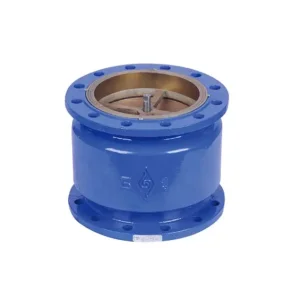
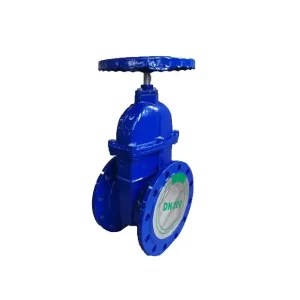
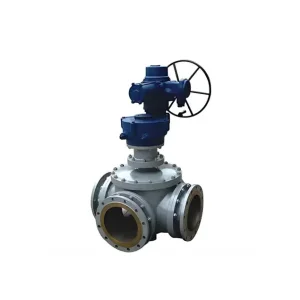
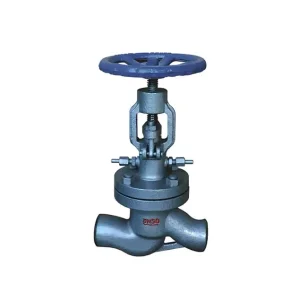
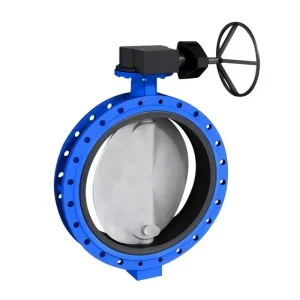
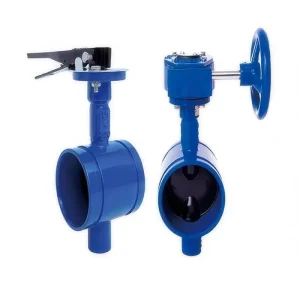
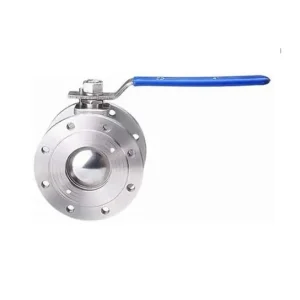
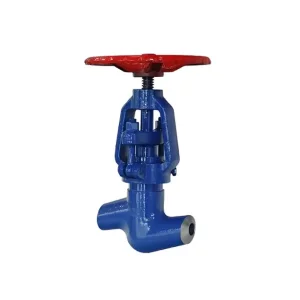
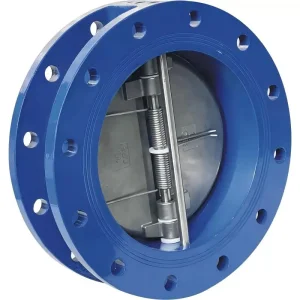
Heavy-Duty Valves: Globe, Check, Ball & Stainless Solutions
Complementary pipeline equipment engineered to the same exacting standards as our butterfly series, ensuring total plant balance and seamless procurement consolidation.
Frequently Asked Questions: Wholesale Wafer Valve Engineering
Direct answers from our senior valve design and metallurgical engineering team for procurement professionals, piping engineers, and project estimators.
What is the structural difference between wafer and lug style butterfly valves?
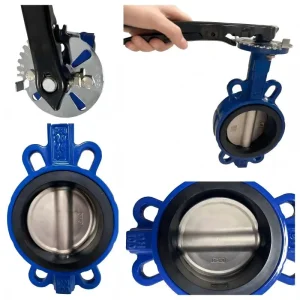
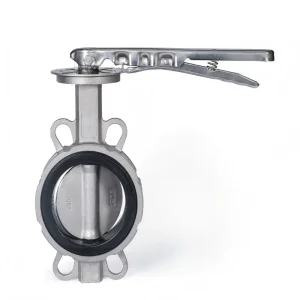
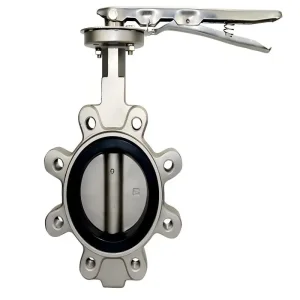
Wafer butterfly valves feature compact, lightweight bodies with centering holes or unthreaded locating lugs clamped between two mating pipe flanges via long through-bolts. Lug valves feature fully threaded internal bolt holes along their perimeter, allowing them to be unbolted from either side of the piping line to enable dead-end isolation service under full working pressure without disturbing downstream lines.
Why is in-house rubber compounding crucial for butterfly valve durability?
The resilient elastomer seat liner is the primary wear component determining sealing integrity and operating torque. By running Tianjin Dongfang Rubber Factory (established 1987) under our group, we control monomer quality, vulcanization temperatures, and carbon-black dispersion. This prevents elastomer embrittlement, swelling, premature permanent compression set, or bonding delamination commonly seen with outsourced generic seats.
Which standards govern your wafer butterfly valve dimensions and flange drillings?
Our wafer butterfly valves comply dimensionally with face-to-face standards ISO 5752 Series 20, EN 558 Series 20, and API 609 Category A. The universal wafer locating design permits mating with EN 1092-2 PN6/PN10/PN16, ASME/ANSI B16.1 Class 125, ASME B16.5 Class 150, BS 10 Table D/E, and JIS B2238 10K/16K flanges without requiring custom pattern casting modifications.
What testing procedures are applied before valve shipment release?
100% of manufactured valves are hydrostatically tested in conformance with ISO 5208 and EN 12266-1. The body shell is pressurized to 1.5 times the nominal working pressure (e.g., 24 bar for PN16). The resilient seat undergoes bi-directional shut-off testing at 1.1 times nominal pressure (e.g., 17.6 bar for PN16) along with a low-pressure pneumatic air seat test (6 bar) to verify Rate A (bubble-tight) closure.
Can you provide pinless discs and how do they benefit chemical processes?
Yes. Our high-performance series features a precision pinless stem-to-disc drive (hexagonal, squared, or double-D internal engagement). By eliminating taper pins drilled through the disc edge, we eliminate leak paths into the stem bore and prevent localized crevice corrosion, significantly extending service life in corrosive acids, seawater, and sanitary potable water pipelines.
What is the standard production lead time for full wholesale container shipments?
Standard concentric wafer butterfly valves in ductile iron with EPDM/NBR seats and stainless steel discs (DN50 to DN300) typically ship within 20 to 30 calendar days for full 20ft/40ft container quantities. Custom trims (such as Aluminum Bronze, Monel, Hastelloy, or virgin PTFE lined units) average 35 to 45 days, supported by our buffer casting stock in Tianjin.
Ready to Procure Direct from the Factory Source?
Contact the engineering sales division at Tianjin Top Automation Equipment Co., Ltd. for comprehensive 2D/3D CAD drawings, EN 10204 3.1 material certificates, and wholesale factory pricing.
