
Featured High-Performance & Industrial Valve Assemblies
Direct wholesale inventory produced to rigorous ASME, EN, DIN, and ISO standards with 100% shell and hydrostatic leakage certifications.
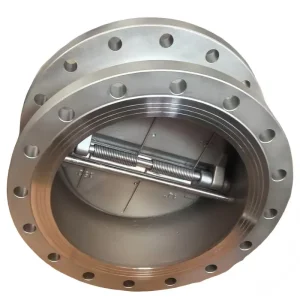
CE Compact Low-Pressure Drop Wafer Lift Check Valve
View Product Spec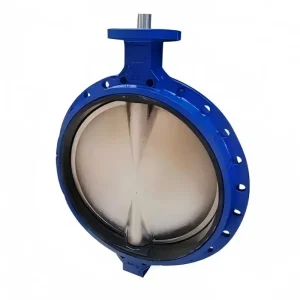
Wholesale Single Flange Heavy-Duty Butterfly Valve
View Product Spec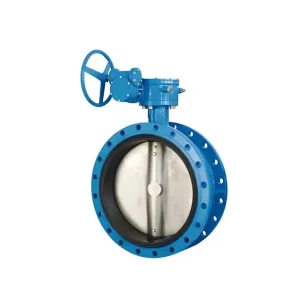
Wholesale Low-Torque Flange Type Industrial Butterfly Valve
View Product Spec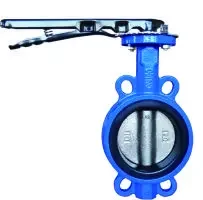
Precision Wafer Butterfly Valve for Direct Pipeline Isolation
View Product Spec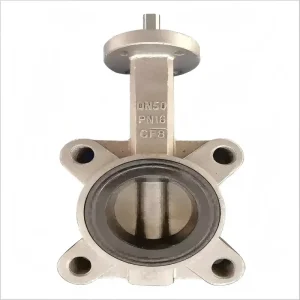
Wholesale Semi-Lug Versatile Industrial Flow Butterfly Valve
View Product Spec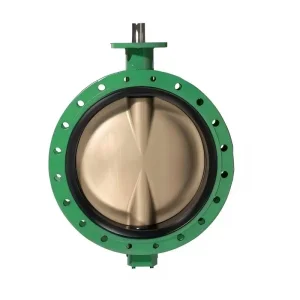
Flanged High-Capacity Water Butterfly Valve Assembly
View Product Spec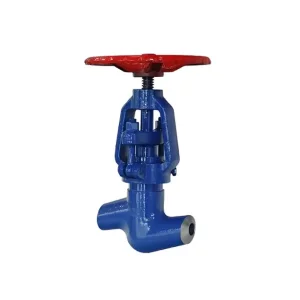
High-Temperature High-Pressure Power Station Globe Valve
View Product Spec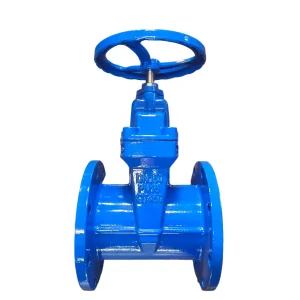
Full-Bore Industrial Gate Valve for Severe Service Isolation
View Product SpecTriple Offset Valve Butterfly: Kinematic Mechanics & Information Gain
Why procurement engineers and EPC plant contractors specify Triple Offset Valves (TOV) over standard gate valves, ball valves, and concentric rubber-lined butterfly valves.
Offset 1: Shaft Axis Displacement
The stem axis is intentionally located behind the valve seating plane. This foundational geometry generates an uninterrupted 360-degree continuous sealing boundary across the body bore, eliminating high-wear stem penetration holes found in concentric butterfly designs.
- Benefit: Continuous seal boundary
- Wear Mitigation: Zero shaft packing erosion
Offset 2: Eccentric Shaft Centerline
The shaft centerline is laterally offset from the pipeline center axis. During the initial quarter-turn stroke of actuation, the disc immediately cams away from the seat, drastically reducing contact friction across the entire 90-degree rotary profile.
- Kinematics: Immediate cam-off action
- Torque Profile: 40% lower breakout torque
Offset 3: Oblique Conical Geometry
The seat and disc sealing faces are precision-machined into an inclined conical cone axis. This geometry creates a pure "wedging" mechanical shutoff with zero rubbing, scuffing, or sliding contact until the final mechanical seating point.
- Sealing Type: Non-rubbing, torque-seated
- Integrity: ISO 5208 Rate A / ANSI FCI 70-2 VI
Comparative Engineering Matrix: TOV vs Conventional Technologies
Technical evaluation metrics used by pipeline engineers when evaluating lifecycle reliability, maintenance windows, and capital expenditure.
| Evaluation Parameter | Concentric Butterfly Valve | High-Performance Double Offset | Triple Offset Butterfly Valve (TOV) | Rising Stem Gate Valve |
|---|---|---|---|---|
| Seat Design & Contact | Continuous interference rubber rubbing | Elastomer or PTFE camming contact | Torque-seated pure metal-to-metal wedge | Sliding mechanical wedge friction |
| Operating Temperature Range | -20°C to +120°C (Elastomer limited) | -50°C to +260°C (PTFE limited) | -196°C to +650°C (Cryogenic to Steam) | -29°C to +425°C |
| Pressure Containment Capability | PN10 – PN16 / Class 150 | Class 150 – Class 300 | ASME Class 150, 300, 600, 900 (PN10-PN160) | Class 150 to Class 2500 |
| Fugitive Emissions Risk | Moderate (Elastomer aging) | Low-Medium (Rotary shaft) | Ultra-Low (ISO 15848-1 Class AH Certified) | High (Linear rising stem drags media) |
| Weight & Envelope Size | Compact & lightweight | Compact | 70% lighter than equivalent Gate Valve | Bulky, requires heavy crane scaffolding |
| Bi-Directional Bubble-Tight | Yes (Low pressure only) | Preferred directional sealing | True Bi-Directional Zero-Leakage (Rate A) | Prone to thermal binding & bypass |
China Factory 4.0: Supply Chain Resilience & Manufacturing Depth
Overcoming global supply disruptions through pure vertical integration in our 23,000 m² Tianjin production campus.
Independent Metallurgical Foundry
Unlike pure valve assembly houses, our group controls an independent foundry. We execute complete spectrographic chemical analysis and mechanical tensile testing on ductile iron (GGG40/50), WCB, CF8M, and Nickel-Aluminum Bronze before pouring patterns.
Proprietary Elastomer Compounding (Since 1987)
Originating from Tianjin Dongfang Rubber Factory, our in-house rubber division formulates vulcanized EPDM, NBR, and fluoroelastomers directly. This eliminates seat shrinkage, thermal cracking, and batch variance common in outsourced assembly setups.
Multi-Axis CNC Machining Accuracy
Our triple offset cone profiles are machined using multi-axis CNC centers with digital surface contour verification. Shaft bores, keyways, and laminate disc stacks are finished within micron tolerances to guarantee bi-directional sealing integrity.
100% Hydrostatic & Pneumatic Verification
Every valve undergoes automated hydrostatic shell pressure testing at 1.5x design pressure and high-pressure gas seat testing at 1.1x design rating. Zero leakage is confirmed prior to blast cleaning, robotic epoxy coating, and protective sea-freight packing.
Logistical Proximity to Tianjin Deepwater Port
Located in the Wuxia Industrial Park, Dongli District, our production lines sit 40 minutes from Tianjin Port (Xingang). This geographic advantage ensures rapid container consolidation, expedited customs clearance, and reduced transshipment lead times worldwide.
Comprehensive Digital Traceability
From raw melt heats to CNC tool paths and pressure test benches, every valve serial number links back to EN 10204 3.1 material test reports (MTR), heat numbers, and quality inspections for life-of-plant procurement audits.
Macro Industry Engineering Solutions
Engineered flow solutions deployed in demanding international engineering, procurement, and construction (EPC) projects.
Superheated Steam & Power Generation
High-temperature steam distribution lines experience thermal shocks that cause conventional gate valves to seize or crack. Our Stellite 21 hardfaced solid-metal seat TOVs maintain bubble-tight isolation at temperatures exceeding +550°C without galling.
- Standard: ASME B16.34 Steam Rating
- Seat Type: Solid Stellite 21 Hardfaced
LNG & Cryogenic Gas Terminals
For liquid natural gas (-162°C) and cryogenic nitrogen service, extended bonnet designs relocate the stem packing outside the cold zone to prevent ice formation. Graphitic and multi-ply stainless laminates ensure zero seal deformation under extreme shrinkage.
- Compliance: BS 6364 Cryogenic Testing
- Temperature: Rated down to -196°C
Desalination, Offshore & Marine Piping
Seawater reverse osmosis (SWRO) environments aggressively attack standard stainless steels via chloride pitting. We cast bodies and discs in Nickel-Aluminum Bronze (C95800) and Duplex 2205/2507 to deliver decades of crevice corrosion resistance.
- Metallurgy: Ni-Al Bronze / Duplex Stainless
- Approvals: Marine Type Approvals Available
Chemical Processing & Toxic Hydrocarbons
Managing volatile air pollutants requires zero fugitive stem emissions. Our triple offset valves feature live-loaded PTFE or graphite packing rings certified to ISO 15848-1 AH standards, safeguarding both workers and environmental metrics.
- Fugitive Emissions: ISO 15848-1 / TA-Luft
- Fire-Safety: API 607 / ISO 10497 Certified
Municipal Potable Water Networks
Our WRAS-approved butterfly valve product lines satisfy strict British and European water quality parameters. In-house molded, NSF/WRAS-certified EPDM liners eliminate heavy metal leaching, ensuring zero biological contamination in distribution mains.
- Certification: WRAS Approval No. 4020G/4325G
- Media: Bulk Treated Municipal Drinking Water
District Heating & HVAC Energy Grids
High-rise urban infrastructure demands lightweight, bi-directional control valves that minimize pumping energy consumption. Our low-torque disc profiles streamline Cv flow capacity while delivering drop-tight seasonal dead-end shutoff.
- Pressure: PN16 / PN25 High Head Rating
- Operation: Gear, Pneumatic & Modulating Electric
Technology Roadmap & Future Outlook (2025–2030)
How our engineering department is evolving triple offset butterfly valve designs for next-generation clean energy, zero-emissions infrastructure, and Industrial IoT.
Hydrogen Service & Embrittlement Resistance
Pure hydrogen transportation demands specialized metallurgy with low inclusions to resist high-pressure hydrogen embrittlement. We are qualifying ultra-dense forge-cast austenitic alloys with mirror-finished diamond-like carbon (DLC) coatings for Class 600 H2 pipelines.
Industrial IoT Smart Valve Actuation
Integrating wireless piezo-electric acoustic emissions sensors and Hall-effect angle transducers within the mounting bracket. Maintenance supervisors can predict seat wear, packing decay, and operational torque fluctuations weeks before scheduled downtime.
Decarbonized Foundry Green Casting Operations
Transitioning our Tianjin smelting foundry to closed-loop induction electric melting powered by renewable regional grids. Our goal: reduce embodied carbon across every ton of finished valve body by 35% across the 2026-2028 manufacturing cycle.
Localized Support, Audits & Compliance Guarantees
How wholesale buyers, international valve stockists, and EPC contractors verify accountability across borders.
Third-Party Inspection (TPI) Welcome
We routinely host independent verification agencies—including SGS, Bureau Veritas, TÜV Rheinland, and DNV. TPI teams audit PMI (Positive Material Identification), witness hydrostatic testing, review radiography films, and inspect packaging seals prior to vessel loading.
Comprehensive Material Documentation
Every shipment is accompanied by complete mill test certificates in accordance with EN 10204 Type 3.1 / 3.2. Chemical breakdown, Charpy V-notch impact values, Brinell hardness reports, and certificate of conformity dossiers are delivered in full prior to port dispatch.
Complete Engineering Drawing Support
Our Tianjin technical design team delivers custom CAD drawings, STEP 3D models, flow coefficient (Cv) curves, and actuation torque sizing calculations within 24 hours of inquiry to streamline your pipeline skid layout and piping design approvals.
Engineered Flow Control Inventory & Specialized Builds
Explore additional high-specification butterfly, gate, check, and control valve models manufactured directly in our Tianjin facility.
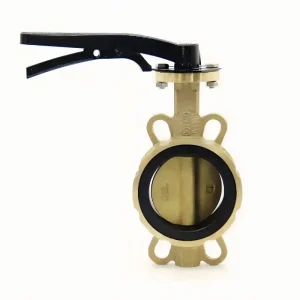
Aluminum Bronze Seawater Corrosion-Resistant Butterfly Valve
View Product Spec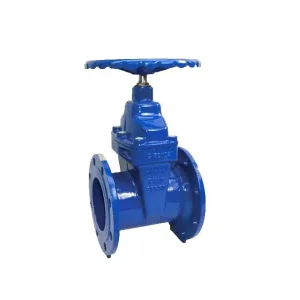
Non-Rising Stem Resilient Seat Sealing Gate Valve
View Product Spec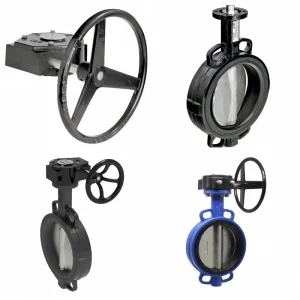
WRAS Approved High-Performance Butterfly Valve 4020G
View Product Spec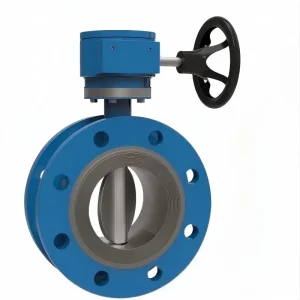
Double-Flanged Industrial Pipeline Butterfly Valve
View Product Spec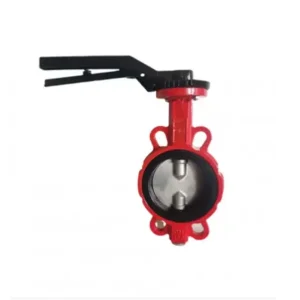
High-Strength Double Half-Shaft Wafer Butterfly Valve
View Product Spec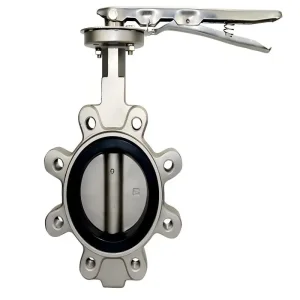
Stainless Steel Lug Pattern High-Durability Butterfly Valve
View Product Spec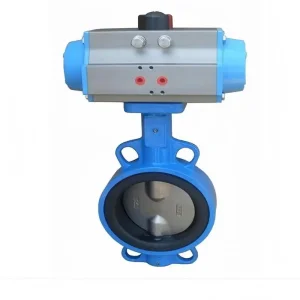
Automated Pneumatic Actuated Butterfly Valve Assembly
View Product Spec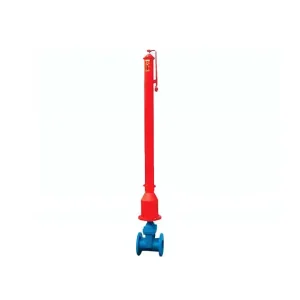
Underground Buried Elastic Resilient Seat Gate Valve
View Product SpecFrequently Asked Questions: Global Sourcing & Engineering
Comprehensive technical and commercial responses to common inquiries submitted by international procurement leaders and EPC piping designers.
What is the fundamental sealing difference between a double offset and triple offset butterfly valve?
A double offset (high-performance) valve utilizes two eccentric axes to cam the disc off the seat, yet relies on interference friction during final closure, typically requiring an elastomer or PTFE seal. A triple offset valve adds a third conical angular offset, converting the rotary contact into an oblique wedging action with pure metal-to-metal sealing and zero rubbing friction.
Can your triple offset butterfly valves deliver true bi-directional zero-leakage shutoff?
Yes. Our triple offset valves are precision torque-seated and manufactured to API 598 and ISO 5208 Rate A (zero bubbles) in both normal forward and reverse flow directions. This capability makes them ideal for double block and bleed (DBB) isolation, tank terminals, and reversible pumping stations.
How does purchasing direct from your Tianjin factory reduce total cost of ownership (TCO)?
We eliminate intermediate trading markups by operating an integrated foundry (since 1996) and elastomer compounding plant (since 1987). Buyers receive direct-from-foundry material pricing, traceable EN 10204 3.1 certification, faster engineering revision response, and 100% factory-tested quality.
What certifications support your butterfly and gate valve manufacturing operations?
Our management systems are ISO 9001, ISO 14001, and ISO 45001 certified. Product models carry CE conformity according to the Pressure Equipment Directive (PED 2014/68/EU), WRAS approvals for drinking water, and fire-safe qualifications to API 607 / ISO 10497.
Can you provide custom face-to-face dimensions and special drilling standards?
Yes. We machine valve body flanges to ASME B16.5, EN 1092-1 (PN10, PN16, PN25, PN40), BS 10, and JIS standards. Face-to-face dimensions follow API 609 Category B long and short patterns, ISO 5752, or DIN 3202 to enable direct drop-in replacement of existing gate or ball valves.
What is the standard production and shipping lead time for wholesale quantities?
Standard resilient seated and high-performance valves in stock ductile iron or WCB materials ship within 15–25 business days. Engineered triple offset valves or specialized nickel-aluminum bronze builds typically require 35–45 days. Rapid container transit is coordinated directly through Tianjin Port.
