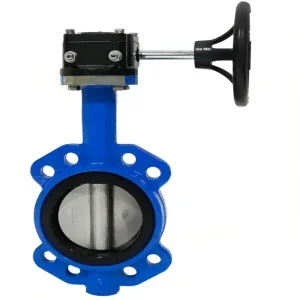
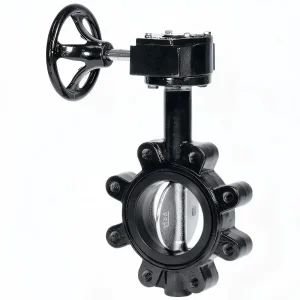
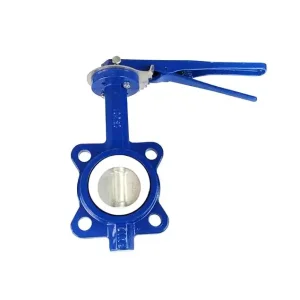
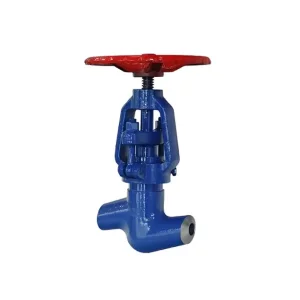
Precision Industrial Flow Control Inventory (Tier 1 Showcase)
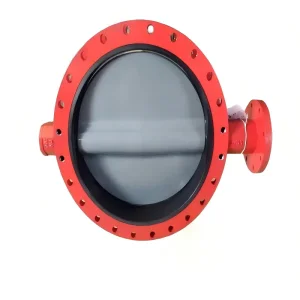
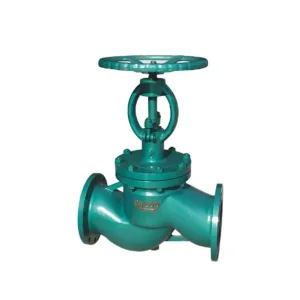
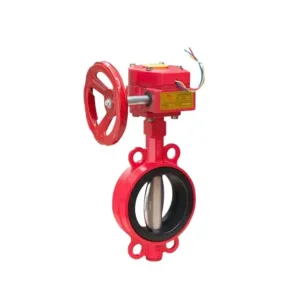
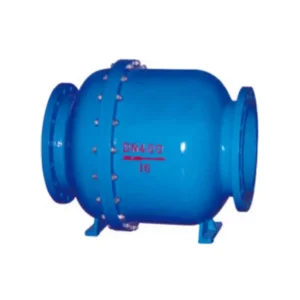
Explore our verified selection of wafer butterfly, globe, check, and high-performance pipeline valves manufactured in accordance with strict international tolerance requirements.
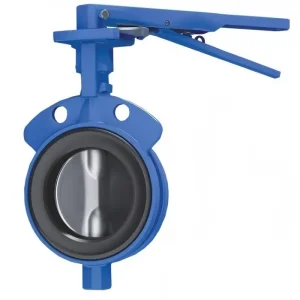
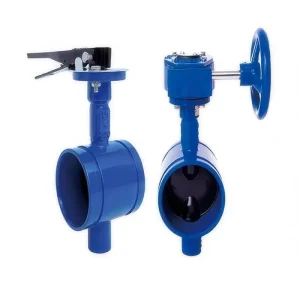
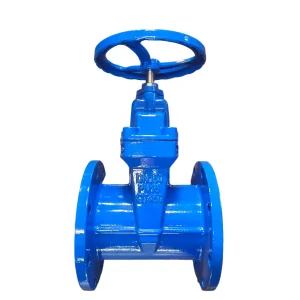
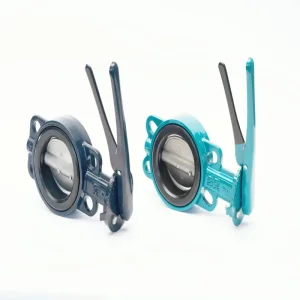
The Macro Shift toward Stainless Steel Thin (Wafer) Ball Valves
Modern industrial plants face escalating spatial constraints, stringent seismic loading factors, and escalating requirements for zero-cavity hygiene. In response, international EPC contractors and process engineers are transitioning from conventional three-piece and flanged two-piece ball valves to high-integrity stainless steel ultra-thin wafer ball valves.
Ultra-Short Face-to-Face Envelope
Traditional flanged valves introduce heavy structural overhang and excessive pipe joint stress. Wafer-thin ball valves reduce the axial dimension by up to 70%, clamping seamlessly between pipeline flanges (EN 1092-1 PN16/40, ASME B16.5 Class 150/300) without adding cantilever torque onto process manifolds.
Corrosion Immunity: CF8M & CF3M
Fabricated using precision investment silica-sol casting, our valve bodies employ low-carbon stainless steel (SS304/CF8, SS316/CF8M, and SS316L/CF3M). This completely eliminates intergranular corrosion and handles aggressive caustic chemicals, brine solutions, and high-purity industrial water systems.
Cavity-Filling & Fire-Safe Topology
Dead volumes within valve bodies harbor fluid stagnation, crystallization, and bacterial colony growth. Our thin ball valves can be customized with cavity-filled Virgin/Modified PTFE seats, coupled with anti-blowout stem designs and fire-safe graphitic secondary seals complying with API 607.
Vertically Integrated Foundry & Rubber Compounding Excellence
Unlike typical broker companies, Tianjin Top Valve integrates decades of legacy metallurgic casting and proprietary polymer vulcanization on a singular 23,000 m² smart plant footprint.
1. Independent Foundry
Operating our own high-precision induction furnaces ensures precise carbon-content suppression and strict chemical spectral control for raw SS304/SS316 melts prior to machining.
2. In-House Elastomer Lab
Inheriting Tianjin Dongfang Rubber's compounding legacy (established in 1987), our engineers formulate proprietary EPDM, FKM, and food-grade PTFE blends for exceptional seat resiliency.
3. 5-Axis CNC Milling
Micro-finishing the spherical surface of stainless balls to mirror polish (Ra ≤ 0.2 μm) minimizes actuator torque loads, prevents seat abrasion, and guarantees low maintenance overhead.
4. 100% Dual-Stage Testing
Every thin valve body completes hydrostatic shell testing at 1.5× nominal pressure and high-sensitivity low-pressure pneumatic seat testing conforming strictly to ISO 5208.
Comparative Engineering Parameters: Thin Ball vs. Standard Valves
Review the mechanical differences between ultra-thin wafer ball valves and standard pipeline configurations to assist process engineers in making informed technical selections.
| Evaluation Parameter | Stainless Steel Thin Ball Valve (Wafer) | Standard 2-Piece / 3-Piece Ball Valve | High-Performance Wafer Butterfly Valve |
|---|---|---|---|
| Face-to-Face Envelope | Ultra-short (conforming to factory wafer standard), saves 60-75% axial length. | Standard ASME B16.10 length; requires large spatial clearance. | Compact face-to-face (ISO 5752 series 20), similar to thin ball valve. |
| Internal Fluid Resistance (Cv) | High flow coefficients; unobstructed circular bore profile with low headloss. | Full-port profiles provide maximum flow, but require heavy cast bodies. | Disc remains in fluid path, creating localized drag and higher pressure drop. |
| Cavity Trapping Mitigation | Optional fully encapsulated cavity-filler seats prevent fluid accumulation. | Prone to fluid trapping between ball and body cavity in standard models. | Naturally cavity-free disc architecture; zero entrapped internal volumes. |
| High-Viscosity & Slurry Suitability | Self-cleaning ball action sweeps across seats, wiping away sticky media. | Accumulates media residues inside the shell body over extended duty cycles. | Slurry solids can abrade elastomer seals along the perimeter disc track. |
| Actuator Mounting Standard | Integrated ISO 5211 direct-mount platform; eliminates bracket flex and misalignment. | May require external mounting brackets and custom drive couplings. | Integrated ISO 5211 direct-mount platform standard across modern designs. |
| Pressure & Vacuum Capability | Bi-directional Class VI bubble-tight shutoff from full vacuum to PN40 (600 PSI). | Excellent pressure handling up to ANSI 600/900; bulky in smaller diameters. | Limited differential pressure thresholds on resilient seat designs (typically PN16/25). |
Worldwide Macro Solutions & Local Application Scenarios
Engineered to comply with local codes across North America, the European Union, the Middle East, and Southeast Asia, our stainless steel thin ball valves deliver long-term reliability in critical infrastructure projects.
Compact Marine Skids & Desalination
Onboard commercial shipping vessels and offshore RO desalination platforms, deck space is at an absolute premium. CF8M wafer ball valves resist saline corrosion while fitting within dense manifold arrangements, meeting BV, DNV, and Lloyd's Register naval piping expectations.
Food, Beverage & Clean Steam Services
Sanitary food processing, microbrewery automation, and pharmaceutical utility lines require zero dead-zones to prevent microbial contamination. Our thin-profile ball valves feature electropolished surfaces, USDA-grade cavity-fillers, and rapid CIP/SIP sterilization capability.
Municipal Cryogenics & Chemical Dosing
Municipal wastewater dechlorination systems and industrial chemical dosers handle aggressive reagents including ferric chloride, caustic soda, and hydrochloric acid. Thin-section 316L ball valves with virgin PTFE seats withstand continuous chemical exposure without pitting.
Compliance Framework & International Delivery Guarantees
We assist Tier-1 EPC contractors and regional valve distribution partners in navigating jurisdictional safety standards, export classifications, and site inspection procedures.
Standardization Matrix
Complies with EU Pressure Equipment Directive (PED 2014/68/EU), CE marking, WRAS certifications for potable lines, ISO 9001:2015 traceability, and API 598 pressure testing standards.
EN 10204 3.1 Traceability
Every shipment is accompanied by complete heat-number chemical and mechanical metallurgical testing documentation, non-destructive test (NDT) reports, and dimensional inspection sign-offs.
Port-Proximity Logistics
Situated within Dongli District, Tianjin, our facilities leverage direct motorway access to Tianjin Xingang Port, cutting freight handling times and delivering consolidated sea container schedules globally.
Engineering Horizons: The Future of Thin Ball Valve Architecture
As digital twin networks, IIoT telemetry, and zero-emission mandates transform process control, our R&D team is standardizing intelligent valve advancements across all product families.
Smart Actuator Diagnostics
Integrated wireless sensors reporting real-time stem torque profiles, detecting early seat abrasion before leakage occurs.
Low-Emission ISO 15848-1
Upgraded live-loaded Chevron packing systems to eliminate fugitive volatile organic compound (VOC) emissions down to Class AH.
Advanced Nanocomposites
Carbon-nanotube reinforced PTFE seats that double thermal wear resistance up to 260°C without polymer degradation.
Additive Titanium Alloys
Hybrid 3D printing and casting methods for specialized Super Duplex and Titanium wafer bodies in extreme deep-sea chemical applications.
Frequently Asked Technical & Procurement Inquiries
In-depth guidance covering materials, installation standards, and operating capabilities for technical sales engineers, project specifiers, and procurement leads.
What defines a "thin" ball valve compared to traditional 2-piece or 3-piece ball valves?
Can stainless steel thin ball valves be actuated with electric or pneumatic operators?
What seat materials are available for handling high-temperature or aggressive media?
How does Tianjin Top Valve guarantee zero-leakage performance across production batches?
What flange standards are compatible with your wafer thin ball valves?
Specialty High-Pressure & Severe Duty Valve Selections (Tier 2 Showcase)
Explore our specialized portfolio of CE-certified wafer, gear-operated, pinless, power station, and fluoropolymer-lined butterfly valves manufactured directly in our facilities.