
Engineered Flow Control Assemblies — Batch I
Explore high-performance industrial valves manufactured in our vertically integrated Tianjin production campus. Every unit undergoes precision machining, ultrasonic wall verification, and 100% hydrostatic shell and seat testing prior to crate dispatch.
-
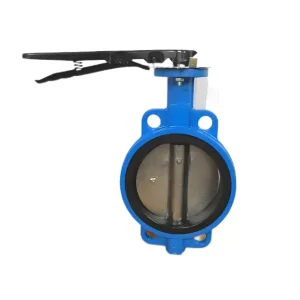
Wholesale Low - Pressure Wafer Type Butterfly Valve Supplier, Manufacturers
Request Engineering Quote -
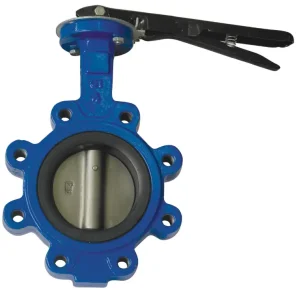
High-Quality Lug type manual operated butterfly valve Manufacturers, Factory
Request Engineering Quote -
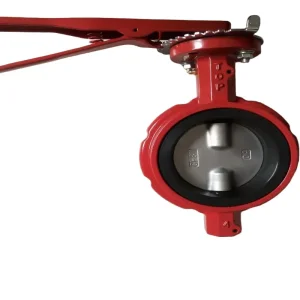
Wholesale Lugless Semi-Shaft Wafer Butterfly Valve - Durable & Reliable Manufacturer, Factory
Request Engineering Quote -
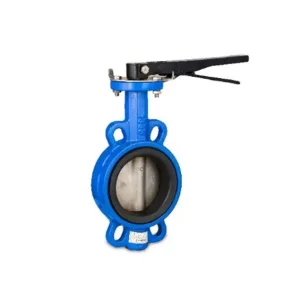
High-Quality Rubber Lined Pinless Butterfly Valve Supplier, Factories
Request Engineering Quote -
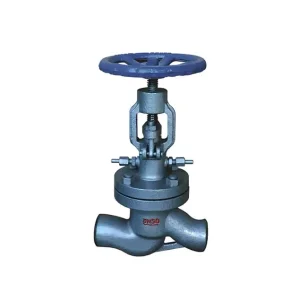
High-Quality Water Seal Globe Valve with Quick - Closing Feature Manufacturers, Manufacturer
Request Engineering Quote -
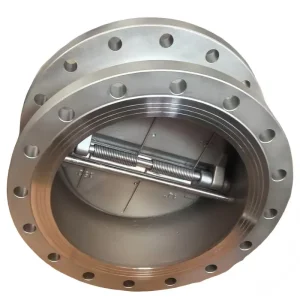
CE Certification Compact Low-Pressure Drop Wafer Lift Check Valve Supplier, Factories
Request Engineering Quote -
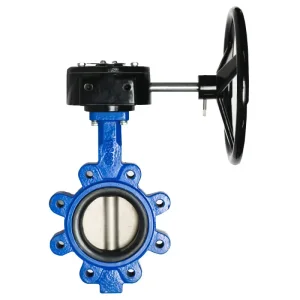
High-Quality Lug type Butterfly valve Suppliers, Manufacturers
Request Engineering Quote -
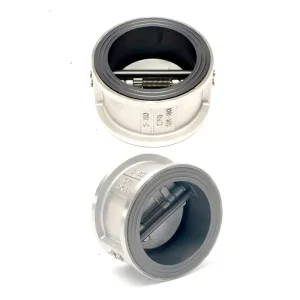
CE Certification Compact Wafer Lift Check Valve with Low - Pressure Drop Supplier, Manufacturers
Request Engineering Quote
Kinematic Precision: Mechanics of Outside Screw & Yoke (OS&Y) Rising Stem Globe Valves
In critical thermal fluid dynamics and high-pressure chemical handling, the rising stem globe valve stands as the preeminent standard for precise flow throttling and absolute process isolation.
Unlike quarter-turn ball or butterfly valves where localized velocity gradients can cause cavitation and severe acoustic resonance across partially throttled discs, an industrial rising stem globe valve utilizes an axial disc displacement perpendicular to the seat plane. This tortuous, multi-turn fluid path introduces a predictable pressure recovery coefficient (FL), moderating Reynolds stress and suppressing cavitation damage across high differential pressures (ΔP).
When operating under elevated pressures (ASME Class 150 to Class 2500 / PN16 to PN420), stem thrust computation dictates packing integrity. Tianjin Top Automation Equipment utilizes high-tensile 17-4PH or ASTM A182 F6a/F316 ground stems finished to an arithmetic average roughness (Ra) of ≤ 0.4 μm. This mirror-like micro-finish directly counteracts packing extrusion and minimizes breakaway friction against braided flexible graphite rings, ensuring seamless compliance with low-fugitive emission benchmarks like ISO 15848-1 Class AH and API 641.
The Chinese Factory Advantage: Vertical Integration in Tianjin
Why Tier-1 global EPCs and mechanical distributors contract Tianjin Top Automation Equipment Co., Ltd. for mission-critical rising stem globe valve procurement.
In-House Foundry & Metallurgy
Dating back to 1996 through Tianjin Donglian Valve Factory, our group controls an independent foundry pouring ductile iron, WCB, LCC, WC6, and duplex stainless alloys. Melt chemistry is validated using optical emission spectrometers before pouring, eliminating porous defect scrap.
Elastomer & Polymer Synergy
Our affiliate Tianjin Dongfang Rubber Factory (founded in 1987) compounds and moulds specialized synthetic rubbers, PTFE, and high-purity packing in-house. This direct control eliminates the sealing variability common in facilities that outsource soft-goods fabrication.
CNC Centers & Hardfacing Cell
Equipped with horizontal machining centers and automated Plasma Transferred Arc (PTA) Stellite hardfacing systems. Seat surfaces receive uniform cobalt-chromium alloys overlaid to at least 2.0 mm thickness, yielding Rockwell hardness values exceeding HRC 40–45.
Global Industry Evolution: The Next Generation of Rising Stem Globe Valves
Stringent environmental standards and smart plant automation are reshaping globe valve design from passive shut-off mechanical hardware into active, digitally monitored flow assets.
Live-Loaded Fugitive Control
Strict carbon-neutrality mandates compel plants to eliminate volatile organic compound (VOC) emissions. Modern OS&Y valves integrate Belleville spring live-loaded gland systems that adjust packing compression automatically under thermal cycling.
Smart Actuation & IoT Sensing
Rising stem designs now pair directly with intelligent multi-turn electric and electro-hydraulic actuators. High-resolution linear Hall-effect position encoders deliver real-time stem thrust and travel diagnostics over HART or Modbus protocols.
Multi-Stage Anti-Cavitation Trims
For severe pressure drops (Class 900+ boiler feed and blowdown lines), traditional parabolic plugs are upgraded to drilled cage or labyrinth disc designs that disperse pressure step-by-step, eliminating sonic velocity erosion and vibration.
Hermetic Bellows Hybrid Sealing
For cryogenic media, thermal oil, and toxic anhydrous ammonia services, multi-ply hydroformed Inconel or stainless steel bellows cartridges work with standard OS&Y stems to establish zero-leakage dual-boundary containment.
Engineering Application Scenarios & Duty Parameters
Rising stem globe valves serve distinct flow dynamics. Below is an engineering roadmap mapping process parameters to metallurgy, disc configurations, and applicable design standards.
| Application Environment | Typical Working Media | Nominal Pressure & Temp | Recommended Metallurgy | Disc & Trim Architecture | Governing Specification |
|---|---|---|---|---|---|
| Superheated Steam Mains | High-pressure dry steam | ASME Class 600–1500 (≤ 540°C) | ASTM A217 WC6 / WC9 / C12A | Stellite No. 6 faced Parabolic Plug | ASME B16.34 / BS 1873 |
| Petrochemical Refining | Hydrocarbons, sour gas, H2S | ASME Class 150–600 (-29°C to 425°C) | ASTM A216 WCB / A351 CF8M | NACE MR0175 Trim 8 / Trim 12 | API 623 / API 602 |
| Refrigeration & Chemical | Anhydrous Ammonia (NH3) | PN25 / PN40 (-40°C to 150°C) | Ductile Iron QT450 / WCB | Deep cone seat with PTFE soft seal | EN 13709 / DIN 3356 |
| Marine Auxiliary Boilers | Seawater cooling, fuel oil lines | JIS 10K / 20K (Ambient to 180°C) | Bronze RG5 / Cast Steel SC450 | Quick-closing weighted safety disc | JIS F7305 / ISO 5208 |
| District Heating Sub-stations | Pressurized hot water & condensate | PN16 / PN25 (≤ 200°C) | Ductile Iron EN-GJS-400-18-LT | Equal percentage regulating throttle | EN 1092-2 / CE Mark |
In thermal power loops and high-pressure steam utility stations, disk chatter caused by turbulence across the seat port can rapidly destroy guiding surfaces. Tianjin Top Automation Equipment uses precision-machined heavy-duty body guide ribs to anchor the disc through its entire stroke. This eliminates lateral deflection, galling, and uneven seat erosion, ensuring tight shut-off even after thousands of high-temperature cycles.
Enterprise-Grade Valve Solutions for Global Infrastructure Projects
We supply modular, skid-ready flow assemblies and turnkey packages tailored to international EPC project specifications and demanding mechanical contracts.
Complete Boiler Island Piping Packages
Supplying comprehensive valve packages for thermal generation projects, combining rising stem globe valves (boiler feed water, main steam isolation), dual-plate check valves, and high-performance butterfly valves under unified material test reports (MTR) and CE/PED compliance.
Specialty Marine & Offshore Skids
For naval architects and shipyard engineering teams, we supply quick-closing marine valves, nickel-aluminum bronze butterfly valves, and high-pressure bronze-trimmed globe valves built to ABS, DNV, and BV marine society certification standards.
Municipal Water & District Energy Networks
Municipal water authorities and heating conglomerates trust our resilient-seated gate valves, WRAS-approved water butterfly valves, and throttling globe valves for energy-efficient pressure regulation across municipal networks in over 50 export countries.
Enterprise QA/QC Matrix: Meeting Strict EPC Procurement Protocols
Global procurement teams demand full verification before issuing purchase orders. Here is how our production facility guarantees compliance with international quality standards.
Procuring industrial valves from overseas factories requires rigorous risk management. At Tianjin Top Automation Equipment Co., Ltd., quality control is embedded directly into every phase of manufacturing rather than treated as a final checkbox:
- MTR Verification & Traceability: Every cast heat and forged bar lot is permanently logged. Material Test Reports (MTR) meeting EN 10204 Type 3.1 (with independent 3.2 inspection available via SGS, TÜV, or Lloyd’s Register) verify chemical composition and mechanical tensile, yield, elongation, and Charpy V-notch impact values.
- Non-Destructive Examination (NDE): High-pressure casting runs receive Radiographic Testing (RT) and Ultrasonic Testing (UT) on critical pressure-containing zones per ASME B16.34 Appendix I. Machined surfaces, seal weld overlays, and stem threads undergo 100% Magnetic Particle (MT) or Liquid Penetrant (PT) inspection.
- Hydrostatic & Pneumatic Seat Verification: Every single valve undergoes pressure testing per API 598, ISO 5208, or EN 12266-1. Shell test pressures are maintained at 1.5× the cold working pressure (CWP), while high-pressure hydrostatic and low-pressure pneumatic seat tests check for zero detectable leakage across the seat plane.
- Preservation & Heavy-Duty Crating: Machined flange faces receive rust-preventive oil and heavy plastic end protectors. Valve bodies are heat-sealed in thick anti-moisture vapor-barrier foil within reinforced, fumigated plywood export crates engineered for ocean container freight.
Engineering Questions Procurement Teams Ask Before Ordering
Answers to common questions regarding valve dimensions, metallurgy options, lead times, and factory audit requirements.
What makes an Outside Screw & Yoke (OS&Y) rising stem valve preferable to an inside screw non-rising stem (NRS) design?
How does your factory prevent fugitive emissions along the rising stem boundary?
What materials and trims are available for corrosive and high-temperature services?
Can your factory supply rising stem globe valves drilled to ASME, DIN, and JIS standards within the same project?
What is your typical production lead time for wholesale container shipments?
How can overseas clients conduct video or third-party factory audits?
Engineered Flow Control Assemblies — Batch II
Complete your mechanical specifications with our precision-engineered butterfly, check, gate, and high-pressure power station globe valves, built for demanding processing systems worldwide.
-
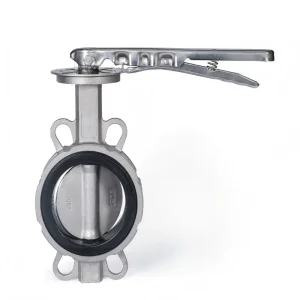
Wholesale Stainless Steel Butterfly Valve - Durable & Corrosion-Resistant Suppliers, Manufacturer
Request Engineering Quote -
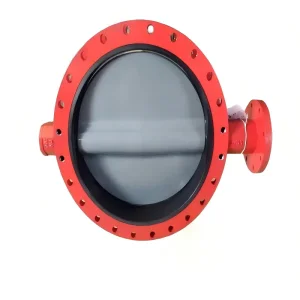
Wholesale Ceramic Disc Wafer Butterfly Valve - Durable & Efficient Design Supplier, Factories
Request Engineering Quote -
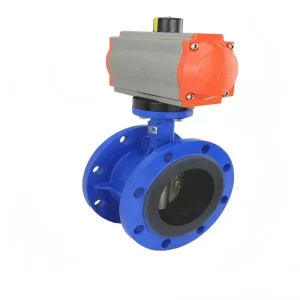
High-Quality Pneumatic Butterfly Valve - Reliable Flow Control Solution- Lug butterfly valve, flanged butterfly valve Suppliers, Manufacturers
Request Engineering Quote -
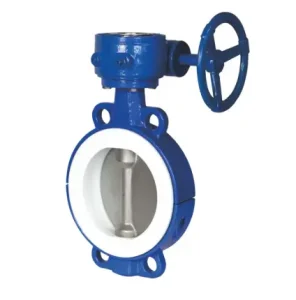
Wholesale PTFE Lined Butterfly Valve - Durable & Corrosion Resistant Manufacturers, Manufacturer
Request Engineering Quote -
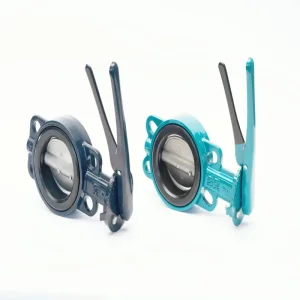
CE Certification Water-Safe Butterfly Valve for Efficient Flow Control Manufacturers, Manufacturer
Request Engineering Quote -
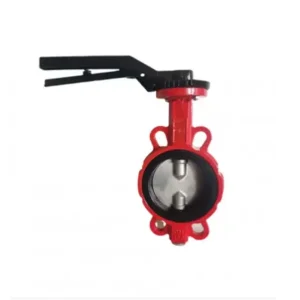
High-Quality Double Half Shaft Wafer Butterfly Valve Supplier, Manufacturer
Request Engineering Quote -
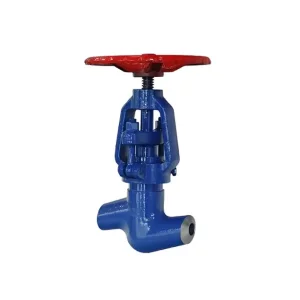
High-Quality High Temperature And High Pressure Power Station Globe Valve Manufacturers, Manufacturer
Request Engineering Quote -
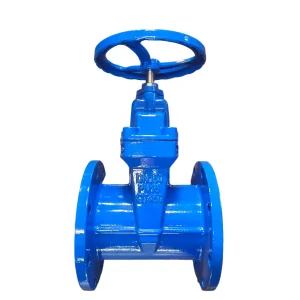
Wholesale High-Quality Gate Valve for Reliable Flow Control Manufacturer, Factories
Request Engineering Quote
