Engineered Industrial Flow Solutions
Explore high-integrity quarter-turn and non-return valves manufactured directly in our specialized foundry and machining complexes.
Architecture & Kinematics of 3-Way Stainless Steel Ball Valves
An in-depth engineering assessment of L-Port vs. T-Port multi-port mechanics, material performance under severe corrosive cycles, and thermodynamic reliability.
L-Port (Diverting) Kinematics
The L-Port configuration (90° turn) is designed primarily for dual-direction switching and direct fluid diversion. By rotating the 90-degree internal ball conduit, fluid can be smoothly shifted between Port 1 and Port 2, or redirected from Port 1 to Port 3 without stalling line pressure.
Our Tianjin precision machining ensures that during intermediate switching positions, hydraulic hammer is minimized through gradual cross-sectional aperture control, protecting upstream pumps and flow sensors.
T-Port (Mixing & Splitting) Flexibility
The T-Port ball arrangement (180° rotation) provides simultaneous multi-channel access, functioning as a high-precision proportioning, diverting, or converging component. It permits simultaneous three-way straight-through flow or precise mixing of two varying chemical or aqueous media into one common outflow.
Equipped with four-sided reinforced PTFE or RTFE seats, our T-Port valves maintain full cavity balance, preventing cross-leakage across non-active pipe ports under differential pressure up to 64 Bar (Class 400 equivalent).
Corrosion Dynamics: CF8M & CF3M Metallurgy
Industrial flow loops carrying halogenated brines, organic acids, or demineralized steam require robust anti-pitting resistance. Utilizing investment casting per ASTM A351 (Grades CF8, CF8M, CF3M), our foundries verify that the Pitting Resistance Equivalent Number (PREN) consistently exceeds strict petrochemical guidelines.
Each casting heat undergoes spectrometer analysis before tapping to guarantee low carbon content, eliminating sensitization during line welding and preserving boundary chromium concentration.
The Chinese Factory Advantage: Tianjin Integrated Ecosystem
Combining legacy metallurgical foundry traditions with cutting-edge robotic CNC tooling and direct coastal port logistics.
Vertically Integrated Foundry Control
Unlike assembly-only vendors, Tianjin Top Valve leverages dedicated casting foundries established through decades of operational heritage (including group entities since 1987 and 1996). Controlling shell mould creation, electric induction melting, and sand reclaiming allows complete authority over metallurgical soundproof density and gas-porosity exclusion.
Direct-Bonded Elastomer & Seat Molding
The operational lifespan of a multi-port ball valve rests on polymer elastic recovery and torque consistency. With group facilities formulating high-purity PTFE, R-PTFE, and PEEK components, seal creep under continuous cyclical thermal excursion is mitigated, ensuring zero-seat migration even during high-frequency pneumatic duty.
Supply Chain Density & Export Proximity
Situated within the Wuxia Industrial Park in Tianjin, our facility benefits from hyper-concentrated raw material supply lines, high-speed forging centers, and direct highway conduits to Tianjin Port. This logistical synergy compresses lead times from 12 weeks down to standard 3-4 week dispatch cycles for custom project manifolds.
Technical Specification & Standard Compliance Matrix
A reference checklist for piping engineers, EPC specification reviewers, and global procurement managers.
| Engineering Parameter | Industrial Class / Standard | Material / Construction Options | Procurement & QC Verification Criteria |
|---|---|---|---|
| Nominal Diameters | DN15 to DN200 (1/2" to 8") | Full Bore & Reduced Bore | 100% Calibrated Go/No-Go Gauge Inspection |
| Pressure Ratings | PN16, PN25, PN40, Class 150 / 300 | Investment Cast CF8M / CF8 / WCB Body | Hydrostatic Shell Test at 1.5x Design Pressure |
| Seat / Seal Compounds | PTFE, RTFE (15% Glass Fiber), PEEK, Delrin | Virgin Teflon / Enhanced Carbon-Filled | Bubble-Tight Air Seat Test per API 598 / EN 12266-1 |
| End Connection Standards | ASME B16.5, EN 1092-1, BSPP, NPT, Tri-Clamp | Flanged, Female Threaded, Sanitary Clamp | Flange Face Finish: Ra 3.2 - 6.3 µm (Smooth Serrated) |
| Actuator Interface | ISO 5211 Standardized Direct Mount Pad | F03, F04, F05, F07, F10, F12 Patterns | Square / Double D Stem with Blowout-Proof Design |
| Working Temperatures | -29°C to +180°C (PTFE); Up to +260°C (PEEK) | Low-Temp Stainless, High-Temp Graphite Packing | Cryogenic / Elevated Thermal Cycle Testing Protocol |
Global Industry Solutions: Precision Media Handling
High-integrity stainless steel three-way ball valves deployed across severe-duty chemical plants, clean-utility biotech skids, and maritime systems.
Chemical & Petrochemical
Acid handling, solvent distribution, and batch reaction diversion. Automated multi-port valves eliminate multiple isolation points, significantly cutting fugitive emissions and reducing installation envelope size.
HVAC & District Cooling
Chilled and hot water balancing networks utilize three-way diverter valves to regulate heat exchanger intake. Modulating electric actuators provide closed-loop thermal efficiency without system pressure shocks.
Food, Beverage & Pharma
Sanitary polishing (Ra < 0.4 µm) combined with cavity-filled ball seats prevents media stagnation and microbial proliferation, ensuring complete clean-in-place (CIP) and steam-in-place (SIP) compliance.
Water & Desalination
High-salinity reverse osmosis plants utilize dual-phase and CF8M 3-way manifolds to cycle permeation and brine reject flows without localized intergranular stress cracking.
Emerging Valve Technologies & Global Procurement Trends
How digital valve positioning, predictive IoT telemetry, and stringent carbon border adjustment mechanisms (CBAM) are transforming valve procurement.
Smart IoT Modulating Controls
Modern process engineering demands real-time feedback. Our three-way valves feature direct-mount ISO 5211 drive flanges configured for smart electro-pneumatic positioners running HART, Profibus, or Modbus protocols, delivering valve travel profiling and diagnostic torque warnings.
ISO 15848-1 Low Fugitive Emission
Global environmental mandates strictly limit stem packing leakage of VOCs. Tianjin Top Valve utilizes live-loaded Belleville spring packing sets paired with dynamic virgin graphite and PTFE V-rings to ensure Class AH seal tightness under severe pressure cycling.
Supply Chain Transparency & MTRs
Engineering procurement teams now require end-to-end traceability. Every single unit cast at our Tianjin factory is engraved with heat numbers directly mapped to EN 10204 3.1 Mill Test Certificates, verifying tensile, impact, and chemical test compliance.
Frequently Asked Questions on Sourcing 3-Way Ball Valves
Direct technical answers addressing seat wear, pressure loss, port orientation, and custom manifold integration.
How do I determine whether my application needs an L-Port or T-Port design?
If your system solely transfers fluid from a single supply line between two alternative destination lines (or switches between two alternate supplies into one line) without ever blending them, choose an L-Port. If your process requires combining two lines together, diverting one line into two simultaneously, or maintaining a straight-through pipeline flow while occasionally tapping a third side branch, specify a T-Port design.
Why is a 4-seat ball construction superior to a 2-seat design in 3-way valves?
Many economy multi-port valves carry only two seats, which allows media pressure to distort the unsupported side of the ball, resulting in internal bypassing to the nominally closed port. A 4-seat construction cradles the ball symmetrically, ensuring positive shutoff and uniform seal loading regardless of which port experiences positive pressure.
What is the standard lead time for customized automated valve assemblies?
Standard manual stainless steel 3-way ball valves with threaded or flanged connections are maintained in ready semi-machined inventory, shipping within 7–15 days. Customized actuated assemblies with pneumatic cylinders, limit switches, or IP67 electric servo positioners require 20–30 days, including full bench-cycle validation and leak decay tests.
Can Tianjin Top Valve supply full EN 10204 3.1 inspection documentation?
Yes. Every batch dispatch includes comprehensive 3.1 certification detailing mechanical tensile testing, yield points, elongation metrics, chemical spectrometer analyses, and hydrostatic pressure hold charts executed per API 598 or ISO 5208 specifications.
Severe-Duty Industrial Valves & Pipeline Check Solutions
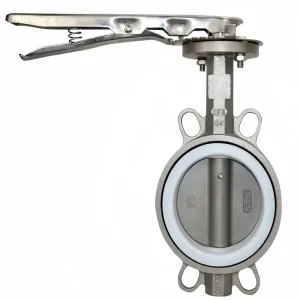
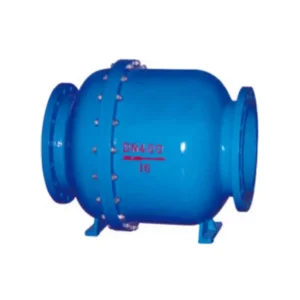
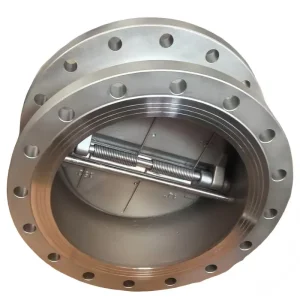
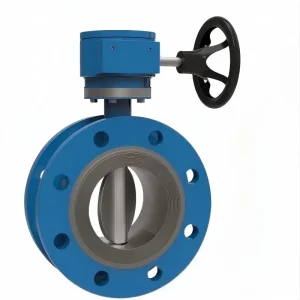
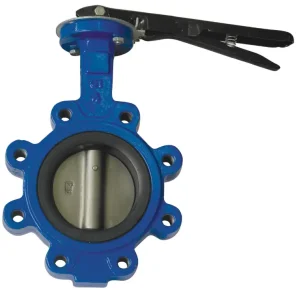
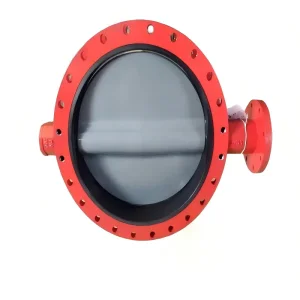
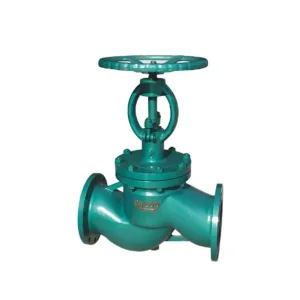
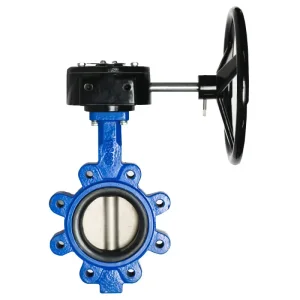
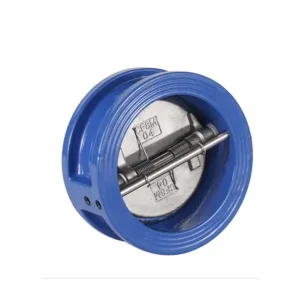
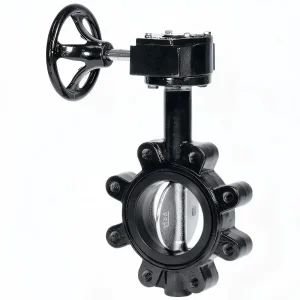
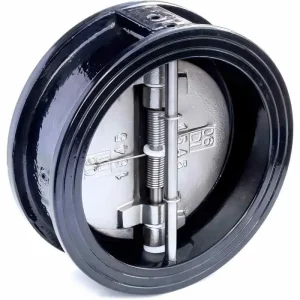
Complete your flow network specifications with our certified non-return check valves, lined butterfly valves, and high-temperature specialty isolation units.