
High-Integrity Pipeline Infrastructure & Valves
Explore our precision-machined, foundry-direct valves engineered to minimize friction losses, stop fugitive emissions, and withstand extreme aggressive media.
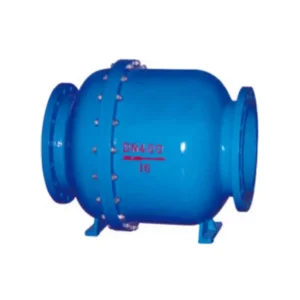
CE Certification Micro-Resistance Ball Check Valve Manufacturers, Factories
Explore Specifications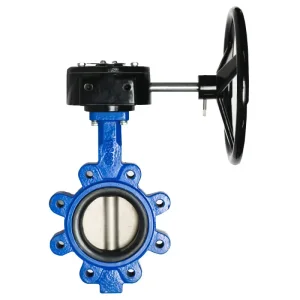
High-Quality Lug type Butterfly valve Suppliers, Manufacturers
Explore Specifications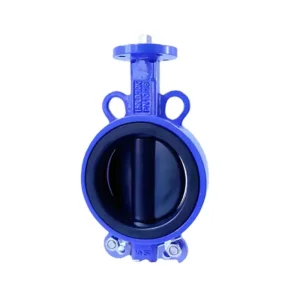
Wholesale Halar Lined Pinless Butterfly Valve Supplier, Manufacturer
Explore Specifications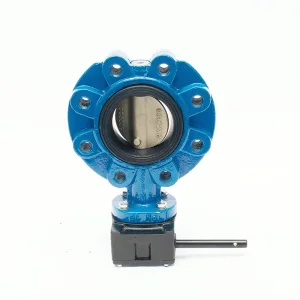
High-Quality Marine Centric Lug type manual operated butterfly valve Manufacturers, Factory
Explore Specifications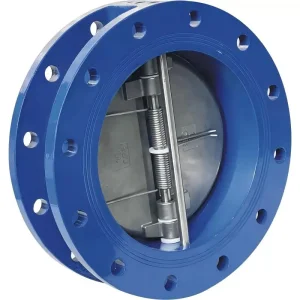
CE Certification Dual Plate Check Valve, Reliable Backflow Prevention Device Suppliers, Manufacturer
Explore Specifications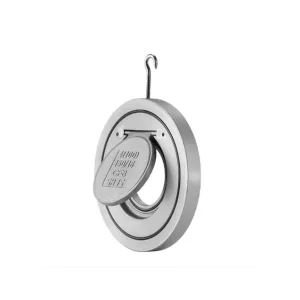
CE Certification Stainless Steel Single Disc Wafer Check Valve with Enhanced Corrosion Supplier, Manufacturers
Explore Specifications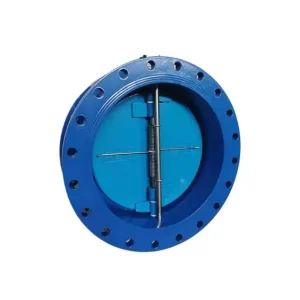
Wholesale Dual Plate Flange Type Check Valve Factories, Factory
Explore Specifications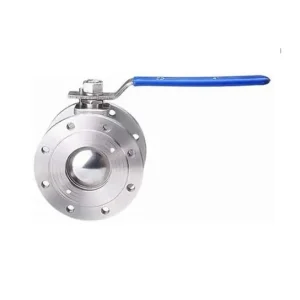
Wholesale Stainless Steel Ultra - Thin Ball Valve with Fire - Safe Design Supplier, Factories
Explore SpecificationsThe Engineering Evolution of Pinless PTFE Lined Butterfly Valves
Eliminating through-stem penetrations to overcome catastrophic fugitive emissions in aggressive media transport.
Zero Fugitive Disc-Stem Interlock
Traditional butterfly designs utilize taper pins, dowels, or cross-bolts driven directly through the disc profile into the drive shaft. In corrosive environments (such as concentrated sulfuric acid, wet chlorine, or caustic soda), micro-permeation attacks the mechanical pin, leading to rapid crevice galvanic corrosion and mechanical failure. Our pinless architecture employs an internally broached splined drive or encapsulated double-D profile fully shielded behind virgin PTFE/PFA resin.
- Eliminates Leak Paths: Zero wetted metal-to-metal boundary joints.
- Isostatic Compression: Resists thermal cycle fatigue (-40°C to +200°C).
Dual-Resilience Energized Elastomer Seat
Pure fluoropolymers (PTFE/PFA) offer unmatched chemical inertness but lack memory retention, suffering from continuous mechanical creep under constant compressive loads. To solve this, Tianjin Top Valve leverages our sister facility (Tianjin Dongfang Rubber Factory, established 1987) to engineer vulcanized resilient silicone (VMQ) or fluoroelastomer (FKM) back-up cushions behind the 3mm+ thick virgin fluoropolymer lining, sustaining dynamic sealing recovery.
- Bubble-Tight Shutoff: Conforms strictly to API 598 and ISO 5208 Rate A.
- Low Breakaway Torque: Slashes pneumatic actuator size by up to 25%.
Precision Dielectric Spark Integrity
The integrity of a lined valve is only as good as the molecular density of the polymer barrier. In corrosive gas and strong acid pipelines, microscopic pinholes cause invisible permeation that dissolves underlying cast iron or stainless steel skeletons. Every single lined component manufactured at our Tianjin facility undergoes high-voltage electrostatic dielectric testing (spark testing at minimum 14kV to 20kV) per ASTM F1545 standards.
- Zero Porosity: High-density compression molded virgin PTFE.
- Traceable Material Heats: Complete 3.1 chemical & physical certs.
Comparative Matrix: Pinless PTFE vs. Traditional Pinned & Metal Valves
A quantifiable engineering comparison for global procurement managers deciding between high-alloy exotics and lined pinless butterfly configurations.
| Performance Parameter | Pinned PTFE Lined Valve | High-Alloy Alloy 20 / Hastelloy | Tianjin Top Valve Pinless PTFE |
|---|---|---|---|
| Disc-Stem Joint Structure | Through-disc taper pin or bolt | Welded or pinned one-piece stem | Internal spline / double-D encapsulated |
| Primary Leak Risk | Crevice permeation around pin seals | Intergranular stress cracking | Zero wetted joint (Hermetically sealed) |
| Corrosion Resistance Range | Moderate (Pin fails first) | High, but selective to chlorides/acids | Universal (pH 0-14, highly oxidizing) |
| Actuator Torque Stability | Degrades over thermal cycles | Stable, high friction coefficient | Low breakaway torque via resilient backer |
| Relative Procurement Cost | Baseline (1.0x) | Exorbitant (4.5x - 7.0x) | Optimized Lifecycle Value (1.35x) |
| Dead-End Service Capability | Restricted downstream retention | Full flange retention | Full Bi-Directional Lugged Rating (PN16) |
Why Tier-1 EPCs Rely on Our China Direct Supply Ecosystem
Overcoming global supply chain bottlenecks with end-to-end metallurgical casting, polymer compounding, and automated CNC lines in Tianjin.
Integrated Foundry & Rubber Compounding
Most valve brands act merely as assembly workshops, outsourcing casting foundries and elastomer cushions to secondary vendors. Tianjin Top Valve controls our internal metallurgical foundry (Donglian Valve, established 1996) and dedicated rubber facility (Dongfang Rubber, established 1987). This vertical control eliminates lead-time variability and prevents uncertified scrap metal or filler-loaded rubber from contaminating your pipeline project.
Logistical Hub Proximity to Tianjin Port
Situated in Zone A, Wuxia Industrial Park, Dongli District, our 23,000 m² modern manufacturing plant sits minutes away from Tianjin Port (Northern China's largest maritime logistics hub). We coordinate heavy containerized break-bulk and FCL shipping effortlessly, guaranteeing rigorous export-grade barrier packaging, anti-corrosive desiccant sealing, and direct container stuffing to protect delicate PTFE flanges during oceanic transit.
Full OEM/ODM Customization Capabilities
From extended stems for cryogenic/lagged piping to bespoke ISO 5211 direct-mount automation pads for double-acting pneumatic actuators or smart PROFIBUS/Modbus electric positioners, our R&D engineering department handles bespoke project requirements. We produce bodies in ductile iron (GGG40/QT450), WCB carbon steel, CF8M 316 stainless steel, and aluminum bronze to fulfill global project datasheets.
Engineered for Critical International Applications
Serving rigorous regional regulatory standards across North America, Europe, the Middle East, and Southeast Asia.
Semiconductor & Ultra-Pure Water (UPW)
Manufactured under class-10,000 cleanroom protocols with deionized ultrasonic washing. The fully fluoropolymer-lined, pinless wetted boundary prevents trace metal leaching and micro-particulate detachment, ensuring absolute compliance with TOC (Total Organic Carbon) thresholds in semiconductor fab chemical loops.
Chlor-Alkali & Wet Chlorine Gas
Wet chlorine gas quickly destroys exotic metals including 316L, Hastelloy C, and titanium. Our virgin PFA/PTFE pinless butterfly design maintains an impenetrable non-reactive dielectric envelope, preventing galvanic blistering and preserving stem seals across millions of cycles.
Pharmaceutical & Biotechnology
Compliant with FDA 21 CFR 177.1550 and USP Class VI sanitary elastomer testing. Non-stick mirror-smooth PTFE finishes stop bacterial cultivation and protein deposition during rigorous Clean-in-Place (CIP) and Steam-in-Place (SIP) chemical wash cycles.
Mining Leach Slurry & Hydrometallurgy
Where high acid concentrations join with abrasive particulate slurry, our reinforced thick-wall fluoropolymer liners, paired with ceramic or ductile cores, resist erosion-corrosion wear that renders standard metal seated gate valves obsolete in weeks.
Frequently Asked Questions: Technical Engineering & Global Sourcing
Direct technical answers addressing critical specification criteria for piping engineers and quality assurance directors.
Why is a pinless disc superior to pinned designs in acid handling?
Traditional taper pins pierce through the fluoropolymer liner to mechanically lock the disc to the shaft. Under cycling thermal stresses, these pins develop microscopic clearances. Corrosive media permeates along these gaps, attacking the metallic stem and causing catastrophic shaft seizure or external toxic leakage. A pinless disc relies entirely on internal drive geometries, keeping the media fully isolated from metals.
How does Tianjin Top Valve prevent PTFE liner cold-flow and creep?
PTFE exhibits a natural propensity to deform plastically under compressive loads (cold-flow). Our factory combats this by precision-machining dovetailed anchoring grooves into the ductile iron/stainless body shell. The fluoropolymer liner is locked into these mechanical recesses under high pressure, preventing liner collapse under full vacuum (755 mmHg) while backed by high-recovery silicone or EPDM elastomers.
What testing and certifications accompany every export shipment?
Every single valve undergoes 100% hydrostatic shell testing (1.5x design pressure) and pneumatic seat bubble-tight leak testing (1.1x design pressure) per EN 12266-1 and API 598. Furthermore, our quality control lab executes 14kV spark testing on 100% of lined wetted surfaces. Full EN 10204 3.1 material certificates, pressure logs, and coating thickness reports are bundled with every commercial order.
Can your valves fit ANSI Class 150, PN10, and PN16 counter-flanges?
Yes. Our multi-standard wafer and lugged patterns are CNC-machined with universal bolt circles that seamlessly bolt into ASME/ANSI B16.5 Class 125/150, EN 1092-1 PN10/PN16, and JIS B2238 10K flanges. Furthermore, face-to-face dimensions strictly adhere to ISO 5752 series 20 and API 609 table 1 short, allowing quick drop-in replacement across international installations.
High-Performance Flow Isolation & Prevention Components
Review additional engineering models manufactured across our specialized production centers, ready for worldwide project commissioning.
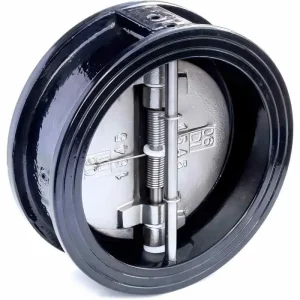
High-Quality High-Quality Wafer Check Valve for Secure Fluid Control Suppliers, Factories
Explore Specifications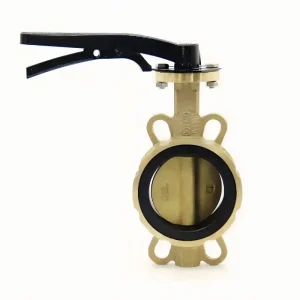
High-Quality Aluminum Bronze Butterfly Valve - Durable & Corrosion Resistant Suppliers, Manufacturer
Explore Specifications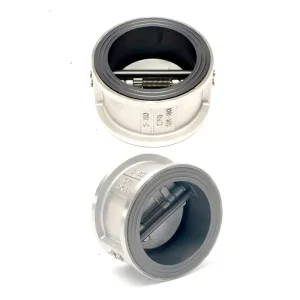
CE Certification Compact Wafer Lift Check Valve with Low - Pressure Drop Supplier, Manufacturers
Explore Specifications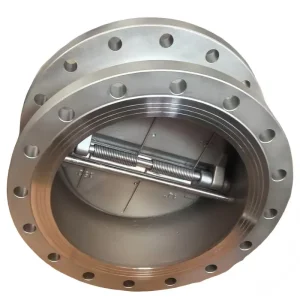
CE Certification Compact Low-Pressure Drop Wafer Lift Check Valve Supplier, Factories
Explore Specifications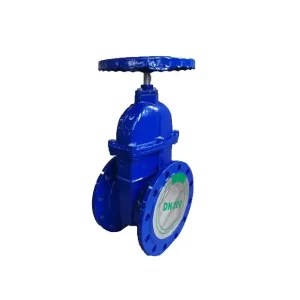
CE Certification German Standard Elastic Seat Gate Valve Manufacturers, Manufacturer
Explore Specifications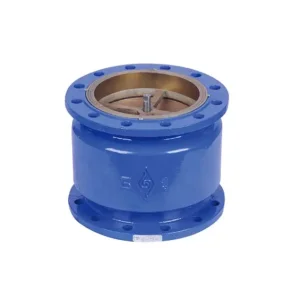
CE Certification Energy-Saving Silencer Check Valve Suppliers, Supplier
Explore Specifications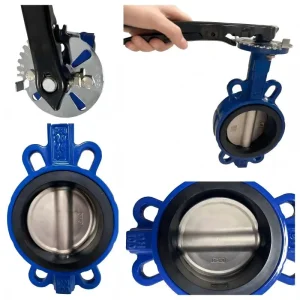
High-Quality WRAS Approved Butterfly Valve - High Performance & Durability 4020L Supplier, Manufacturers
Explore Specifications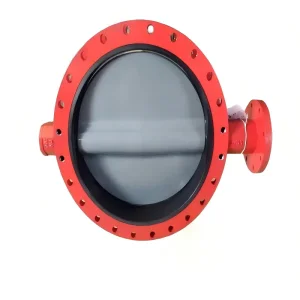
Wholesale Ceramic Disc Wafer Butterfly Valve - Durable & Efficient Design Supplier, Factories
Explore SpecificationsDirect Factory Engineering & Sourcing Consultation
Eliminate commercial trading markups and secure fully traceable, factory-direct industrial butterfly, check, and gate valves. Send your valve schedule, chemical concentration, design pressure, and actuation specifications to our technical engineering team for complete dimensional drawings, 3D STEP models, and commercial quotes within 24 hours.
