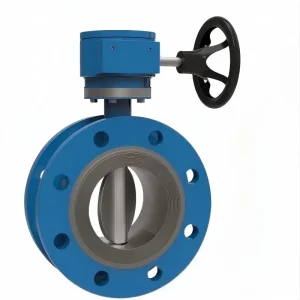
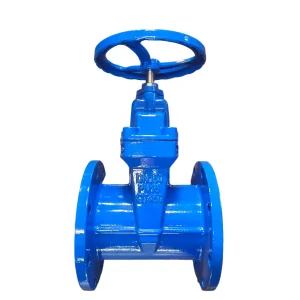
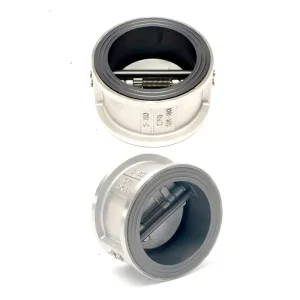
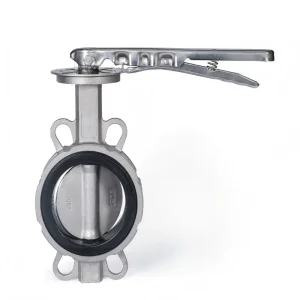
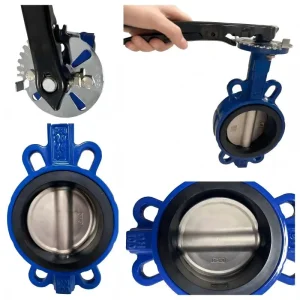
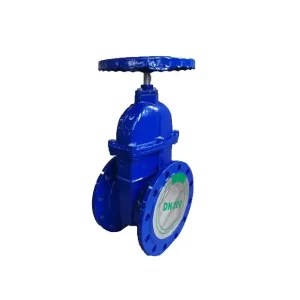
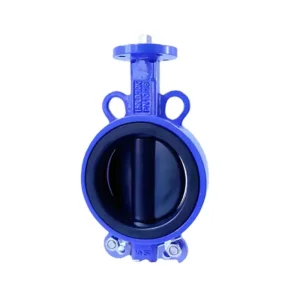
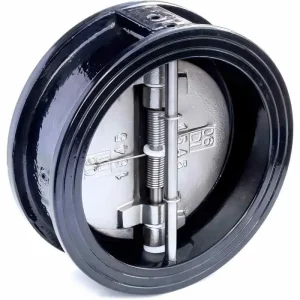
Primary Precision & Intelligent Valve Assemblies
Explore key marine fluid control units engineered for extreme salinity, cavitation suppression, and automated remote actuation across modern vessel platforms.
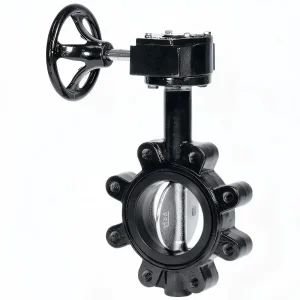
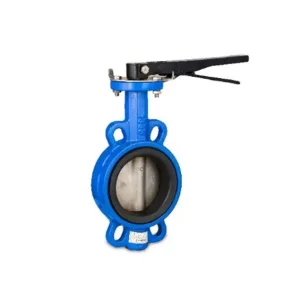
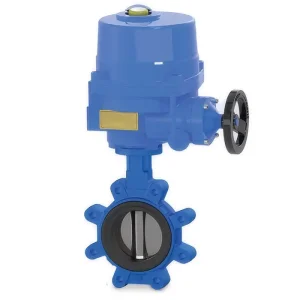
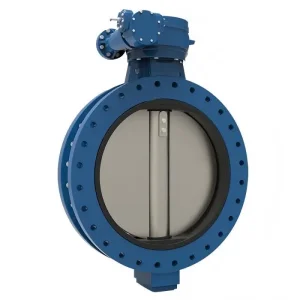
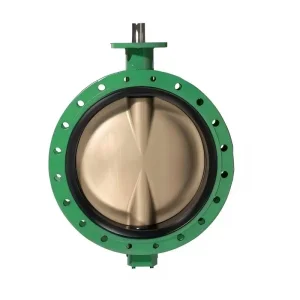
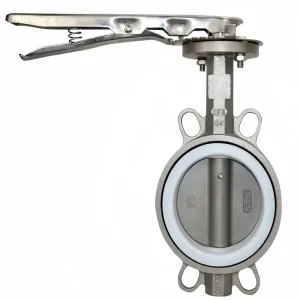
Engineering Architecture of Modern Marine Intelligent Butterfly Valves
Addressing the harsh thermodynamic and electrochemical demands of modern naval architecture through IoT telemetry, resilient elastomers, and advanced nickel-aluminum bronze alloys.
Autonomous Edge Actuation
Integration of onboard microprocessors supporting Modbus RTU, Profibus-DP, and CANopen protocols. These intelligent actuators continuously report dynamic stem torque, ambient temperature, angular deviation, and cycle frequency back to central vessel automation systems (IAS).
Marine-Grade Metallurgy
Engineered using high-integrity Nickel-Aluminum Bronze (Cu3 / C95800), duplex stainless steels (2205/2507), and ductile iron bodies lined with specialized elastomeric barriers. This structural integrity completely resists chloride crevice attack, bio-fouling, and high-velocity impingement corrosion.
Zero-Leakage Sealing Matrix
Formulated with vulcanized EPDM, marine-grade NBR, and PTFE/FKM compounds produced in dedicated elastomer laboratories. Concentric and high-performance double-offset disc geometries eliminate seat scrub, guaranteeing bi-directional Class VI bubble-tight shut-off across millions of cycles.
Strategic Advantages of Sourcing Marine Valves from Tianjin, China
How deep vertical integration—from private metallurgical foundries to certified rubber vulcanization—creates an unmatched supply chain defense for global shipbuilders.
In-House Casting & Vulcanization
Unlike assemble-only entities, established Tianjin manufacturing plants feature in-house ductile iron foundries (operational since 1996) and specialized elastomer factories (since 1987). Raw material spectrum analysis, mold porosity verification, and elastomer compounding are tightly governed under one roof.
Standard Compliance & Classification
Valves adhere rigorously to international naval specifications including ISO 5752, EN 593, API 609, JIS F7480, and DIN 3202. Full compliance readiness for classification societies such as DNV, ABS, Lloyd’s Register (LR), Bureau Veritas (BV), and CCS streamlines global shipyard integration.
Logistical Synergy via Tianjin Port
Direct access to Northern China's largest maritime freight hub drastically compresses international transport cycle times. Heavy industrial maritime packages are secured in anti-corrosive multi-layer export crates ready for rapid air, rail, or ocean deployment to over 50 destinations.
Engineering Matrix: Intelligent vs. Conventional Marine Valves
Compare mechanical traits, telemetry performance, and lifecycle economics to evaluate overall operational expenditure (OPEX).
| Evaluation Parameter | Conventional Mechanical Valves | Smart Pneumatic / Electro-Hydraulic | Next-Gen Intelligent Marine Butterfly Valves |
|---|---|---|---|
| Diagnostic Capabilities | Zero; relies entirely on physical human inspection | Binary limit-switch telemetry (Open / Closed only) | Full Telemetry: Continuous torque, travel curve & wear analytics |
| Sealing Integrity & Friction | High elastomer wear due to continuous disc drag | Standard cycle life (approx. 20,000 cycles) | Offset disc geometry reduces seat friction (>100,000 cycles) |
| Emergency Failsafe Action | Manual intervention via emergency handwheel | Mechanical spring-return or hydraulic accumulator | Supercapacitor / Battery backup with auto-homing SIL-3 safety |
| Cavitation & Flow Control | Rough throttling; severe cavitation under high delta-P | Standard linear modulation with hunting risk | Dynamic CFD-optimized disc contour; algorithmic throttling |
| Commissioning & Calibration | Manual mechanical end-stop setting | Potentiometer adjustment via access cover | Non-intrusive Bluetooth / Bus digital auto-calibration |
Mission-Critical Marine & Offshore Applications
Deploying ruggedized intelligent flow control across specialized shipboard piping networks.
Ballast Water Management (BWMS)
Automated sequencing valves balancing high-flow intake, electro-chlorination lines, and neutralizer dosing. Real-time feedback eliminates uncommanded cross-contamination during international port discharges.
Engine Room & Bilge Control
Quick-closing safety valves and automated bilge distribution. High resistance to contaminated hydrocarbon-water mixtures with instant emergency remote cutoff in fire-safety scenarios.
Hull Cooling & Seawater Loops
Modulating central heat exchanger loop temperatures using aluminum bronze valves that withstand raw seawater intake cavitation, turbulent currents, and continuous thermal cycles.
FPSO & Offshore Cargo Handling
Corrosion-resistant PTFE/FKM-lined units deployed on floating production platforms handling crude, brine injection, and volatile petrochemical fractions under variable hydrostatic heads.
Macro Shifts Shaping Global Shipyard Sourcing
Naval engineering demands are shifting toward autonomous maintenance, weight reduction, and carbon footprint mitigation.
Predictive Condition Monitoring
Modern ship operators require valves that anticipate failure before dry-docking. Integrated torque sensing indicates seat hardening, marine barnacle accumulation, or stem deflection well before actual breakdown occurs.
Electrification vs. Hydraulic Piping
Shipyards are systematically replacing massive, leaky hydraulic piping networks with intelligent all-electric actuators. This transition removes thousands of meters of hydraulic lines, preventing environmental oil spills and lowering structural hull weight.
Digital Twin & Class Registry Data
Global buyers demand complete digital footprints: 3D STEP CAD models, finite element analysis (FEA) reports, and digital material test certificates (EN 10204 3.1) linked directly into shipboard PLM networks.
Frequently Asked Technical Questions (FAQ)
Essential technical, material, and logistic insights for procurement officers, naval architects, and EPC project directors.
What distinguishes a marine intelligent butterfly valve from standard industrial models?
How does in-house elastomer vulcanization benefit marine valve longevity?
Which international flange dimensions and pressure ratings are accommodated?
How is emergency closing executed in case of total shipboard blackout?
Can 3.1 Material Test Reports and marine classification certificates be provided?
What are the lead times for custom machined and actuated valve assemblies?
Specialized Heavy-Duty & Marine Line Valving
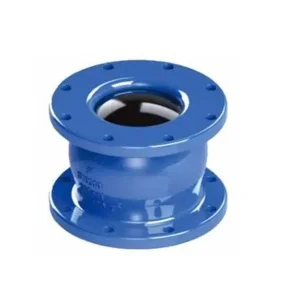
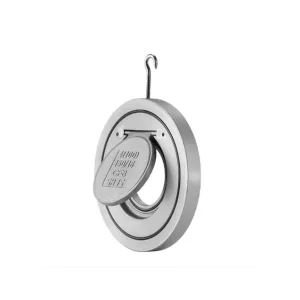
Explore additional gate, check, and lined butterfly configurations manufactured for auxiliary ship services, freshwater generators, and industrial process stability.