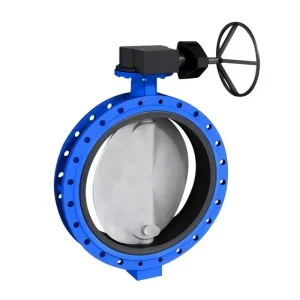
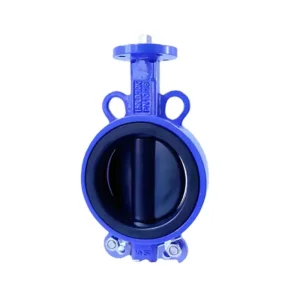
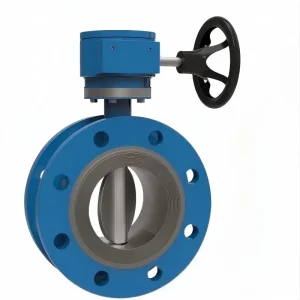
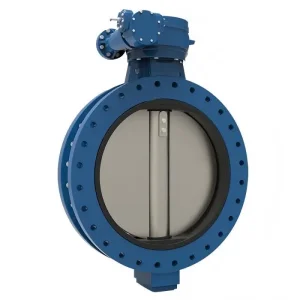
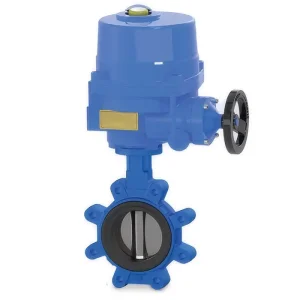
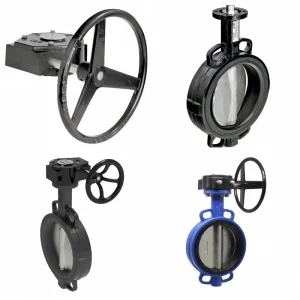
Featured Industrial Valve Solutions: Series I
Factory-direct flow isolation and check assemblies engineered to ISO 9001, CE, and WRAS potable water benchmarks.
Global Commercial & Mechanical Realities of Thin Ball Valves
How wafer-type thin manual ball valves solve structural payload limits and spatial congestion across modern process engineering.
Ultra-Compact Wafer Architecture
Traditional two-piece and three-piece flanged ball valves require substantial face-to-face dimensions, creating severe piping stresses on skid platforms. High-quality manual thin ball valves (wafer-type ball valves) compress the body into a narrow wafer envelope, clamping directly between DIN EN 1092-1 or ASME B16.5 counter flanges.
In-House Casting & Metallurgical Integrity
Thin valve bodies demand superior tensile properties and zero porosity to withstand compressive bolting loads without body distortion. Leveraging an independent foundry operating since 1996, valve shells are cast in CF8, CF8M, WCB, or forged alloys with strict chemical spectrographic validation before single-setup multi-axis CNC machining.
Precision Manual Lever Ergonomics
Manual actuation in cramped quarters requires optimized stem seals and precision-finished spherical balls. Featuring mirror-ground balls ($Ra \le 0.2\mu m$) and specialized virgin or reinforced PTFE seats formulated in-house, these valves yield exceptionally low break-away breakaway torques, permitting reliable one-hand lever isolation.
Industry Evolution Trends & Application Vectors
From cryogenic refrigeration plants to chemical dispensing skids: how engineering teams deploy thin-pattern manual ball valves.
Trend: Decarbonization & Fugitive Emission Control
Global environmental mandates (such as ISO 15848-1 and TA-Luft) are forcing industrial facilities to eliminate stem leakage. Modern thin ball valve manufacturers deploy live-loaded stem packings with Belleville springs, ensuring continuous sealing despite thermal cycling between -40°C and +200°C.
Application: Skid-Mounted Process Systems
Modular water treatment (RO skids), hydrogen generation modules, and marine ballast water management skids face strict footprint limitations. Manual thin ball valves provide uninhibited straight-through flow with near-zero pressure drop while reducing overall piping rack length by up to 35%.
Application: Tankers, Fuel Lines & Distilleries
Stainless steel thin wafer ball valves are heavily favored in mobile transport tankers and alcohol/solvent processing. The short cavity drastically diminishes fluid retention inside the valve body, mitigating cross-contamination during product flush cycles and reducing cleaning time.
| Evaluation Parameter | Manual Thin (Wafer) Ball Valve | Standard 2-Piece Flanged Ball Valve | Resilient Seated Butterfly Valve |
|---|---|---|---|
| Face-to-Face Dimension | Ultra-Short (Up to 70% shorter) | Standardized Long (ASME B16.10) | Compact Wafer Pattern |
| Fluid Flow Profile | Full / Reduced Straight-through Bore | Full Bore, Undisturbed | Central Disc Obstruction in Flow Path |
| Weight Reduction Benefit | High (Weight reduced by 40-60%) | Baseline Weight (Heavy flanges) | High (Lightweight structure) |
| Cavity Fluid Retention | Minimal Cavity Volume | Standard Fluid Entrapment | Zero Cavity Design |
| Operating Pressure Rating | PN16 to PN40 / ANSI 150-300 | Up to ANSI Class 2500 | Typically PN10 to PN25 |
Technical Roadmap & Turnkey Pipeline Solutions
Delivering end-to-end metallurgical control, lifecycle durability, and systemic fluid compatibility from casting to commissioning.
01. Material Formulations
Expanding foundry metallurgy to include Super Duplex stainless steel (2507), Hastelloy C-276, and titanium alloy castings for hyper-saline desalination and offshore platform applications.
02. Nano-Polymer Sealing
Integrating modified PEEK, carbon-filled PTFE, and in-house elastomer vulcanization for ultra-high cycle stability under cycling thermal stresses and abrasive slurry carrying conditions.
03. Fire-Safe API 607 / ISO 10497
Secondary metal-to-metal seating architecture guarantees that if soft seals decompose during catastrophic plant fires, the ball drifts to form an impenetrable metal seal against line fluid.
04. Digital Quality Traceability
Every valve receives an etched 2D matrix linking raw heat numbers, EN 10204 3.1 chemical test certs, torque logs, and hydrostatic pressure graphs directly to user cloud documentation.
Frequently Asked Technical Questions
Critical procurement and technical answers verified by senior pipeline engineers and foundry metallurgists.
What is the structural difference between a manual thin ball valve and a standard ball valve?
A manual thin ball valve (wafer-style ball valve) features an ultra-short face-to-face body dimension, engineered to be clamped between two piping flanges using through-bolts. Unlike standard two-piece or three-piece flanged valves that have lengthy end flanges, the wafer thin design cuts weight by up to 60% and footprint by up to 70% while preserving a circular flow profile and high working pressure ratings.
How do you guarantee bubble-tight shutoff in ultra-thin valve bodies under pipe stress?
Thin valve bodies must withstand heavy piping torque and tension without spherical seat ovalization. We achieve this by casting high-tensile ductile iron, CF8M, and carbon steel in our group foundry, followed by finite element analysis (FEA) reinforced body ribbing. Seats are CNC-machined from virgin or reinforced PTFE, compounded and tested under API 598 zero-bubble standards.
Can manual thin ball valves be field-retrofitted with electric or pneumatic actuators?
Yes. High-quality thin ball valves are built with an integrated ISO 5211 direct mounting pad. While operated via a high-leverage ergonomic manual handle for immediate manual shutoff, maintenance teams can unbolt the handle and mount standard pneumatic actuators or quarter-turn electric motors without disassembling the valve from the active pipeline.
What seat materials are selected for abrasive or high-temperature duties?
For general water, HVAC, and organic chemicals up to 150°C, virgin PTFE and reinforced PTFE (RPTFE) are optimal. For thermal oil, steam, or high-abrasion slurries up to 250°C, we utilize carbon-graphite filled PTFE, PEEK, or stellite-hardened metal seats. Because our group operates its own dedicated rubber plant (since 1987), elastomer O-rings (FKM, EPDM, NBR) are formulated under exact rheological control.
What international standards do your thin wafer ball valves conform to?
Our thin ball valves comply with EN 12516, ASME B16.34 (pressure and temperature design), ISO 5752 series 100 or manufacturer compact face-to-face dimensions, DIN EN 1092-1 / ASME B16.5 flange drilling, and API 598 or EN 12266-1 pressure testing. CE/PED and ISO 9001 certifications apply across production.
How does cavity purge performance compare between thin ball valves and gate valves?
Gate valves have deep seat pockets where particulates, solids, and residual slurry settle, precipitating seat binding and leakage. In contrast, thin wafer ball valves have a sweep-through bore and minimized cavity dead space, ensuring that media is purged clean during operation and reducing cross-contamination in batching installations.
Featured Industrial Valve Solutions: Series II
Explore heavy-duty specialized isolation, high-pressure eccentric, and high-performance pipeline units.