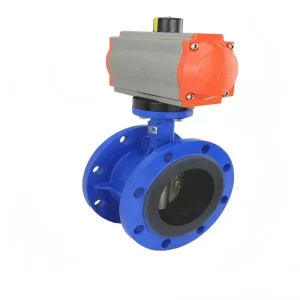
Featured Flow Control & Butterfly Valve Solutions
Explore our precision-cast resilient seated butterfly valves, high-pressure check valves, and industrial isolation systems manufactured in our integrated foundry and rubber compounding facilities.
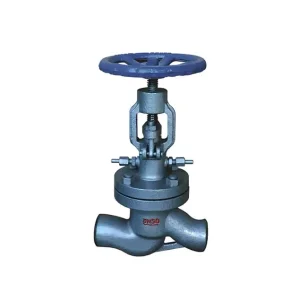
High-Quality Water Seal Globe Valve with Quick - Closing Feature Manufacturers, Manufacturer
Configure Valve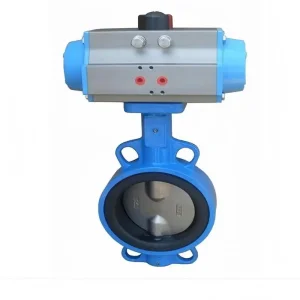
High-Quality Pneumatic Butterfly Valve - Efficient Flow Control Solution Suppliers, Factories
Configure Valve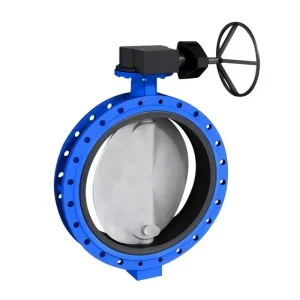
Wholesale High-Quality U Section Butterfly Valve for Reliable Flow Control Suppliers, Manufacturer
Configure Valve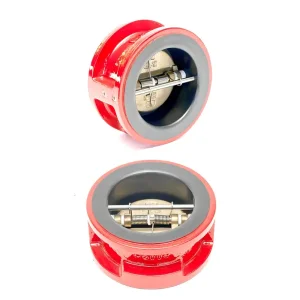
Wholesale Full Rubber Coated Check Valve Supplier, Factories
Configure Valve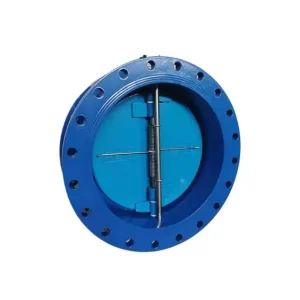
Wholesale Dual Plate Flange Type Check Valve Factories, Factory
Configure Valve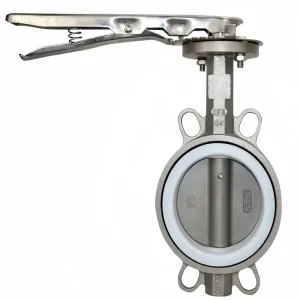
CE Certification PTFE Lined Stainless Steel Butterfly Valve Manufacturer, Factory
Configure Valve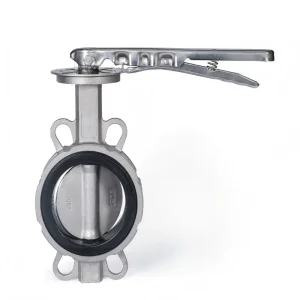
Wholesale Stainless Steel Butterfly Valve - Durable & Corrosion-Resistant Suppliers, Manufacturer
Configure Valve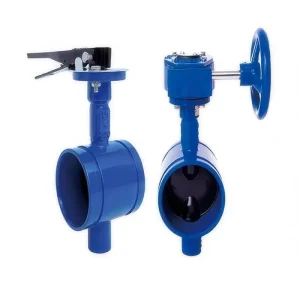
High-Quality Grooved End Butterfly Valve - Durable & Reliable Flow Control Suppliers, Supplier
Configure ValveGlobal Industrial Status of Lug Type Manual Operated Butterfly Valves
Across modern plant engineering, process facilities, and utility infrastructure, resilient seated lug style manual butterfly valves hold an irreplaceable strategic position. Unlike through-bolt wafer designs, the full-lugged architectural profile incorporates individually threaded radial lugs that bolt directly to opposing pipeline flanges.
Dead-End Isolation Supremacy
Industrial facilities frequently demand equipment isolation without full system depressurization. The lugged butterfly valve provides independent downstream piping detachment while sustaining maximum differential working pressure upstream, serving as an active dead-end containment boundary during maintenance shutoffs.
- Uninterrupted plant pump station turnaround
- Elimination of temporary blind flanging costs
- Bi-directional bubble-tight seal integrity
Manual Actuation Ergonomics
Manual gear and lever actuation eliminate pneumatic tubing lines, solenoid field cabling, and control cabinet infrastructure. For remote water intake lines, bypass throttling loops, and auxiliary cooling towers, rugged mechanical operators offer infallible fail-in-position security without electrical power grids.
- 10-position throttle notched lever locking
- Self-locking heavy worm gearboxes with IP67 enclosures
- Continuous mechanical visual position indication
Total Life-Cycle CapEx Optimization
Compared to gate valves and ball valves in line sizes above DN100 (4 inches), lug butterfly valves reduce structural pipeline weight by up to 70% and slash installation footprint space. Engineering contractors leverage this compactness to reduce structural pipe racks and foundation load requirements.
- Low initial procurement capital expenditure
- Minimal structural pipe hanger reinforcement
- Rapid seat and stem packing field overhaul
Technical Architecture: Engineering Anatomy of Lug Butterfly Valves
A high-quality manual lug butterfly valve depends upon cohesive metallurgical casting, high-precision elastomer chemistry, and rigid stem deflection resistance. Below is an exhaustive structural breakdown that sets professional manufacturing apart from commodity valves.
Casting Ductility & Lugs
Valve bodies cast from EN-GJS-400-15 (Ductile Iron) or ASTM A395 exhibit superior tensile resistance against pipeline thermal expansion stresses. Each lug is drilled and tapped strictly per ASME B16.5 Class 150 or EN 1092-2 PN16, ensuring full thread engagement and high torque tolerance during pipe bolting.
In-House Elastomer Molding
With rubber compounding originating from our group’s heritage since 1987, our resilient EPDM, NBR, and Viton liners achieve optimal rebound resilience and low compression set. The wide raised face seal profile eliminates separate flange gaskets, creating an impermeable primary sealing face.
Splined & Pinless Stem
Our heavy-duty disc-to-stem connection utilizes high-strength internal double-D or polygon broached splines. By eradicating transverse through-pins through the disc, we remove primary leak paths, eliminate crevice galvanic corrosion, and preserve an unviolated hydrodynamic disc surface profile.
Blow-Out Proof Stem Retention
Stems machined from martensitic 416 or austenitic 316 stainless steel feature integrated retaining rings in strict compliance with API 609 Cat. A and EN 593 standards. This prevents catastrophic internal stem ejection under elevated surge pressures, protecting on-site operators.
| Component | Standard Metallurgy | Severe Service Options | Applicable Test Standard |
|---|---|---|---|
| Valve Body | Ductile Iron GGG40 / GGG50 / A536 | Cast Steel WCB, SS316, Duplex 2205, C95800 | EN 12266-1 Shell Test |
| Closure Disc | CF8M (SS316), Ductile Iron Nylon-Coated | Aluminum Bronze C95800, Hastelloy C, 2507 Super Duplex | EN 10204 3.1 Material Cert |
| Resilient Seat | Potable EPDM (WRAS / NSF/ANSI 61 compliant) | High-Acrylonitrile NBR, FKM Viton, PTFE Composite | ISO 5208 Rate A Zero Leakage |
| Drive Stem | SS416, SS420 (Quenched & Tempered) | 17-4PH, SS316, Monel K-500, Duplex S31803 | API 609 Anti-Blowout Verification |
| Manual Operator | Ductile Iron 10-Pos Lever with Safety Latch | Heavy-Duty Worm Gearbox IP67 / IP68 with Handwheel | ISO 5211 Direct Top Flange |
Localized Industrial Solutions: Mission-Critical Deployment
From municipal drinking water networks to offshore ballast systems, high-specification lug manual butterfly valves provide deterministic flow interception. Below are engineered deployment profiles across key infrastructure sectors.
Municipal Potable Water Networks
Water distribution grids mandate certified non-toxic contact surfaces. Our WRAS-approved EPDM vulcanized seats prevent bacteriological colonization and volatile leaching. Tapped lugs permit sectional main isolation, allowing water authority personnel to isolate district metering areas without draining entire neighborhood networks.
Commercial HVAC & District Cooling
Chilled water plants running at 4°C to 12°C face severe external condensation. Lug butterfly valves with extended neck patterns accommodate heavy thermal lagging without covering manual gearboxes. The bi-directional bubble-tight seal prevents thermodynamic energy migration during chiller staging shutdowns.
Marine & Offshore Seawater Service
Seawater handling demands galvanic defense. Combining Nickel-Aluminum Bronze (C95800) discs with hard-backed vulcanized rubber liners isolates the ductile iron valve body from electrolytic contact. These valves operate reliably on shipboard ballast lines, bilge manifolds, and desalination RO feed skids.
Chemical Effluent & Slurry Transport
Industrial wastewater and mineral tailings carry corrosive suspended abrasives. Employing high-integrity PTFE-lined discs and heavy-gauge hypalon or Viton seats prevents premature erosion. The streamline contoured disc prevents particle collection in the seat pocket, preserving torque performance.
Bulk Storage Tank Terminal Drainage
At fuel, chemical, and lubricant tank bottom outlets, terminal isolation valves must guarantee zero downstream seepage. Lug manual butterfly valves bolted directly onto tank nozzles serve as primary containment blocks, providing dead-end capability to decouple road-tanker loading arms easily.
Fire Suppression & Deluge Isolation
In NFPA-standard industrial fire sprinkler installations, sectional isolation valves require positive gear operators with open/close visual targets. Lug valves bolted to pump discharge headers sustain sudden dynamic hydraulic surges without seat displacement or pressure loss.
Technological Roadmap & Sustainable Manufacturing Outlook
As industry targets decarbonization, extended asset life, and fugitive emission mitigation, our engineering roadmaps focus on digital integration, smart foundry operations, and emission-tight stem packing assemblies.
1. Fugitive Emissions ISO 15848-1 Compliance
Volatile organic compounds (VOC) and toxic vapor leakage from valve stems account for significant industrial emissions. Our advanced lug series features dual secondary O-rings backed by energized PTFE V-ring stem seals, exceeding ISO 15848-1 Class AH requirements under dynamic cycling test regimes.
2. Smart Digital Position Telemetry on Manual Gears
Bridging manual hardware with Industry 4.0 monitoring, our new generation worm gearboxes offer integrated wireless BLE and LoRaWAN position transmitters. Operators retain the physical manual handwheel, while plant SCADA systems receive continuous quarter-turn angular position data without extra power cables.
3. Closed-Loop Green Foundry Casting Metallurgy
With electric induction furnaces and automated green-sand moulding lines, Tianjin Top Valve recycles 95% of iron scrap within our foundry. Rigorous optical emission spectrometry verifies nodularity exceeds 85% in our ductile iron heats, optimizing mechanical tensile properties and minimizing carbon footprint.
Engineering Q&A: Specifying Manual Lug Butterfly Valves
Procurement engineers and piping designers ask critical technical questions when selecting resilient seated lug butterfly valves. Here are authoritative, factory-direct answers.
Q: What mechanical difference distinguishes wafer vs. lug manual butterfly valves?
Wafer valves have centering guide holes and are sandwiched between flanges using long through-studs. Lug butterfly valves feature individual internally threaded lugs around the entire body circumference matching companion flange bolt patterns. This allows bolts to thread in from each side independently, facilitating downstream piping removal while keeping the valve firmly anchored under full working pressure.
Q: Can a lug manual butterfly valve withstand full rated dead-end pressure?
Yes. Properly engineered lug valves built to API 609 and EN 593 are explicitly certified for dead-end terminal service. While some commodity valves derate dead-end pressure to 60-70% of PN rating, Tianjin Top Valve's lug series delivers 100% full bidirectional working pressure (PN10/PN16/150PSI) with no downstream flange attached, proven by hydro testing.
Q: At what pipe size threshold should manual gearboxes replace hand levers?
Under normal flow velocities (<3 m/s), lever operators with 10-position notched plates are recommended up to DN150 (6"). From DN200 (8") and above, dynamic seating torques and flow forces require worm gear operators. Worm gearboxes protect against fluid hammer surges during rapid closures and keep manual rim effort below 250N per EN 12570 standards.
Q: How does your rubber compounding process maximize elastomer seat longevity?
Operating our dedicated rubber facility (Tianjin Dongfang Rubber Factory since 1987) gives us absolute control over raw monomer blending, carbon black dispersion, and sulfur/peroxide curing. Our EPDM liners deliver a compression set below 18% after 1,000 thermal cycles (-10°C to +120°C), preventing permanent seat groove deformation and disc binding.
Q: Are flange drillings interchangeable between ANSI Class 150 and DIN PN16?
Because lug holes are individually tapped rather than through-clearance holes, thread specifications differ. DIN/EN patterns require metric threads (e.g., M16, M20), whereas ASME/ANSI patterns specify UNC threads (e.g., 5/8"-11, 3/4"-10). We custom machine tapped lugs to either imperial UNC or metric DIN standards based on your project schedule, or provide dual-drilled bodies for designated sizes.
Q: What factory inspection reports accompany export shipments?
Every shipment leaves our Tianjin facility with complete EN 10204 Type 3.1 inspection documentation. This covers optical spectrometer body/disc chemical compositions, mechanical tensile test results, elastomer hardness and cure records, 100% hydrostatic shell testing (1.5x PN), and bidirectional bubble-tight pneumatic seat testing (1.1x PN) with zero allowable leakage.
Expanded Marine, Metal Seal & Specialized Check Valve Range
Review our extensive heavy industrial manual lug butterfly valves, marine flanged assemblies, metal-seated extreme valves, and refrigeration valves manufactured for global project contractors.
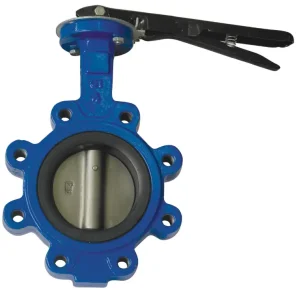
High-Quality Lug type manual operated butterfly valve Manufacturers, Factory
Configure Valve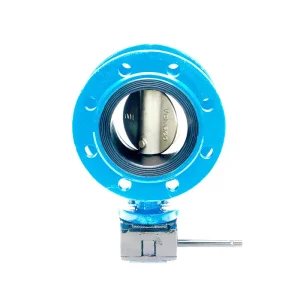
High-Quality Marine flange type manual operated butterfly valve Supplier, Manufacturers
Configure Valve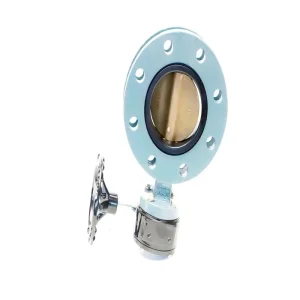
Wholesale CE/ISO/DIN/BS High Pressure Metal Seal Hard Seal Butterfly Valve Manufacturers, Manufacturer
Configure Valve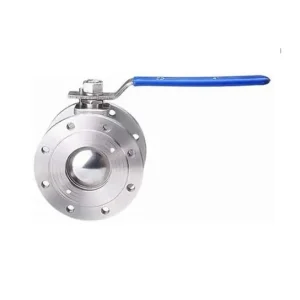
Wholesale Stainless Steel Ultra - Thin Ball Valve with Fire - Safe Design Supplier, Factories
Configure Valve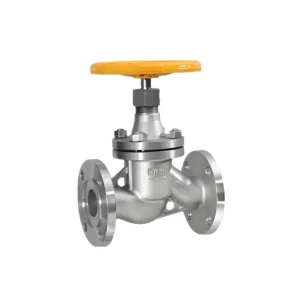
Wholesale Straight-Through Ammonia Globe Valve Manufacturers, Factory
Configure Valve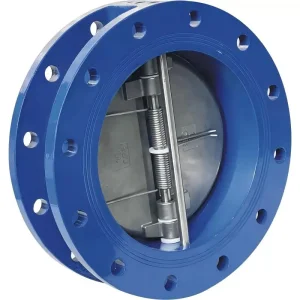
CE Certification Dual Plate Check Valve, Reliable Backflow Prevention Device Suppliers, Manufacturer
Configure Valve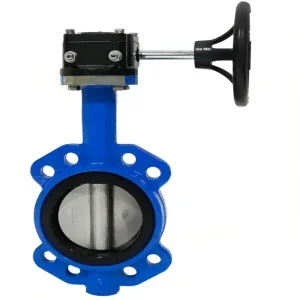
CE Certification Wafer Butterfly Valve,water usage butterfly valve Suppliers, Factories
Configure Valve