
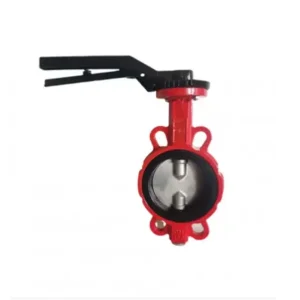
Wafer Series
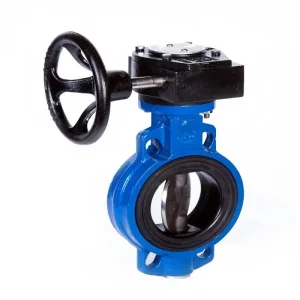
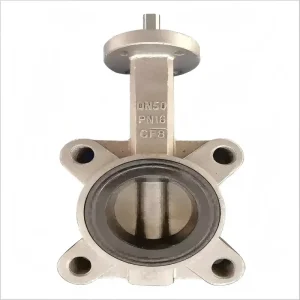
High-Quality Double Half Shaft Wafer Butterfly Valve Supplier, Manufacturer
Explore Technical Specifications
Direct from our precision foundry and elastomer compounding laboratories, each valve undergoes rigorous hydrostatic shell and bidirectional leakage validation.
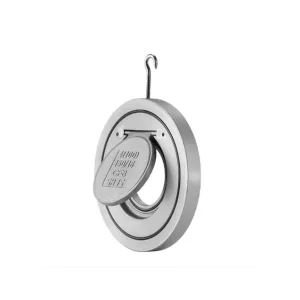
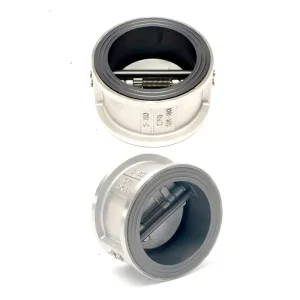
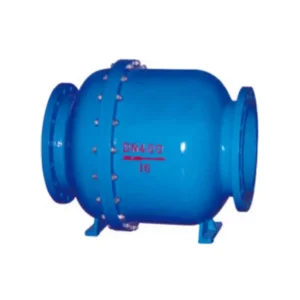
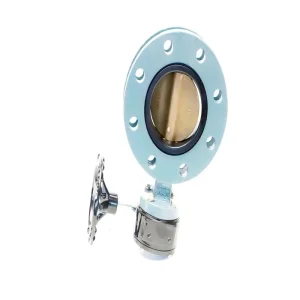
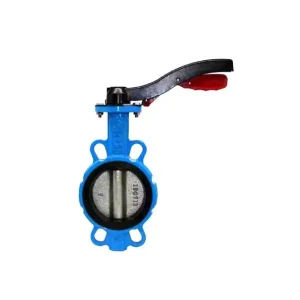
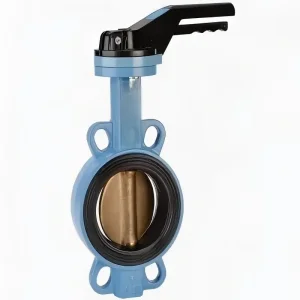
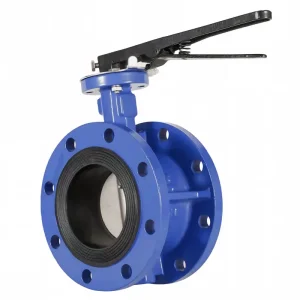
In high-stakes life safety and fire sprinkler networks, valve integrity must be absolute. The manufacturing dominance of China’s premier valve factories is not rooted in low-cost arbitrage, but in total supply chain integration, proprietary metallurgy, and advanced polymer science.
Unlike Western assembly shops dependent on outsourced casting subcontractors, leading Chinese manufacturers operate integrated sand-casting and lost-foam foundries. Having an in-house metallurgical laboratory ensures ductile iron grade control (QT450-10 / ASTM A536 65-45-12) with zero blowhole porosity and traceable spectroscopic melts.
The valve's service life is fundamentally dictated by its rubber seat. With proprietary rubber compounding facilities (operating since 1987), raw EPDM, NBR, and Fluorosilicone elastomers are custom-cured for fire standby service, avoiding the common compression set failures seen in generic commodity valves.
Our machining floors deploy multi-axis CNC horizontal centers that finish spherical disc profiles and double-D drive stems to micron-level runout tolerances. This drastically minimizes operational seating torque, ensuring quick actuation even after years of dormant emergency standby.
Analyzing the pivotal shifts in international fire protection codes (NFPA 13, EN 12845, GB 5135) and how wafer butterfly valves provide unmatched spatial and hydro-dynamic efficiency.
For decades, traditional rising-stem Outside Screw and Yoke (OS&Y) gate valves served as standard isolation mechanisms in sprinkler risers. However, modern commercial architecture demands tighter mechanical risers, modular prefabrication, and centralized supervisory integration. Fire-fighting wafer butterfly valves offer up to 65% reduction in face-to-face installation volume and 50% lighter deadweight, eliminating structural load stresses in seismic zones.
| Critical Performance Criterion | Traditional OS&Y Resilient Gate Valve | Engineered Fire Wafer Butterfly Valve | Engineering Advantage |
|---|---|---|---|
| Face-to-Face Dimension (DN150) | 267 mm (DIN 3202 F4) | 56 mm (ISO 5752 Series 20) | 79% Compact Footprint |
| Supervisory Switch Integration | Bulky external brackets vulnerable to tampering | Dual internal micro-switches integrated in gear box | Direct BMS / SCADA Connection |
| Opening Torque After Standby | High (Subject to wedge sticking and sedimentation) | Low (Spherical disc profile + lubricated EPDM) | Rapid 90° Actuation |
| Hydraulic Flow Characteristic | Full bore, high turbulence during throttling | Optimized hydrodynamic disc, linear flow curve | Superior Flow Regulation |
Equipped with factory-installed tamper switches and low-power telemetry modules, our fire butterfly valves deliver instantaneous open/closed telemetry directly to the central fire command console, eliminating catastrophic human error in sprinkler shut-off.
Wafer clamp designs distribute shear forces across through-bolts, offering elevated mechanical dampening compared to rigid flanged assemblies, making them the preferred specification for seismic design categories C through F.
Coated via automated electrostatic fluidized bed with WRAS and fire-grade fusion bonded epoxy (minimum 250 µm thickness), ensuring 1,000+ hours of salt-spray corrosion resistance in harsh industrial environments.
Evaluating real-world duty cycles where failure is not an option, from high-density server farms to petrochemical terminal protection.
Pre-action and dry pipe sprinkler networks require valves with zero internal condensation accumulation. Our pinless wafer butterfly valves ensure leak-tight sealing to safeguard server racks from accidental moisture discharge.
Utilizing high-nickel aluminum bronze discs (C95800) paired with nickel-plated ductile iron bodies, these valves resist marine biofouling and aggressive seawater deluge systems onboard FPSOs and drillships.
ESFR (Early Suppression Fast Response) fire sprinkler risers require minimal hydraulic head loss. Our streamline disc profile preserves high Cv coefficients across the supply piping network.
Handling corrosive foam concentrates (AFFF/AR-AFFF) without seat degradation, utilizing custom-formulated fluoropolymer linings and high-strength stainless steel double-half shafts.
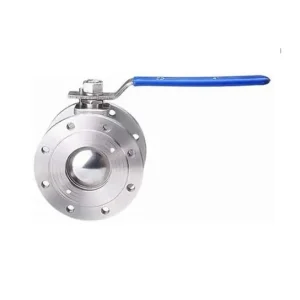
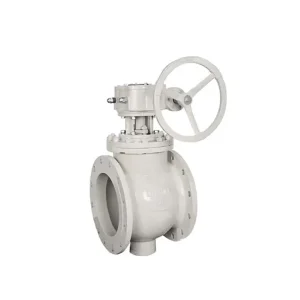
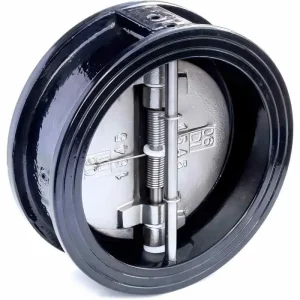
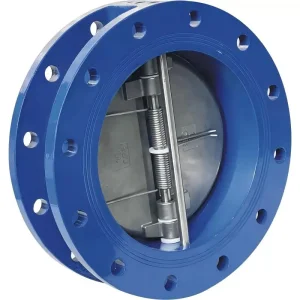
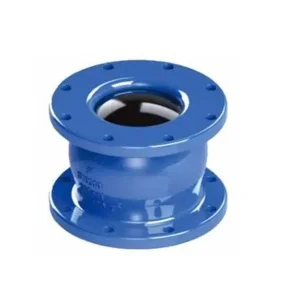
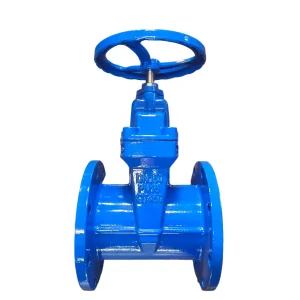
Expanding the pipeline isolation architecture with high-pressure, anti-abrasion, and low-resistance check and gate systems.
Comprehensive engineering insights addressing international valve standards, material verifications, testing routines, and logistic safeguards.
