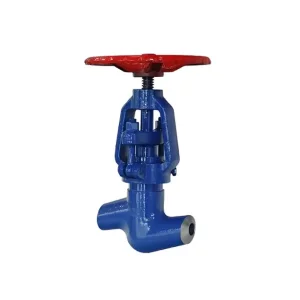
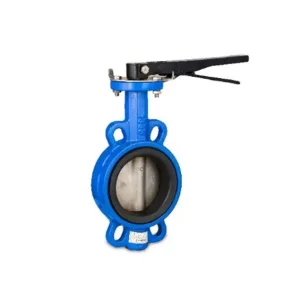
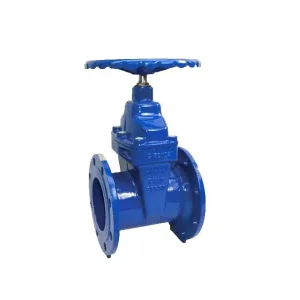
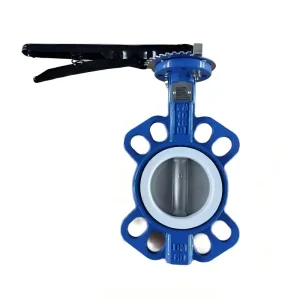
Featured Flow Control Assemblies
Engineered for high-integrity municipal pipelines, industrial cooling towers, and aggressive desalination infrastructure.
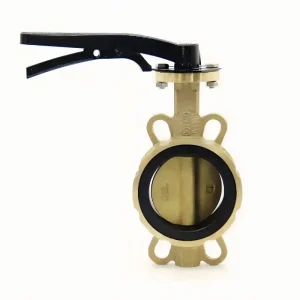
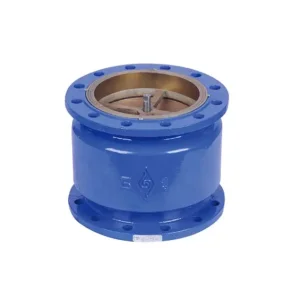
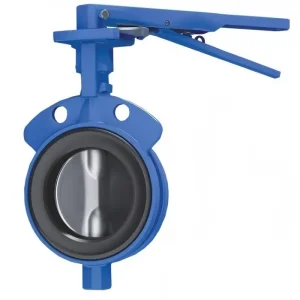
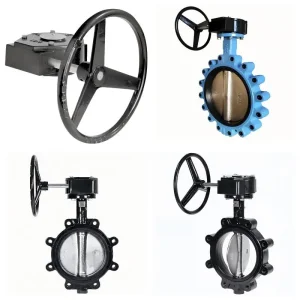
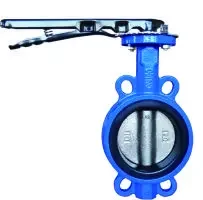
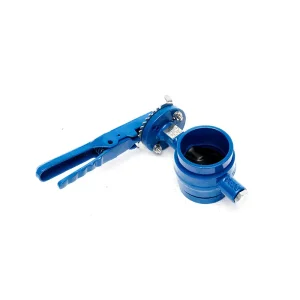
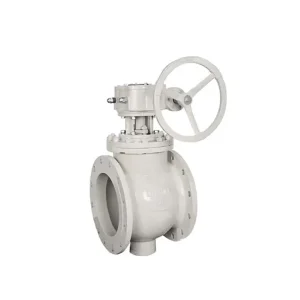
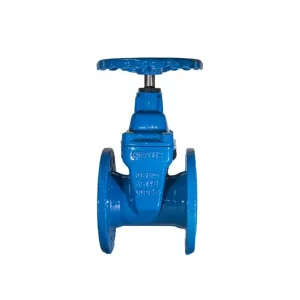
Industry Evolution: The Double Flange Advantage
Transitioning from traditional wafer architectures to rigid double-flanged bodies for high-load hydraulic networks.
Structural Rigidity & Anti-Deflection
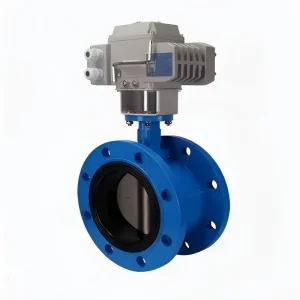
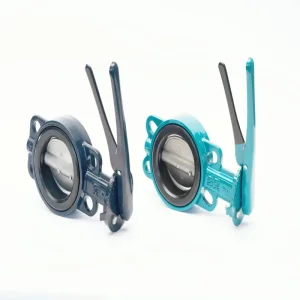
Traditional wafer configurations transmit line bending moments directly to the valve body. Our Double Flanged Butterfly Valves isolate pipeline tensile stresses across EN 1092-2 and ASME B16.1 flanges, eliminating disc jamming during thermal expansion or geological ground settling.
Full Dead-End Pipeline Service
Double flanged bodies enable safe downstream pipeline disassembly and maintenance under full working pressure (PN10/PN16/PN25) without leakage. Bolted directly to upstream piping, they function as self-contained isolation stations without temporary backing flanges.
Hydrodynamic Profile & Energy Efficiency
Using CFD-optimized dual-eccentric disc geometries, our valves feature an uninterrupted contoured waterway. This lowers flow resistance (Cv factor optimization) by up to 23%, reducing continuous pumping station energy costs across large-diameter water transfer projects.
Macro Engineering Specifications & Material Matrices
In-house metallurgical casting control paired with custom elastomer formulations for challenging plant environments.
| Component | Standard Specification | Optional High-Performance Alloys | Engineering Benefit |
|---|---|---|---|
| Valve Body | Ductile Iron GGG40 / GGG50 (EN-GJS-450-10) | Cast Steel WCB, CF8M Stainless Steel, C95800 Bronze | High yield strength, resistant to hydraulic water hammer and cold embrittlement. |
| Disc Profiles | Ductile Iron Epoxy Coated, SS304 / SS316 | Aluminum Bronze (AB2/C95800), Super Duplex (2507) | Exceptional cavitational resistance in brackish cooling lines and desalination outlets. |
| Resilient Seats | EPDM (Potable WRAS grade) | NBR (Petroleum resistant), High-Temp EPDM, Viton (FKM), PTFE | Formulated in our rubber compounding lab since 1987; uniform elasticity up to 100,000 cycles. |
| Drive Stems | Stainless Steel 416 / 420 (13Cr) | SS316, 17-4PH, Monel 400 | Splined or keyed pinless configurations ensuring zero dynamic fluid pathway penetration. |
| Protective Coating | Thermoset Fusion Bonded Epoxy (FBE) ≥ 250 µm | Multi-coat Marine Polyurethane, Rilsan Polyamide 11 | Pin-hole free dielectric insulation against stray soil currents and microbial attack. |
Global EPC Solutions & Macro Industry Deployment
Custom-engineered double flanged packages configured for global municipal utilities and heavy process industries.
Municipal Water & Desalination
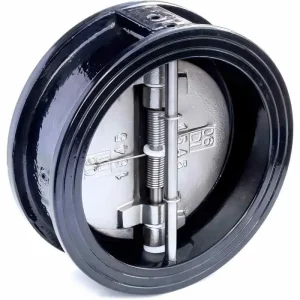
Large transmission mains require valves that maintain bubble-tight shutoff through pressure transients. Our WRAS-compliant double flanged assemblies, paired with anti-vacuum air release valves and dual-plate check valves, protect long-distance pipelines from catastrophic water hammer.
District HVAC & Industrial Cooling
District energy networks demand high cycle life under constant modulation. We integrate ISO 5211 direct-mount actuator flanges with self-lubricating PTFE sleeve bearings, ensuring consistent operational breakaway torque over multi-year cooling cycles.
Marine & Chemical Processing
Seawater handling facilities face severe crevice corrosion. We provide double flange valves with nickel-aluminum bronze (C95800) bodies and high-build fluoropolymer linings to deliver predictable service life in aggressive chemical wash cycles.
Localized Compliance, Quality Assurance & SCM Traceability
Vertical manufacturing operations certified to international quality standards for turnkey engineering tenders.
ISO 9001:2015 Audited
Every melt batch undergoes spectrometer validation, ultrasonic flaw inspection, and hardness verification before precision machining.
WRAS Potable Water
Non-leaching EPDM seats verified to BS 6920 standards prevent toxic extraction and microbial growth in municipal drinking lines.
CE / PED 2014/68/EU
Pressure Equipment Directive certified for Category III pressure envelopes, ensuring compliance across European process pipelines.
EN 10204 3.1 Traceability
Full metallurgical traceability from the raw sand core to final hydrostatic shell testing (1.5x PN) and seat testing (1.1x PN).
Technical Roadmap: Smart Valves & Modern Actuation
Integrating Industry 4.0 monitoring into resilient double flanged butterfly infrastructure.
IoT Diagnostic Monitoring
Developing embedded sensor pockets in the valve yoke to monitor dynamic stem torque, internal pressure pulsations, and localized vibration signatures, enabling predictive maintenance schedules before elastomer degradation occurs.
Smart Modulating Actuators
Seamless fieldbus integration (Modbus, Profibus, HART) with ultra-low-power electric quarter-turn actuators, allowing real-time flow rate feedback and remote SCADA throttling down to 0.5% positioning accuracy.
Low-Emission Fugitive Packing
Next-generation live-loaded stem seals engineered to ISO 15848-1 Class AH standards. Redundant quad-ring elastomer seals combined with secondary graphite packing protect against atmospheric emissions in continuous chemical lines.
Frequently Asked Questions (FAQ)
Direct technical answers from our engineering team regarding flange standards, operations, and materials.
What are the key technical differences between double-flanged, lug, and wafer butterfly valves?
Which international drilling standards are compatible with your double flanged bodies?
How does in-house rubber compounding improve seat durability and cycle life?
What hydrostatic and pneumatic pressure testing protocols do your valves undergo?
Can double-flanged butterfly valves be specified for buried underground service?
Complete Pipeline Architecture Portfolio
Explore our full range of gate, check, globe, and specialty flow control valves.