
Featured Industrial Flow Control Units
Factory-direct high performance industrial valves engineered by Tianjin Top Valve, featuring in-house casting integrity, ISO 9001 certified precision machining, and CE-compliant hydrostatic test protocols.
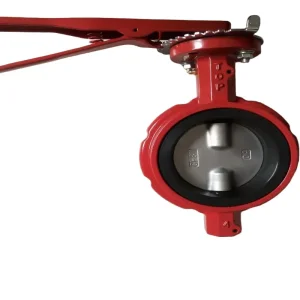
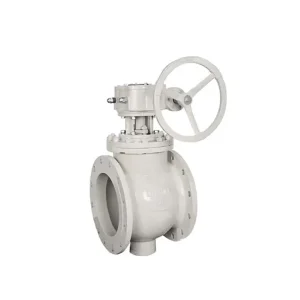
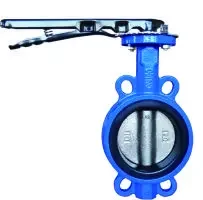
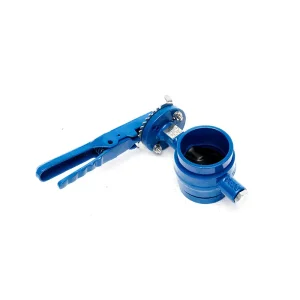
Engineering Metallurgy & Vertically Integrated Foundry Power
Rooted in decades of continuous metallurgic casting and elastomeric synthesis, our industrial facilities provide an unbroken chain of custody from raw molten stainless steel to PED-certified finished globe valve assemblies.
Foundry Heritage Since 1996
Founded through the technological consolidation of Tianjin Donglian Valve Factory (established 1996) and Tianjin Dongfang Rubber Factory (established 1987), our 23,000 m² modern manufacturing complex maintains dedicated induction melting furnaces, sand reclamation circuits, and automated shell casting cells capable of pouring duplex, super austenitic, and 300-series stainless alloys with zero porosity defects.
Sub-Micron Precision Machining
The core challenge of stainless globe valves lies in seating concentricity, stem straightness, and disc guide alignment under thermal gradients. Our Dongli District facility employs 5-axis horizontal machining centers (HMCs) alongside robotic hardfacing units applying Stellite Gr. 6 overlays. This guarantees zero-chatter throttling, lower closing breakaway torques, and true linear flow characteristic profiles.
In-House Chemical & Physical Lab
Every casting run is subjected to direct-reading optical emission spectrometry (OES) for exact C, Cr, Ni, Mo, and N quantification. Mechanical testing encompasses Charpy V-notch impact validation down to -196°C for cryogenic service, intergranular corrosion testing per ASTM A262 Practice E, and 100% PMI verification prior to European CE marking authorization.
Engineered Solutions for Critical Severe-Duty Industries
Unlike general on/off valves, stainless steel globe valves are primarily deployed where velocity throttling, tight shut-off, and resistance to erosion-corrosion are mission-critical. Here is how our certified units operate across core sectors.
Petrochemical & Hydrocarbon Refining
Engineered for high differential pressure drop (ΔP) service handling sour gas, light hydrocarbons, and aromatic fractions. Utilizing ASTM A351 CF8M/CF3M bodies with Stellite Gr. 6 hardfaced plug discs, our globe valves withstand extreme fluid velocities without wiredrawing, meeting NACE MR0175/ISO 15156 sulfide stress cracking constraints.
Cryogenic LNG & Industrial Gases
Liquefied natural gas (-162°C) and liquid nitrogen (-196°C) handling require specialized extended bonnets per BS 6364 to establish an insulating gas column that safeguards live-loaded PTFE/graphite packing rings. Our stainless globe valves feature one-piece forged stems, micro-finished seats, and pressure relief venting to prevent catastrophic overpressurization.
Clean Steam & Pharmaceutical Systems
Steam lines demand impeccable cavitation resistance and absolute zero stem packing leakage. We manufacture electropolished CF3M (316L) parabolic disc globe valves with Hastelloy C-276 bellows seals. This design eliminates traditional packing maintenance while offering sterile, ultra-smooth fluid dynamics for Clean-In-Place (CIP) and Steam-In-Place (SIP) routines.
Thermal Power & Steam Condensate
Superheated steam bypass networks and boiler feedwater lines generate severe acoustic vibration and flashing. Our high-pressure Y-pattern globe valves optimize flow paths, slashing pressure loss by 40% compared to traditional T-pattern bodies while offering parabolic contour plugs for linear micro-throttling control under high ΔP across hundreds of cycles.
Offshore Marine & Desalination
Chloride pitting and crevice corrosion destroy standard austenitic steels within seawater environments. Our foundry pours 254 SMO (UNS S31254), Duplex 2205 (UNS S32205), and Super Duplex 2507 (UNS S32750) globe valves with PREN (Pitting Resistance Equivalent Number) > 42, safeguarding high-pressure reverse osmosis (SWRO) energy recovery racks.
Nuclear Auxiliary & Hazardous Chemical
Corrosive acids (nitric, acetic, sulfuric) and toxic radio-chemical auxiliary systems require triple-barrier containment. In addition to high-nickel stainless steels, our valve design incorporates redundant two-piece live-loaded packing glands energized with Belleville disc springs to prevent human-exposure risks.
European PED 2014/68/EU Harmonization & International Standards
Navigating industrial valve procurement across European, North American, and Asian EPC markets necessitates strict alignment with harmonized legal frameworks, pressure equipment directives, and fugitive emission mitigation laws.
PED 2014/68/EU Module H Conformity
For pressure equipment operating under Group 1 (hazardous) and Group 2 (non-hazardous) fluids, CE marking is a mandatory statutory passport into the European Economic Area. Tianjin Top Automation Equipment operates under a rigorous full quality assurance system (Module H), audited by EU Notified Bodies. This authorizes the design, casting, machining, welding, and pressure testing of Category I, II, III, and IV valve assemblies without requiring individual third-party lot inspections.
EN 13709 vs. API 623 Design Philosophy
While American API 623 mandates thick stem diameters, guided discs, and API 600 wall thicknesses to endure severe pipeline stresses, European standard EN 13709 focuses on high-efficiency flow passage contours, strict wall thickness formulas according to EN 12516-1, and precise seat leakage categories per EN 12266-1 Rate A (bubble-tight). Our engineering designs combine both standards, ensuring interchangeable dual-certified face-to-face dimensions (EN 558 Series 1 vs. ASME B16.10).
ISO 15848-1 AH Stem Fugitive Emission
Methane, volatile organic compounds (VOCs), and hazardous air pollutants are restricted by strict decarbonization and ESG benchmarks. Our CE-certified stainless globe valves are qualified under ISO 15848-1 Class AH (leakage rate ≤ 10⁻⁶ mg·s⁻¹·m⁻¹ with helium tracer gas under 2,500 mechanical endurance cycles and thermal cycling up to +400°C), minimizing fugitive greenhouse leaks across process facilities.
| Engineering Parameter | European Standard (EN / ISO) | American Standard (ASME / API) | Tianjin Top Valve Manufacturing Benchmark |
|---|---|---|---|
| Design & Construction | EN 13709 / EN 12516-1 | API 623 / API 602 / BS 1873 | Dual-Certified Design with Heavy-Wall Castings & Integral Guiding |
| Pressure & Temperature | EN 1092-1 PN 16, 25, 40, 63, 100 | ASME B16.34 Class 150 to 2500 | 100% Computer-Calculated Wall Stress Profile (FEA Verified) |
| Face-to-Face Dimensions | EN 558 Series 1 / Series 8 | ASME B16.10 Globe Short / Long | Exact Bolt-Hole Alignment & Precision Machined Flange Serrations |
| Flange Connection & Serration | EN 1092-1 Type B1 / B2 Form | ASME B16.5 RF / RTJ (Ra 3.2 - 6.3 µm) | Phonographic Spiral / Concentric Grooving (ASME / EN Universal) |
| Shell & Seat Leakage Testing | EN 12266-1 Rate A (Bubble Tight) | API 598 / ISO 5208 Rate A | 1.5x Shell Hydrostatic / 1.1x Seat Hydrostatic & 0.6 MPa Pneumatic |
| Material Conformity | EN 10213 (1.4408 / 1.4308 / 1.4581) | ASTM A351 (CF8M / CF8 / CF3M / CN7M) | Dual-Stamped Material Certificates with EN 10204 Type 3.1 Included |
Localized Global Support & Rigorous Compliance Assurance
Factory-direct accountability eliminates contractor risk. Through comprehensive documentation, third-party inspection access, and regional logistical warehousing, we guarantee immediate field reliability.
Full NDT Testing
100% Non-Destructive Examination protocols including Radiographic Testing (RT) per ASME B16.34 Appendix I, Ultrasonic Testing (UT) on forged parts, Dye Penetrant (PT) on Stellite hardfacings, and Magnetic Particle (MT) for casting structural sound integrity.
Anti-Blowout Stem Security
Every stainless globe valve incorporates an integral backseat bushing inside the bonnet. This allows gland packing maintenance while the line is under pressure and acts as an anti-blowout retaining shoulder complying with API 623 and EN 13709 security requirements.
Fast-Track Logistics
Located in Tianjin Wuxia Industrial Park with fast road connectivity to Tianjin Port, one of Northern China's largest maritime hubs. We provide wooden crate export packaging with protective bubble cushioning, desiccants, and flange end-caps for worldwide delivery.
24-Hr Technical Desk
Direct communication with application engineers rather than general sales reps. We supply detailed 2D CAD dimension drawings, 3D STEP models, Flow Coefficient (Cv / Kv) curve calculations, and custom actuator sizing torque tables within 24 hours of technical inquiry.
The Next Horizon of Industrial Flow Engineering
As global processes transition toward hydrogen carriers, extreme decarbonization, and autonomous IIoT predictive maintenance, Tianjin Top Valve invests continuously in next-generation fluid containment architectures.
Additive Flow Optimization
Employing computational fluid dynamics (CFD) and 3D sand-printing for casting cores to create streamlined internal valve cavities, cutting turbulence and parasitic head loss across the bridge wall by 22% while eliminating turbulent eddies that induce cavitation.
Active Acoustic Sensing
Integrating non-invasive high-frequency acoustic emission sensors into the bonnet flange. This enables real-time detection of incipient micro-cavitation, laminar-to-turbulent transitions, and seat wire-drawing long before uncontained external leakage manifests.
Liquid Hydrogen (LH₂) Trim
Developing ultra-deep vacuum jacketed extended bonnets and specialized austenitic alloys immune to low-temperature hydrogen embrittlement. Verified for tight shutoff at cryogenic conditions down to 20 Kelvin (-253°C) for clean energy distribution grids.
Autonomous Digital Twin
Embedding ISO 19840 smart RFID tracking and stress memory sensors into valve forgings, feeding operational parameters to cloud-based predictive maintenance systems to forecast packing replacement intervals and residual lifecycle.
Engineered Industrial Valves for Severe Duty Pipelines
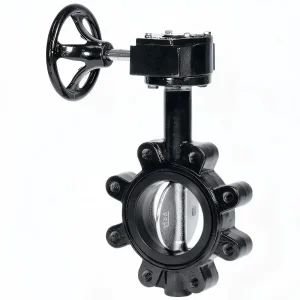
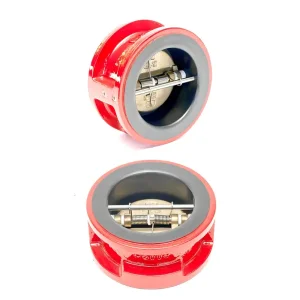
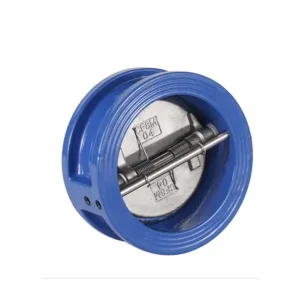
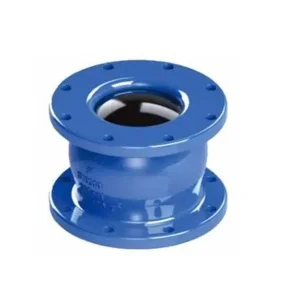
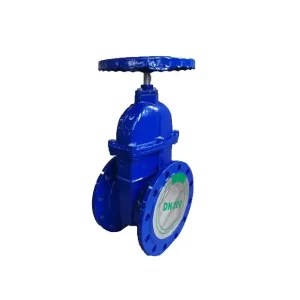
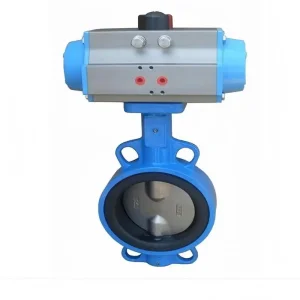
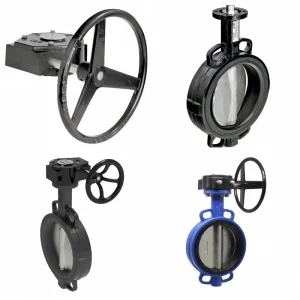
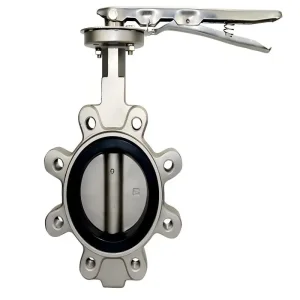
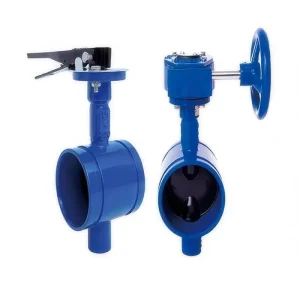
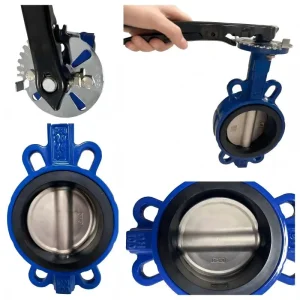
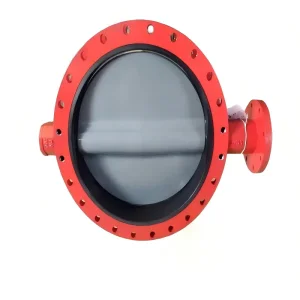
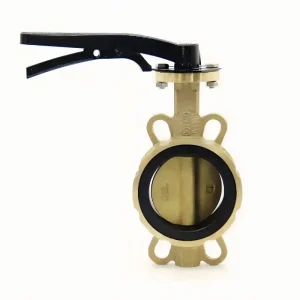
From water networks and marine hulls to high-temperature power stations and chemical reactors, explore our catalog of butterfly, check, gate, plug, and globe valves ready for export.
Frequently Asked Questions by Valve Engineers & Buyers
Detailed technical clarifications on Pressure Equipment Directive conformity, material metallurgy, flow coefficients, and leak testing criteria.
What specific quality and audit benchmarks are required for CE-certified stainless globe valves under PED 2014/68/EU?
When should an engineer specify a parabolic plug disc versus a standard flat-faced or needle disc in a globe valve?
- Flat/Quick-Opening Discs: Best suited for on/off isolation where minimal stem travel produces maximum flow area quickly, ideal for low-cycle safety shut-off.
- Parabolic/Contoured Throttling Plugs: Essential for continuous modulation and throttling service. They establish an equal-percentage or linear flow profile, preventing wiredrawing erosion across the seating faces and mitigating rapid fluid acceleration that induces cavitation.
- Needle/Micro-Flow Discs: Specified for very small pipe diameters (DN15-DN25) or high differential pressure drops where precise instrumentation metering and calibration control are needed.
How does your factory prevent galling on stainless steel stems and seating faces during high-pressure cycles?
- Hardness Differential: The disc seating face and body seat ring are overlaid with Cobalt-base Stellite (e.g., Stellite Gr. 6 on the disc, Stellite Gr. 21 on the body) maintaining a minimum 50 HB differential in surface hardness.
- Sub-Micron Machining: Valve stems are precision ground and burnished to a mirror surface roughness of Ra < 0.2 µm, preventing microscopic mechanical interlocking within the packing rings.
- Dissimilar Bushing Materials: Stem nuts and yoke sleeves are manufactured from high-tensile aluminum bronze (ASTM B148 C95800) or nitrided stainless steel, delivering natural lubricity and eliminating thread seizure under continuous operating torques.
