Standard & Custom CE-Certified Industrial Valves
Direct from Tianjin Donglian Valve Foundry (since 1996) and Dongfang Rubber Plant (since 1987). Factory-direct quality, zero middleman markup.
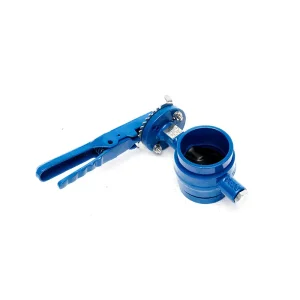
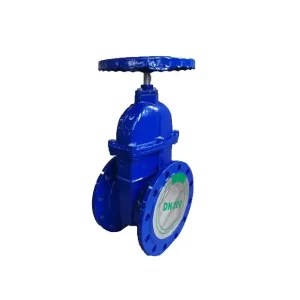
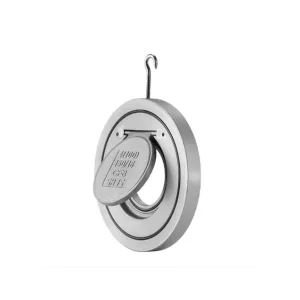
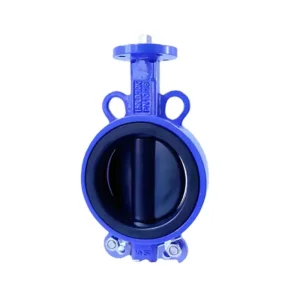
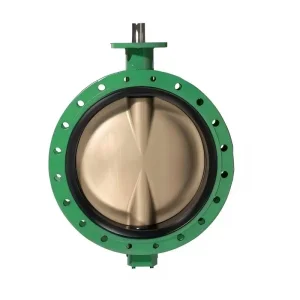
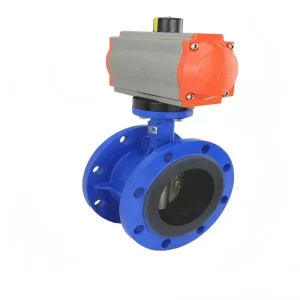
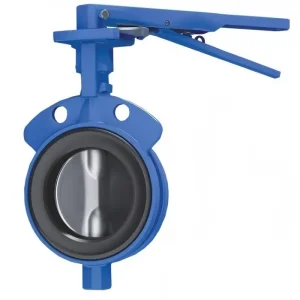
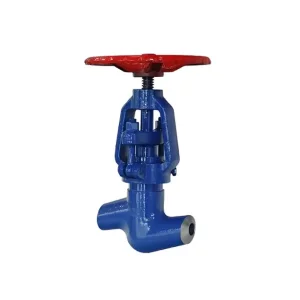
Macro-Industry Dynamics & The Rise of Semi-Lug Butterfly Valves
In modern industrial and utility infrastructure, piping engineers face a relentless trifecta of operational challenges: weight minimization, pipeline space conservation, and rapid downstream maintenance capabilities.
Wafer vs. Lug vs. Semi-Lug Geometry
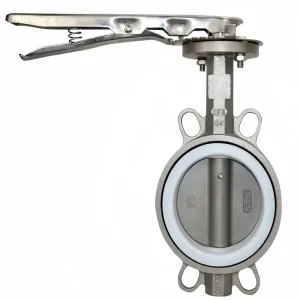
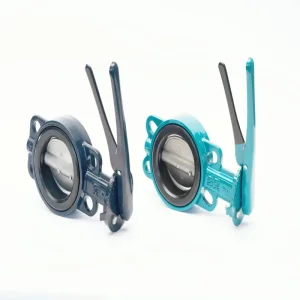
While standard wafer valves require long through-bolts that make pipeline segment servicing risky, full-lug valves add considerable body weight and cost. The Semi Lug butterfly valve bridges this gap by featuring alignment guide lugs (often threaded at key bolt locations), ensuring concentric alignment during installation, eliminating flange slip, and dramatically reducing raw casting mass.
Pressure Boundary Safety & CE Marking
Under the European Union Pressure Equipment Directive (PED 2014/68/EU), valve bodies and elastomer components must withstand rigorous tensile, pressure fatigue, and burst requirements. Tianjin Top Valve manufactures semi-lug units cast from high-grade ductile iron (EN-GJS-400-15 / 500-7) and ASTM A351 CF8M stainless steel to guarantee zero porosity and structural stability up to PN16/PN25.
Extended Thermal & Elastomer Endurance
With an in-house rubber compounding lab operating since 1987, our bonded and phenolic-backed EPDM, NBR, Viton, and PTFE seats offer exceptional resilience. In-house vulcanization guarantees low compression set, preserving a bubble-tight shut-off (EN 12266-1 Rate A) even after thousands of continuous operating cycles under alternating thermal gradients.
Global Commercial Status: Supply Chain Resiliency in Valve Sourcing
Strategic analysis of global valve procurement indicates an increasing pivot away from pure wafer bodies toward semi-lug and full-lug configurations across water transmission, HVAC, and energy generation sectors.
Structural Advantages of the Semi-Lug Architecture
Across mega-infrastructure projects in Europe, North America, Southeast Asia, and the Middle East, piping designers prioritize valves that deliver fast assembly without compromising safety margins. Conventional wafer valves, clamped between flanges using extended tie-rods, suffer from differential bolt elongation during thermal spikes and seismic vibrations. Conversely, full-lug configurations, while safe for terminal isolation, incur elevated raw material costs and casting weight that challenge shipboard systems and modular skids. The CE Certified Semi-Lug Butterfly Valve provides calibrated guide ear lugs that ensure concentric disc-to-pipe alignment, prevent gasket shearing during bolt torqueing, and offer localized piping stability at a substantially reduced capital expenditure.
| Evaluation Parameter | Wafer Butterfly Valve | Semi Lug Butterfly Valve | Full Lug Butterfly Valve |
|---|---|---|---|
| Flange Alignment Method | External guide holes (requires careful manual centering) | Integrated guide lugs (automatic bolt centralization) | Full perimeter threaded holes (bolted individually) |
| Casting Weight & Cost | Lowest (minimal ductile iron/alloy content) | Balanced (15% to 25% lighter than full lug) | Heaviest (maximum mass due to continuous bosses) |
| Downstream Pipe Disassembly | Not supported (system must be fully drained) | Limited downstream unbolting with support brackets | Permitted (supports true dead-end isolation) |
| Bolt Thermal Expansion Vulnerability | High (long stud bolts stretch under thermal flux) | Low to Medium (shorter span between flange shoulders) | Low (independent short stud fasteners per side) |
| Ideal Application Matrix | Tight footprint commercial HVAC, basic pump skids | District cooling, municipal water networks, marine skids | Chemical processing plants, tank farms, pump isolation |
Localized Support & European/Global Compliance Assurance
Mitigating cross-border operational risk with comprehensive certification documents, factory traceability, and international technical documentation.
PED 2014/68/EU Module H
Full CE certification ensures compliance with European Pressure Equipment Directives. Comprehensive 3.1 Material Test Reports (EN 10204) are available on demand for all pressure-bearing castings and elastomer seal lots.
WRAS Potable Water Approvals
Selected butterfly valve series (including 4020G, 4020L, 4325G, and 4325L) hold official WRAS certifications, proving non-toxic, anti-microbial safety in municipal drinking water and potable desalinated water infrastructure.
ISO Integrated Quality System
Operating under ISO 9001:2015, ISO 14001:2015, and ISO 45001:2018. Integrated digital tracking links each finished valve serial number back to raw ingot spectrographic analyses and vulcanization batches.
24-Hour Engineering Support
Our dedicated technical response team delivers STEP 3D CAD modeling, torque curve calculations, actuator sizing data sheets, and local flange drilling validation (EN 1092-2 PN10/16, ASME Class 150, JIS B2238) within 24 hours.
Mission-Critical Application Scenarios for Semi-Lug Valves
Engineered to excel in demanding environments where weight constraints, hydrodynamic forces, and aggressive fluids rule out substandard hardware.
District Cooling & Chilled Water Loops
In high-density commercial HVAC cooling loops, vibration from immense centrifugal chillers can cause standard wafer valves to shift out of alignment. Semi-lug valves lock precisely into place, utilizing food-grade EPDM resilient seats that resist cavitation and deliver zero-leakage performance under variable hydraulic pumping loads.
Marine Ballast & Seawater Desalination
Seawater environments cause rapid galvanic pitting on non-compatible metals. Combining ductile iron bodies with our proprietary Nickel Aluminum Bronze (C95800) or Duplex 2205 discs, semi-lug butterfly valves handle reverse osmosis pressures and brine salinity while keeping overall hull machinery weight remarkably low.
Municipal Wastewater & Sludge Separation
Sewage transfer and sludge digestion require uninterrupted flow paths. Our pinless stem-to-disc designs eliminate exposed through-pins that catch rags or fibrous solids. Paired with oil-resistant NBR or reinforced anti-abrasion elastomer seats, these valves run clog-free with minimal operating torque.
Next-Generation Technology Roadmap & Industry 4.0 Outlook
Pioneering smart flow regulation through continuous material science advancements and integrated sensor telemetry.
Hydrodynamic CFD Streamlining
Implementing supercomputer-driven computational fluid dynamics to reduce disc profile drag by 14%, increasing flow coefficient (Kv/Cv) and reducing pump electricity consumption across mega-pumping facilities.
Advanced Polymeric Matrixes
Formulating fluorosilicone and nano-ceramic infused vulcanized linings in our group rubber lab to expand resilient valve operational temperature boundaries from -40°C up to +220°C under harsh chemical exposure.
Industrial IoT Sensor Integration
Deploying smart stem packing glands embedded with strain and micro-acoustic sensors for predictive seal wear monitoring and fugitive emission detection, interfacing natively via Modbus and wireless LoRaWAN gateways.
Closed-Loop Circular Metallurgy
Re-engineering green electric arc furnace casting processes to achieve 90% recycled domestic scrap utilization with zero-carbon footprint manufacturing, fully certified under revised EU Green Taxonomy standards.
Frequently Asked Questions: Semi Lug Butterfly Valves
Comprehensive technical guidance formulated by our engineering quality team to answer top procurement, compliance, and plant operational queries.
What is the specific mechanical difference between a wafer, semi lug, and full lug butterfly valve?
The distinction lies in flange engagement geometry and bolting methodology. A wafer butterfly valve has a smooth outer circumference or simple unthreaded guiding eyes, clamping between mating flanges with long studs that traverse the entire body. A full lug valve features threaded tapped holes entirely surrounding the valve's perimeter, allowing either flange side to be unbolted independently for terminal or dead-end pipeline maintenance. A semi-lug butterfly valve provides alignment guide lugs around critical bolt quadrants (often 2 or 4 holes depending on pipe diameter) which center the valve body precisely between counter-flanges during bolt tightening, preventing disc contact with the pipe walls without the added bulk and threading cost of a full-lug casting.
Why is CE Certification (PED 2014/68/EU) critical when buying butterfly valves for European and international projects?
The CE marking certifies that the valve satisfies the mandatory European safety legislation under Pressure Equipment Directive (PED 2014/68/EU). This mandates extensive design calculations, non-destructive casting examinations (radiographic/ultrasonic testing for defects), pressure containment verification (hydrostatic shell testing at 1.5x PN and seat testing at 1.1x PN), and strict traceability back to melt furnace heat numbers. Uncertified valves present immense safety and legal liabilities, risking pipe rupture, unscheduled shutdowns, and rejection by project insurance underwriters.
Can semi-lug butterfly valves be utilized for dead-end or downstream service?
Semi-lug valves are primarily optimized for inline service and self-aligning isolation. While full-lug butterfly valves with fully threaded bolt circles are standard for dead-end terminal isolation (downstream pipe dismantling under full pressure), semi-lug valves can only be deployed in temporary downstream scenarios if designed with dedicated threaded holes and operated at derated pressures under strict engineering review. When full dead-end shut-off capability is required on operating pipelines, we recommend choosing our factory-direct full-lug models.
How does in-house rubber compounding at Tianjin Top Valve affect valve longevity?
Most commercial valve assemblers purchase pre-made rubber seats from external commercial third parties, leading to inconsistent polymer durometers and poor vulcanization bonding. Our group operates Tianjin Dongfang Rubber Factory (founded in 1987), mixing raw polymers (EPDM, Nitrile, Viton) with high-grade carbon black, anti-aging agents, and vulcanizing compounds under stringent laboratory control. This guarantees consistent durometer hardness (70 to 75 Shore A), superior memory rebound, resistance to permanent compression set, and zero seat delamination even across high fluid velocity throttling cycles.
What actuation and automation options are compatible with CE-certified semi lug valves?
All Tianjin Top Valve butterfly series are manufactured with standardized top-mounting flanges complying with ISO 5211 (F05, F07, F10, F12, F16). This universal standardization enables seamless direct-mounting of manual locking hand levers, heavy-duty worm gearboxes, pneumatic rack-and-pinion actuators (double-acting or spring return), and intelligent 4-20mA modulating electric motor actuators without specialized brackets, significantly lowering installation and maintenance overheads.
Explore Additional High-Pressure & Chemical Valves
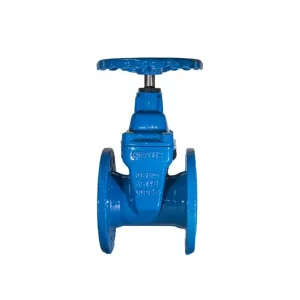
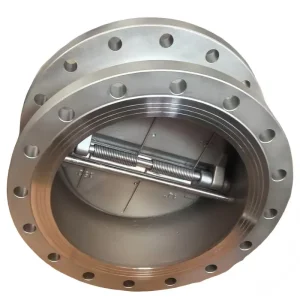
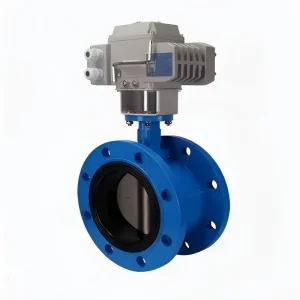
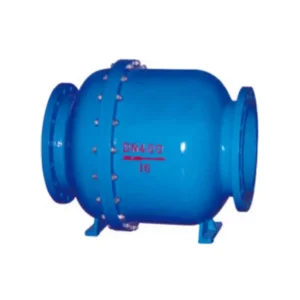
Complete your plant layout with fully certified check, globe, gate, and specialized butterfly valve products.