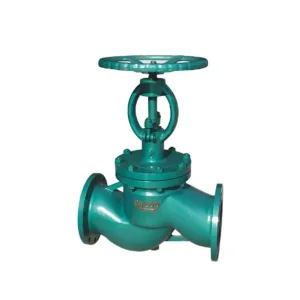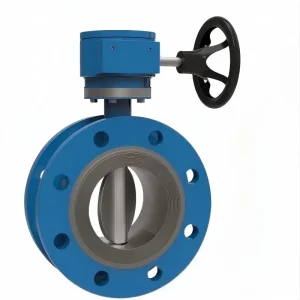
Primary Flow Control Portfolio
Precision Isolation & Regulation Assemblies
Engineered for severe duty cycles, high-temperature thermal fluids, and water-steam cycle management across global utility projects.
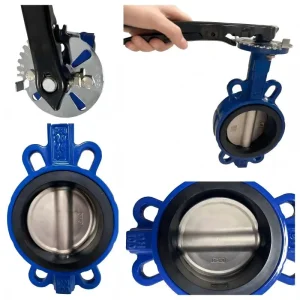
High-Quality WRAS Approved Butterfly Valve - High Performance & Durability 4020L
Technical Datasheet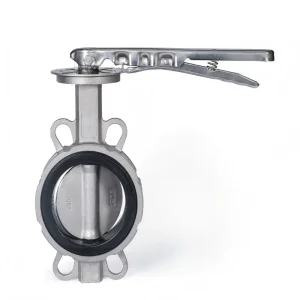
Wholesale Stainless Steel Butterfly Valve - Durable & Corrosion-Resistant
Technical Datasheet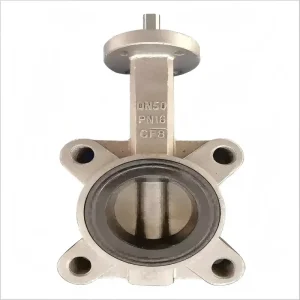
Wholesale Semi Lug Butterfly Valve - Durable & Versatile Flow Control
Technical Datasheet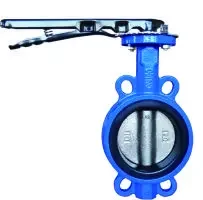
Wholesale Wafer Butterfly Valve - Durable & Efficient Flow Control Solution
Technical Datasheet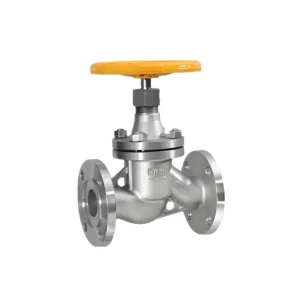
Wholesale Straight-Through Ammonia Globe Valve Manufacturers
Technical Datasheet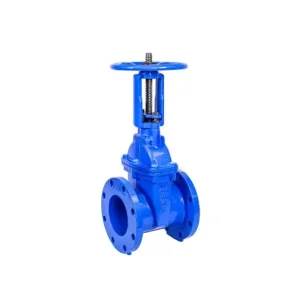
Wholesale Rising Stem Resilient Seat Gate Valve Supplier
Technical Datasheet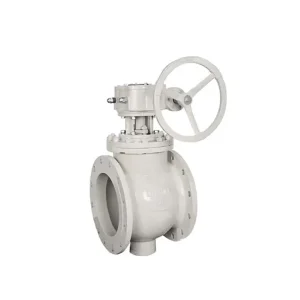
CE Certification High - Pressure Eccentric Plug Valve for Oil and Gas
Technical Datasheet
Industry State & Metallurgical Integrity
Engineering Architecture of High Temperature & High Pressure Globe Valves
Navigating supercritical thermal stresses, creep-fatigue interactions, and severe pressure drops in modern steam generation facilities.
Pressure-Seal Bonnet Physics
Unlike bolted-bonnet valves where internal fluid pressure increases the mechanical load on body-bonnet bolting, high-pressure power station globe valves leverage a pressure-seal design. As system pressure spikes (up to Class 4500 / 76 MPa), the upward thrust forced upon the piston bonnet compresses a precision-machined flexible graphite or silver-plated metallic gasket against the body’s hard-faced containment angle, creating an increasingly tighter seal that prevents fugitive steam emission.
Super-Alloy Metallurgy (Creep-Resistant)
Thermal power operating temperatures routinely surpass 580°C to 620°C in ultra-supercritical (USC) boiler applications. Valves operating in these thermal envelopes require forged steel grades such as ASTM A182 F91 (9% Cr-1% Mo-V) and F92, which resist long-term grain boundary embrittlement and high-temperature oxidation. Seating surfaces are consistently hardfaced using Stellite 6 (CoCr-A) or Stellite 21 to counteract wire-drawing erosion caused by flashing condensate.
CE PED Directive 2014/68/EU Module H
Supplying critical isolation valves to the European Economic Area requires rigorous compliance with the Pressure Equipment Directive (PED). Top-tier power station globe valves carry CE marking governed by Module H or Module H1 (Full Quality Assurance with Design Examination). Every shell undergo 100% volumetric Non-Destructive Examination (NDE)—including Radiographic Testing (RT) and Ultrasonic Testing (UT)—guaranteeing structural safety against catastrophic steam burst events.
"In supercritical and combined-cycle power facilities, globe valve failure directly correlates to boiler trip-outs. Implementing multi-stage anti-cavitation trim profiles and forged chromium-molybdenum alloy pressure containment eliminates high-velocity wire-drawing and valve seizing, directly securing plant uptime."
Macro Industrial Deployment
Specialized Power Plant Application Matrix
Engineered for extreme fluid mechanics, high differential throttling, and isolation where conventional valves fail prematurely.
Boiler Blowdown & Drain Service
Continuous boiler blowdown and low-level drum drains subject valves to flashing mixtures of saturated water and superheated steam loaded with abrasive iron oxide boiler scale. Our high-pressure globe valves integrate replaceable hardened cobalt-alloy seat rings and parabolic needle-type throttling discs that deflect flow momentum away from the primary sealing surfaces, preventing seat scouring and thermal wash-out.
Main Steam Isolation & Warm-up Bypass
Main steam bypass circuits require exceptional micro-metering capabilities during turbine pre-warming phases to avoid thermal shock to massive turbine casings. The straight-pattern (T-pattern) and Y-pattern globe valve configurations supply exact flow coefficients (Cv) while operating under full differential pressure (Class 2500 / Class 4500), guaranteeing smooth steam admission before main line opening.
Sootblower Valve Manifolds
Sootblower piping cycles violently from idle ambient temperatures to instantaneous high-pressure superheated steam temperatures thousands of times per year. This severe thermal shock cracks standard cast valves. Our CE-certified forged steel globe valves utilize unified forging envelopes (F22, F91) and non-rotating stems to prevent packing extrusion and cyclical thermal fatigue failures.
| Design Parameter | High-Pressure Globe Valve (Power Station) | Standard Gate Valve (Power Station) | High-Performance Butterfly Valve |
|---|---|---|---|
| Primary Duty | Precision Throttling & Critical Isolation | Full Bore On/Off Isolation Only | Bulk Water/Gas Low-to-Mid Temp Throttling |
| Pressure Rating Scope | ASME Class 900 to Class 4500 (PN160 - PN760) | ASME Class 150 to Class 2500 | ASME Class 150 to Class 600 (PN10 - PN100) |
| Bonnet Integrity | Pressure Seal (Self-energizing graphite ring) | Bolted or Pressure Seal Bonnet | Wafer / Lug Integral Shaft Seal |
| Seating Metallurgy | Stellite 6 / Stellite 21 Hardfaced Overlay | 13Cr / Stellite Wedge & Seat Ring | EPDM, NBR, PTFE or Metal-to-Metal |
| Cavitation / Wire-Draw Resistance | Extremely High (Multi-hole labyrinth trims) | Low (Vulnerable to seat erosion if cracked open) | Moderate (Subject to turbulence at partial open) |
Future-Proof Engineering Roadmap
Emerging Trends in Global Power Infrastructure
As the world transitions towards high-efficiency flexible thermal generation, combined cycle gas turbines (CCGT), and Gen-IV nuclear reactors, severe-service valve specifications are transforming.
Fast Cycling & Renewable Peaking
Traditional baseload thermal plants now cycle load rapidly to stabilize grids backed by intermittent wind and solar. This results in severe thermal transients (thermal ramping from 150°C to 560°C within minutes). Globe valves must feature optimized wall thicknesses via Finite Element Analysis (FEA) to reduce thermal gradients between the outer surface and the inner fluid boundary, eliminating cyclical thermal stress cracking.
IoT & Predictive Acoustic Leak Sensing
Unplanned power plant outages cost hundreds of thousands of dollars per day. The future roadmap incorporates smart digital positioners paired with high-frequency acoustic emission (AE) sensors embedded directly into the globe valve's pressure-seal cavity. These sensors detect microscopic steam escaping across the seat long before visible thermal imaging registers external body heating.
Zero Fugitive Emission Certifications (ISO 15848-1)
With stringent global environmental mandates under ESG scrutiny, steam and industrial gas leakage must be eliminated. Modern CE-certified high-temperature valves employ double live-loaded Belleville disc spring assemblies alongside ultra-pure, die-formed flexible graphite packing rings with carbon yarn anti-extrusion caps, guaranteeing Class AH fugitive emission containment.
Engineering Knowledge Hub
Frequently Asked Questions for Valve Specifiers
Direct technical clarifications on pressure classes, metallurgy selection, testing protocols, and CE certification standards.
What makes a globe valve specifically suited for high temperature and high pressure power stations?
Unlike gate valves that only offer on/off operation, or ball/butterfly valves limited by elastomer or composite seat limits, power station globe valves feature a robust, linear-travel design that excels at precision flow throttling. The internal fluid changes direction through the S-shaped body, allowing controlled pressure drops. Crucially, they utilize a self-energized pressure-seal bonnet rather than bolted joints, meaning the higher the internal pressure climbs (up to Class 4500 / 760 bar), the tighter the gasket seals against the forged alloy body.
Which CE certifications and EU standards apply to high pressure power station valves?
Valves operating above 0.5 bar fall under the European Pressure Equipment Directive (PED 2014/68/EU). High temperature/high pressure utility valves generally fall under Category III or Category IV, requiring Module H or Module H1 compliance. Relevant design standards include EN 12516 (Industrial valves - Shell design strength), EN 13709 (Steel globe and globe stop and check valves), and EN 736. Material testing requires strict EN 10204 3.1 or 3.2 inspection certification with full chemical, tensile, impact, and heat-treatment traceability.
How do you combat wire-drawing and cavitation in high-pressure differential throttling?
Wire-drawing (erosive grooving across the seat caused by high-velocity wet steam or flashing water) is prevented through two design interventions: 1) Metallurgical hardfacing using Cobalt-base Stellite (Stellite 6 on the disc, Stellite 21 on the seat ring) applied via Plasma Transferred Arc (PTA) welding to minimum 38-42 HRC hardness; and 2) Custom engineered multi-step or multi-hole labyrinth disc plugs which stagedly diminish fluid pressure without exceeding the fluid's vapor pressure, eliminating cavitation bubble collapse.
What are the key differences between F22, F91, and F92 forged alloy bodies?
ASTM A182 Grade F22 (2.25% Cr - 1% Mo) is standard for conventional superheated steam up to 540°C. For modern supercritical and ultra-supercritical plants running between 560°C and 620°C, Grade F91 (9% Cr - 1% Mo - 0.2% V) offers vastly superior creep-rupture strength and resistance to graphitization. Grade F92 adds Tungsten (W) and Boron (B) alloying, pushing creep strength further for advanced USC main steam lines up to 650°C.
Why is an in-house foundry and testing laboratory critical for high-pressure valve reliability?
Severe service valves cannot afford microporosity, slag inclusions, or wall thickness variations that lead to catastrophic containment loss under 300+ bar pressure. Operating an in-house foundry and certified testing center allows complete control over optical emission spectrometry (OES) chemical verification, Charpy impact tests at low temperatures, 100% hydrostatic shell testing at 1.5x design pressure, and high-pressure gas seat testing according to API 598 or EN 12266-1.
High-Duty & Severe Duty Valve Catalog
Specialty Check, Plug, Ball & Steam Globe Valves
Complete process containment solutions certified to international pressure equipment and quality standards.
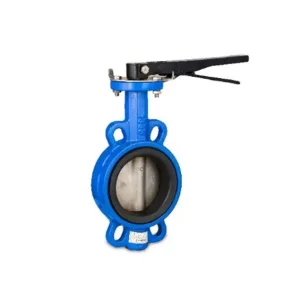
High-Quality Rubber Lined Pinless Butterfly Valve Supplier
Technical Datasheet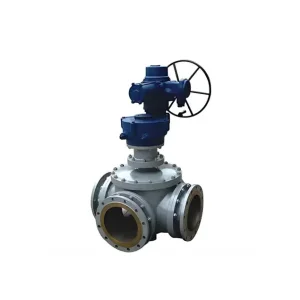
CE Certification Quick - Opening Three - Way Flange Ball Valve for Emergency Fluid Diversion
Technical Datasheet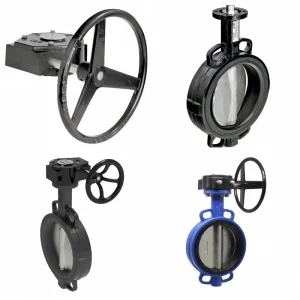
CE Certification WRAS Approved High-Performance Butterfly Valve 4020G
Technical Datasheet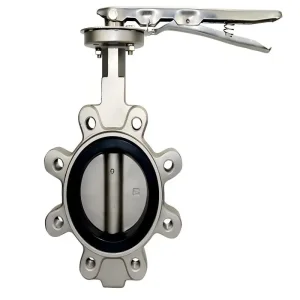
High-Quality LUG Stainless Steel Butterfly Valve - Durable & Reliable
Technical Datasheet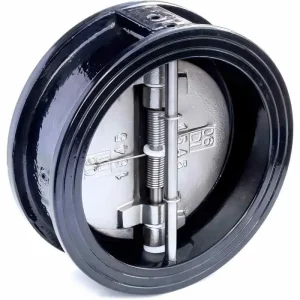
High-Quality High-Quality Wafer Check Valve for Secure Fluid Control
Technical Datasheet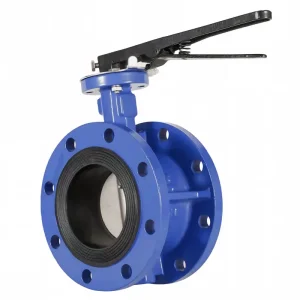
CE Certification Flanged Butterfly Valve with Lever Actuator
Technical Datasheet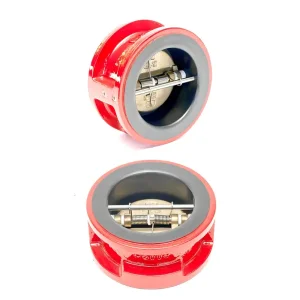
Wholesale Full Rubber Coated Check Valve Supplier
Technical Datasheet