
Precision Flow Isolation & Backflow Prevention Systems
Explore our foundational series manufactured across our vertically integrated foundry and precision elastomer compounding facilities.
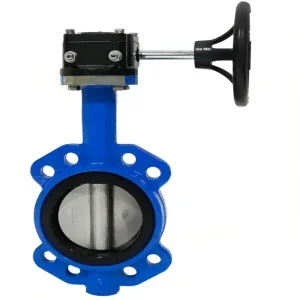
CE Certification Wafer Butterfly Valve, Water Usage Butterfly Valve
Configure Valve Datasheet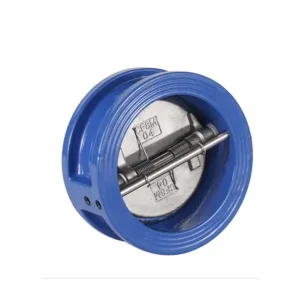
High-Performance Dual Plate Wafer Check Valve for High-Flow Systems
Configure Valve Datasheet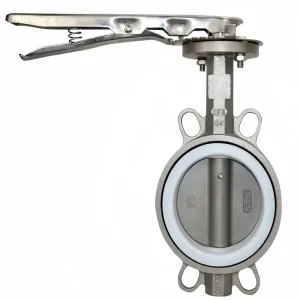
CE Certification PTFE Lined Stainless Steel Butterfly Valve
Configure Valve Datasheet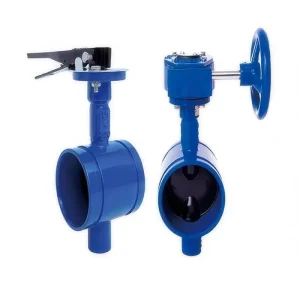
High-Quality Grooved End Butterfly Valve - Durable Flow Control
Configure Valve Datasheet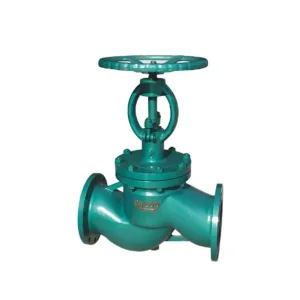
High-Temperature Vacuum Isolation Globe Valve for Thermal Plants
Configure Valve Datasheet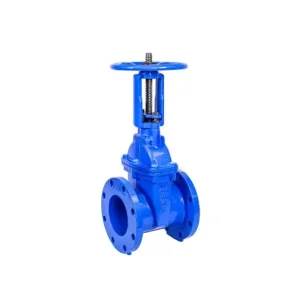
Wholesale Rising Stem Resilient Seat Gate Valve (OS&Y)
Configure Valve Datasheet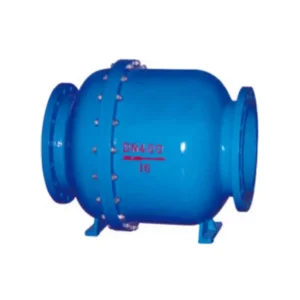
CE Certification Micro-Resistance Ball Check Valve for Wastewater
Configure Valve Datasheet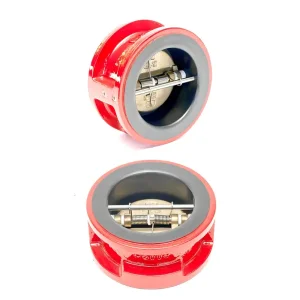
Wholesale Full Rubber Coated Non-Slam Check Valve
Configure Valve DatasheetEngineering Paradigm of Grooved Type Manual Butterfly Valves
Analyzing hydraulic performance, mechanical joint integrity, and global adoption metrics for critical infrastructure piping.
In modern industrial fluid management, mechanical piping systems face strict demands: they must endure continuous hydrodynamic stress, thermal cycles, seismic shifts, and urgent operational schedules. The grooved type manual butterfly valve has become a primary alternative to conventional flanged and wafer valves. Designed in accordance with international standards including AWWA C606, ISO 6182, EN 593, and MSS SP-67, grooved butterfly valves allow rapid installation via standard mechanical couplings. This setup eliminates the labor-intensive bolt alignment, gasket centering, and high flange torque requirements common to older piping methods.
Under European Union regulatory frameworks, pressure apparatuses deployed across industrial networks must satisfy strict conformity assessments. Our CE certified grooved manual butterfly valves comply fully with the Pressure Equipment Directive (PED) 2014/68/EU. They feature ductile iron bodies (ASTM A536 Grade 65-45-12 / EN-GJS-450-10 or EN-GJS-500-7) paired with fully encapsulated resilient elastomer discs. Unlike conventional lined wafer valves—where downstream maintenance requires pipeline drainage or spool disassembly—grooved systems enable fast mechanical disconnection. This design protects the joint against pipe misalignment, absorbs axial thermal expansion, and dampens operational vibration without leaking.
Optimized Fluid Dynamic Hydrodynamics
Computational fluid dynamics (CFD) profiling on our streamlined disc geometries lowers flow turbulence and pressure loss. This design minimizes pumping energy consumption across extensive closed hydronic loops and open cooling networks.
Dual-Stem Pinless Mechanical Drive
Features an internal spline or precision double-hex upper/lower stem connection. Eliminating exposed pins through the disc boundary protects fluid sealing integrity and eliminates galvanic crevice corrosion paths.
In-House Seat Vulcanization
Compounded by our specialized rubber facility (operating since 1987), our EPDM and NBR elastomer compounds deliver compression set resilience, bubble-tight EN 12266-1 Rate A closure, and broad chemical resistance.
China Factory 4.0: Supply Chain Resilience & Vertical Synergy
Combining heavy-duty metallurgical casting, CNC multi-axis tooling, and custom elastomer compounding under one production roof.
International valve sourcing often struggles with sub-supplier dependencies: body casting foundries, rubber seal contractors, machine shops, and coating facilities are frequently scattered across disconnected regions. Tianjin Top Automation Equipment Co., Ltd. eliminates these issues through full vertical integration, supported by deep corporate heritage: Tianjin Donglian Valve Factory (foundry operations since 1996) and Tianjin Dongfang Rubber Factory (elastomer formulation since 1987).
On our 23,000 m² industrial campus in Dongli District, Tianjin, every manufacturing step for CE-compliant grooved butterfly valves remains under direct engineering oversight. By housing the electric induction foundry, computer-controlled vulcanization presses, multi-axis horizontal CNC centers, automated electrostatic epoxy coating lines, and computerized hydrostatic test rigs within a unified system, we provide clear batch traceability and maintain consistent dimensional accuracy.
Metallurgical Foundry
Equipped with optical emission spectrometers to verify carbon, silicon, and nodularity percentages in ductile iron batches (ASTM A536 65-45-12 / EN-GJS-500-7) before mould pouring.
CNC Groove Turning
Automated CNC machine tools turn cut and roll grooved dimensions to exact AWWA C606 and ISO 6182 tolerances, preventing coupling engagement slip or gasket shear during field pressurization.
Corrosion Shielding
Electrostatic fusion-bonded epoxy (FBE) powder coating with a minimum dry film thickness of 250 μm provides high dielectric isolation, abrasion resistance, and chemical protection.
100% Pressure Integrity
Every individual production unit passes hydrostatic shell pressure tests (1.5 × PN) and bidirectional seat closure tests (1.1 × PN) under EN 12266-1 requirements before cleanroom packaging.
Connection Topology Selection: Grooved vs Flanged vs Wafer
Evaluating installation speed, mass, structural vibration resistance, and operating lifetime across common piping connection standards.
| Evaluation Parameter | Grooved Type Manual Butterfly Valve | Wafer Type Butterfly Valve | Double Flanged Butterfly Valve |
|---|---|---|---|
| Assembly Speed | Ultra-Fast 2-bolt coupling clamp (approx. 3-5 min) | Moderate (requires 4-12 studs alignment) | Slow (16-32 bolts with balanced multi-pass torque) |
| Installed Piping Mass | Lightweight Up to 40% lighter than flanged setups | Lightweight, but creates high shear on studs | Heavy; requires secondary structural hanging brackets |
| Vibration & Seismic Damping | High elastomer coupling absorption (ideal for pumps) | Low; vibration transfers directly into valve body | Rigid; cyclical vibration leads to flange bolt loosening |
| Maintenance Downstream Disassembly | Quick release without disturbing pipeline alignment | Requires pipe spread; risks damaging elastomer seat | Labor intensive; requires total flange face cleaning |
| Common Working Pressures | PN16, PN25, 300 PSI (20.7 bar), 365 PSI (25 bar) | PN10, PN16, Class 150 | PN10, PN16, PN25, Class 150/300 |
| Governing CE / PED Norm | EN 593 / MSS SP-67 / PED 2014/68/EU Module H | EN 593 / ISO 5752 Series 20 | EN 593 / ISO 5752 Series 13 / 14 |
Global Industrial Deployment & Localized Use Cases
Engineered to satisfy regional mechanical codes across critical commercial, civic, and heavy industrial installations.
NFPA Fire Protection Networks
Ideal for fire pump houses, standpipe risers, and deluge valve pre-action distribution mains. Compatible with gear operators featuring internal supervisory switches for UL/FM/CE system monitoring.
Commercial HVAC & District Energy
Specified for chilled water headers, condenser loops, cooling towers, and boiler rooms. The mechanical grooved joint absorbs thermal cycling stresses without weeping at seasonal startup.
Municipal Water Treatment
Utilizes potable-water approved EPDM seats with WRAS and CE compliance for high-capacity reverse osmosis pre-filtration skids, booster pump stations, and underground valve vaults.
Mining Tailings & Industrial Process
Provides dependable quarter-turn manual isolation for abrasive slurry tailings, mine dewatering circuits, and industrial utility air loops requiring fast field valve replacement.
Frequently Asked Questions on CE Grooved Butterfly Valves
Detailed technical, compliance, and metallurgical answers prepared by our sales engineering team.
What specific standards govern the dimensions of your grooved manual butterfly valve ends?
Our grooved ends are machined to meet AWWA C606 and ISO 6182 standards for cut-groove and roll-groove patterns. This design ensures mechanical interchangeability with standard global grooved couplings (such as Victaulic, Grinnell, and Tyco systems). Face-to-face dimensions follow manufacturer standards alongside MSS SP-67 and EN 593 short/medium installation formats.
What does CE Certification under PED 2014/68/EU mean for high-pressure pipeline safety?
For pressure equipment imported into the European Economic Area, the Pressure Equipment Directive (PED 2014/68/EU) mandates rigorous design safety margins, verifiable material traceability under EN 10204 Type 3.1, non-destructive testing (NDT), and documented hydro-testing. Our valves follow Module H quality assurance, confirming that pressure housings are sound and rated for hazardous or non-hazardous group fluids up to design pressure limits without brittle rupture risk.
How does an in-house rubber factory improve sealing performance compared to outsourced seats?
Elastomer compression set and vulcanization temperature directly affect valve seating torque and service life. Because our group has operated Tianjin Dongfang Rubber Factory since 1987, our rubber formulas use high-grade polymers with optimized anti-aging additives. This provides stable sealing, low operating torque, and zero leakage under cyclic reverse pressures, outlasting generic outsourced EPDM and NBR liners.
When should an EPC contractor specify a worm gear operator instead of a manual lever?
For nominal pipe sizes DN50 to DN150 (2" to 6"), manual 10-position detent notch levers are common for quick shut-off. For sizes DN200 (8") and above, or line pressures exceeding 200 PSI (14 bar), hydrodynamic torque increases substantially. A self-locking worm gearbox is recommended to protect operators from rapid kickback, provide mechanical advantage, and eliminate liquid water hammer during closing.
Can grooved butterfly valves be deployed in buried underground utility services?
Yes. When installed underground, the valve body should receive high-build fusion-bonded epoxy coating or polyurethane wrap, accompanied by 316 stainless steel stem trim and an IP67/IP68 sealed stem housing. Underground valves are typically fitted with an extended square operating nut and extension spindle inside a cast-iron valve box for street-level curb key operation.
High-Performance Resilient & Metal Seated Pipeline Series
Explore our extended industrial valves engineered for municipal, chemical, fire fighting, and marine systems.
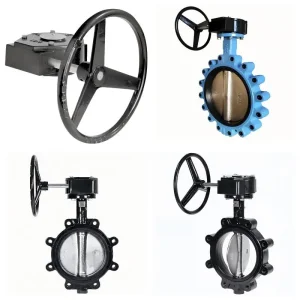
Wholesale WRAS Approved Lug Type Butterfly Valve 4325G
Configure Valve Datasheet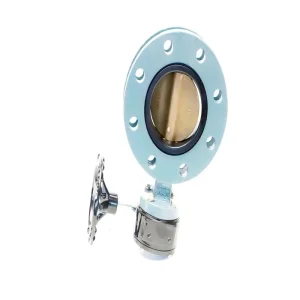
CE/ISO/DIN High-Pressure Metal Hard Seal Butterfly Valve
Configure Valve Datasheet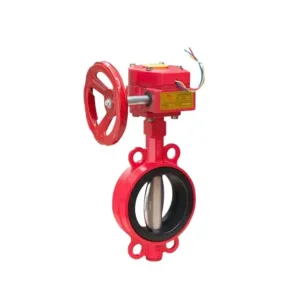
Wholesale Fire-Fighting Wafer Signal Butterfly Valve
Configure Valve Datasheet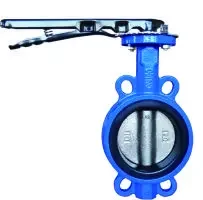
Wholesale Resilient Wafer Butterfly Valve Flow Control Solution
Configure Valve Datasheet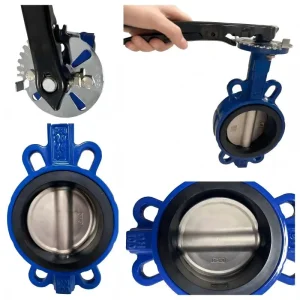
High-Performance WRAS Approved Butterfly Valve 4020L
Configure Valve Datasheet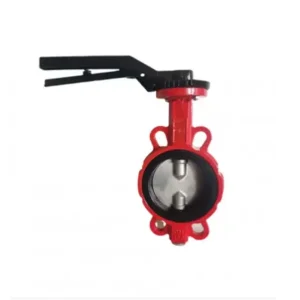
Double Half Shaft Wafer Butterfly Valve (Pinless Disc)
Configure Valve Datasheet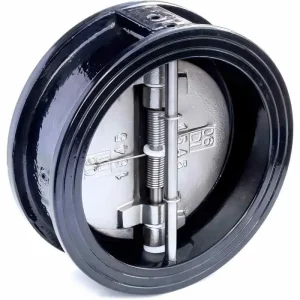
Single Disc Wafer Check Valve for Secure Fluid Control
Configure Valve Datasheet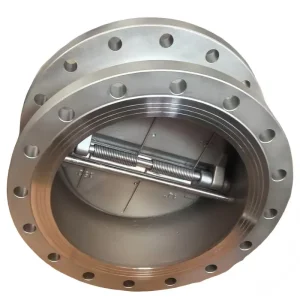
CE Compact Low-Pressure Drop Wafer Lift Check Valve
Configure Valve DatasheetRequest Project Engineering Datasheets & Factory Direct Quotations
Our technical engineering team provides comprehensive valve schedule shortlisting, 2D/3D CAD integration files (Revit/STEP), chemical compatibility verification, and direct factory pricing within 24 hours.
