
High-Precision Flow Control Portfolio
Engineered for critical industrial media, municipal networks, and marine hydraulic installations with verifiable traceability from smelting to pneumatic seat calibration.
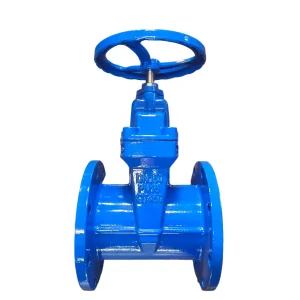
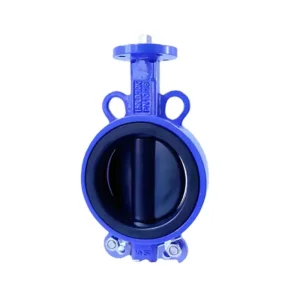
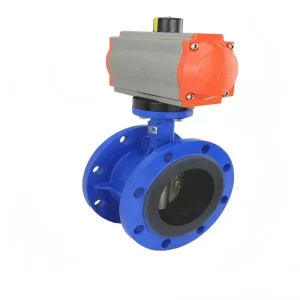
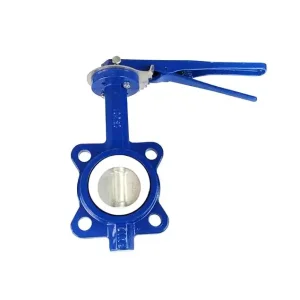
Evolutionary Trajectories of Gate and Globe Valves in Contemporary Pipeline Engineering
From traditional manual shut-off mechanisms to intelligent actuation matrices, linear motion valves remain indispensable backbones in pressurized fluid management across Europe, the Americas, and APAC.
Zero-Fugitive Emission Packaging
Strict European environmental regulations, including ISO 15848-1 Class AH and TA-Luft compliance, mandate stem sealing designs utilizing multi-layered graphite rings pre-formed with live-loading Belleville spring packs to eliminate micro-leakages under continuous thermal cycling.
Elastomeric Wedge Vulcanization
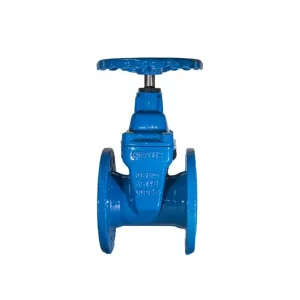
Modern DIN EN 1171 gate valves implement total internal and external encapsulated EPDM and NBR ductile iron wedges. Bonded through high-pressure transfer molding, the elastomer prevents tear-off under differential pressures up to 25 bar while delivering bubble-tight bidirectional isolation.
Dynamic CFD Throttling Geometry
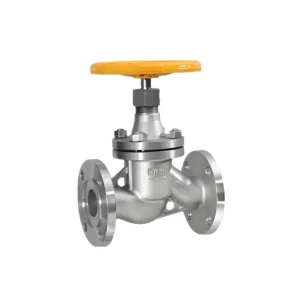
Globe valves operating under EN 13709 standards now utilize parabolic, needle, and perforated cage trim designs optimized through computational fluid dynamics (CFD). This alleviates cavitational erosion and acoustic energy release in severe high-pressure drops.
Technical Note: Gate Valve vs. Globe Valve Aerodynamics
Gate valves provide straight-through flow paths with minimal pressure drop (ζ ≈ 0.2 to 0.5), rendering them supreme for full-bore isolation where pumping energy conservation is critical. In contrast, globe valves feature tortuous S-shaped flow paths resulting in elevated loss coefficients (ζ ≈ 4.0 to 7.0), but provide unrivaled precision in flow modulation, continuous throttling, and repeatable seat shut-off against high dynamic differential pressures.
CE Marking & Pressure Equipment Directive (PED 2014/68/EU) Standards Matrix
Global engineering procurement contractors (EPCs) demand rigorous compliance verifications. Here is the operational framework for compliance, material traceability, and non-destructive examination (NDE).
| Evaluation Parameter | Resilient Gate Valve (DIN / EN) | High-Pressure Globe Valve (EN / API) | Buried Service Gate Valve | Ammonia / Cryogenic Globe Valve |
|---|---|---|---|---|
| Governing Standard | EN 1171 / DIN 3352 | EN 13709 / API 602 / API 623 | EN 1074-1 / EN 1074-2 | EN 12284 / DIN 3158 |
| CE Certification Module | PED 2014/68/EU Module H | PED 2014/68/EU Module H1 | PED 2014/68/EU Module H | PED 2014/68/EU Module H1 |
| Nominal Pressure Class | PN10, PN16, PN25 | PN16 to PN160 / Class 150-1500 | PN10, PN16 | PN25, PN40, PN63 |
| Shell Test Pressure | 1.5 × PN (Hydrostatic) | 1.5 × PN (Water) / 1.1 × Helium | 1.5 × PN | 1.5 × PN Hydro + 1.1 × PN N2 |
| Seat Tightness Class | EN 12266-1 Rate A (0 Drops) | EN 12266-1 Rate A or B | EN 12266-1 Rate A | EN 12266-1 Rate A (Bubble Tight) |
| Stem Sealing System | O-Ring Cartridge (Replaceable) | Graphite Packing + Bellows Seal | Quadruple O-Ring Maintenance-Free | PTFE V-Rings / Hermetic Bellows |
| Casting Inspection | Visual (MSS SP-55) + MT | 100% RT / UT on Critical Sections | Dimensional & Wall Thickness UT | 100% PT + Cryogenic Impact Testing |
Material Test Certification EN 10204 3.1 & 3.2
Every casting lot undergoes optical emission spectrometry (OES) to substantiate carbon equivalents, nickel alloy ratios, and low-sulfur ceilings. Traceability tracks raw melt heats to individual valve bonnets and bodies with serialized QR barcoding.
Third-Party Inspection (TPI) Protocols
Factory Acceptance Testing (FAT) routinely welcomes Lloyd's Register, TÜV SÜD, Bureau Veritas, and DNV auditors for witnessed hydrostatic shell testing, torque profile measurements under maximum differential pressures, and coating adhesion pull-off checks.
Coating Integrity (EN ISO 12944)
Internal and external surfaces receive fusion bonded epoxy (FBE) applied electrostatically at temperatures exceeding 200°C. Certified to GSK standards with a minimum dry film thickness (DFT) of 250 μm and 0-hole dielectric holiday testing at 3 kV.
China Factory 4.0: Supply Chain Resilience, Vertical Integration & Precision Machining
Combining legacy metallurgy established since 1987 with digitalized Industry 4.0 assembly tracks. Vertical control over foundry smelting, rubber curing, and machining delivers predictable delivery timelines and uncompromising repeatability.
Autonomous Foundry Metallurgy
Independent induction smelting furnaces pour ductile iron (EN-GJS-400-15 / EN-GJS-500-7) and high-integrity cast steel (WCB, LCC, WC6, CF8M) with automated nodularity checks exceeding 85%, ensuring tensile strength without micro-porosity.
In-House Rubber Compound Engineering
Operating specialized rubber facilities since 1987, elastomeric formulations are customized for potable water (WRAS, ACS, NSF-61), abrasive slurry resilience, and hydrocarbon service, guaranteeing permanent resilience without compression set fatigue.
CNC Multi-Axis Center Machining
High-capacity horizontal machining centers machine body guides, flange faces, and disc seating faces in single setups. This guarantees concentric alignment of stems and wedges, dropping operating torque and tripling gland packing lifespans.
High-Reliability Application Blueprints: Matching Metallurgy to Media Dynamics
Operational duty cycles dictate valve architecture. Below are standard engineering recommendations deployed across major municipal and chemical plant sectors.
Buried Urban Water Networks
Deployment: Subsurface transmission without manholes.
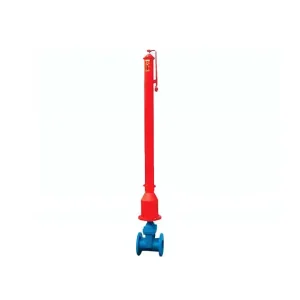
Solution: Non-rising stem (NRS) resilient seated gate valve with telescopic extension spindles and surface boxes. EN 1074-2 compliance, maintenance-free quadruple O-ring stem seals, and NSF-61/WRAS certified vulcanized EPDM wedges to preserve clean drinking water.
Thermal District Steam & Power
Deployment: Saturated and superheated steam headers at 400°C+.
Solution: Forged and cast steel globe valves (EN 13709) with Stellited (Stellite 6) hard-faced seat rings and discs. Features bellows seal hermetic isolation paired with safety secondary graphite packing to stop volatile thermal medium escapement.
Chemical & Refrigeration Lines
Deployment: Liquid ammonia, aggressive organics, and chlorine media.
Solution: Straight-through ammonia globe valves and PTFE/Halar lined valves. Ductile iron or CF8M bodies paired with pure virgin PTFE soft seating, elongated bonnet freeze-shields, and helium leak-tested packing cartridges.
Frequently Asked Questions: Engineering, Certification & Procurement
Real-world insights addressing quality assurance, flange interoperability, testing procedures, and lead-time schedules.
Module A represents internal self-certification by the manufacturer without third-party notified body surveillance, strictly limited to low-risk Category I applications. Module H represents full quality assurance audited and stamped by an EU Notified Body (e.g., TÜV, Lloyd's). It certifies that our quality management system covers design, manufacturing, material traceability, and hydrostatic testing for critical Category II and III pressure equipment, essential for high-pressure globe valves and utility gate valves entering the European Union.
Yes. Our multi-axis CNC machining configurations accommodate dual-standard drilling. We manufacture resilient-seated gate valves to DIN 3352 F4 and F5 face-to-face lengths while machining flange bolt circles and patterns to EN 1092-2 PN10/PN16 or ASME B16.1/ASME B16.5 Class 125/Class 150 upon request. Flange raised faces, phonographic spiral grooving, and flat-face requirements are customized on our live CNC turning tracks.
Most valve factories outsource rubber components, leading to batch variances in tensile elasticity, vulcanization depth, and chemical resilience. Operating our specialized rubber facility since 1987, we compound raw EPDM, NBR, and Viton in-house with precise cross-linking agents. This ensures complete bonding to the ductile iron wedge core without delamination under 25 bar backpressure, keeping compression set under 18% over decades of active duty.
100% of manufactured valves undergo hydrostatic shell testing (1.5 × nominal pressure) and air/water seat leakage testing (1.1 × nominal pressure) per EN 12266-1 / ISO 5208. For high-pressure globe valves and custom projects, we perform Magnetic Particle Inspection (MPI) on valve necks and body-bonnet fillets, ultrasonic thickness gauging (UT), liquid penetrant testing (PT) on Stellite-welded trims, and radiographic testing (RT) per ASME B16.34 on designated casting lots.
Our top flanges conform to ISO 5211 mounting dimensions across our entire gate, globe, and butterfly valve ranges. Standard bare-shaft valves are dispatched within 2 to 3 weeks. Actuated assemblies integrated with AUMA, Rotork, or pneumatic rack-and-pinion actuators (including limit switches, positioners, and solenoid valves) undergo calibration on our automation test benches, shipping within 4 to 6 weeks depending on actuator availability.
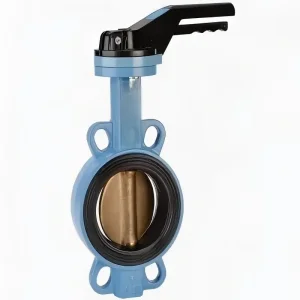
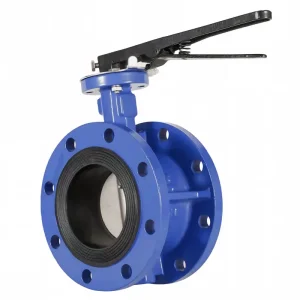
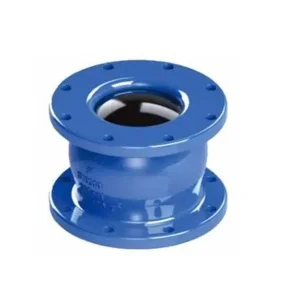
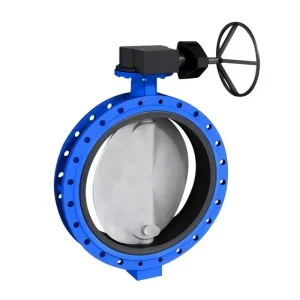
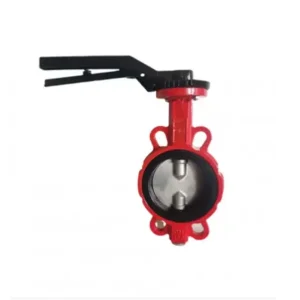
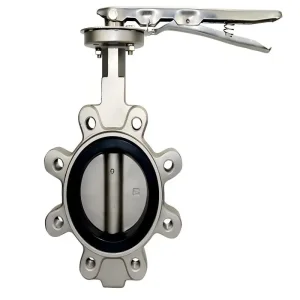
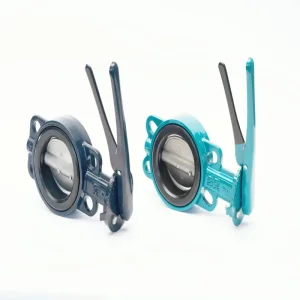
High-Duty Industrial Valves & Fluid Control Components
Complementary isolation, non-return check, and severe service solutions fabricated for international utility networks and critical process operations.
Need Engineering Quotations or Full PED / CE Submittals?
Our valve application specialists provide 2D/3D CAD models, compliance documentation, and project tenders within 24 hours. Contact our Tianjin export engineering office directly.
