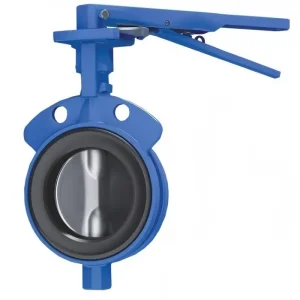
CE Certified Flow Regulation & Isolation Portfolio
Engineered to international pressure standards with comprehensive hydro testing and material batch traceability.
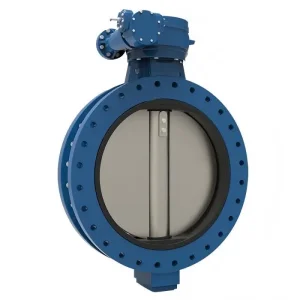
CE Certification Flanged Butterfly Valve - Durable & Efficient Flow Control
Explore Specifications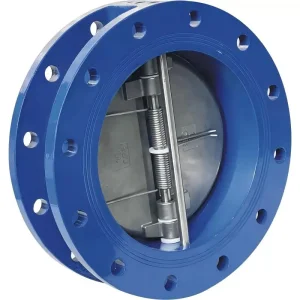
CE Certification Dual Plate Check Valve, Backflow Prevention Device
Explore Specifications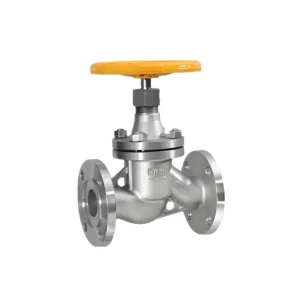
Wholesale Straight-Through Ammonia Globe Valve Manufacturers
Explore Specifications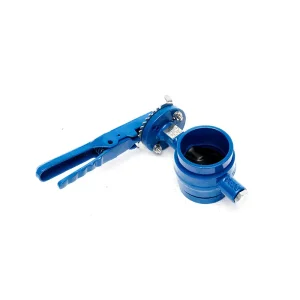
High-Quality Grooved Type Manual Butterfly Valve Suppliers
Explore Specifications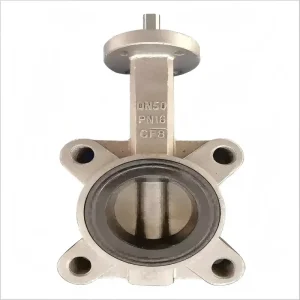
Wholesale Semi Lug Butterfly Valve - Durable Flow Control
Explore Specifications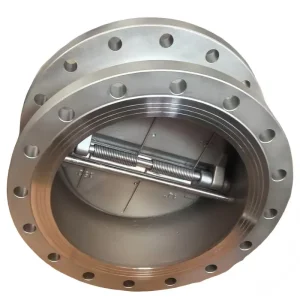
CE Certification Compact Low-Pressure Drop Wafer Lift Check Valve
Explore Specifications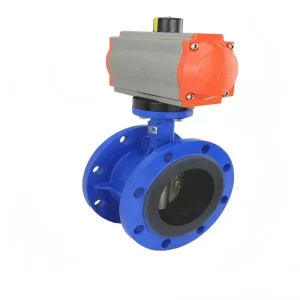
High-Quality Pneumatic Butterfly Valve - Reliable Solution
Explore Specifications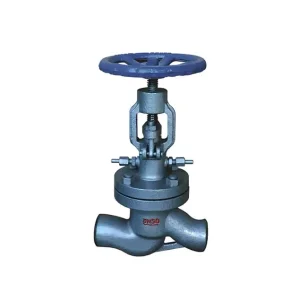
High-Quality Water Seal Globe Valve with Quick-Closing Feature
Explore SpecificationsEngineering Principles of CE Certified Ductile Iron Globe Valves
In modern industrial fluid networks, linear globe valves are recognized as the benchmark for precise flow throttling, line regulation, and tight positive shut-off. Unlike multi-turn gate valves designed solely for full-bore isolation, or rotary butterfly valves that encounter cavitation turbulence when throttled below 30% stroke, globe valves utilize an orthogonal disk-to-orifice geometry. This allows uniform annular fluid velocity and linear stem lift characteristics, making the ductile iron globe valve an indispensable component across district heating, chilled-water HVAC circuits, and low-to-medium pressure industrial steam lines.
The mechanical integrity of modern globe valves hinges on spheroidal graphite ductile iron, primarily cast under EN-GJS-400-18-LT (Grade 5.1303) and EN-GJS-500-7 (Grade 5.1400) specifications, or standard ASTM A536 65-45-12. Traditional grey cast iron (EN-GJL-250) incorporates graphite in flake morphology, introducing localized micro-stress concentrations that render the matrix brittle under thermal shock or hydraulic water-hammer events. By contrast, ductile iron introduces magnesium/cerium nodulizing inoculants during the induction melting process, transforming graphite into spherical nodules. This microstructure yields superior yield strength (up to 320 MPa), an elongation capacity exceeding 18% at low temperatures, and impact absorption properties approaching those of forged carbon steel (WCB/A105), while drastically reducing manufacturing costs and improving castability.
CE Marking & Pressure Equipment Directive (PED 2014/68/EU) Mandates
Procuring industrial valves destined for the European Union, European Economic Area, or adjacent regions requiring mutual recognition demands full conformity with the Pressure Equipment Directive (PED 2014/68/EU). Ductile iron globe valves utilized in Group 1 (hazardous/flammable gases and liquids) or Group 2 (inert fluids, steam, potable water, thermal oils) fluid classes must undergo conformity assessment modules proportionate to their pressure-volume (PS × DN) threshold:
- Pressure Boundary Design (EN 12516-2 / EN 12516-3): Strict analytical and experimental wall-thickness calculations ensure shell resistance against catastrophic rupture, fluid pulsations, and piping bending moments.
- Face-to-Face and Dimension Standards (EN 558 Series 1 / DIN 3202-F1): Complete dimensional interchangeability for global engineering contractors replacing legacy flanged gate or globe units across existing processing lines.
- Factory Production Control (Module H / H1 Conformity): Implementation of comprehensive Quality Management Systems (ISO 9001:2015) audited by a Notified Body, certifying full traceability from raw pig-iron charge to final hydrostatic pressure certification.
- Pressure Testing (EN 12266-1 / ISO 5208): 100% mandatory shell hydro-testing at 1.5 × PN (e.g., 24 bar for PN16 rating, 37.5 bar for PN25 rating), accompanied by seat leakage verification achieving EN 12266-1 Rate A (bubble-tight resilient sealing) or Rate B/C for metal-to-metal high-temperature seating.
Commercial Status & Material Performance Matrix
How ductile iron globe valves bridge the critical gap between brittle grey iron and high-cost cast carbon steel in international municipal and energy projects.
| Performance Attribute | Grey Cast Iron (EN-GJL-250) | Ductile Iron (EN-GJS-400-18-LT) | Cast Carbon Steel (WCB / GS-C25) |
|---|---|---|---|
| Tensile Strength (MPa) | 250 MPa (Brittle fracture risk) | 400 – 450 MPa (High elasticity) | 485 – 650 MPa |
| Elongation at Fracture (%) | < 0.8% (No plastic deformation) | 15% – 18% (High toughness) | 22% |
| Thermal Shock Resistance | Poor; micro-cracks occur rapidly | Excellent; suited for steam cycles | Superior |
| Low-Temp Toughness (-10°C to -20°C) | Catastrophic cleavage hazard | Charpy impact ≥ 12 J at -20°C | Charpy impact ≥ 27 J at -29°C |
| Corrosion Resistance in Water | Moderate (graphitic corrosion) | Superior (stable oxide layer) | Prone to uniform oxidation/rusting |
| Total Cost of Ownership (TCO) | Lowest initial, highest failure rate | Optimal Balance (Industry Benchmark) | 40% – 75% higher procurement cost |
| Applicable Pressure Ratings | PN6 – PN16 max | PN10, PN16, PN25 | PN16 – PN100+ (Class 150 – 1500) |
Chinese Factory Efficiency Advantages: The Tianjin Model
Combining three decades of foundry metallurgical expertise and elastomer chemistry under one fully audited roof.
In-House Foundry Metallurgy
Unlike assembly-only competitors that outsource raw castings to disparate foundries, our direct group lineage—originating from Tianjin Donglian Valve Factory (est. 1996)—maintains proprietary induction melting furnaces, spectroscopic chemical verification, and automatic thermal nodularity analysis for every furnace tap. This eliminates porous casting voids and hidden internal micro-shrinkage.
Proprietary Elastomer Compounding
Benefiting from Tianjin Dongfang Rubber Factory (operating continuously since 1987), our sealing matrices, vulcanized rubber seats, and graphite-PTFE hybrid packing sets are engineered in-house. We formulate custom EPDM, NBR, Viton, and expanded graphite formulations tailored to withstand extreme thermal cycle aging, abrasive line particles, and aggressive chemical glycol additives.
Digital CNC Machining Cells
Every ductile iron globe valve body, bonnet neck, stem thread, and guide plug undergoes high-precision single-setup CNC machining. Concentricity tolerances within ±0.015 mm prevent asymmetric stem friction, seal blowout, and stem galling. Automated surface burnishing provides mirror-finish finishes on 13Cr/304/316 stainless steel trim components, substantially lowering operating torque.
Localized Application Scenarios & Sectoral Demands
Engineered for high-vibration, variable-temperature, and continuous-throttling industrial duties.
District Steam Networks
Municipal heating utility lines in Northern & Central Europe require globe valves compliant with DIN EN 13709 to throttle superheated steam up to 300°C. Ductile iron bodies withstand cyclic expansion stresses without fatigue cracking.
Industrial HVAC Chillers
Large-scale data center and commercial cooling plants utilize PN16/PN25 ductile iron globe valves for hydronic balancing and glycol flow distribution, offering zero seat leakage and low maintenance over 20+ year life cycles.
Refrigeration & Ammonia
Industrial cold-chain logistics demand tight water-seal and ammonia isolation. Specialized straight-through ductile iron globe valves with PTFE-carbon composite soft seating guarantee leak-free containment of volatile volatile agents.
Water Supply & Desalination
Coastal and potable infrastructure utilizes WRAS-approved internal fusion-bonded epoxy (FBE) coated ductile iron globe valves to throttle booster pump discharges without media contamination or electrolytic corrosion.
Engineering Procurement Checklist for EPCs & Valve Stockists
Essential parameters procurement managers must verify to ensure compliance, warranty coverage, and long-term project safety.
Technical Quality & Material Traceability
When issuing Purchase Orders (PO) for CE-marked ductile iron globe valves, international engineering firms must require EN 10204 Type 3.1 Material Test Certificates (MTC). This document must state the chemical composition (C, Si, Mn, P, S, Mg), nodularity percentage (≥ 85%), yield strength, and tensile elongation of the specific casting melt charge. Furthermore, verify that the valve stem is manufactured from cold-rolled stainless steel (minimum AISI 410 / 1.4006 or AISI 304 / 1.4301) to eliminate galvanic binding within graphite stuffing boxes.
Fugitive Emissions & Environmental Safety
Modern sustainability frameworks and EU environmental regulations mandate stringent fugitive emission compliance on valve stuffing boxes. Top-tier ductile iron globe valves must integrate live-loaded Belleville washer gland assemblies or advanced dual-ply metallic bellows seals (complaint with ISO 15848-1 Class B or TA-Luft). This design eliminates fugitive leaks of steam or chemical vapors, preventing industrial greenhouse losses and protecting operators during high-pressure cycling.
Frequently Asked Questions on CE Certified Ductile Iron Globe Valves
Comprehensive engineering clarifications for piping designers, quality assurance auditors, and project buyers.
What specific advantages does EN-GJS-400-18-LT offer over standard ductile iron in globe valve service?
How does the CE marking on ductile iron globe valves verify compliance with the Pressure Equipment Directive (2014/68/EU)?
What is the difference between straight-through (T-pattern) and angle-pattern globe valve configurations?
Can a ductile iron globe valve replace a cast steel (WCB) valve in thermal oil or steam lines?
How do seat trim materials affect performance in abrasive vs clean media?
What are the key differences between rotating rising stems and non-rotating rising stems?
What factory acceptance tests are carried out before export shipping?
How does vertical group manufacturing lower production lead times for bulk overseas tenders?
High-Efficiency Flow Control Components
Manufactured under the same strict ISO 9001 and CE quality frameworks to complement your project pipeline.
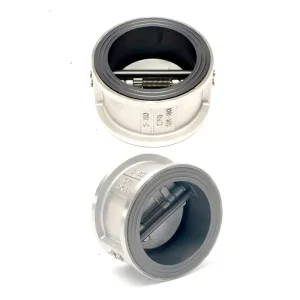
CE Certification Compact Wafer Lift Check Valve Low-Pressure Drop
Explore Specifications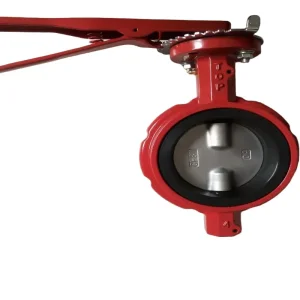
Wholesale Lugless Semi-Shaft Wafer Butterfly Valve Durable
Explore Specifications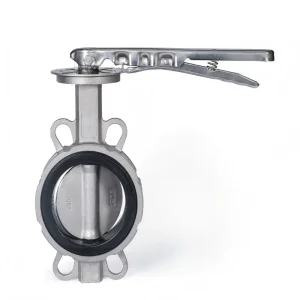
Wholesale Stainless Steel Butterfly Valve Corrosion-Resistant
Explore Specifications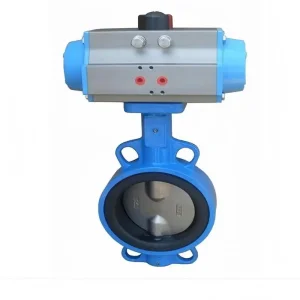
High-Quality Pneumatic Butterfly Valve Flow Control Solution
Explore Specifications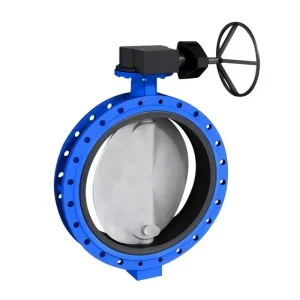
Wholesale High-Quality U Section Butterfly Valve Reliable Control
Explore Specifications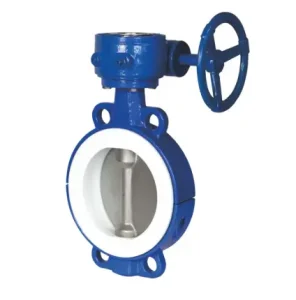
Wholesale PTFE Lined Butterfly Valve Corrosion Resistant
Explore Specifications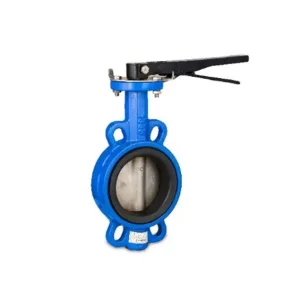
High-Quality Rubber Lined Pinless Butterfly Valve Supplier
Explore Specifications