Featured High-Performance Butterfly & Flow Control Valves
Explore our core engineered valve line manufactured with rigid metallurgy, zero-leakage resilient seating, and verified under CE and WRAS criteria.
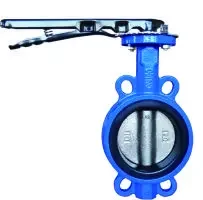
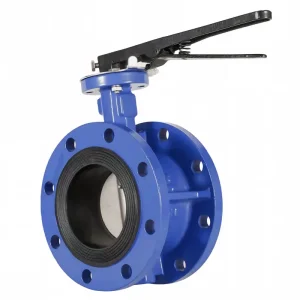
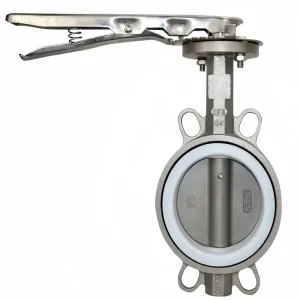
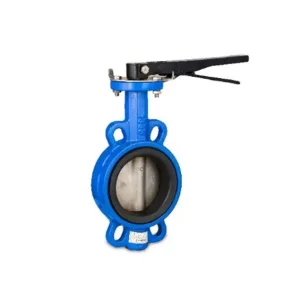
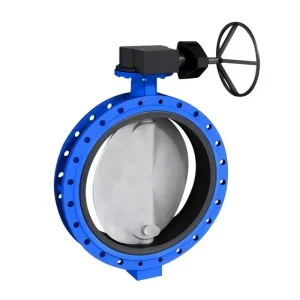
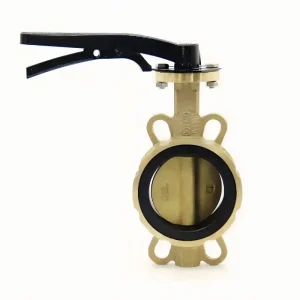
CE Certification Flanged Butterfly Valve with Lever Actuator - Durable & Reliable
Request Spec Sheet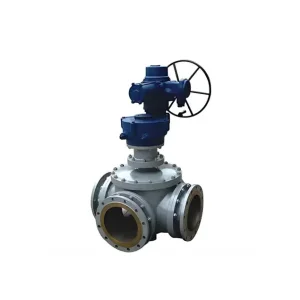
CE Certification Quick - Opening Three - Way Flange Ball Valve for Emergency Diversion
Request Spec Sheet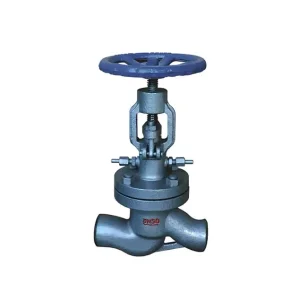
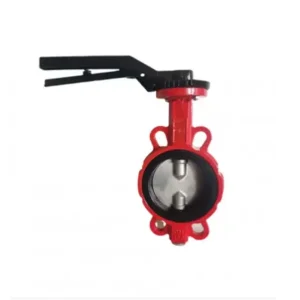
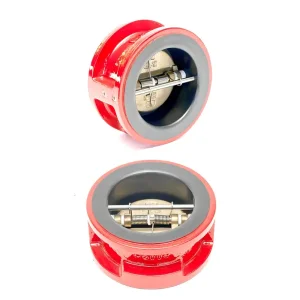
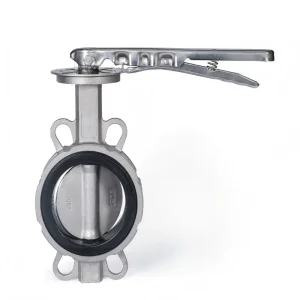
Engineering White Paper: Double Half Shaft Wafer Butterfly Valve Architecture
A deep technical assessment on why the double half shaft (stub shaft) geometry eliminates flow turbulence, decreases operational friction, and provides long-term bubble-tight integrity under high cycling frequencies.
Pinless Stub Shaft Mechanics
Traditional concentric butterfly valves utilize a single through-shaft secured to the disc via taper pins, creating localized stress concentrations, potential crevice corrosion zones, and permanent leak paths. Our double half-shaft pinless construction introduces independent upper and lower trunnions embedded securely into precision-broached internal disc hubs. This design leaves the hydrodynamic disc face entirely smooth, mitigating cavitation and eliminating penetration points through the sealing diameter.
Enhanced Flow Dynamic (Cv Coefficient)
By discarding the continuous structural shaft cutting across the pipeline's central axis, the effective cross-sectional open area is expanded by up to 18% in nominal sizes DN50 through DN600. Fluid transitions past the streamlined disc profile with negligible drag, drastically lowering system turbulence, preventing head loss, and reducing pumping energy operational expenditures (OPEX) in municipal and high-volume commercial cooling circulation networks.
Triple Stem Sealing & Anti-Blowout
Personnel safety and fugitive emission suppression are engineered directly into the valve bonnet assembly. Standardized with a specialized integral retention ring, the upper half shaft is mechanically secured against internal overpressure blow-out conforming to API 609 Cat A and EN 593. An autonomous triple-barrier sealing cluster—consisting of the primary elastomeric seat interface, secondary radial O-rings, and heavy-duty PTFE/Bronze bushings—guarantees hermetic containment under extreme hydraulic water hammer.
CE Certification, European Compliance & Material Traceability
Stringent compliance is non-negotiable for project EPCs and valve distributors supplying critical infrastructure within the European Economic Area (EEA).
PED 2014/68/EU Module H
Our double half shaft wafer valves comply with the essential safety criteria of the Pressure Equipment Directive (PED). Full Quality Assurance Module H certification validates that our complete workflow—from casting foundry to assembly—maintains documented conformity for Group 1 and Group 2 industrial fluids.
EN 10204 Type 3.1 Traceability
Every shipment is supported by certified EN 10204 3.1 inspection documentation. Optical emission spectrometry and automated tensile checks verify chemical composition (C, Si, Mn, P, S) and mechanical thresholds (tensile strength, yield stress, elongation) for each heat lot of ductile iron (QT450-10 / EN-GJS-450-10) and stainless steel.
Universal Flange Engagement
Engineered with universal location lug openings, our wafer bodies automatically self-center between EN 1092-1 (PN10/PN16), ASME B16.5 Class 150, AS 2129 Table E, and JIS B2239 10K flanges. This universal accommodation simplifies warehouse SKU variety for international supply stocking distributors.
ISO 5211 Direct Actuation
An integral ISO 5211 direct mounting pad with standardized square stem execution (F05, F07, F10, F12) allows rapid integration of bare-shaft valves with pneumatic single/double acting pistons, intelligent electric quarter-turn multi-voltage actuators, or manual worm gears without costly mounting brackets.
The China Factory Supply Chain Advantage: Tianjin Industrial Cluster
Discover how vertical integration—from the group's in-house foundry to specialized elastomer mixing plants established in 1987—builds uncompromised cost efficiency and cycle speed.
Proprietary Elastomer Compounding
Over 80% of premature butterfly valve failures correlate directly to liner degradation, permanent compression set, or ozone erosion. Operating through our long-running sister division, Tianjin Dongfang Rubber Factory (since 1987), we compound our proprietary vulcanized EPDM, high-nitrile NBR, and Viton rubber batches directly. By executing real-time tensile, elongation, and aging rheometer evaluations in-house, we eliminate outsourced third-party inconsistencies.
Tianjin Port Freight Advantage
Located in the Wuxia Industrial Park, Dongli District, our plants sit merely 45 minutes from Tianjin Xingang Port—the maritime logistical gateway of Northern China. This strategic positioning slashes inland transportation costs, lowers container transport wear, expedites direct break-bulk loading for large infrastructure components, and supports consistent ocean schedule frequencies to Rotterdam, Hamburg, Singapore, Dubai, and Houston.
End-to-End Precision Foundry Control
From resin sand mould forming in our dedicated foundry (Tianjin Donglian Valve Factory, est. 1996) to modern multi-axis CNC horizontal machining centers, each casting shell undergoes spectrographic melt monitoring prior to pouring. We execute automated electrostatic epoxy powder coating (minimum 250 microns, RAL 5015/5017), followed by rigorous hydrostatic shell testing at 1.5x PN and bubble-tight seat pneumatic verification at 1.1x PN under ISO 5208 Rate A criteria.
Technical Datasheet: Double Half Shaft Wafer Construction
Engineered parameters for valve selection across general, industrial, and aggressive fluid handling installations.
| Component Name | Standard Execution | Optional High-Corrosion Alloys | Compliance Reference |
|---|---|---|---|
| Valve Body | Ductile Iron GGG40 / GGG50 (QT450-10) | WCB Carbon Steel, SS304 (CF8), SS316 (CF8M) | EN 1563 / ASTM A536 |
| Disc Profiles | CF8M Stainless Steel / CF8 Stainless Steel | Aluminum Bronze C95800, 1.4462 Duplex, Hastelloy C | ASTM A351 / EN 10213 |
| Shafts (Upper & Lower) | SS416 / SS420 Martensitic Stainless | SS316, 17-4PH (SUS630), Duplex 2205 | ASTM A276 / EN 10088 |
| Elastomeric Liner | High Resilience EPDM (Potable Water/HVAC) | NBR (Petroleum/Oils), Viton/FKM, White Silicone | FDA 21 CFR / WRAS Criteria |
| Working Pressure | PN10 / PN16 (1.0 MPa / 1.6 MPa) | Class 150 (20 Bar Differential on Request) | EN 12266-1 / ISO 5208 |
| Temperature Range | -20°C to +120°C (EPDM Liner) | -10°C to +82°C (NBR), -15°C to +200°C (FKM) | DIN EN 1333 |
| Testing Standards | Hydrostatic Shell: 1.5x PN; Seat: 1.1x PN | Helium Leak Testing, Fugitive Emissions TA-Luft | API 598 / ISO 5208 Rate A |
Localized Applications, Global Procurement Demands & Industry Trends
How double half shaft wafer butterfly valves resolve engineering challenges across major regional procurement programs and mission-critical operating environments.
District Cooling & Industrial HVAC
In high-capacity chilled water networks across the Middle East (GCC), Europe, and Southeast Asia, continuous plant run-times demand minimal line stagnation. The low-torque, pinless double half shaft architecture lowers actuation wear on high-frequency modulating loops, enabling the implementation of smaller, energy-saving electric actuators.
Desalination & Seawater Intake
Marine environments rapidly corrode conventional pinned shafts. By pairing our rubber-lined ductile iron bodies with high-spec Aluminum Bronze (AB2 / C95800) or Duplex 2205 discs operating on isolated dry half shafts, reverse osmosis facilities prevent galvanic cell creation between dissimilar metals.
Smart Digital Pipeline Trend
The modern valve industry is pivoting toward intelligent diagnostic feedback. Our direct-mount ISO 5211 stems accommodate smart industrial positioners (HART, Profibus, Modbus), providing real-time angular displacement feedback, torque signature alerting, and predictive maintenance logs directly to the SCADA control room.
Frequently Asked Questions (FAQ) for Engineering & Procurement
Direct technical responses addressing common vendor qualification queries, pressure rating standards, and OEM customizations.
What is the difference between a double half shaft and a through-shaft butterfly valve?
Does your double half shaft wafer butterfly valve hold authentic CE marking?
Can these wafer valves be installed in end-of-line dead-end service?
How does the group's in-house rubber factory benefit international buyers?
What flange standards are compatible with your wafer body?
What quality inspection reports are provided prior to dispatch?
Complete Industrial Valve Solutions & Factory Range
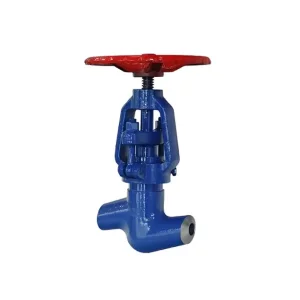
Complementary high-spec quarter-turn and multi-turn valves engineered under ISO 9001 and CE frameworks for power, chemical, marine, and municipal water applications.