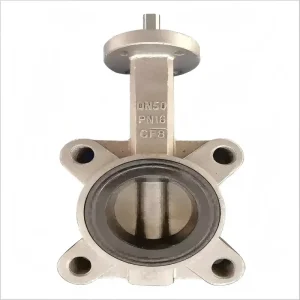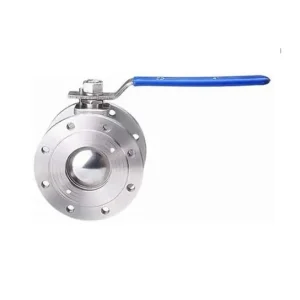
Stainless Steel Ultra-Thin Ball Valve (Osaka Compact Series)
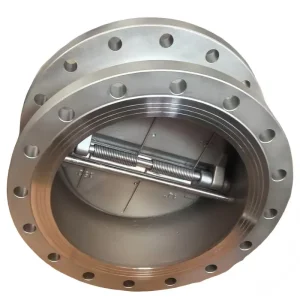
Zero-cavity compact wafer profile with ISO 10497 fire-safe certification engineered for constrained maritime and skid skids.
Product Technical Specs →Direct-to-project flow control assemblies designed for high-cycle isolation, severe abrasive petrochemical handling, and rapid diversion protocols across Kansai processing clusters.
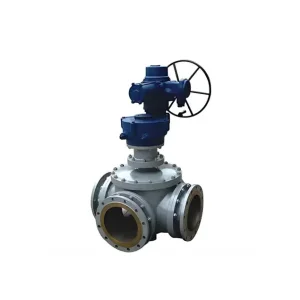
Zero-cavity compact wafer profile with ISO 10497 fire-safe certification engineered for constrained maritime and skid skids.
Product Technical Specs →
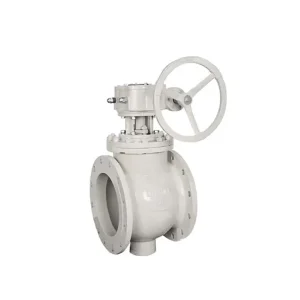
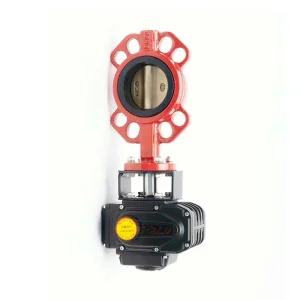
CE-marked multi-port diversion flow valve with split-second pneumatic response for rapid loop bypass in refining plants.
Product Technical Specs →
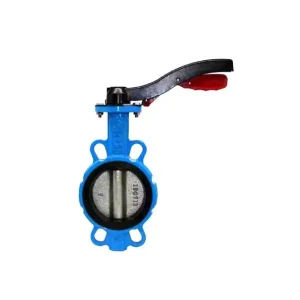
Heavy-duty eccentric seating configuration for erosive hydrocarbons, abrasive slurries, and elevated pressure pipeline terminals.
Product Technical Specs →
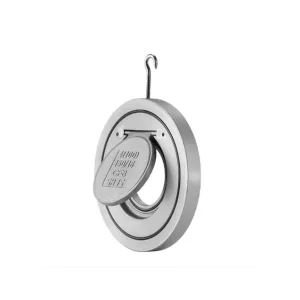
Ultra-low pressure drop spring-loaded lift disc ensuring rapid anti-surge shutoff and hydraulic water-hammer protection.
Product Technical Specs →Osaka has historically served as the commercial and precision-machining nucleus of western Japan. Anchoring the broader Hanshin Industrial Region, Osaka Bay hosts critical infrastructure ranging from the Sakai-Senboku petrochemical complex to massive LNG receiving terminals, high-purity semiconductor manufacturing fabs, and advanced pharmaceutical synthesis clusters in Doshomachi.
Within this concentrated manufacturing biome, ball valves are not treated as commoditized pipe fittings; they represent mission-critical containment barriers where micro-leakage poses catastrophic safety, environmental, and financial risks. Japanese industrial standards (JIS B 2002, JIS B 2220) and stringent safety conventions established by regional Japanese utilities demand zero-ppm fugitive emissions, flawless metallurgical integrity, and predictable quarter-turn actuation cycle lives exceeding millions of rotations.
While local Osaka workshops excel in specialized, high-mix low-volume prototyping and custom alloy trim machining, international EPC firms and Japanese conglomerates operating across Southeast Asia and the Middle East face domestic capacity ceilings, escalating machining costs, and lengthy foundry lead times. Resolving this supply chain friction demands deep integration between localized Japanese technical standards and modern large-scale vertically integrated manufacturing.
International engineering procurement demands have shifted decisively away from standard cast commodity valves toward certified, high-performance ball valve architectures capable of mitigating volatile fugitive emissions.
Industrial plants are under severe carbon penalties. Stem packing arrangements now incorporate live-loaded Belleville spring washers and engineered primary/secondary graphite and PTFE barrier seals, achieving Class AH leakage rates (≤ 10−6 mg·s−1·m−1) for helium sniff testing.
As clean fuel storage expands globally, ball valves must operate reliably at −196°C (LNG) and down to −253°C (Liquid Hydrogen). This requires extended bonnets, vapor columns, non-collapsing Kel-F (PCTFE) seat inserts, and cavity pressure relief mechanisms.
For slurries, mining tailings, and delayed coking where polymer seats combust or abrade rapidly, High-Velocity Oxygen-Fuel (HVOF) applied tungsten carbide or cobalt-based hardfacings ensure bi-directional bubble-tight shutoff (Class VI / Rate A) at +450°C.
For global contractors sourcing valves intended for Osaka projects or overseas EPC tenders governed by Japanese trading companies, balancing cost with absolute reliability is the paramount challenge. This is where the Tianjin manufacturing infrastructure changes the equation.
Unlike valve assemblers who outsource casting, vulcanization, and machining to fragmented third-party shops, our manufacturing group operates a fully enclosed, vertically unified ecosystem. From our dedicated foundry pouring WCB carbon steel, CF8M, CF3M stainless steel, and aluminum bronze to our specialized elastomer processing facility established in 1987, work-in-progress materials never leave our unified Quality Management System.
Traditional Fragmented Sourcing vs. Tianjin Integrated Model
| Metric | Fragmented OEM Hubs | Tianjin Integrated Group |
|---|---|---|
| Casting Control | Subcontracted / Variable chemistry | Proprietary Foundry / In-house spectro |
| Seat Compounding | Commercial third-party buy | In-House Vulcanization (Since 1987) |
| Dimensional Tolerances | Standard 3-axis tolerance | Precision 5-Axis CNC (±0.008 mm) |
| Quality Verification | Batch sampling (10-20%) | 100% Shell & Bubble-Tight Seat Test |
| Procurement Lead Time | 16 – 26 Weeks | 6 – 10 Weeks Standard |
| Total Cost of Ownership | High intermediary margin | Factory-Direct Value Optimization |
From Osaka Bay's marine waterways to the pristine cleanrooms of Kansai's semiconductor fabs, our ball valve designs conform to the specific fluid dynamics of each demanding operational profile.
Continuous petrochemical distillation requires ANSI Class 150/300/600 trunnion mounted and floating ball valves with blow-out proof stems, anti-static grounding springs between stem and ball, and fire-safe graphite secondary sealing to prevent volatile hydrocarbons from feeding industrial fires.
Precision wafer fabrication demands ultra-pure water (UPW) and aggressive etching chemical distribution lines. Ultra-thin stainless steel ball valves and virgin PTFE-lined units eliminate micro-crevice stagnation zones, minimizing TOC (Total Organic Carbon) extraction and ionic shedding.
Harsh marine splash zones, salt spray, and ballast water treatment systems require nickel-aluminum bronze (C95800) and duplex stainless steel ball and butterfly configurations with JIS 5K/10K/16K or ASME flanges, resisting aggressive cavitation pitting and biofouling.
Modern flow loop reliability hinges on precise mechanical interaction among dynamic components. Our valve designs integrate proven functional safety and life-cycle benchmarks.
Trunnion-mounted valves utilize spring-energized self-relieving seats (Single Piston Effect - SPE). When trapped fluid expands thermally in the body cavity, excess pressure automatically lifts the seat ring away from the ball, venting safely back into the pipeline loop.
Machined ISO 5211 top flanges allow direct mounting of pneumatic rack-and-pinion actuators or smart electric servo motors without cumbersome brackets or external couplings, eradicating mechanical hysteresis and stem sideload wear.
Certified according to IEC 61508 standards for Safety Instrumented Systems (SIS), providing documented low PFDavg (Probability of Failure on Demand) for critical ESD (Emergency Shutdown) applications in petrochemical complexes.
Standard configurations readily cast, machined, and certified in-house:
| Body Material | Ball & Stem | Seat Insert |
|---|---|---|
| ASTM A216 WCB | A182 F304 / 304SS | PTFE / R-PTFE |
| ASTM A351 CF8M | A182 F316 / 316SS | Virgin PTFE / PEEK |
| ASTM A351 CF3M | 316L Low Carbon | PCTFE / Devlon V |
| Duplex 2205 / 2507 | F51 / F53 Duplex | PEEK / Metal Stellite |
| Al-Bronze C95800 | Monel K500 / NAB | FKM / In-House EPDM |
When international procurement engineers audit suppliers for mission-critical Osaka or international projects, evaluating the factory's quality gate system prevents costly shutdowns and replacement liability.
Ensure the foundry issues fully compliant EN 10204 3.1 material test certificates (MTR). Verify chemical composition, Charpy V-notch impact toughness values at low temperature, and Positive Material Identification (PMI) logs before machining begins.
For Class 600+ or high-temperature cyclic lines, mandate RT (Radiographic Testing) or UT (Ultrasonic Testing) of the valve shell per ASME B16.34 Appendix I. Ensure magnetic particle (MPI) or dye penetrant inspection (DPI) covers flange necks and welds.
Never accept statistical sample testing. Ensure 100% hydrostatic shell testing at 1.5× cold working pressure (CWP), followed by high-pressure liquid and low-pressure air seat leakage testing per API 598 or ISO 5208 Rate A (zero visible leakage).
Walk our 23,000 m² production campus, independent foundry, and automated testing rigs live with a senior fluid mechanics engineer prior to purchase order placement.
Complementing our ball valve production, our group manufactures companion resilient-seated, double-eccentric, and non-return check valves for integrated Osaka municipal, marine, and chemical flow loops.
CE-certified 316 stainless steel single disc check valve preventing backflow in aggressive marine and industrial wastewater effluent.
Product Technical Specs →
High-precision pneumatic/electric actuated wafer butterfly valve for automated district cooling, chiller loops, and process regulation.
Product Technical Specs →
Eliminates leak paths through disc-stem pin penetrations, engineered with 2205 duplex alloy for heavy saltwater exposure.
Product Technical Specs →
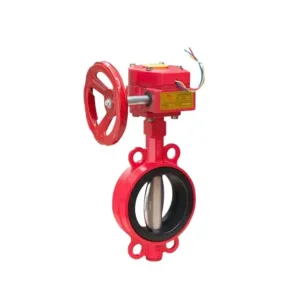
Integrated micro-switch supervisory gearbox transmitting real-time open/close signals to building fire automation panels.
Product Technical Specs →
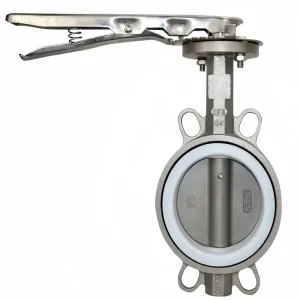
Full 3mm+ virgin PTFE/PFA lining completely isolating corrosive hydrochloric/sulfuric media from the ductile or stainless valve body.
Product Technical Specs →
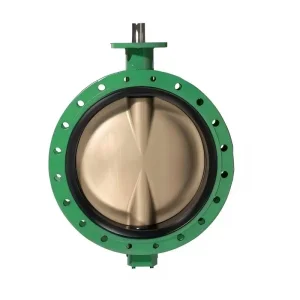
Double flanged design with vulcanized EPDM seat certified for drinking water distribution, pump discharge, and reservoirs.
Product Technical Specs →
Precision cast CF8/CF8M body and mirror-finished disc engineered for sanitary clean-in-place (CIP) and steam-in-place (SIP) lines.
Product Technical Specs →
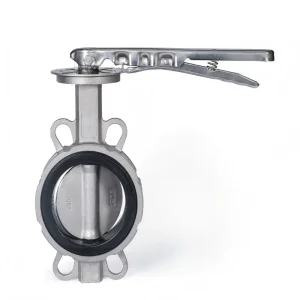
Optimized semi-lugged profile offering effortless alignment between JIS/ANSI flanges with low breakaway torque and durable sealing.
Product Technical Specs →Clear, definitive answers to technical queries raised by piping design engineers, quality assurance inspectors, and EPC procurement leads.
Connect directly with our engineering department. Share your piping schedules, media compositions, design temperatures, and pressure classes. We provide comprehensive datasheets, dimensional drawings, and competitive factory-direct quotations within 24 hours.