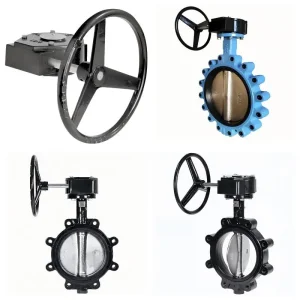
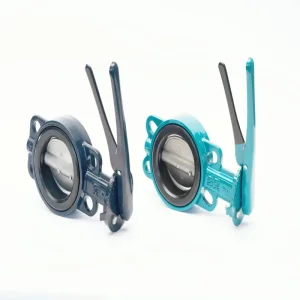
High-Performance Industrial Valve Assembly Range
Engineered for high-pressure durability, zero cavity retention, and chemical resistance across critical municipal water networks, HVAC circulation, and process infrastructures.
Commercial Dynamics of Stainless Steel Manual Ball Valves
Strategic shift toward high-purity austenitic alloys, fugitive emission compliance, and integrated foundry-to-assembly manufacturing governance.
Supply Chain Resiliency & In-House Smelting
Global procurement teams are moving away from multi-tier trading brokers. Sourcing directly from manufacturers operating in-house foundries and rubber elastomer compounding units eliminates scrap variance, ensures strict metallurgical traceability according to EN 10204 3.1 certificates, and guarantees uncompromised dimensional consistency across multi-thousand valve batches.
Fugitive Emission & Environmental Imperatives
With international standards such as ISO 15848-1 and EPA Method 21 enforcing zero-tolerance environmental leak thresholds, stainless steel manual ball valves feature live-loaded Belleville spring packing, multi-ring chevron V-ring PTFE seals, and blow-out proof stems to suppress volatile organic compounds (VOC) and toxic vapor egress in aggressive chemical plants.
Severe Duty Metallurgy: CF8M, CF3M & Duplex
Modern petrochemical, cryogenic, and maritime facilities require specialized cast grades. Utilizing precision investment casting (lost wax method) for CF8 (AISI 304), CF8M (AISI 316), and low-carbon CF3M (316L) alloys ensures surface finishes better than Ra 0.8 µm, preventing pitting corrosion, intergranular attack, and localized fluid turbulence across dynamic flow regimes.
Structural Architecture & Sealing Mechanics
Rigorous mechanical comparison between 1-piece, 2-piece, and 3-piece stainless steel manual ball valve body constructions and seat materials.
| Valve Design Type | Body Configuration | Standard Pressure Rating | Seat & Seal Compounds | Key Operational Advantages | Primary Industrial Use-Case |
|---|---|---|---|---|---|
| 1-Piece Reduced Bore | Unibody Solid Cast | 1000 WOG (PN63) | PTFE / R-PTFE | Zero Body Leak Paths Compact, ultra-low weight, cost-effective | General HVAC, domestic water, low-pressure compressed air manifolds |
| 2-Piece Full Port | Split Body (Body + Retainer) | 1000 - 2000 WOG (Class 150-300) | Virgin PTFE / Carbon-Filled PTFE | Full Laminar Flow Minimized pressure drop, unrestricted Cv values | Chemical dosing lines, solvent transfer, commercial water distribution |
| 3-Piece Swing-Out | Bolted Center Body + End Caps | 1000 - 3000 WOG (Class 600) | Reinforced PTFE / PEEK / Devlon | In-Line Maintenance Fast seal replacement without breaking welded pipeline joints | Pharmaceutical processing, hygienic food & beverage, high-cycle automation |
| Flanged Process Ball Valve | Split-Body ASME B16.5 / EN 1092-1 | Class 150 / 300 / PN16 / PN40 | RPTFE / Glass Filled / PEEK | Heavy Duty Bolting Direct ISO 5211 actuator mounting pad, anti-static device | Refinery feed systems, municipal pumping stations, marine ballast manifolds |
| Metal-to-Metal Severe Service | High-Strength Forged / Cast CF8M | Class 600 - 1500 (PN100-250) | Stellite / Tungsten Carbide Coated | Extreme Temperature Functional from -196°C to +450°C, abrasive particle slurry resistance | Power utility steam bypass, thermal oil loops, slurry mining pipelines |
Bi-Directional Bubble-Tight Sealing Physics
Manual stainless steel ball valves rely on a floating or trunnion ball mechanism where upstream line pressure pushes the finely polished sphere (Ra < 0.4 µm) against the downstream elastomer seat ring. Our factory applies precise pre-compression ratios to the seats during CNC torque calibration. This dynamic self-relieving mechanism compensates for thermal cycling while maintaining Class VI zero-leakage shut-off conforming to API 598 and ISO 5208.
Anti-Static Grounding & Blow-Out Proof Stems
Safety in explosive and volatile liquid transport is paramount. Our valve stems feature an internally assembled, bottom-entry shoulder design, preventing stem ejection under line over-pressurization. Stainless steel spring-loaded ball bearings establish electrical continuity between the valve body, stem, and ball, safely discharging static electricity created by high-velocity fluid friction.
Technological Roadmap for Next-Gen Fluid Controls
Evolutionary pathways in mechanical metallurgical longevity, additive prototyping, and digital QA inspection verification.
Nanocomposite Seat Formulations
Replacing traditional virgin fluoropolymers with graphene-reinforced and carbon-matrix PTFE. Enhances wear resistance by 300% under high-frequency cycling and drastically lowers operating breakaway torque.
Cryogenic Deep-Freezing (-196°C)
Extending valve bonnet column heights for Liquefied Natural Gas (LNG) and liquid nitrogen handling. Cryogenic thermal degreasing and precision micro-finishing guarantee bubble-tight isolation at ultra-low temperatures.
Automated Spectral Metal Verification
Integration of direct-reading Optical Emission Spectrometers (OES) and Positive Material Identification (PMI) on 100% of incoming molten batches to guarantee minimum 2.0% Molybdenum content in CF8M/316 alloys.
Low-Torque Eco-Profiles
Advanced CFD simulation of fluid turbulence through the ball orifice reduces vortex cavitation by 42%, delivering streamlined velocity profiles and extending the service life of pipe walls and connected pump systems.
Tailored Industrial Solutions Across Core Sectors
Engineered manual valve assemblies operating in high-demand global project installations.
Petrochemical & Refinery Processing
In refining cracking units and aromatic solvent transport, valves face severe hydrocarbon volatility and thermal shocks. Our CF8M flanged and threaded manual ball valves feature API 607 fire-safe certification, secondary metal-to-metal seating backups, and anti-static grounding, guaranteeing containment under flash-fire emergencies.
Semiconductor & Ultrapure Water (UPW)
Microchip fabrication demands piping materials with zero ionic leaching and non-shedding surfaces. We deliver electropolished 316L ball valves with surface roughness Ra < 0.25 µm, ultrasonic multi-stage degreasing, cleanroom Class 10,000 double polyethylene packaging, and full helium mass spectrometer leak verification.
Marine, Offshore & Desalination Plants
High chloride concentrations in seawater reverse osmosis (SWRO) systems cause rapid localized crevice corrosion in standard ductile and carbon irons. We supply specialized Super Duplex (2507 / 1.4410) and high-molybdenum stainless steel ball valves designed to resist chloride pitting under 70 bar operating conditions.
Pharmaceutical Clean-in-Place (CIP/SIP)
Biological formulation systems rely on 3-piece swing-out valves with cavity-filled PTFE seats. By completely occupying the annular void between ball and valve body, fluid stagnation and microbial breeding zones are eliminated, withstanding routine steam sanitization up to 150°C without elastomer degradation.
Cryogenic Gas & Industrial Refrigeration
Liquid nitrogen, argon, and high-pressure anhydrous ammonia storage require specialized non-embrittling austenitic valve steels. Our extended stem manual valves allow sufficient vapor column insulation, protecting handle operators and stem packings from cryogenic freeze-up down to -196°C.
Municipal Drinking Water & Infrastructure
Eliminating heavy metal contamination in municipal water mains. We supply WRAS-approved and CE-certified stainless and resilient-seated valve assemblies, eliminating lead and zinc leaching into urban drinking reservoirs and booster distribution stations.
Macro Engineering Selection & Standards Compliance
Cross-reference criteria for EPC contractors and mechanical project managers specifying valve duty profiles.
Shell Pressure Standards
Manufactured strictly according to ASME B16.34, EN 12516-1, and GB/T 12224. Every raw casting undergoes ultrasonic and radiographic wall-thickness verification before machining.
Connection Dimensions
Available in NPT (ASME B1.20.1), BSPT/BSPP (ISO 7-1), Flanged (ASME B16.5 Class 150/300 & EN 1092-1 PN16/PN40), and Socket/Butt Weld (ASME B16.11 / B16.25).
Hydrostatic Testing
100% factory shell test at 1.5× nominal cold working pressure; seat tightness tested at 1.1× water pressure and 0.6 MPa low-pressure dry nitrogen air according to ISO 5208 Rate A.
Operator Ergonomics
Heavy-duty stainless steel handle levers fitted with vinyl insulation sleeves, integrated position locking latches (padlockable), and optional oval handwheels for confined mechanical rooms.
In-House Manufacturing Integration: The Foundry & Rubber Advantage
Tianjin Top Automation Equipment Co., Ltd. brings together decades of foundry and elastomer engineering heritage. Our strategic foundation includes the long-standing Tianjin Donglian Valve Factory (established in 1996) and Tianjin Dongfang Rubber Factory (operating since 1987). This rare industrial synergy ensures that:
- Zero Metallurgical Recycled Contamination: Our automated investment casting foundry checks every furnace heat with spectrum analyzers, ensuring precise nickel, chromium, and molybdenum levels.
- Formulated Rubber Compounds: Unlike competitors who source commercial rubber seats from external vendors, our sister factory produces proprietary EPDM, NBR, and fluoroelastomers with verified compression sets and tensile elongation.
- Integrated CNC Machining Centers: Multi-axis horizontal and vertical CNC lines turn raw castings into finished valve bodies with tight geometric tolerances, maintaining concentricity between the stem and ball.
- 100% Pre-Shipment Inspection: No valve leaves our 23,000 m² campus without documented hydrostatic shell pressure testing, low-pressure gas testing, and torque-sweep measurement.
Frequently Asked Questions on Manual Ball Valves
Direct technical guidance from our chief valve engineering team regarding material selection, testing, and system integration.
Specialty Control, Isolation & Diversion Valves
Comprehensive industrial valve offerings featuring WRAS potable water approval, chemical fluoropolymer lining, and rapid emergency bypass configurations.