
Factory-Direct Pipeline Valves & Engineered Check Solutions
Full metallurgical traceability, hydrostatic pressure testing in accordance with EN 12266-1 / API 598, and precision vulcanized elastomeric sealing.
Executive Overview: The Critical Role of Stainless Butterfly Valves in Modern Industrial Infrastructure
Navigating aggressive fluid mechanics, fugitive emission mandates, and lifecycle total cost of ownership (TCO) across complex process engineering plants.
In modern industrial fluid handling, the stainless butterfly valve has evolved from an economical isolation device into a high-performance, precision-engineered control mechanism. Global energy transitions, petrochemical plant expansions, high-purity pharmaceutical synthesis, and mega-scale reverse osmosis seawater desalination facilities require quarter-turn flow control valves capable of operating under punishing cyclic thermal stresses and highly corrosive chemical media.
Procurement executives and EPC mechanical engineering leads are confronted with twin challenges: maximizing operational uptime while maintaining compliance with stringent global statutory protocols such as the European Pressure Equipment Directive (PED 2014/68/EU), WRAS for potable water distribution, and low-fugitive emission standards (ISO 15848-1 / TA-Luft). Sourcing wholesale industrial valves requires deep evaluation of raw material metallurgy, elastomeric compounding integrity, precision machining tolerances, and integrated factory verification procedures.
Metallurgical Taxonomy and Sealing Kinematics
From standard CF8/CF8M austenitic casting to Duplex 2205 and PTFE encapsulation: matching mechanical dynamics with fluid chemistry.
Austenitic Stainless Alloys
ASTM A351 CF8 (SS304) and CF8M (SS316/SS316L) form the core of our stainless steel product lines. Engineered with precise molybdenum additions (2.0% - 3.0%), CF8M exhibits superior resistance to pitting and crevice corrosion in chloride-rich environments.
- Tensile Strength: ≥ 485 MPa
- Yield Strength: ≥ 205 MPa
- Full EN 10204 3.1 chemical & physical certification
Duplex & Super Duplex
For aggressive offshore marine, flue gas desulfurization (FGD), and hypersaline brine services, we pour ASTM A890 Grade 4A (2205 Duplex) and 5A/6A (2507 Super Duplex). These materials deliver PREN > 42 with double the yield strength of austenitic steel.
- Pitting Resistance Equivalent (PREN) > 42
- Extreme stress-corrosion cracking resistance
- Erosion-resistant disc profiles
PTFE / PFA Fluoropolymer Lined
For concentrated acids, chlorine gas, and ultra-pure chemical processes, our PTFE-lined stainless valves feature virgin PTFE/PFA lining (≥3mm thickness) mechanically keyed and isostatically moulded to eliminate delamination risks under full vacuum conditions.
- Spark tested up to 20kV for zero pinholes
- Full vacuum capability (absolute 0.01 bar)
- FDA 21 CFR 177.1550 compliant options
| Valve Architecture | Disc Geometry | Seat Construction | Pressure Class | Operating Temp | Typical EPC Pipeline Usage |
|---|---|---|---|---|---|
| Concentric Resilient-Seated | Centric disc & shaft | EPDM, NBR, FKM vulcanized liner | PN10, PN16, Class 150 | -20°C to +130°C | Potable water (WRAS), municipal HVAC, light chemical lines |
| Double Offset High-Performance | Eccentric shaft & disc offset | Renewable PTFE / R-PTFE / Fire-Safe | Class 150, Class 300, PN25/40 | -50°C to +230°C | Petrochemical distribution, district heating, steam isolation |
| Triple Offset Metal-to-Metal | Stellite-hardfaced conical seal | Laminated SS316 + Graphite / Stellite | Class 150 to Class 600 | -196°C to +550°C | LNG cryogenic systems, refining furnaces, high-pressure steam |
| Fluoropolymer Lined Sanitary | Encapsulated CF8M / Hastelloy | Virgin PTFE / PFA backed by Silicone | PN10, PN16, Class 150 | -30°C to +180°C | Sulfuric acid, chlorine, semiconductor ultra-pure fluids |
Chinese Factory Supply Chain Resilience: From Molten Heat to Finished Valve
Vertical integration eradicates subcontractor markups, guarantees metallurgical integrity, and accelerates global export turnaround times.
In the contemporary global valve market, supply chain disruptions frequently stem from fractured sub-tier manufacturing setups where foundries, rubber moulders, CNC machine shops, and testing labs operate as separate commercial entities. Tianjin Top Automation Equipment Co., Ltd. addresses this fragmentation through strategic consolidation.
Our shareholder base operates Tianjin Dongfang Rubber Factory (founded in 1987) and Tianjin Donglian Valve Factory (operating since 1996) across an expansive 23,000 square meter industrial campus with 12,000 square meters of modern manufacturing bays. This vertical model grants total quality control across all critical production stages:
In-House Foundry & Spectrometry
Our dedicated sand-casting and investment-casting foundries maintain direct oversight of charge chemistry. Optical emission spectrometers verify carbon, nickel, chromium, and molybdenum contents before pouring, preventing porosity and hot tears.
- Melt heat traceability with heat numbers cast on body
- Radiographic (RT) and dye-penetrant (PT) non-destructive testing
Proprietary Elastomer Vulcanization
Since 1987, our rubber production facility has formulated, compounded, and vulcanized EPDM, NBR, FKM, and silicone liners in-house. We control polymer curing curves and cross-linking density, achieving compression set resistance that prevents permanent seat deformation.
- WRAS-approved potable water elastomer compounds
- Dynamic rheometer testing for batch-to-batch consistency
Automated CNC Machining & Testing
Our multi-axis horizontal and vertical CNC machining centers ensure concentricity across disc outer profiles and stem bores within microns. Every finished unit undergoes automated hydrostatic shell and bi-directional seat leakage testing in accordance with ISO 5208.
- Zero shell porosity and bubble-tight shut-off verified
- Automated calibrated hydraulic test rigs
Localized Pipeline Deployment & Engineering Scenarios
From European municipal networks to Middle Eastern seawater desalination: engineered configurations tailored to regional operational demands.
European Potable Water & HVAC
In Western and Central Europe, municipal drinking water projects require strict non-leaching elastomer compliance. Our WRAS-approved models (4020G, 4020L, 4325G, 4325L) feature certified non-toxic EPDM seats and CF8M disc profiles with low head-loss hydrodynamics to reduce pumping energy consumption.
Middle East Desalination & RO
Seawater intake, high-pressure brine rejection, and energy recovery systems in GCC regions present severe pitting risks. We provide Duplex 2205 and Nickel Aluminum Bronze (C95800) disc butterfly valves with internal rubber linings, resisting velocities above 4.5 m/s without cavitational pitting.
North American Process & Chemicals
ASME B16.34 / B16.5 Class 150 lug and wafer valves designed for aggressive refining and chemical processing. Featuring virgin PTFE linings, pinless blowout-proof shaft architectures, and ISO 5211 direct-mount actuator flanges for automated shut-off sequences.
Engineering Roadmap: Smart Valves, Fugitive Emissions, and Cryogenics
Anticipating the technological demands of decarbonization, cryogenic fuels, and Industry 4.0 predictive maintenance systems.
Smart IoT Diagnostic Actuation
Integration of low-power wireless torque monitoring, partial stroke testing (PST), and real-time stem packing leakage telemetry into intelligent pneumatic and electric actuation systems via Modbus and wireless HART protocols.
Zero-Emission Fugitive Sealing
Advancement of multi-stage spring-loaded PTFE and live-loaded dynamic graphite packing architectures to achieve Class AH certification per ISO 15848-1, eliminating volatile organic compound (VOC) emissions across refining facilities.
Cryogenic Liquid Hydrogen Service
Refining triple offset stainless steel butterfly valves with extended vapor columns (bonnets) and austenitic CF3M / 316L compositions for temperatures down to -253°C, supporting the emerging liquid hydrogen global energy supply chain.
Localized Compliance, Approvals, & Engineering Support
Rigorous documentation guarantees friction-free customs clearance, immediate site sign-off, and streamlined engineering approval.
EN 10204 Type 3.1 Traceability
Every shipment is accompanied by verified inspection certificates detailing actual melt chemistry, mechanical tensile and Charpy impact values, and hydrostatic test charts linked directly to the heat numbers cast on each valve body.
Global Flange Interoperability
Multi-standard drilling on wafer and semi-lug patterns accommodates EN 1092-1 PN10/PN16, ASME B16.5 Class 150, and JIS B2220 10K/16K without requiring re-machining on site, reducing inventory overhead for stocking distributors.
24-Hour Engineering Turnaround
Our Tianjin-based application engineering team provides comprehensive submittal packages including 3D STEP models, AutoCAD dimensioned footprints, flow coefficient (Cv/Kv) curves, and sizing torque calculations within 24 hours of technical RFQ receipt.
Engineering & Procurement FAQ
Addressing critical technical queries from project consultants, pipeline designers, and purchasing directors.
How do operating media velocities influence disc selection in stainless butterfly valves?
What is the difference between CF8, CF8M, and forged 316L in valve bodies?
Why is pinless stem-to-disc design superior in corrosive and sanitary applications?
How does in-house rubber compounding prevent dynamic seat swelling and high break-away torque?
What testing protocols confirm bi-directional bubble-tight shut-off?
How does Tianjin Top Valve support custom OEM private-label branding and custom flange drilling?
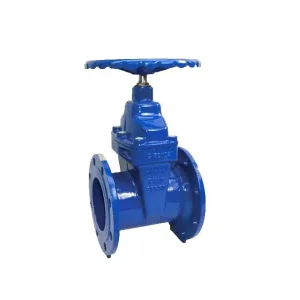
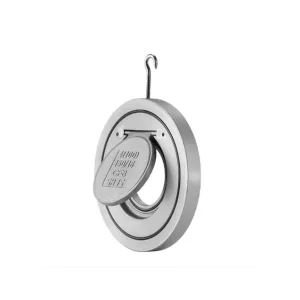
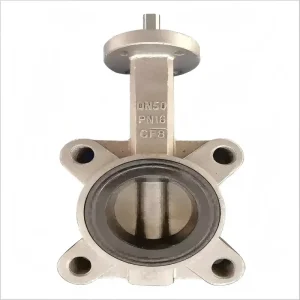
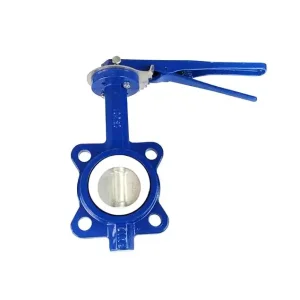
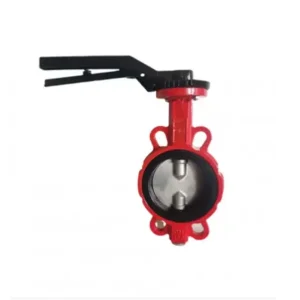
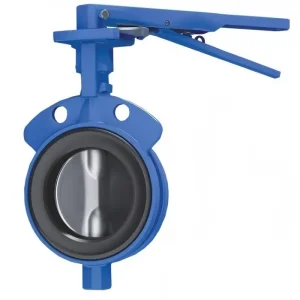
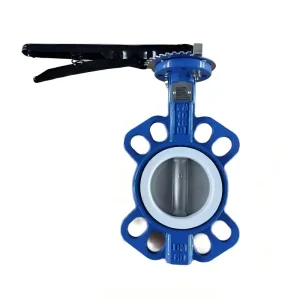
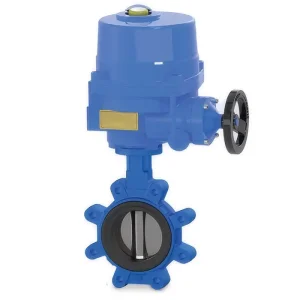
Specialty Butterfly, Check, & Resilient Isolation Valves
Engineered for long service lives across heavy municipal distribution, chemical processing, and automated control applications.
Connect Directly with Our Valve Engineering Division
Whether you require complete project submittals, custom torque calculations for automated packages, or volume factory pricing for regional distribution networks, our engineering team in Tianjin is ready to assist within 24 hours.
