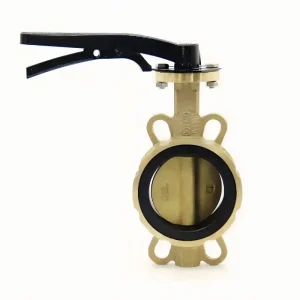
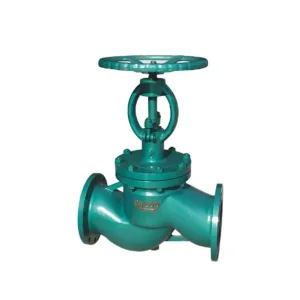
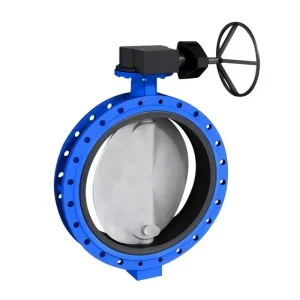
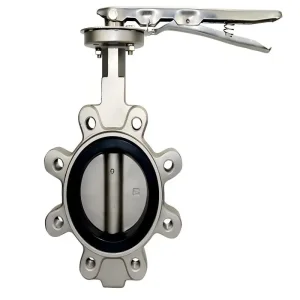
High-Performance Fluid Control Valves (Part I)
Explore our industrial range designed for aggressive sewage, potable networks, and heavy industrial loops, combining in-house casting integrity with vulcanized elastomer precision.
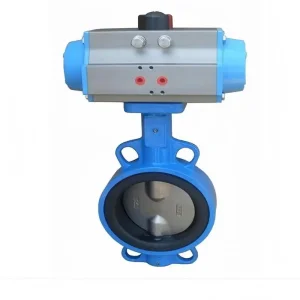
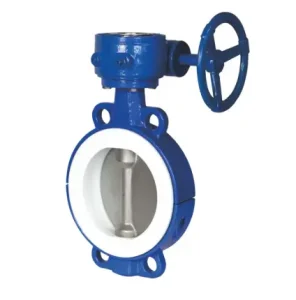
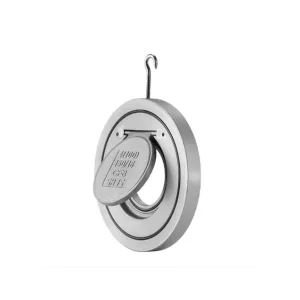
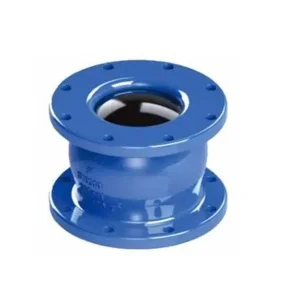
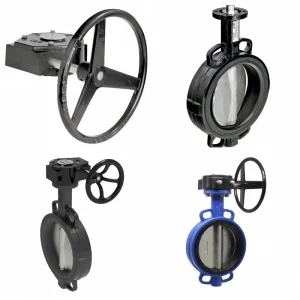
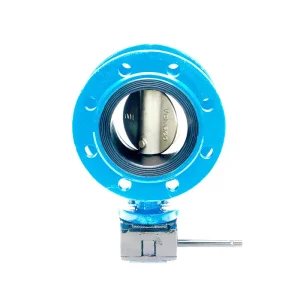
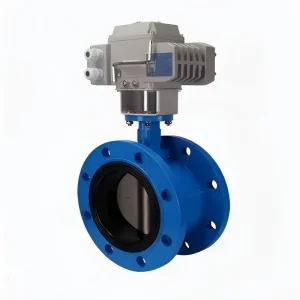
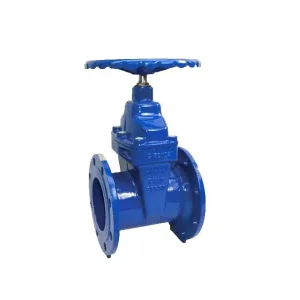
Engineering Anatomy of the Ductile Iron Ball Check Valve
Overcoming the limitations of traditional swing and dual-plate check valves in viscous, fibrous, and solids-laden pipeline architectures.
Ductile Iron (EN-GJS-450-10 / 500-7) Metallurgy
Unlike standard gray cast iron, ductile iron incorporates nodular graphite via magnesium inoculation. This metallurgical structure delivers minimum tensile strength of 450 to 500 MPa, an elongation factor exceeding 7-10%, and high impact resistance, preventing catastrophic body fractures caused by unexpected hydraulic transients or line pressure spikes.
Full-Bore Flow Path & Self-Cleaning Rotation
The valve interior is cast with an offset ball pocket. Under flow, the encapsulated ball lifts completely out of the streamline, generating a 100% full-bore opening with minimal pressure drops ($\Delta P$). Concurrently, turbulent hydraulic currents induce free ball rotation, continuously distributing mechanical wear evenly over the entire elastomer mantle and preventing solid sediment settling.
Precision Encapsulated Ball Sealing System
Formulated and moulded in our affiliated rubber facility operating since 1987, the core ball is produced with a high-density metallic/aluminum core seamlessly vulcanized in high-grade EPDM or NBR. Compression set resistance meets ISO 815 standards, guaranteeing bubble-tight back-pressure shut-off even against dirty fluid matrices containing up to 40% solids.
Verified Laboratory Benchmarks & Testing Precision
100% shell hydrostatic testing at 1.5× PN rating and dynamic low-pressure seat leakage tests on state-of-the-art automated test benches.
Global Enterprise Solutions Across Mission-Critical Sectors
Customized pipeline defense against water hammer, backflow surge, and abrasion across complex global municipal and industrial sectors.
Municipal Wastewater & Lift Stations
Submersible wastewater pumping stations demand zero tolerance for ragging and fibrous debris entanglement. Our ductile iron ball check valves are installed vertically or horizontally behind lift pumps, providing an unimpeded straightway that lets solids, hygiene textiles, and grit clear the chamber without valve entrapment.
Industrial Sludge & Effluent Treatment
In chemical processing, paper pulp production, and refinery wastewater plants, heavy viscous media degrades standard valve components. By applying fusion bonded epoxy (FBE) powder coatings to GSK standards and fitting chemical-grade NBR vulcanized balls, Top Valve delivers long-term barrier isolation against harsh reagents.
Mining Tailings & Slurry Pipelines
For high-wear mineral handling, coal washing discharge, and abrasive sediment lines, our ductile iron valve bodies offer structural resistance to external stress and wall cavitation. The rubber-lined ball absorbs abrasive impact energy, outlasting rigid swing discs that suffer rapid face degradation and hinge-pin shear.
Standard Technical Datasheet & Dimensional Conformity
Comprehensive design parameters tailored to EN 12050-4, EN 1092-2, and ASME B16.42 international installation criteria.
| Nominal Diameter (DN) | Pressure Class | Body / Bonnet Material | Ball Formulation | Coating Protection | Face-to-Face Standard |
|---|---|---|---|---|---|
| DN 50 – DN 150 (2" – 6") | PN 10 / PN 16 / Class 150 | Ductile Iron GGG40 / GGG50 | Metal Core + NBR / EPDM Encapsulation | WRAS-approved FBE (≥250 µm) | EN 558 Series 48 (DIN 3202 F6) |
| DN 200 – DN 300 (8" – 12") | PN 10 / PN 16 / Class 150 | Ductile Iron EN-GJS-450-10 | Hollow Aluminum / Steel + NBR | Electrostatic Epoxy Coating | EN 558 Series 48 (DIN 3202 F6) |
| DN 350 – DN 600 (14" – 24") | PN 10 / PN 16 | Ductile Iron EN-GJS-500-7 | Reinforced Dual-Density Composite | Heavy-Duty Corrosion Resistant FBE | EN 558 Series 48 / Custom Flanged |
| Threaded DN 32 – DN 50 | PN 10 / PN 16 | Ductile Iron GGG50 / Cast Iron | Solid / Hollow Elastomer Mantle | Internal / External FBE | BSPP / NPT Female Threaded |
Global Enterprise Procurement, Localization & Quality Traceability
Reliable supply continuity backed by full raw-material heat tracing, ISO-certified quality control, and regional technical compliance.
In-House Casting & Rubber
Unlike assemblers reliant on third-party foundries, Tianjin Top Valve controls body casting at Donglian Valve Factory (since 1996) and elastomer compounding at Dongfang Rubber Factory (since 1987), eliminating metallurgical variations and seat defects.
Material Test Reports (EN 10204 3.1)
Every batch ships with comprehensive 3.1 certification detailing spectral chemical analysis, tensile testing, elongation percentages, and hydrostatic shell/seat pressure logs. Serialized laser tagging guarantees complete lifetime accountability.
International Regulatory Approvals
Manufactured under strict ISO 9001, ISO 14001, and ISO 45001 management frameworks. Products carry European CE marking (Pressure Equipment Directive 2014/68/EU) and select models feature UK WRAS approval for potable water compliance.
Export Logistics & Packing
Located near Tianjin Port, we streamline shipping for EPCs across 50+ countries. Every valve receives individual internal seat protection, protective vapor-phase wrapping, and IPPC ISPM-15 heat-treated marine plywood crating.
Engineering Roadmap & Next-Gen Smart Infrastructure
Developing intelligent flow control, sustainable metallurgy, and low-friction polymer composites to meet evolving industrial demands.
Self-Calibrating IoT Diagnostic Bonnets
Our upcoming generation of ductile iron ball check valves will offer an optional smart monitoring cover. Integrated ultrasonic ball displacement transmitters and acoustic acoustic sensors continuously assess ball travel dynamics, back-pressure sealing integrity, and particulate fouling without breaking line containment.
Advanced Fluro-Polymer & Ceramic Ball Mantles
To handle severe industrial mining, lime dosing, and acidic chemical recovery processes, R&D is qualifying hollow composite spheres coated in bonded modified-PTFE and ceramic fluoropolymers, expanding service lifespans across extreme pH ranges (pH 2–13) at temperatures up to 130°C.
Low-Carbon Recycled Melting Protocols
By transitioning our core melting furnaces to variable-frequency induction systems powered by renewable energy, Top Valve is reducing the embodied carbon per metric ton of ductile iron casting by 35%, ensuring upcoming infrastructure tenders comply with global ESG mandates.
Frequently Asked Questions on Ball Check Valves
Comprehensive technical guidance addressing engineering selection, maintenance procedures, and operational sizing.
Q1 Why choose a ductile iron ball check valve over a swing or dual-plate check valve?
Swing and dual-plate check valves contain internal hinge pins, shafts, disc stops, and springs that sit in the fluid stream. In sewage, wastewater, and sludge, stringy items and fibrous debris collect on these mechanisms, causing clogs or preventing closure. Ball check valves have an open interior with an offset ball pocket, yielding an unobstructed, full-port flow path that prevents entrapment.
Q2 What are the correct installation orientations for ball check valves?
Ball check valves operate reliably in horizontal pipelines (with the inspection bonnet pointing upward) and vertical pipelines with vertical upwards flow. Vertical downward installations are not permitted, as gravity works against back-pressure sealing. When installed horizontally, the ball pocket design relies on flow velocity to push the ball upward into the bonnet cavity.
Q3 How do you select between EPDM and NBR rubber-encapsulated balls?
NBR (Nitrile) is recommended for media with oils, hydrocarbons, grease, animal fats, or raw unscreened municipal wastewater. EPDM is better suited for potable water, hot water circuits, dilute acids, alkaline services, and outdoor installations exposed to ozone or UV. Our engineers can review your fluid composition to recommend the optimal polymer selection.
Q4 What minimum back-pressure is required to achieve a tight seal?
Thanks to the soft, precision-vulcanized elastomer mantle conforming against the machined body seat, our valves achieve bubble-tight sealing at differential pressures as low as 0.05 bar to 0.1 bar (0.5 to 1.0 m water column). This low sealing threshold prevents backflow drainage in low-head pumping systems.
Q5 Can the valve be serviced or cleared without removing it from the pipeline?
Yes. The bolted bonnet cover allows full inline access. By simply removing the bonnet bolts and lifting off the cover, the elastomer ball can be inspected, cleaned, or replaced without removing the valve body from the pipeline, minimizing system downtime.
Q6 What flow velocities are recommended for ball check valves?
For consistent ball lifting and to keep solids in suspension, a minimum liquid velocity of 0.7 m/s to 1.0 m/s is recommended. Maximum continuous pipeline velocity should ideally stay below 3.0 m/s to avoid excessive head loss and unnecessary hydraulic wear over extended service intervals.
High-Performance Fluid Control Valves (Part II)
Explore our additional industrial valve offerings, including gate, globe, and resilient butterfly valves engineered to high global manufacturing standards.