Featured Pipeline Products & Non-Return Systems
Precision-machined double-disc wafer check valves and companion resilient isolation assemblies.
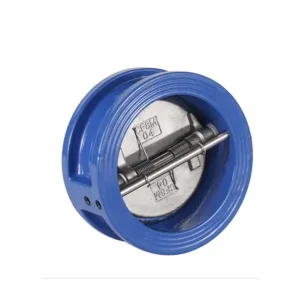
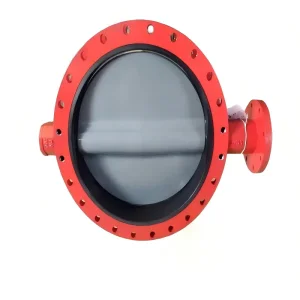
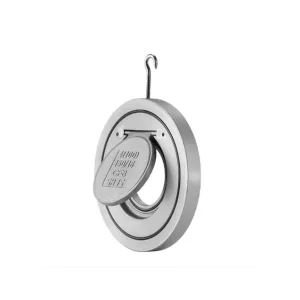
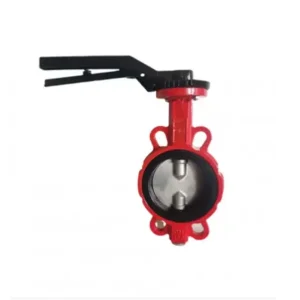
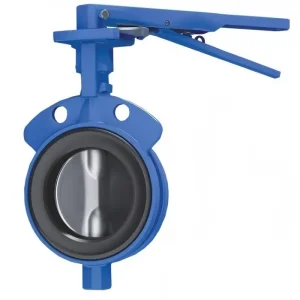
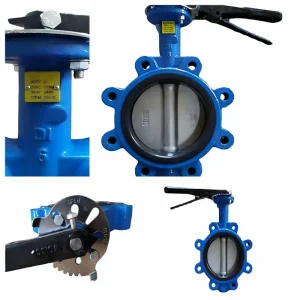
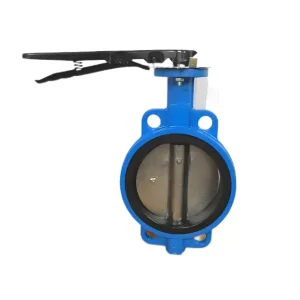
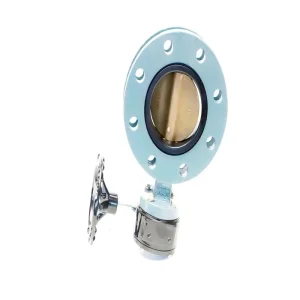
Dual-Plate Dynamics: Eliminating Water Hammer & Optimizing Cv
An engineering breakdown of flow velocity, spring responsiveness, and disc deflection geometry.
Spring-Assisted Instant Closing
Traditional swing check valves depend on backflow deceleration to swing the massive single flap into its seat, regularly initiating catastrophic water hammer shockwaves. Double-disc wafer valves utilize twin torsion springs manufactured from Inconel or 316SS that pre-load each plate. This forces closure prior to hydraulic velocity reversal, reducing slam decibels and suppressing cavitation transients.
Balanced Twin-D Profile
Dividing the cross-sectional barrier into two semicircular D-plates cuts the travel distance and individual mass of moving parts by over 50%. This lower inertia allows the valve to open completely under modest cracking pressure differentials, minimizing system head loss (Delta P) and delivering continuous energy savings in commercial pumping circuits.
Dual-Sealing Versatility
Engineered for zero-leakage requirements, our double-disc assemblies accommodate vulcanized resilient seats (WRAS-grade EPDM, high-nitrile NBR, or chemical-grade FKM) or micro-lapped metal-to-metal seating (Stellite, 316SS, Aluminum Bronze). Each geometry ensures bubble-tight Class A or API 598 compliance under full backpressure.
Global Industrial Landscape & Critical Application Verticals
Across global civil construction, offshore processing, and municipal networks, compact wafer bodies optimize piping skid design and infrastructure integrity.
District Desalination & Marine Services
Naval defense vessels and coastal reverse osmosis plants operate in highly corrosive seawater environments. Double-disc wafer bodies cast from Nickel Aluminum Bronze (C95800) or Duplex 2205 prevent pitting corrosion while protecting centrifugal multi-stage high-pressure pump sets from immediate hydraulic backflow reversal.
HVAC Hydronic & District Cooling
High-rise chilled water loops and district thermal cooling utilities require minimal pipe spacing and ultra-quiet mechanical operation. Short face-to-face dimensions conformable to API 594 reduce structural loads on piping brackets, while silent closing mechanics safeguard condenser arrays.
Petrochemical & Gas Fractionation
Refining headers and hydrocarbon storage terminals demand fire-safe certifications, ASME Class 150/300/600 ratings, and pinless wafer profiles. Retainerless body designs eradicate external leak paths through hinge pin penetration points, guaranteeing compliance with strict fugitive emission limits.
Municipal Potable Water Distribution
Drinking water networks demand hygienic certification and low degradation. Backflow prevention using WRAS-compliant EPDM seats and NSF-certified fusion-bonded epoxy (FBE) internal coatings guarantees zero toxic leaching and long maintenance cycles under constant operation.
China Factory Resilience: In-House Metallurgical & Polymer Synergy
Direct integration of casting, rubber compounding, and CNC precision machining delivers transparent traceability and reliable delivery timelines.
Elastomer Formulation
Tianjin Dongfang Rubber Factory has formulated proprietary EPDM, Nitrile, and Fluoroelastomers in-house since 1987. Precise control over cure profiles, compression set, and tensile resilience ensures that our wafer check valve seats resist tearing, extrusion, and aging.
Foundry Casting Heritage
Tianjin Donglian Valve Factory has refined electric induction melting, resin-sand molding, and automated spectrometer tracking since 1996. Complete metallurgical control eliminates porous shrinkage in Ductile Iron (QT450-10), WCB, CF8M, and Bronze castings.
Hydrostatic Seat & Shell Testing
Every individual double-disc valve undergoes hydro testing according to ISO 5208 and API 598. Shell tests at 1.5x nominal pressure and low/high-pressure bidirectional seat isolation checks are logged for complete batch traceability.
Export Destinations
Close proximity to Tianjin Port provides efficient multi-modal container transport. Custom crating, anti-shock bubble wrapping, and standardized palletization protect each shipment bound for EPC projects and distributors across Europe, the Americas, and Southeast Asia.
Technology Roadmap: The Next Era of Smart Check Valve Design
Advancements in computational fluid dynamics (CFD), surface tribology, and predictive IoT telemetry.
CFD Boundary Optimization
Advanced numerical fluid dynamics modeling enables curved disc edges, streamlined hinge pins, and contoured central ribs. Reducing turbulence vortex formations behind the plates raises the discharge coefficient (Cv) by up to 14%, reducing pump electricity demands across continuous processes.
Micro-Plasma Ceramic Cladding
For applications involving erosive slurry, tailings pipelines, or high-velocity sands, thermal plasma spraying applies micron-thin ceramic oxide layers to plate sealing edges. This surface treatment yields diamond-grade hardness, extending disc life well beyond standard metallurgies.
Embedded Ultrasonic Lifecycle Sensors
Integrated acoustic emission sensors and miniature external piezoelectric monitors can now track hinge shaft wear, spring relaxation, and cycle degradation in real time. This automated telemetry feeds predictive maintenance systems before reverse flow faults take place.
International Engineering Standards & Comprehensive Quality Systems
Global certifications verify dimensional interchangeability, pressure boundary safety, and material traceability.
Dimensional & Flange Standards
Manufactured to API 594, EN 558 series 16, and ISO 5752 short face-to-face standards. Dual-drilled and universal alignment bolt holes interface seamlessly with ASME B16.5 Class 150/300, EN 1092-2 PN10/PN16/PN25, and JIS 10K/16K pipeline counter-flanges.
Pressure Testing & Sealing Integrity
Quality protocols conform to API 598, ISO 5208, and BS 6755 Part 1. Every batch includes chemical composition reports, mill test certificates (EN 10204 3.1), tensile verification, and non-destructive examination (NDE) upon project requisition.
Hygiene & Environmental Approvals
Integrated manufacturing operates under ISO 9001 (Quality), ISO 14001 (Environmental Management), and ISO 45001 (Health & Safety). Selected models maintain European CE-PED conformity and UK WRAS approval for potable water infrastructure.
Frequently Asked Questions (FAQ)
Key engineering considerations for sizing, installing, and servicing double-disc wafer check valves.
What are the primary operational advantages of a double-disc wafer check valve over a swing check valve?
Can double-disc wafer check valves be installed in vertical piping runs?
What is the distinction between a retainer-type and a retainerless wafer check valve?
Which elastomeric or metal seat material should be specified for my process media?
How do in-house foundry and rubber manufacturing facilities ensure valve reliability?
Complete Pipeline Control & Actuation Catalog
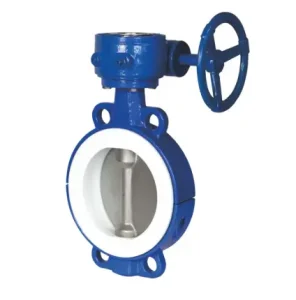
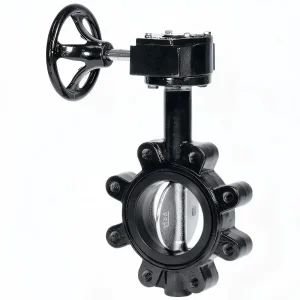
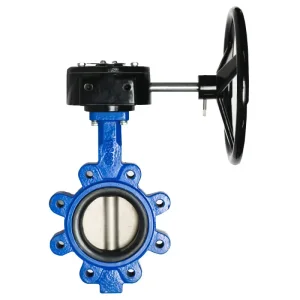
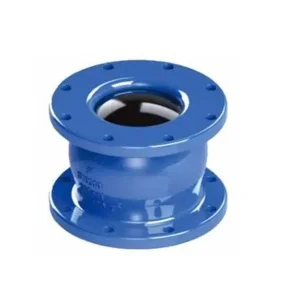
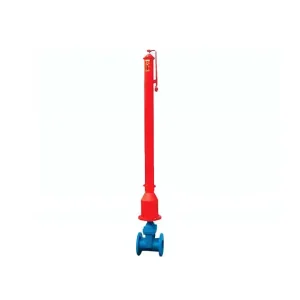
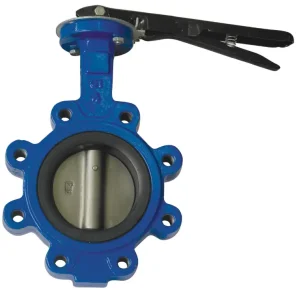
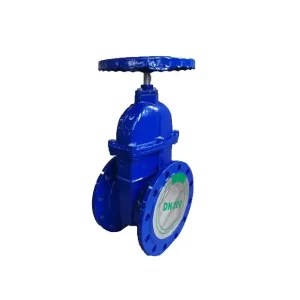
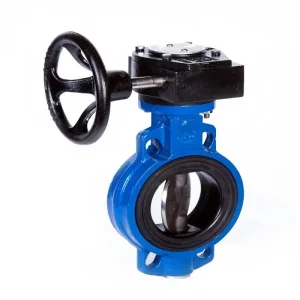
Explore our full line of industrial valves, including resilient-seated gate valves, worm-gear butterfly valves, and silent check valves.