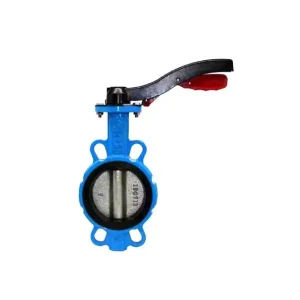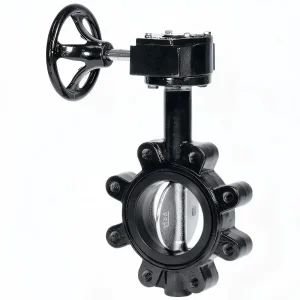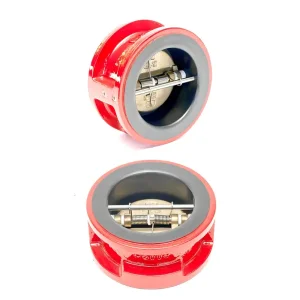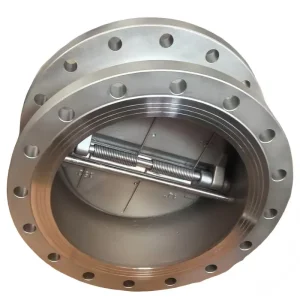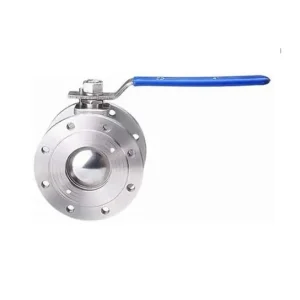
Featured Industrial Engineering Pipeline Assemblies
Direct factory delivery of heavy-duty, rigorously tested flow-isolation and vacuum-duty valve systems manufactured under strict ISO 9001 and CE frameworks.
Global Commercial Landscape & Enterprise Procurement Drivers
Analyzing the strategic convergence of thermodynamic efficiency, vacuum barrier engineering, and total cost of ownership (TCO) across worldwide energy and utility plants.
100%
Hydrostatic Shell & Seat Leak Testing
≤ 0.01%
Atmospheric Infiltration Under Negative Bar
50+
Countries Actively Supported Across EPC Sectors
Since 1987
Proprietary Metallurgy & Elastomer Mastery
Thermal Energy & Power Generation
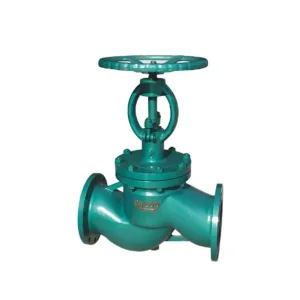
Supercritical and subcritical steam-turbine condensing circuits require globe valves capable of withstanding absolute vacuum conditions down to 0.005 MPa without ambient air ingress. Our cast iron water seal globe valves deploy pressurized water chambers around the stem packing, creating an impassable barrier that protects thermodynamic cycle efficiency and condenser efficiency.
District Heating & HVAC Networks
Metropolitan district energy schemes demand strict cavitation suppression and linear flow regulation during variable load balancing. Through optimized throttling plugs and parabolic disc profiles, our water seal globe assemblies eliminate turbulent flow chatter, providing stable decibel attenuation and extended maintenance cycles under cyclic thermal shock conditions.
Industrial Chemical & Petrochemical Utilities
Utility pipelines carrying condensate return, cooling towers, and ammonia systems require zero external leakage to satisfy ISO 15848-1 environmental compliance. The hybrid secondary water injection port continuously buffers toxic media, containing volatilization and preventing hazardous atmospheric release within processing facilities.
Macro Industry Solutions: Technical Anatomy of Water Seal Design
Comprehensive metallurgical and hydrodynamic analysis of ductile and gray cast iron water seal globe valves under high pressure-drop throttling operations.
Dual-Chamber Water Seal Bonnet
Unlike standard industrial globe valves that rely solely on compressed graphite or PTFE packings, our water seal configuration utilizes an engineered lantern ring surrounded by an annular fluid gallery. High-pressure treated water (0.1–0.2 MPa above line pressure) fills this annulus, forming an absolute liquid curtain that renders fugitive stem emissions physically impossible.
Metallurgical Chemistry & Foundry Control
Castings produced within our in-house facility utilize premium spheroidal graphite ductile iron (EN-GJS-450-10 / ASTM A536 65-45-12) or high-grade gray cast iron (EN-GJL-250). Nodularity above 90% is guaranteed through spectroscopic thermal analysis, providing high tensile strength and superior vibration absorption during sudden pressure shifts.
Stellite Hardfaced Trim Integrity
The valve disc and seat ring contact surfaces receive micro-plasma weld overlays of Cobalt-Base Stellite Alloy (Gr. 6) or 13Cr martensitic stainless steel. Hardened to Rockwell C 38–45, the seating zone demonstrates high resistance to droplet erosion, flashing, wire drawing, and thermal micro-welding in extreme throttling situations.
| Engineering Parameter | Standard Ductile Iron Water Seal | High-Precision Power Station Grade | Vacuum Isolation Configuration |
|---|---|---|---|
| Nominal Diameter Range | DN50 – DN400 (2" to 16") | DN15 – DN300 (1/2" to 12") | DN25 – DN500 (1" to 20") |
| Nominal Pressure Class | PN10, PN16, Class 125/150 | PN25, PN40, Class 300 | Full Vacuum to PN16 (1.6 MPa) |
| Body & Bonnet Casting | QT450-10 / ASTM A536 Gr. 65-45-12 | QT500-7 / ASTM A395 / WCB Option | HT250 Gray Cast Iron / Ductile Iron |
| Water Seal Medium | Clean Demineralized Water / Condensate | Pressurized Condensate / Treated Water | Sealing Fluid Supply System |
| Allowable Leakage Class | EN 12266-1 Rate A (Bubble Tight) | ANSI/FCI 70-2 Class V / Class VI | Zero Inward Gas Ingress Rate |
| Operating Temperature | -10°C to +200°C | -20°C to +350°C | -10°C to +150°C |
Technology Roadmap: Next-Gen Industrial Fluid Intelligence
Integrating Industrial Internet of Things (IIoT) architecture, predictive degradation analytics, and low-torque valve dynamic geometry.
Phase 1: Real-Time Barrier Pressure Sensing
Embedding micro-piezoelectric sensors into the water seal lantern chamber. These sensors broadcast live water pressure differential data over WirelessHART or Modbus, notifying operations centers if the liquid-barrier pressure drops near critical pipeline internal levels.
Phase 2: Additive CFD Seat Cavitation Dampeners
Leveraging 3D hydrodynamic numerical simulation algorithms to re-sculpt internal flow ports. The latest cage-guided water seal discs split high-velocity pressure drops into micro-jets, moving vortex dissipation away from the iron boundary walls to protect cast surfaces.
Phase 3: Digital Twin & Predictive Maintenance
By monitoring stem torque drift via intelligent electric actuators (rotary Modbus units) and logging cycle count alongside fluid temperature gradients, plant engineers can accurately forecast packing replacement intervals up to 180 days before micro-leak risks occur.
Global Standardization, Regulatory Compliance & Field Support
Ensuring frictionless site integration, full traceability, and long-term operating reliability for major engineering contractors and distribution partners.
Dimensional Standards
Face-to-face dimensions strictly comply with EN 558 Series 1 / DIN 3202 F1 and ASME B16.10, ensuring drop-in replacement parity for existing industrial installations globally.
Pressure Equipment Directive
Certified under EU PED 2014/68/EU Module H, carrying legitimate CE marking. Every shell casting undergoes nondestructive examination (NDE) and wall thickness verification.
Rapid Logistics & Port Access
Located in the Wuxia Industrial Park, Tianjin, our direct proximity to Tianjin Port enables streamlined multimodal export delivery across European, Middle Eastern, and American shipping lanes.
Complete Material Certification
Every delivery batch is accompanied by EN 10204 3.1 chemical, tensile, and pressure test certificates, supported by recorded batch heats back to the foundry pour.
Frequently Asked Questions (Engineering & Procurement FAQ)
Authoritative technical clarifications addressing water seal mechanics, material selection, installation precautions, and life-cycle economics.
How does a water seal globe valve differ mechanically from a standard globe valve?
Standard globe valves rely on braided graphite packing rings squeezed against the moving stem. Under deep vacuum or frequent cycling, ambient air can leak inward or volatile steam can leak outward. A water seal globe valve integrates an annular chamber (lantern ring) supplied with external water at a pressure higher than the internal pipeline media, providing a fluid barrier that eliminates all gaseous ingress or fugitive egress.
What minimum water pressure must be maintained in the seal chamber?
For vacuum service pipelines (such as steam turbine condensing loops), seal water pressure should be maintained between 0.15 MPa and 0.25 MPa gauge. For pressurized line duties, the auxiliary water injection must maintain a positive differential of roughly 0.1 MPa over the line working pressure to guarantee barrier integrity.
When is cast iron or ductile iron preferred over cast carbon steel?
Ductile iron (such as EN-GJS-450-10 or ASTM A536) offers excellent structural dampening against pipeline vibration and cavitation noise, coupled with high graphite self-lubricating characteristics and lower raw material procurement costs. For non-corrosive water, district cooling, and moderate-temperature steam systems (≤ 250°C), ductile iron delivers matched pressure performance at an advantageous TCO.
Can your water seal globe valves be automated with actuators?
Yes. Every valve body can be configured with an ISO 5211 direct-mount top flange or yoke adaptation. We routinely assemble multi-turn electric actuators (such as AUMA, Rotork, or smart domestic brands) as well as heavy pneumatic diaphragm or piston actuators configured for emergency quick-closing trip functionality.
What factory acceptance testing is performed before dispatch?
100% of manufactured valves undergo hydro testing in accordance with ISO 5208 and EN 12266-1. This includes a hydrostatic shell test at 1.5 times the nominal working pressure, a high-pressure bidirectional seat test at 1.1 times nominal pressure, and a secondary hydraulic pressure test applied directly into the water seal packing gallery.
How does your factory ensure casting purity and prevent internal sand holes?
Our Tianjin Donglian Valve foundry operates resin-sand automatic moulding lines with computerized electric induction furnaces. Thermal analysis checks nodularity and carbon equivalent before every pour, while internal critical wall sections receive ultrasonic (UT) or liquid penetrant (PT) non-destructive testing.
Comprehensive Fluid Control & Anti-Backflow Product Matrix
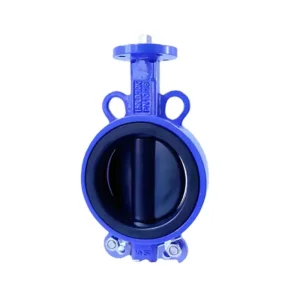
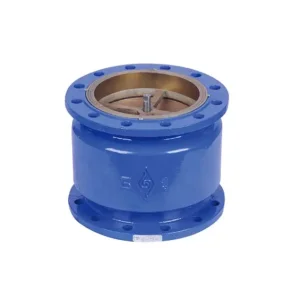
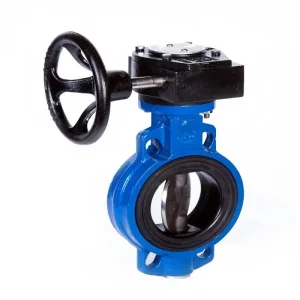
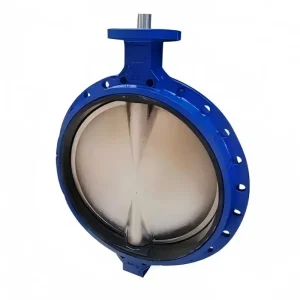
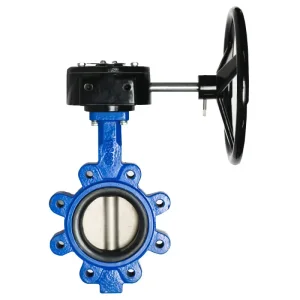
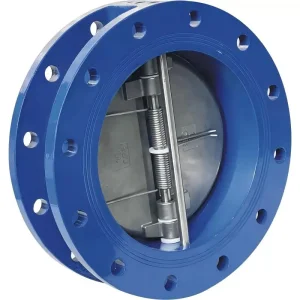
Explore our specialized range of high-performance check valves, lined butterfly valves, and space-saving wafer assemblies engineered for global utilities.