
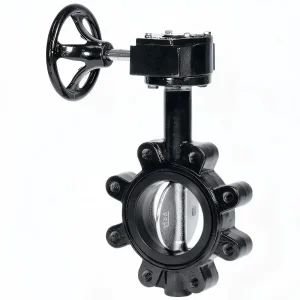
CE Certification Gear Operated Butterfly Valve - Durable & Reliable Supplier Supplier, Factory
Engineered to high-performance metallurgy tolerances. Factory direct supply with certified hydrodynamic testing for municipal, maritime, and chemical pipelines.
CE Certification Gear Operated Butterfly Valve - Durable & Reliable Supplier Supplier, Factory
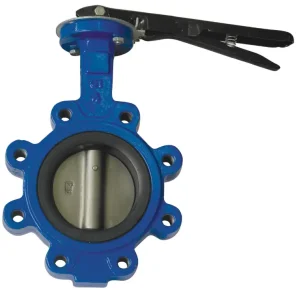
High-Quality Lug type manual operated butterfly valve Manufacturers, Factory
Wholesale Wafer Butterfly Valve - Durable & Efficient Flow Control Solution Suppliers, Factory
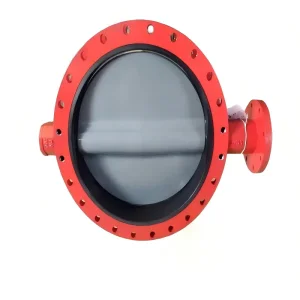
Wholesale Ceramic Disc Wafer Butterfly Valve - Durable & Efficient Design Supplier, Factories
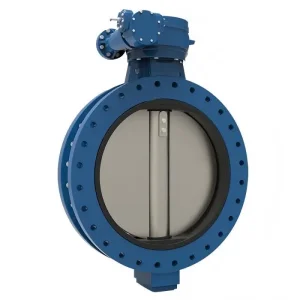
CE Certification Flanged Butterfly Valve - Durable & Efficient Flow Control Suppliers, Supplier
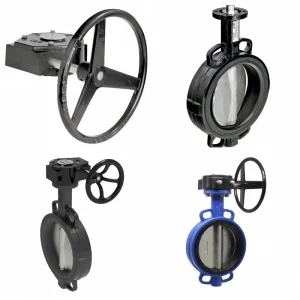
CE Certification WRAS Approved High-Performance Butterfly Valve 4020G Manufacturer, Factories
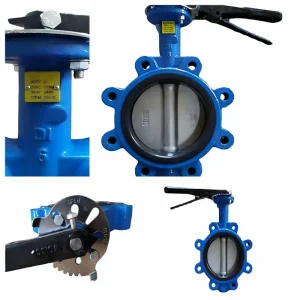
High-Quality WRAS Approved Butterfly Valve Lug Type 4325L Manufacturer, Factories
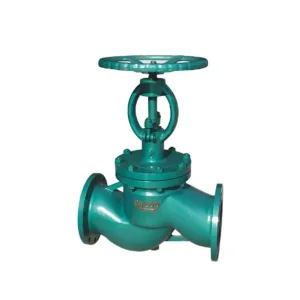
High-Quality High - Temperature - Vacuum Isolation Globe Valve for Vacuum Heat Suppliers, Factory
Strategic insights into foundry capacities, supply chain shifts, ductile vs. gray iron economics, and international compliance architectures.
In high-capacity pumping systems and municipal wastewater conveyance, the Cast Iron Ball Check Valve stands out as one of the most operationally resilient check valve configurations available. Unlike traditional swing check valves with external hinge pins or dual-plate wafer check designs prone to ragging and particulate accumulation, the ball check mechanism features an elastomer-encapsulated spherical core that rolls freely within an off-center flow chamber. When forward flow begins, hydrodynamic lift sweeps the ball into an engineered recess, ensuring an unobstructed, full-bore flow path with a flow resistance coefficient (Cv) superior to mechanical flapper designs.
Modern global procurement strategies require factories to deliver high metallurgical integrity. Leading wholesale factories operate integrated casting facilities utilizing EN-GJL-250 (GG25) Gray Cast Iron and EN-GJS-450-10 (GGG40/50) Ductile Iron. Ductile iron configurations exhibit tensile strengths upward of 450 MPa and elongation rates above 10%, effectively neutralizing risks related to water hammer shock waves and thermal cycling in deep-well or high-head pumping installations. Buyers must balance grey iron cost efficiencies against ductile iron fatigue margins when selecting check valves for municipal lift stations or industrial drainage systems.
The spherical ball displaces completely from the flow stream under nominal head pressure. Solids, fibrous wastewater rags, and slurries pass cleanly without entanglement, mitigating pump shutdown risks.
Every cycle forces the vulcanized core to seat on a different contact point. This rotary wear dispersion ensures uniform seating friction and prevents uneven rubber degradation across thousands of cycles.
Internal and external surfaces receive electrostatic fusion-bonded epoxy powder coatings (min 250 μm). Certified non-porous finish resists galvanic corrosion and chemical degradation in harsh wastewater.
Performance profiles across critical municipal infrastructure, industrial fluid transfer, and viscous wastewater applications.
Submersible pump discharges handle heavy stringy rags, wet wipes, and grit. Ball check valves eliminate flapper bind-up and prevent catastrophic backflow when paired with resilient gate valves.
Mining dewatering systems carrying suspended sand, iron ore tailings, or acidic drainage rely on NBR or Polyurethane-coated metallic balls designed to resist sharp particulate scouring.
Commercial basements and high-rise storm water diversion sumps utilize compact NPT or flanged ball check valves to guarantee bubble-tight isolation during prolonged pump dormancy.
Fertigation networks and river pumping stations face silty sediment buildup. Low cracking pressure (0.02–0.05 bar) ensures seamless startup with minimal energy loss.
Factory technological advancements: elastomeric composite compounding, CFD chamber optimization, and integrated smart sensors.
Computational Fluid Dynamics (CFD) simulates vortex behaviors inside the valve chest. Streamlined guide ribs minimize turbulence, eliminating ball chatter and cutting pumping energy consumption by up to 14%.
Proprietary composite cores: high-density aluminum/iron center encased in seamless hot-moulded EPDM or FKM. Designed to balance buoyant mass against quick sealing velocity to mitigate water hammer.
Deployment of internal acoustic transducers and ultrasonic sensors to analyze closing velocity and detect micro-cavitation or seat fouling in industrial SCADA networks.
Integration of medium-frequency electric induction melting, 100% recycled scrap qualification, and low-VOC waterborne epoxy coatings aligned with global decarbonization frameworks.
Comprehensive supply chains bridging casting foundries, rubber synthesis, and international project logistics.
For municipal water authorities and EPC conglomerates, procurement extends beyond unit price. The total lifecycle cost of a valve installation is dictated by pressure drop efficiency, scheduled maintenance intervals, and resistance to unexpected back-surge shocks. As an integrated manufacturing entity with in-house foundries dating back to 1996 and dedicated elastomeric production since 1987, Tianjin Top Automation Equipment provides transparent raw material certification (EN 10204 Type 3.1) and verifiable wall thickness tolerances that align with DIN EN 12334, BS 5153, and AWWA C508 standards.
By producing rubber components in-house, our engineering teams precisely calibrate the Shore A durometer of vulcanized sealing spheres (ranging from 65 to 80 Shore A). This prevents premature core deformation under high static backpressures up to PN16 (232 psi). Every unit undergoes dual testing: low-pressure shell and seat pneumatic testing (0.5 bar) to confirm zero-drip sealing under minimal head conditions, alongside full hydrostatic shell testing at 1.5 times the rated working pressure.
Machined precision flange faces conforming to EN 1092-2 (PN10/PN16), ASME B16.1 Class 125/150, and JIS B2239 standards. Easy direct replacement without expensive piping realignment.
Top-entry bolted bonnet allows maintenance personnel to inspect, flush, or replace the internal elastomer ball directly in the pipeline without disconnecting main flange bolts.
The short stroke path and rapid downward rolling motion allow the ball to close just as forward flow approaches zero velocity, significantly mitigating water hammer damage to upstream pump sets.
In-depth technical answers addressing operational parameters, material selection, and installation best practices for wholesale procurement.
Ball check valves feature an unobstructed, full-flow design. The elastomeric ball lifts entirely into a side chamber during flow, eliminating internal flapper hinges, springs, and shafts that catch stringy solids, fibrous rags, or wet wipes commonly found in municipal raw sewage.
Yes. Ball check valves can be installed horizontally or in vertical upward-flow orientations. In vertical setups, gravity assists the ball in settling back onto the machined conical seat upon pump shutdown. Vertical installations with downward flow are strictly prohibited.
EN-GJL-250 (Class 125/GG25) is a cost-effective material with flake graphite, suitable for moderate pressures up to PN10. EN-GJS-450-10 (GGG40/50) contains spheroidal nodular graphite, delivering superior tensile strength (450 MPa) and impact absorption up to PN16/25 bar.
Standard municipal water and wastewater services typically use NBR (Nitrile) for hydrocarbons, oils, and general sewage. EPDM is selected for drinking water, dilute acids, and elevated temperatures (up to 120°C). Polyurethane is utilized for high-abrasion mining slurries.
Due to the resilient elastomer-to-metal seating interface, our ball check valves achieve bubble-tight shutoff (zero leakage conforming to ISO 5208 Rate A) with a static backpressure differential as low as 0.2 to 0.5 bar (3 to 7 psi).
Our in-house foundry employs automated resin sand molding lines, optical emission spectrometers for pre-pour chemistry validation, and hydro-testing on 100% of finished raw castings to eliminate porosity, pinholes, and dimensional variances.
Advanced fluid regulation systems engineered for rigorous isolation, throttling, and anti-cavitation applications across global supply chains.
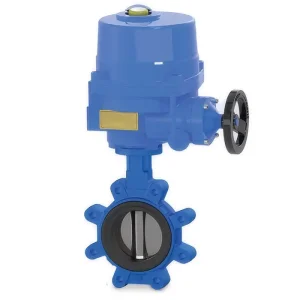
High-Quality Electrical butterfly valve Supplier, Manufacturer
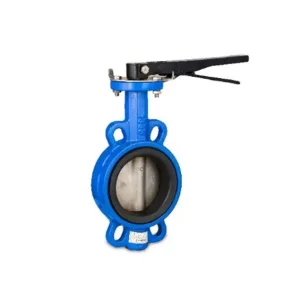
High-Quality Rubber Lined Pinless Butterfly Valve Supplier, Factories
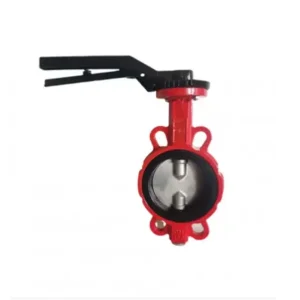
High-Quality Double Half Shaft Wafer Butterfly Valve Supplier, Manufacturer
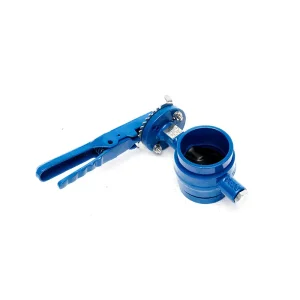
High-Quality Grooved Type Manual Butterfly Valve Suppliers, Manufacturers
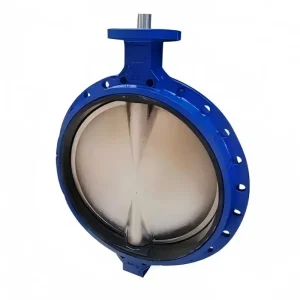
Wholesale Single Flange Butterfly Valve - Durable & Efficient Flow Control Supplier, Manufacturers
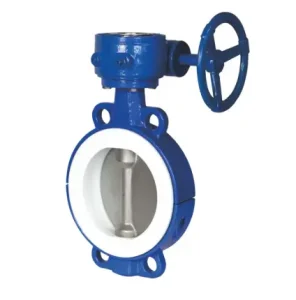
Wholesale PTFE Lined Butterfly Valve - Durable & Corrosion Resistant Manufacturers, Manufacturer
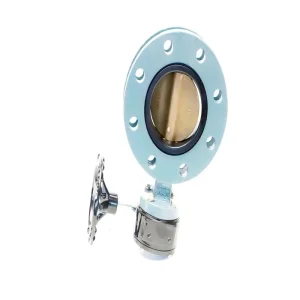
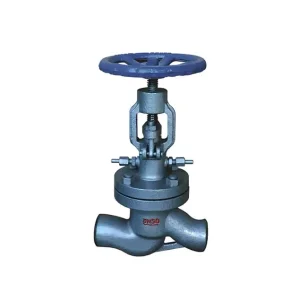
High-Quality Water Seal Globe Valve with Quick - Closing Feature Manufacturers, Manufacturer
