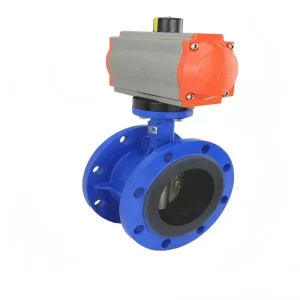
Featured Industrial Butterfly & Flow Control Valves
Engineered in-house from metallurgical casting to 100% hydrostatic shell and seat leak testing. Fully compatible with ISO 5752, EN 558, and ASME B16.34 dimensional standards.
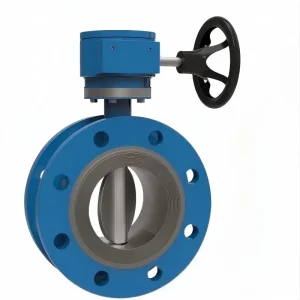
High-Quality Flange Type Butterfly Valve - Durable and Efficient Flow Control
Product Details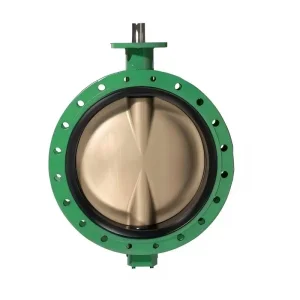
High-Quality Water Used Flanged Butterfly Valve - Durable & Efficient
Product Details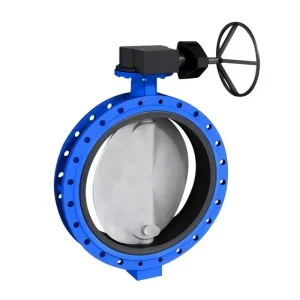
Wholesale High-Quality U Section Butterfly Valve for Flow Control
Product Details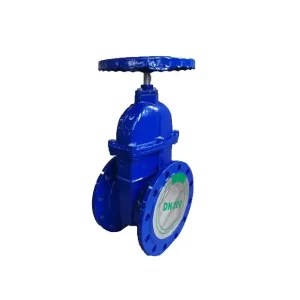
CE Certification German Standard Elastic Seat Gate Valve
Product Details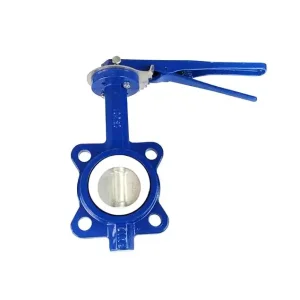
High-Quality PTFE Lined Pinless Butterfly Valve Chem-Service
Product Details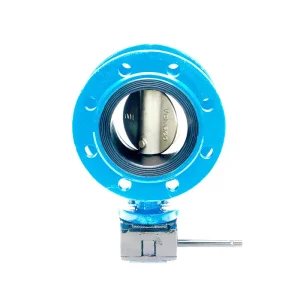
Marine Flange Type Manual Operated Butterfly Valve
Product Details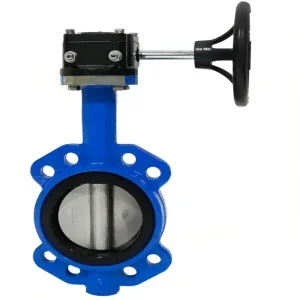
CE Certification Wafer Butterfly Valve Water Usage Spec
Product Details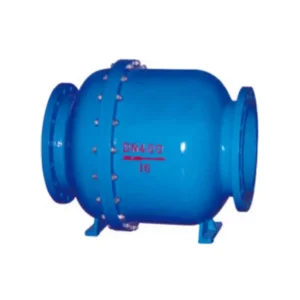
CE Certification Micro-Resistance Ball Check Valve
Product DetailsEvolutionary Dynamics of Butterfly Check Valve Engineering
A critical exploration of dynamic hydraulic response, water hammer mitigation, and aerodynamic disc kinematics in high-velocity piping architectures.
Hydraulic Transient & Water Hammer Mitigation
Traditional swing check valves suffer from excessive disc inertia and protracted closing times. Under sudden pump stoppage, reverse flow velocity peaks before disc closure, generating catastrophic kinetic energy conversion into hydraulic shock waves known as water hammer. Dual-plate butterfly check valves utilize twin spring-assisted semicircular plates hinged centrally across the flow conduit. By drastically shortening the center-of-mass travel path and applying balanced torsion spring preloads, the disc reaches closure at zero flow velocity (non-slam condition), preserving pipeline structural integrity.
- Spring-assisted closure completes prior to reverse flow acceleration.
- Acoustic shock wave attenuation verified via CFD transient modeling.
- Compact face-to-face geometry lowers total installation inertia.
Streamlined Aerodynamic Hydrofoil Contours
Fluid friction through conventional non-return configurations introduces pronounced turbulence eddies, stagnant separation zones, and parasitically high drag coefficients ($C_d$). Contemporary butterfly check valves employ profiled hydrofoil plate cross-sections optimized via multi-phase Navier-Stokes fluid simulations. This geometric refinement promotes laminar boundary layer adherence, minimises cavitation incipience, and delivers superior flow coefficient ($C_v$ and $K_v$) ratings, substantially lowering lifelong pumping energy overhead across high-throughput distribution loops.
- Up to 38% reduction in head loss compared to standard lift check valves.
- Elimination of wake turbulence downstream of hinge pin bearings.
- Minimized cavitation erosion around elastomeric vulcanized seat lips.
Elastomer Chemistry & Sealing Integrity
The operational longevity of a butterfly non-return valve is predominantly dictated by the chemical resilience and compression set of its seat elastomer. Because our manufacturing ecosystem directly incorporates Tianjin Dongfang Rubber Factory (founded 1987), our compound formulations for EPDM, NBR, FKM, and PTFE are cross-linked under controlled vulcanization curves. This controls plasticizer migration and ensures zero micro-porosity, securing bubble-tight shut-off (EN 12266-1 Rate A) under both low cracking pressures and peak static system backpressures.
- Formulations compliant with WRAS, FDA 21 CFR 177.2600, and EN 681-1.
- Superior anti-aging parameters tested through 5,000 thermal shock cycles.
- Integral dovetail mechanical anchoring prevents high-velocity seat displacement.
Global Sourcing Requirements & Supply Chain Resilience
Modern EPC contractors, municipal authorities, and plant engineers mandate rigorous supplier transparency, zero-defect quality systems, and deep metallurgical traceability.
Total Cost of Ownership (TCO)
Wholesale procurement decisions transcend nominal unit purchase prices. Sophisticated enterprise procurement matrices evaluate lifecycle expenditure: parasitic pumping head losses across a 25-year lifespan, frequency of elastomer replacement, scheduled downtimes, and actuator compatibility. Our butterfly check valves offer high $C_v$ geometry that reduces static pressure head loss, translating to recurring energy savings in large scale distribution networks.
- Low friction coefficient disc profile.
- Extended seat MTBF (>120,000 cycles).
EN 10204 3.1 Traceability
Every casting batch, disc forging, hinge pin, and return spring is mapped to an immutable heat number. Through in-house optical emission spectrometers (OES), we verify the stoichiometric percentages of Carbon, Manganese, Chromium, Nickel, and Molybdenum in Ductile Iron (EN-GJS-400-15/500-7), WCB, CF8M, and Aluminum Bronze, ensuring zero structural inclusions or decarburization voids.
- Direct optical emission spectrometer logs.
- Complete Charpy impact & tensile verification.
Vertical Foundry Ownership
Global logistics instability has demonstrated the vulnerability of assembly-only suppliers reliant on third-party foundries. Our corporate group operates independent casting facilities alongside dedicated elastomer processing plants. This vertical control ensures predictable raw material lead times, uncompromised casting wall thicknesses (exceeding API 594 minimums), and absolute control over casting solidification cooling rates.
- Uninterrupted supply chain guarantees.
- Custom pattern making & rapid prototyping.
Stringent QA Factory Testing
Prior to crating, 100% of manufactured valves are mounted onto automated hydraulic test benches. Testing protocols conform strictly to ISO 5208, EN 12266-1, and API 598. Shell tests are sustained at 1.5 times nominal pressure rating (PN10, PN16, PN25, Class 150), followed by high-pressure and low-pressure elastomeric seat leakage verifications ensuring zero perceptible droplet seepage.
- Zero-leakage Rate A certification.
- Comprehensive test video audit archiving.
Domain-Specific Valve Architecture Matrix
Selecting optimal metallurgical alloys, elastomer profiles, and valve body geometries customized to challenging process environments and international regulatory frameworks.
| Sector / Media | Recommended Valve Family | Body / Disc Metallurgy | Seat Elastomer | Operating Pressures & Standard | Engineering Value Add |
|---|---|---|---|---|---|
| Municipal Potable Water Drinking water, pumping networks |
Dual Plate Butterfly Check & Resilient Gate | Ductile Iron EN-GJS-400-15 / CF8M Disc | WRAS-Approved EPDM | PN10 / PN16 / PN25 EN 1092-2, BS 5163 |
Eliminates biological growth; non-slam spring closure prevents municipal water hammer surges. |
| Seawater Desalination (SWRO) High chlorides, brine reject, intake |
Lugged Butterfly & Dual Plate Check | Nickel Aluminum Bronze (C95800) / Duplex 2205 | High-Density NBR / FKM | Class 150 / PN25 ASME B16.34, API 594 |
High PREN rating resists severe pitting and crevice corrosion under high-velocity saline exposure. |
| HVAC & Chilled Water Cooling towers, district cooling |
Wafer Butterfly Valve & Silent Check | Cast Iron GG25 / Ductile Iron GGG40 | Bonded EPDM Seat (-20°C to +120°C) | PN16 DIN EN 593, ISO 5752 |
Ultra-low profile wafer body fits confined mechanical risers; minimal pressure drop preserves pump efficiency. |
| Industrial Wastewater & Slurry Effluent, sewage, mining runoff |
Micro-Resistance Ball Check & Ceramic Disc Butterfly | Epoxy Coated Ductile Iron / Zirconia Ceramic | Abrasion-Grade NBR / Polyurethane | PN10 / PN16 EN 12334, DIN 3202 |
Self-cleaning ball and ceramic wear faces resist solids accumulation, abrasive erosion, and jamming. |
| Chemical & Corrosive Process Aggressive acids, solvents, alkalines |
PTFE Lined Pinless Butterfly Valve | Carbon Steel WCB + 3mm Virgin PTFE / PFA | Molded PTFE / Silicone Energizer | Class 150 / PN16 API 609, EN 558 |
Complete fluid isolation prevents chemical attack on the metal body; pinless stem prevents leakage paths. |
| Marine & Offshore Ballast Bilge, ballast, shipboard pipelines |
Marine Flange Butterfly & Wafer Lift Check | Aluminum Bronze C95400 / Cast Steel | Seawater Resilient NBR | JIS 5K/10K, PN10/16 JIS F7480, ISO 5752 |
Corrosion resistance against marine fouling; compact footprint conforms to tight vessel bulkheads. |
| Fire Protection Systems Wet sprinkler, standpipe networks |
Fire-Fighting Wafer Signal Butterfly Valve | Ductile Iron with Fusion Bonded Epoxy | EPDM Rubber Fully Encapsulated | 300 PSI / PN20 UL / FM / NFPA 13 |
Integrated micro-switch supervisory gearbox delivers real-time valve position telemetry to fire control panels. |
Global Standards Harmonization & Localized Technical Support
Bridging Chinese precision manufacturing capabilities with Western engineering standards, project submittals, and multi-jurisdictional compliance.
International Certifications
Our management and manufacturing frameworks hold ISO 9001:2015, ISO 14001:2015, and ISO 45001:2018 accreditations. Critical product series hold CE-PED (Pressure Equipment Directive 2014/68/EU Module H) certification, allowing direct deployment across the European Union. Furthermore, our flagship potable water models (4020G, 4020L, 4325G, and 4325L) hold official WRAS (Water Regulations Advisory Scheme) certification for UK and international drinking water systems.
Project Submittal Documentation
We provide comprehensive engineering documentation for EPC bidding and project approval phases. Submittal packages include detailed general arrangement (GA) 2D/3D CAD and BIM STEP models, calculated flow coefficient ($C_v$) curves, cracking pressure calculations, torque data sheets, and coating dry-film thickness (DFT) calibration certificates (standard 250μm fusion bonded epoxy with pinhole holiday testing).
Dedicated Engineering Support
Procurement teams receive direct communication with our senior valve engineering desk. Whether assessing elastomer compatibility for tertiary chemical effluent, optimizing spring torque ratings for vertical downward pipe runs, or conducting real-time remote video witness testing on factory pressure benches, inquiries are handled with guaranteed 24-hour turnaround times.
Technology Roadmap: Intelligent Flow & Advanced Metallurgy
Strategic investments in industrial automation, sensor-integrated check valves, and decarbonized foundry engineering for next-generation systems.
Zero-Fugitive Emissions (ISO 15848-1)
Implementation of dual O-ring secondary stem containment and pinless disc retention systems across all lug and wafer butterfly valves, eliminating shaft penetrations and fugitive greenhouse gas leaks.
Acoustic & Slam Sensing Check Valves
Integration of piezoelectric acoustic emission sensors within the check valve body to continuously detect incipient reverse slamming, cavitation micro-jets, and internal spring degradation before catastrophic failure.
Self-Lubricating Graphene Elastomers
Developing nano-graphene augmented EPDM and NBR compounds in our rubber laboratories to reduce seat friction coefficients by 40%, boosting cyclic endurance and lowering operating torque requirements.
Additive Metallurgical Discs
Selective laser melting (SLM) additive manufacturing for customized, ultra-lightweight internal hollow butterfly plates, decreasing dynamic closing inertia by 65% for extreme critical protection duties.
Frequently Asked Technical Questions by EPC Engineers
Detailed answers covering hydrodynamic behavior, installation constraints, materials selection, and testing methodologies.
How does a dual plate butterfly check valve prevent water hammer compared to a conventional swing check valve?
Swing check valves have a single, heavy disc suspended from a top hinge pin with a long arcuate travel path (typically 60° to 80°). Under sudden pump stoppage or flow reversal, the substantial disc inertia delays closure until reverse flow has already developed substantial velocity. When the swing disc finally slams shut against the seat, this reverse flow velocity abruptly stops, converting kinetic energy into a catastrophic pressure surge (water hammer). In contrast, dual plate butterfly check valves divide the disc into two semicircular plates hinged across the center. Each plate travels a fraction of the distance (less than 45°), possesses minimal inertia, and is assisted by independent torsional springs. This ensures the valve closes at the exact instant forward flow reaches zero velocity—before any reverse flow velocity can accelerate—preventing dynamic shock waves entirely.
Can wafer and dual plate butterfly check valves be installed in vertical pipelines?
Yes, but installation orientation depends on flow direction. For vertical pipes with upward flow, spring-assisted dual plate check valves operate reliably because forward flow easily overcomes spring preload and gravity, while gravity assists spring closure upon flow cessation. However, in vertical piping runs with downward flow, standard check valves are generally not recommended because gravity pulls the plates open, counteracting the spring and preventing a reliable seal. When installing in horizontal pipelines, the hinge pin must always be oriented vertically (plates opening horizontally left and right) for diameters DN150 and larger. This ensures both plates experience equal gravitational forces, preventing uneven seat wear and ensuring simultaneous plate closure.
What is the practical difference between bonded rubber seats and replaceable liner designs in butterfly valves?
Bonded rubber seats are vulcanized directly onto the valve body casting using high-temperature vulcanizing primers. This creates an unyielding molecular bond that prevents the elastomer from moving or deforming under vacuum service (down to 0.1 bar absolute) or high-velocity fluid flow (exceeding 4.5 m/s). This design is optimal for cooling water circuits, vacuum lines, and heavy-duty throttling applications. Replaceable liners, by contrast, are mechanically held within a precision-machined internal body dovetail. While replaceable liners simplify field refurbishment, they are more susceptible to seat collapse under negative pressure or distortion if flange bolting torque is unevenly applied. Our factory provides both configurations based on pipeline hydraulic dynamics.
How does in-house rubber compounding directly improve valve field reliability?
Over 85% of premature butterfly and check valve failures in the field stem from seat degradation: accelerated embrittlement, ozone cracking, chemical swelling, or excessive compression set (permanent deformation that compromises bubble-tight sealing). Most valve manufacturers outsource rubber moulding to third-party suppliers who may use excessive fillers (such as calcium carbonate) or recycled scrap rubber to cut costs. Through our dedicated Tianjin Dongfang Rubber Factory (operating since 1987), we formulate virgin polymers from certified suppliers. We monitor rheological cure curves, carbon black dispersion, and antioxidant packages on-site, ensuring our EPDM, NBR, and FKM seats maintain resilience, tensile strength, and recovery memory across extended operating lifetimes.
What standards govern testing and wall thickness for your wholesale valves?
Our valves are designed and qualified strictly to harmonized international criteria. Pressure testing conforms to ISO 5208, EN 12266-1, and API 598. Shell tests are conducted hydrostatically at 1.5 times nominal design rating (1.5× PN), while seat leakage tests are evaluated at 1.1 times maximum allowable working pressure (MAWP) for high-pressure closure, alongside a 0.5 bar low-pressure air seat test to verify low-head sealing capability. Structural wall thicknesses and face-to-face dimensions comply with API 609, API 594, ISO 5752 series 20/16, and EN 558 series 20, guaranteeing interchangeable fitment with ANSI Class 125/150, EN 1092 PN10/PN16, and BS 4504 counter-flanges.
What minimum upstream straight pipe run is required for check and butterfly valves?
To avoid asymmetric disc loading, excessive turbulence, and premature spring fatigue, good piping engineering practice recommends a minimum of 5 pipe diameters ($5D$) of straight, uninterrupted pipe upstream of a butterfly check valve, and at least 3 pipe diameters ($3D$) downstream from elbows, pumps, or reducers. Installing check valves immediately adjacent to pump discharge nozzles or pipe bends creates non-uniform velocity profiles and high-intensity vortices that can cause check valve discs to flutter continuously. This cyclic fluttering accelerates hinge pin and spring wear, leading to seat degradation. Where space is constrained, our engineers can calculate custom spring torque configurations to stabilize plate movement.
Specialized High-Performance Valves & Check Assemblies
Engineered for severe-duty service including fire suppression, corrosive chemicals, high-velocity municipal lines, and pneumatic actuation loops.
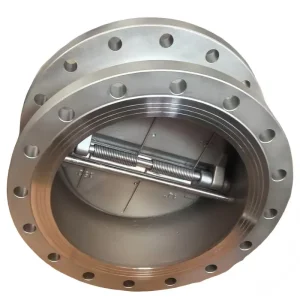
CE Certification Compact Low-Pressure Drop Wafer Lift Check Valve
Product Details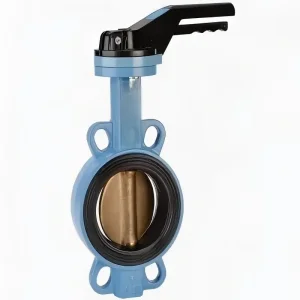
CE Certification Bronze Disc Wafer Butterfly Valve Seawater Duty
Product Details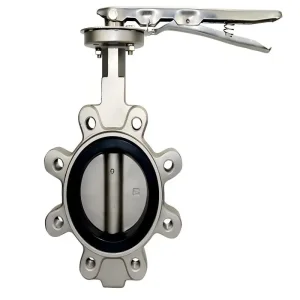
High-Quality LUG Stainless Steel Butterfly Valve Durable & Reliable
Product Details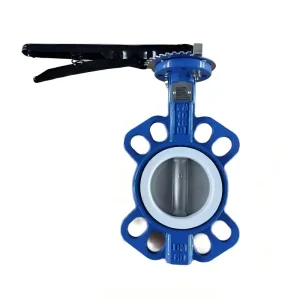
Wholesale PTFE Lined Cast Body Butterfly Valve Chemical Spec
Product Details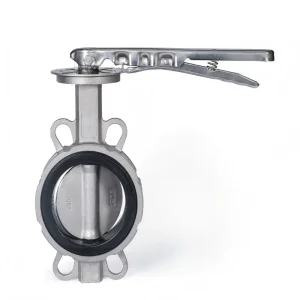
Wholesale Stainless Steel Butterfly Valve Corrosion-Resistant
Product Details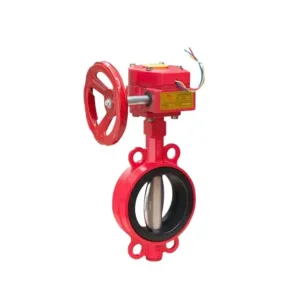
Wholesale Fire-Fighting Wafer Signal Butterfly Valve with Switch
Product Details
Wholesale Wafer Butterfly Valve - Durable & Efficient Flow Solution
Product Details