
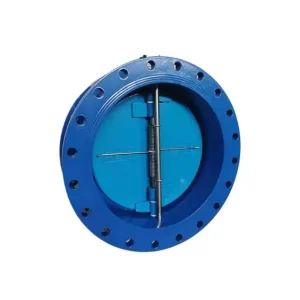
Product Catalog · Volume 01
Precision Flow Control: Premier Valve Selections
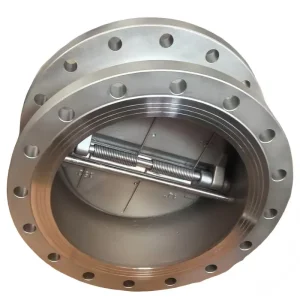
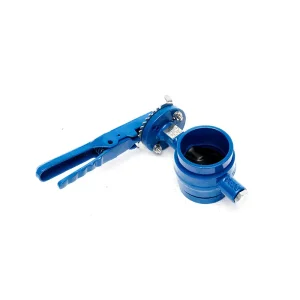
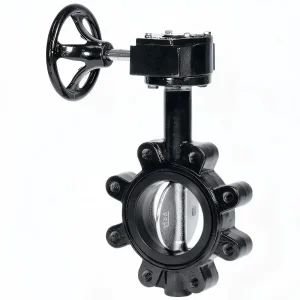
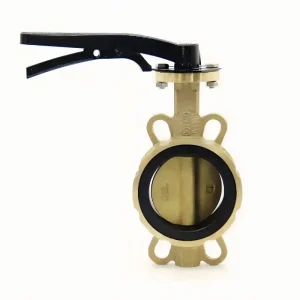
Engineered to international standards with complete in-house metallurgy, CNC finishing, and 100% pressure-leak inspection before export packaging.
Technical Whitepaper & Metallurgical Insight
Engineering Superiority of Industrial Bronze Butterfly Valves
Why Aluminum Bronze alloys (ASTM B148 C95800, C95400, RG5, and CuAl10Fe5Ni5) stand as the premier choice over standard cast iron and austenitic stainless steel in aggressive marine environments.
1987
In-House Rubber Compound Heritage
1996
Valve Foundry Founded
50+
Countries Exported Globally
100%
Shell & Resilient Seat Tested
Spontaneous Passivation Film
Aluminum bronze forms a tenacious, self-repairing surface oxide film composed primarily of aluminum oxide (Al2O3) and cuprous oxide (Cu2O). In dynamic seawater, this microscopic layer prevents pitting, crevice corrosion, and micro-galvanic degradation far more effectively than SS304 or SS316.
Biofouling Resistance & Cavitation Shield
Copper ions continuously leach from the alloy matrix at controlled non-polluting rates, inhibiting barnacles, macro-algae, and micro-organism biofilm colonization. The fine-grained nickel-iron-aluminum microstructures provide remarkable resistance to hydrodynamic cavitation along disc edges.
High Yield & Low Expansion Integrity
Nickel Aluminum Bronze (NAB) offers tensile strengths exceeding 620 MPa with elongation parameters above 12%. This mechanical toughness absorbs hydraulic shockwaves (water hammer) without brittle cracking, maintaining absolute concentric alignment inside high-pressure pipelines.
Tianjin Industrial Cluster Advantage
Why Tier-1 Contractors Source Bronze Valves From China
Combining heavy foundry smelting, proprietary elastomer formulations, high-precision five-axis machining, and direct maritime logistics in Tianjin.
In-House Foundry & Smelting
We eliminate trading intermediaries and subcontracting margins by operating our own vacuum induction furnaces and sand-casting setups. Raw ingots undergo real-time optical emission spectrometry (OES) to guarantee EN 1982 and ASTM B148 chemical purity.
Vulcanized Rubber Compounding
Operating Tianjin Dongfang Rubber Factory since 1987, our internal rubber division custom-blends EPDM, NBR, FKM, and PTFE compounds. We calibrate shore hardness, compression set, and elongation properties to ensure 20,000+ cycle bubble-tight shut-off.
CNC Five-Axis Milling Hub
Every disc edge, sealing contour, internal bore, and ISO 5211 actuator mounting flange is machined on modern CNC equipment. Strict positional tolerances protect stem packing and minimize operational torque under maximum differential pressure.
Maritime Port Proximity
Located in Dongli District, Tianjin, our manufacturing campus sits under 40 km from Tianjin Xingang Port. Expedited export customs handling, certified ocean-grade crating, and multi-modal logistics minimize lead times for EPC project sites.
Engineering Data Matrix
Bronze Butterfly Valve Technical Specifications
Comprehensive standard specifications covering dimensions, design parameters, and testing criteria.
| Design Parameter | Standard Specifications | Available Options | Compliance Standards |
|---|---|---|---|
| Nominal Diameter | DN50 – DN1200 (2" – 48") | Custom oversized up to DN2000 (80") | ISO 5752 / EN 558 |
| Pressure Rating | PN10, PN16, Class 150 (200 PSI) | PN25, Class 300 (High Pressure) | ASME B16.34 / EN 12266 |
| Body & Disc Materials | Nickel Aluminum Bronze C95800, C95400, RG5 | CuAl10Fe5Ni5, AB2, Phosphor Bronze, CuSn5Zn5Pb5 | ASTM B148 / EN 1982 |
| Stem Metallurgy | Monel K500, SS630 (17-4PH), Super Duplex 2507 | Hastelloy C276, Titanium Gr. 2, Bronze C63000 | ASTM A564 / ASTM B865 |
| Resilient Seat Elastomers | Virgin WRAS-Approved EPDM, High-NBR, Viton (FKM) | Virgin PTFE, RPTFE, Halar (ECTFE), Silicone | WRAS / FDA 21 CFR |
| Connection Profiles | Wafer, Lugged Full-Tapped, Double Flanged (Short/Long) | Grooved End, Welded Ends (Navy spec) | ASME B16.5 / EN 1092-1 |
| Testing & Tightness | Shell: 1.5× PN; Seat: 1.1× PN (Bubble-Tight Rate A) | Fire-Safe to API 607, Cryogenic Testing to -196°C | API 598 / ISO 5208 |
Macro Industry Applications
Engineered for Demanding Fluid Control Environments
Our bronze butterfly valves are built to withstand high galvanic activity, aggressive saline compounds, and heavy cycle rates across critical global industries.
Marine & Naval Shipbuilding
Essential components in shipboard ballast water treatment systems (BWTS), bilge lines, seawater firefighting loops, engine room sea-chest manifolds, and saltwater cooling loops. Certified for Lloyd’s Register, DNV-GL, and ABS marine inspection standards.
Seawater Desalination Plants (SWRO)
In high-pressure reverse osmosis intake structures and brine discharge channels, raw sea water induces catastrophic stress corrosion cracking in regular austenitic steel. Aluminum Bronze butterfly valves provide multi-decade service life with zero rust bleed.
Offshore Oil & Gas Platforms
Deployed in offshore topside processing units, floating production storage and offloading (FPSO) hulls, and coastal petrochemical terminal lines where marine atmospheric humidity and high hydrogen sulfide content degrade standard ductile iron bodies.
Procurement Strategy & Trends
Future Trends Shaping Global Valve Procurement
How digital simulation, pinless disc architectures, and predictive IoT actuation impact wholesale valve selection.
Transition to Pinless Stem Architecture
Traditional taper-pin through-disc connections create micro-leak paths under aggressive differential pressures. Modern international EPC tenders specify splined, double-D, or square-drive pinless bronze butterfly valves to eliminate cross-stem leakage completely.
Stringent WRAS & Drinking Water Mandates
Lead-leaching limitations in the European Union and North America have accelerated the phase-out of traditional leaded brass and tin bronzes. Our wholesale casting lines exclusively utilize C95800 / CuAl10Fe5Ni5 alloys and WRAS-certified non-cytotoxic EPDM seals.
Intelligent Actuation & Life Cycle Tracking
Top automation equipment integration has shifted valve demand toward factory-fitted ISO 5211 direct-mount pads. We calibrate torque requirements to pneumatic and Modbus-compatible electric actuators, enabling predictive maintenance in automated smart pumping networks.
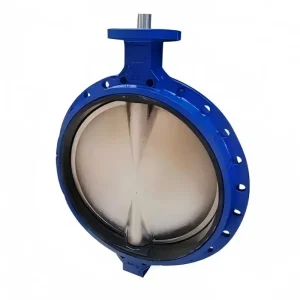
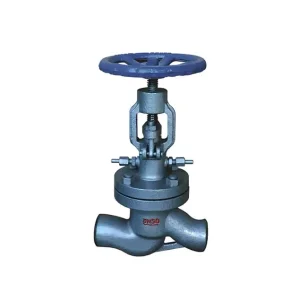
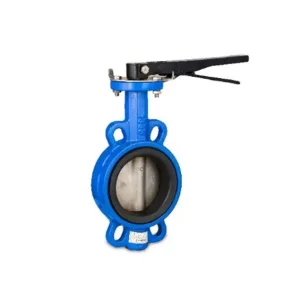
Product Catalog · Volume 02
Engineered Valves for Critical Pipeline Integrity
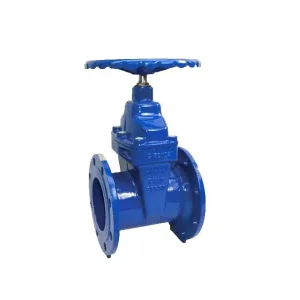
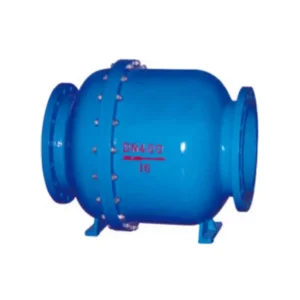
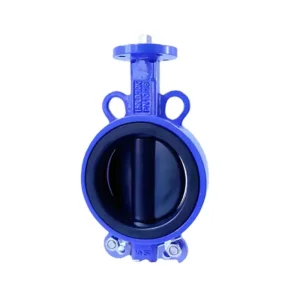
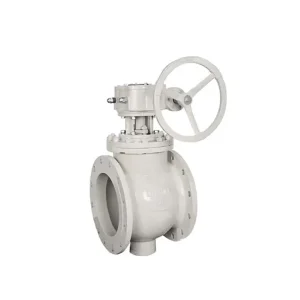
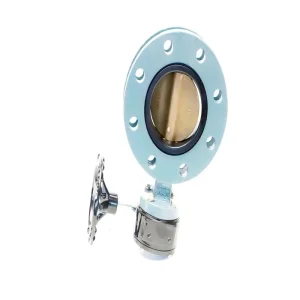
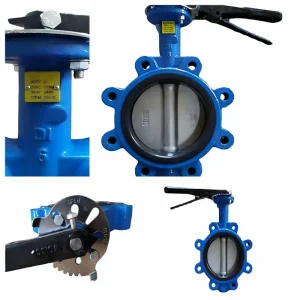
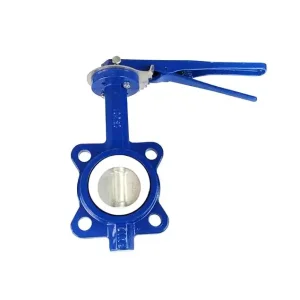
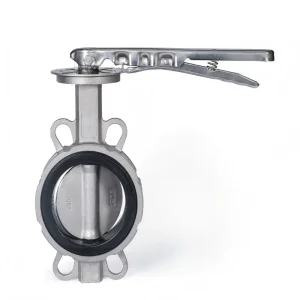
Explore heavy-duty gate, plug, and specialized butterfly valve assemblies ready for bulk procurement and custom project fabrication.
Technical Clarifications
Frequently Asked Questions on Wholesale Bronze Butterfly Valves
Essential guidance compiled by our senior foundry engineers and QA directors to assist mechanical engineers, plant managers, and procurement officers.
What are the key metallurgical differences between Aluminum Bronze C95800 and Tin Bronze RG5/RG10?
ASTM B148 C95800 is a Nickel Aluminum Bronze (NAB) containing approximately 81% copper, 9% aluminum, 4% iron, 4% nickel, and 1% manganese. It is specifically formulated for high-velocity seawater applications, offering superior mechanical yield strength (≥240 MPa vs. ~130 MPa for RG5) and excellent resistance to cavitation impingement. In contrast, Tin Bronze (such as Gunmetal RG5 / CuSn5Zn5Pb5) is softer, easier to cast, and traditionally preferred in static plumbing or sanitary bronze fittings with lower mechanical stress.
Why choose an in-house rubber factory for butterfly valve seat compounding?
The resilient seat is the primary wear component of any butterfly valve. By compounding and vulcanizing our own elastomers via Tianjin Dongfang Rubber Factory (established in 1987), we closely control polymer purity, cure cycles, and antioxidant additives. This prevents premature elastomer embrittlement, chloramine degradation, or seat swelling under fluctuating seawater temperatures, ensuring bubble-tight bidirectional shutoff across 20,000+ duty cycles.
Which flange compatibility standards can you accommodate for export projects?
Our CNC machining centers produce body drilling and bolt-hole patterns compatible with EN 1092-1 PN10/PN16/PN25, ASME/ANSI B16.1 Class 125, ASME B16.5 Class 150/300, BS 10 Table D/E, and JIS B2220 5K/10K/16K. Wafer bodies are designed with multi-standard universal locating lugs, while fully-lugged and double-flanged patterns are precision-tapped according to customer-supplied pipeline specifications.
What quality assurance certifications and pressure test documentation do you supply?
Every shipment is accompanied by EN 10204 3.1 inspection certificates, including full optical emission spectrometry chemical analyses, mechanical tensile and elongation test records, and hydrostatic pressure reports (shell test at 1.5× PN, seat test at 1.1× PN per API 598/ISO 5208). Our facility is audited and certified under ISO 9001:2015, ISO 14001, ISO 45001, CE-PED Module H, and holds WRAS certifications for potable drinking water models.
How does pinless disc design enhance butterfly valve service life?
In conventional pinned butterfly valves, through-pins pierce both the disc and stem, introducing potential leak pathways and galvanic corrosion sites where the pin interfaces with different alloy structures. A pinless connection utilizes an internal hexagonal, double-D, or splined drive mechanism encased inside the disc hub. This preserves an unbroken disc face, reduces turbulent fluid eddying, and eliminates stem puncture failure points.
What are typical production lead times and protective packaging for international sea freight?
Standard lead times for wholesale bronze butterfly valves range between 20 and 35 calendar days, supported by our ongoing inventory of cast bronze blanks. Finished valves are cleaned, lubricated with WRAS-compliant food-grade grease, wrapped individually in anti-abrasion bubble wrap, fitted with end flange caps, and securely crated in ISPM-15 heat-treated fumigation-free plywood cases suitable for deep-sea containerized freight.
