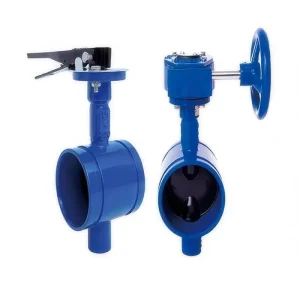
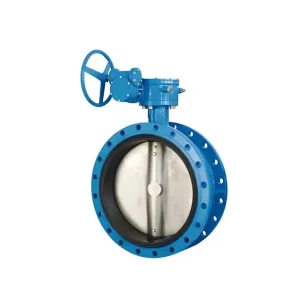
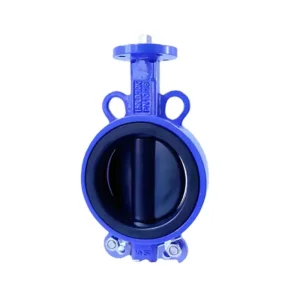
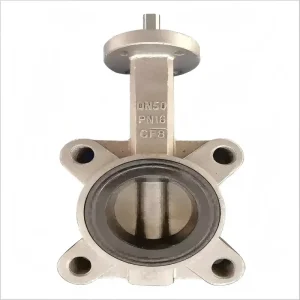
Certified Flow Control & System Isolation Units
Explore high-integrity valves manufactured to stringent dimensional and leakage criteria, deployed across industrial vacuum loops, cooling circuits, and heavy-duty distribution stations.
Executive Analysis: Vacuum Chamber Globe Valve Principles
Decoupling molecular transport from atmospheric intrusion requires an uncompromising metallurgical and kinematic valve design.
The Critical Role of Globe Valves in Ultra-Clean and Industrial Vacuum Enclosures
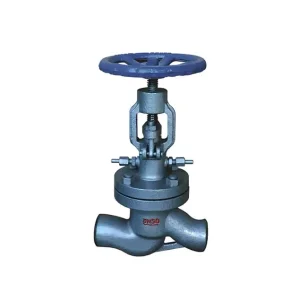
In high-vacuum (HV) and ultra-high-vacuum (UHV) regimes, fluid mechanics transition fundamentally from continuous viscous flow to molecular effusion. Under these operational conditions, conventional mechanical valves exhibit micro-channel permeation, outgassing phenomena, and atmospheric stem ingression that collapse vacuum chamber pressures. A vacuum chamber used globe valve is uniquely engineered to overcome these physical constraints through linear-motion seating, eliminating the scrubbing friction typical of quarter-turn mechanisms and preserving elastomer or metal gasket matrices across hundreds of thousands of duty cycles.
Industrial globe valves configured for vacuum chamber service must manage asymmetric pressure gradients where positive pressure exists on one side during venting or system regeneration, while near-absolute vacuum (down to 10⁻⁷ Pa) dominates the interior plenum. The internal disc and seat geometry must provide laminar flow conductivity during evacuation cycles while guaranteeing absolute hermetic shut-off when separating reaction spaces from turbomolecular pumps, roughing loops, or process gas manifolds.
Hermetic Bellows Sealing
Traditional packing glands fail under molecular vacuum due to microscopic interstitial voids. Modern vacuum globe valves integrate hydroformed or edge-welded AM-350 / 316L stainless steel bellows assemblies that isolate the dynamic stem stroke completely from the chamber atmosphere.
- Zero atmospheric infiltration across linear stroke
- Multi-ply bellows rated up to 150,000 continuous full actuations
- Secondary elastomeric O-ring backup with sniff ports
Water-Sealed & Cryogenic Bonnets
For high-temperature thermal processing or cryo-condensation chambers, water-cooled or extended jacketed bonnets maintain elastomer seal integrity by stabilizing local seat temperatures and preventing cyclic thermal degradation.
- Integral fluid jackets dissipating radiant thermal loads
- Prevention of thermal runaway on fluoropolymer seal rings
- Operating range compatibility: -196°C to +450°C
Ultra-Low Outgassing Metallurgy
Forged 304L, 316L, and electropolished Hastelloy body materials minimize microscopic porosity and volatile inclusions. Vacuum-remelted steels undergo electrochemical passivation to curb desorption of trapped hydrogen and carbonaceous species.
- Electropolished bore surfaces achieving Ra ≤ 0.2 μm
- Nitrogen/Argon vacuum degreasing and ultrasonic clean-room packaging
- Negligible virtual leak formation inside dead cavity zones
Strategic Factory Advantages of Chinese Valve Manufacturing Hubs
From metallurgical foundries in Tianjin to automated five-axis cleanroom machining centers, Chinese production hubs deliver unmatched cost-to-performance efficiency for global vacuum infrastructure.
Integrated Foundries
Tier-1 Chinese factories leverage localized investment-casting foundries and precision vacuum induction melting (VIM). Controlling virgin ingots directly guarantees chemical stoichiometry, eliminating subterranean shrink cavities that trigger catastrophic vacuum wall failures.
Elastomer Formulations
Clusters in Tianjin maintain domestic rubber vulcanization labs formulating specialized low-outgassing FKM (Viton), FFKM (Kalrez grade equivalents), and high-purity EPDM. This in-house compounding cuts vulcanization time while ensuring compression-set stability.
5-Axis CNC Precision
State-of-the-art horizontal and multi-spindle machining centers complete body chamber boring, flange surfacing, and guide stem profiling in a single setup. Eliminating re-clamping yields concentricity errors below 0.005 mm across large valve bodies.
Cost-Scale Optimization
Comprehensive vertical integration removes third-party subcontracting margins. Global OEMs achieve a 30% to 45% capital expenditure reduction on bulk pipeline and vacuum envelope components without conceding helium leak verification rigor.
Technical Comparison Matrix: Industrial vs. Vacuum Globe Configurations
Compare standard fluidic isolation valves with specialized vacuum-chamber-rated globe valves across mechanical, operational, and leakage metrics.
| Performance Parameter | Standard Industrial Globe Valve | High-Vacuum Bellows Globe Valve | Water-Sealed Vacuum Globe Valve |
|---|---|---|---|
| Operating Pressure Domain | Atmospheric to 40 MPa (Positive) | 1×10⁻⁷ Pa to 1.6 MPa (Bi-directional) | 1×10⁻⁴ Pa to 2.5 MPa (Saturated Steam/Vac) |
| Helium Mass-Spec Leak Rate | ≤ 1×10⁻⁴ mbar·l/s (Bubble Class VI) | ≤ 1×10⁻⁹ mbar·l/s (Hermetic Grade) | ≤ 1×10⁻⁶ mbar·l/s (Water-Barrier Barrier) |
| Stem Sealing Mechanism | Braided PTFE / Die-formed Graphite Packing | Multi-Ply Hydroformed AM-350 / 316L Bellows | Dual O-ring Gland with Pressurized Water Jacket |
| Internal Surface Treatment | Mill Finish / Shot Blast (Ra 3.2 - 6.3 μm) | Electropolished Cleanroom Grade (Ra ≤ 0.2 μm) | Precision Machined / Passivated (Ra ≤ 0.8 μm) |
| Seating Contact Dynamic | Metal-to-Metal or Reinforced PTFE Plug | Fluoropolymer (Kel-F / PEEK) or Metal Knife-Edge | Stellite Hardfaced Disc + Resilient EPDM Insert |
| Venting & Purge Compatibility | Uncontrolled Virtual Cavity Deadspace | Zero-Deadspace Linear Scavenging Channels | Interstage Water Flush / Deaeration Ports |
| Typical Industrial Standards | ASME B16.34, API 602, BS 1873 | ISO 2861, DIN 28404, SEMI E49, ASME BPE | JB/T 3595, DIN EN 12516, ISO 5208 |
Emerging Trends Reshaping High-Vacuum Chamber Isolation
Next-generation processing paradigms demand intelligent feedback, higher chemical durability, and particle-free operation.
Smart Actuation & IoT Sensing
Digitalization is transforming vacuum chamber globe valves into telemetry-generating cyber-physical components. Modern pneumatic and stepper-driven actuators now house piezo-electric position sensors and micro-transducers that measure bellows deflection, operating torque anomalies, and chamber cycle counts in real time. Predictive maintenance algorithms detect micro-fissure formation in bellows convolutes hundreds of hours before helium leakage occurs.
Atomic Layer Deposition (ALD) Barriers
As semiconductor geometries shrink below 3 nanometers, reactive halogen precursor gases (fluorinated plasmas, chlorine cleans) degrade standard stainless steels, releasing trace metallic contaminations into vacuum chambers. Valve factories now apply ultra-thin conformal alumina (Al₂O₃) and yttria (Y₂O₃) nanocoatings via ALD onto internal globe surfaces, extending valve component lifespan by over 400% against corrosive fluorine attacks.
Particle-Free Kinematics
Frictional shedding of sub-micron particles inside clean vacuum envelopes ruins microelectronic yield. Next-generation linear globe designs eliminate rotating rubbing guides, adopting friction-free magnetic guidance couplings and flexure hinges. Valve disc landing velocities are carefully dampened via electro-pneumatic profile decelerators to eliminate micro-impact splatter.
Localized Application Scenarios & Operational Integration
Specific field configurations where specialized vacuum globe valves serve as the linchpin of process stability and system protection.
Semiconductor Etch & CVD
Mounted directly between wafer load-lock chambers and main process reaction chambers, globe valves regulate nitrogen purges and rough vacuum pump-down cycles. Their linear throttling characteristics prevent turbulence that dislodges airborne particulate contamination onto silicon wafers during atmospheric repressurization.
Vacuum Metallurgy & Sintering
In vacuum induction melting furnaces, electron beam welders, and hot isostatic pressing (HIP) units, hot metal vapors and carbon particulates condense on cooler valve internals. Water-sealed globe valves withstand high radiated thermal flux while maintaining leak-tight seals during intense smelting cycles.
Cryogenic Insulation Jackets
Liquefied natural gas (LNG) cold boxes, liquid hydrogen fuel tanks, and superconducting quantum computer cryostats rely on high-vacuum double-wall insulation jackets. Globe valves equipped with extended thermal stems govern evacuation, helium leak tracking, and vacuum regeneration manifold loops.
Macro-Scale Solutions for Global Heavy Industry Infrastructure
How factory-direct manufacturing partnerships address high-consequence operational challenges in global industrial ecosystems.
Thermal & Nuclear Power Station Condenser Deaeration
In power generation facilities, main steam turbine condenser systems operate at deep vacuum (typically 3 to 5 kPa absolute). Any leakage of non-condensable atmospheric air through steam cycle isolation valves lowers thermal heat transfer coefficients, raises turbine backpressure, and induces boiler feed-water corrosion. Specialized water-sealed vacuum globe valves utilize pressurized condensate injection into the valve bonnet chamber, ensuring that any packing micro-fissure draws pure demineralized sealing water inward rather than pulling air into the steam-water envelope.
Aerospace Space Simulation Enclosures (Thermal Vacuum Chambers - TVAC)
Testing satellite payloads, optical telescope modules, and deep-space thrusters requires sprawling vacuum test chambers replicating low Earth orbit (LEO) and interplanetary pressures (10⁻⁴ to 10⁻⁸ mbar). Chinese manufacturing plants supply massive DN200 to DN600 high-conductance bellows globe valves engineered for rapid pump-down manifold throttling and rapid-vent nitrogen repressurization, built using forged 316LN bodies with zero residual magnetism.
Biopharmaceutical Lyophilization (Freeze-Drying) Platforms
In high-throughput sterile lyophilizer chambers, bulk injectable drugs undergo cryogenic freezing followed by deep vacuum sublimation. The isolation globe valves connecting condenser coils to drying chambers must withstand clean-in-place (CIP) and steam-in-place (SIP) sterilization cycles up to 134°C without shedding elastomer particulates or trapping product residue. Electro-polished 316L bellows globe designs satisfy ASME BPE bioprocessing criteria with full self-draining angles.
Global EPC & OEM Procurement Checklist: Auditing Factory Capabilities
Procuring specialized vacuum globe valves from international factories requires a multi-layered verification strategy spanning material integrity, helium mass spectrometry, and clean packaging protocols.
1. Metallurgical Traceability
Demand EN 10204 3.1 or 3.2 material test reports certifying chemical melt composition, delta ferrite content (≤ 1% for non-magnetic vacuum service), and Charpy impact toughness. Confirm zero porosity through radiographic (RT) or ultrasonic (UT) inspection reports of all raw forgings and castings.
2. Helium Leak Verification
Never rely on hydrostatic pressure testing alone. Every vacuum valve must be subjected to helium mass spectrometer leak testing adhering to DIN EN 1779 or ASTM E498. Both outward sniffing and inward evacuation hood methods must demonstrate leakage rates under 1×10⁻⁹ mbar·l/s at dynamic stroke cycles.
3. Class 100 Cleanroom Packaging
Post-machining residue, hydrocarbon lubricants, and lint contamination ruin vacuum systems. High-caliber factories implement multi-stage ultrasonic degreasing with deionized water rinses, followed by drying and double-polyethylene vacuum bag heat-sealing inside an ISO 14644-1 Class 5 (Class 100) cleanroom environment.
Frequently Asked Questions (FAQ) for Vacuum Valve Engineers
In-depth technical answers regarding vacuum chamber globe valve selection, life cycles, conductance calculations, and installation practices.
Why are globe valves preferred over ball or butterfly valves in specific vacuum chamber loops?
While butterfly and ball valves provide high flow conductance, their 90-degree rotational shear action creates significant frictional wear against elastomeric or polymer seats, generating microscopic particle debris and compromising seal integrity over time. In contrast, a globe valve utilizes a perpendicular, linear-motion disc closing mechanism. The seat seal is compressed without rotational dragging or tearing, ensuring exceptional cycle longevity. Furthermore, globe valve designs integrate edge-welded metallic bellows along the stem stroke, completely eliminating dynamic elastomer stem packing glands which represent the primary vulnerability for atmospheric gas permeation into high-vacuum enclosures.
What is a "virtual leak" in a vacuum chamber valve, and how is it engineered out?
A virtual leak is the slow, continuous release of trapped gas molecules from a microscopic void, blind tapped screw hole, or unvented seam inside the valve assembly into the vacuum chamber. It mimics an atmospheric leak during pump-down curves without an actual breach to the ambient environment. In quality vacuum globe valve factories, virtual leaks are engineered out by utilizing center-drilled venting fasteners, designing blind holes with relief channels, polishing internal weld roots, and ensuring all seat retaining rings have precision gas escape channels that allow instantaneous evacuation during roughing stages.
How do edge-welded bellows compare to hydroformed bellows in vacuum globe valves?
Hydroformed bellows are manufactured by hydraulically expanding a thin-walled cylindrical tube into corrugated profiles. They offer high mechanical burst strength, lower manufacturing cost, and are well suited for medium-stroke industrial vacuum applications. However, their stroke-to-length ratio is limited (typically 20% to 30%). Edge-welded bellows are fabricated by stamping individual diaphragm rings from precipitation-hardened alloys (like AM-350 or Inconel 718) and micro-plasma or laser welding the inner and outer diameters. Edge-welded bellows provide extreme compressibility (allowing up to a 70% stroke-to-length ratio) and an operating life exceeding 250,000 cycles, making them the standard for ultra-clean semiconductor wafer chamber applications.
What is the operational purpose of a water-sealed bonnet on a vacuum globe valve?
In thermal power plant condensers and saturated vacuum steam piping, complete air exclusion is vital to prevent condenser tube blanketing and thermal performance loss. A water-sealed globe valve incorporates a double-layer packing gland chamber or an extended bonnet filled with pressurized water (typically supplied from the clean condensate cycle at 0.1 to 0.3 MPa above ambient pressure). If the outer packing gland wears or experiences thermal cycling, pure condensate water is drawn inward as a micro-barrier rather than atmospheric air. This hydraulic seal isolates the internal sub-atmospheric vacuum pipeline from the atmosphere entirely.
How is flow conductance calculated for a vacuum chamber globe valve in the molecular regime?
In the free molecular flow regime (where the Knudsen number Kn > 0.5 and mean free path exceeds valve internal conduit dimensions), conductance C depends solely on the molecular velocity of the gas and internal valve geometry, independent of gas pressure. The effective conductance is calculated by treating the globe body as an aperture in series with an angled duct: 1/C_total = 1/C_orifice + 1/C_duct. Because the standard tortuous S-path of an industrial globe valve creates transmission probabilities (Clausing factor) between 0.2 and 0.4, vacuum-specialized globe valves feature contoured Y-pattern bodies or enlarged angled disc profiles that maximize the direct line-of-sight aperture and significantly increase molecular transmission speeds during chamber evacuation.
Which flange connection standards are universally utilized for vacuum chamber globe valves?
Vacuum chamber globe valves utilize standard connection interfaces based on the target pressure regime:
1. ISO-KF (QF/NW): Used for quick-clamp connections up to DN50 in rough to high-vacuum loops (down to 10⁻⁶ Pa) utilizing centering rings and fluoroelastomer (FKM) O-rings.
2. ISO-K / ISO-F: Used for larger diameters (DN63 to DN500) featuring claw-clamp or bolted flange rings with elastomeric sealing.
3. CF (ConFlat): For ultra-high-vacuum (UHV down to 10⁻¹⁰ Pa), featuring precision-machined capture knife-edges that bite into oxygen-free electronic grade copper (OFHC) gaskets.
4. Standard Flanged (ASME B16.5 / EN 1092-1): Commonly used for industrial vacuum services, power station condensers, and water-sealed applications requiring robust structural bolting.
Industrial Pipeline & Severe Duty Valve Solutions
Engineered for high-pressure fluid redirection, corrosive media, and demanding marine and power infrastructure loops.