
Precision Product Portfolio: High-Duty Butterfly & Fluid Isolation
Direct factory-machined valves featuring CNC-contoured discs, proprietary seat bonding, and rigorous 100% shell & seat hydro-testing.
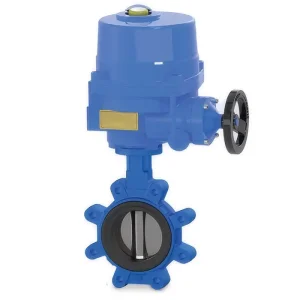
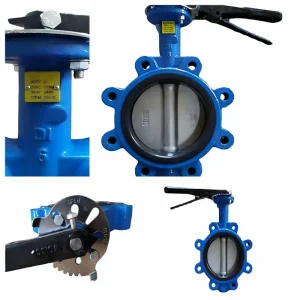
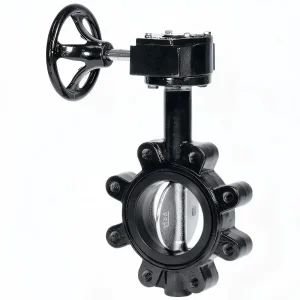
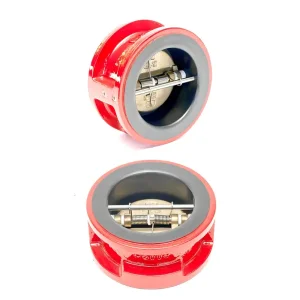
The Global Stainless Steel Butterfly Valve Landscape
Analyzing macroeconomic demand, metallurgical transitions, and supply chain rationalization across tier-1 international processing sectors.
In modern industrial fluid handling, the transition from conventional carbon steel and ductile iron toward austenitic (CF8/CF8M), duplex (2205), and super-austenitic stainless steel butterfly valves represents an industry-wide pivot toward uncompromising corrosion resistance and lifecycle cost optimization. Across the international landscape, engineering, procurement, and construction (EPC) contractors are no longer evaluating industrial valves solely on capital expenditure (CAPEX). Instead, total cost of ownership (TCO)—governed by mean time between failures (MTBF), fugitive emission minimization, and resistance to chloride stress corrosion cracking (CSCC)—has become the defining procurement metric.
In mature European and North American processing hubs, aging municipal water networks and chemical refineries are mandating certified lead-free, WRAS-approved, and low-torque quarter-turn flow control devices to eliminate catastrophic pipe bursts and minimize pumping energy losses. Concurrently, rapid industrialization across the Asia-Pacific region, coupled with massive seawater reverse osmosis (SWRO) desalination megaprojects in the Middle East, has catalyzed unprecedented demand for specialized stainless alloys capable of withstanding pitting resistance equivalent numbers (PREN) above 35. As a vertically integrated manufacturer managing in-house foundries, precision CNC machining, and proprietary elastomer compounding since 1987, Tianjin Top Automation Equipment Co., Ltd. bridges the critical gap between raw metallurgical precision and dependable field performance.
Material Science: Selecting the Correct Stainless Alloy
Evaluating chemical composition, mechanical tensile limits, and corrosive media suitability across stainless steel grades.
| Casting Grade (ASTM) | Wrought Equivalent | PREN Value | Yield Strength (MPa) | Primary Chemical Resistances | Target Industrial Environments |
|---|---|---|---|---|---|
| ASTM A351 CF8 | AISI 304 | ~18.0 - 20.0 | ≥ 205 | Oxidizing acids, potable water, mild industrial solvents, organic chemicals. | Municipal potable water (WRAS), HVAC hydronic loops, food & beverage processing. |
| ASTM A351 CF8M | AISI 316 | ~23.0 - 25.0 | ≥ 205 | 2-3% Molybdenum content provides resistance to localized pitting from dilute chlorides and sulfurous acids. | Chemical processing plants, coastal water intake, pharmaceutical API production, wastewater treatment. |
| ASTM A351 CF3M | AISI 316L | ~23.5 - 25.5 | ≥ 205 | Ultra-low carbon (≤0.03%) eliminates intergranular carbide precipitation during welding and high-temp cycles. | High-purity sanitary systems, biotech clean steam, marine scrubber discharge lines. |
| ASTM A890 4A (CD3MN) | 2205 Duplex (UNS S32205) | ≥ 34.0 - 36.0 | ≥ 450 | Ferritic-austenitic 50/50 microstructure delivers double the mechanical yield and exceptional resistance to chloride CSCC. | Seawater reverse osmosis (SWRO) high-pressure isolation, offshore oil & gas rigs, marine ballast piping. |
| ASTM A890 5A / 6A | 2507 Super Duplex (UNS S32750) | ≥ 42.0 | ≥ 550 | High Cr, Mo, and N composition; virtually immune to crevice corrosion and pitting in hyper-saline brine. | Desalination brine reject headers, subsea manifolds, aggressive sulfuric acid leaching plants. |
The structural efficacy of a stainless steel butterfly valve relies not merely on chemical metallurgy, but on the geometric precision of the disc profile and shaft retention system. Tianjin Top Valve utilizes a pinless disc-to-stem drive connection across high-performance resilient seated models. By utilizing precision-broached internal spline or double-D shaft interfaces, our valves eliminate the through-pins commonly found in budget valves. This engineering choice eliminates external leak paths through the disc core, prevents galvanic crevice corrosion around pin seals, and guarantees uncompromised bidirectional shutoff even under turbulent fluid flow velocities up to 5 m/s.
Strategic Engineering Trends Reshaping Industrial Flow Isolation
From digitalized smart actuator interfaces to ISO 15848-1 certified zero-fugitive emissions and advanced polymer lining.
Fugitive Emission Containment
Global decarbonization and environmental EPA mandates are driving valve stems to comply with ISO 15848-1 Class AH and TA-Luft certifications. Our dual-cup live-loaded PTFE and graphite packing sets eliminate VOC atmospheric discharge.
- Belleville spring energized stem packing
- Dynamic blowout-proof internal stem collar
- Helium mass spectrometer leak rate < 10⁻⁴ mbar·l/s
Smart Actuation & Industrial IoT
The modernization of Industry 4.0 plant architectures demands real-time predictive telemetry. Our electric and pneumatic actuators support HART, Modbus, Profibus, and IO-Link protocols for continuous diagnostic feedback.
- Continuous torque profile & seat wear trending
- Partial Stroke Testing (PST) for safety instrumented systems
- SIL-3 safety architecture verification
Virgin Fluoropolymer Lining
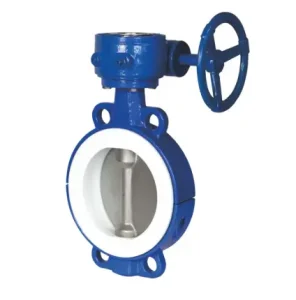
For ultra-corrosive chemical handling involving concentrated nitric, hydrofluoric, or sulfuric acids, our PTFE/PFA fully lined stainless valves isolate fluid contact entirely from the metal casting substrate.
- Minimum 3.0mm virgin PTFE / PFA liner thickness
- High-voltage 20kV spark pore detection
- Resilient silicone backing energizer for thermal cycling
Engineered Application Scenarios: Severe Duty Verification
Field-proven performance across critical process parameters, corrosive chemistries, and stringent sanitary standards.
Municipal Potable Water Networks
Challenge: Biofilm formation, heavy dezincification, and strict chemical leaching thresholds for lead and organic plasticizers under EN 12266 and BS 6920.
Solution: Tianjin Top Valve's WRAS-approved 4020G and 4325L series feature precision CF8/CF8M discs paired with group-formulated in-house EPDM liners. These provide zero organic taste/odor leaching and achieve Class A bubble-tight sealing across 200,000 continuous test cycles.
Seawater Desalination (SWRO)
Challenge: Extreme chloride concentrations (up to 45,000 ppm TDS) operating under high pressures (60–80 bar) that induce rapid crevice corrosion and pitting on standard steels.
Solution: Heavy-wall 2205 Duplex and 2507 Super Duplex disc and body configurations. Precision hydrodynamic disc profiling minimizes localized vortex turbulence, curbing cavitation damage and lowering pumping power draw by up to 14%.
Specialty Chemicals & Acids
Challenge: Aggressive acid feeds, chlor-alkali streams, and organic solvents that rapidly degrade ordinary elastomeric seals and oxidize standard carbon steel casings.
Solution: Full-body PTFE-lined stainless steel butterfly valves. Our factory utilizes high-density, isostatically moulded virgin PTFE/PFA liners mechanically anchored into the CF8M casting, maintaining continuous vacuum resistance up to 180°C.
Pharmaceutical & Sanitary
Challenge: Strict Clean-In-Place (CIP) and Steam-In-Place (SIP) thermal cycling requiring ultra-smooth finishes to prevent bacterial accumulation.
Solution: Electropolished CF3M (316L) disc profiles buffed down to Ra < 0.4 μm. Configured with FDA-compliant silicone or virgin PTFE seats, ensuring total sanitization without pocket dead zones or elastomer shedding.
Offshore Marine & Shipbuilding
Challenge: High salinity, turbulent ballast cycles, continuous exterior salt spray, and extreme torsional mechanical hull stresses.
Solution: Flanged and lugged butterfly valves combining CF8M bodies with nickel-aluminum bronze (C95800) or 316 discs. Type-approved for ballast control, marine fire sprinkler mains, and bilge stripping manifolds.
Cryogenic & Clean Energy
Challenge: Cryogenic LNG, liquid nitrogen, and green hydrogen streams operating down to -196°C where rubber undergoes severe embrittlement.
Solution: Triple-eccentric stainless steel valves featuring extended bonnets for vapor space insulation, combined with Stellite® hard-faced metal seats meeting API 598 zero-leakage requirements under thermal shock.
Macro Fluid Engineering: Cv Sizing, Water Hammer, and Head Loss
Scientific parameter calculations to eliminate pipeline cavitation, prevent transient pressure surges, and balance flow circuits.
A frequent error encountered in piping network design is selecting butterfly valves based solely on nominal pipe size (NPS) rather than calculating the precise Flow Coefficient (Cv / Kv) and Cavitation Index (σ). When oversized, butterfly valves operate at low disc opening angles (<25°), resulting in severe cavitation, localized fluid jetting, premature seat erosion, and uncontrollable hunting in automated loops.
Tianjin Top Valve's engineering desk collaborates directly with EPC piping design teams to optimize valve disc profiles based on the fundamental fluid dynamics formula:
Where Q represents flow rate in GPM, SG is specific gravity of the liquid media, and ΔP is allowable pressure drop in PSI across the valve. In transient network simulations, rapid closure of quarter-turn valves risks triggering catastrophic hydraulic water hammer (Joukowsky pressure wave: ΔP = ρ · c · Δv). By coupling our worm gear operators and electric actuators with tailored variable-speed opening/closing cams, our valve assemblies decelerate precisely across the final 15% of disc travel. This dampens shockwaves and safeguards pipeline integrity without compromising shutdown times.
Engineering Roadmap: 2025–2035 Technology Milestones
Targeted manufacturing advancements in additive metallurgy, automated robotics, and zero-carbon casting processes.
Advanced Micro-Alloy Casting
Adoption of automated vacuum-assisted induction casting to reduce internal gas porosity, minimize ferrite content fluctuations, and deliver consistent microstructure grain sizes in CF8M/CF3M bodies.
3D Laser Cladded Stellite® Discs
Transitioning from manual welding to robotic 5-axis laser cladding for disc seating faces. Delivers an ultra-dense, void-free Stellite Grade 6 overlay with Rockwell hardness ≥ 42 HRC for abrasive slurry isolation.
Nano-Graphene Packing Matrices
Integrating graphene-enhanced fluoropolymer shaft packing rings capable of withstanding 500,000 thermal-mechanical cycles without gland re-torquing, complying with future fugitive emissions limits.
Integrated Ultrasonic Flow Telemetry
Embedding acoustic and piezoelectric sensor arrays directly into the valve neck to enable real-time cavitation, localized wall thickness, and fluid velocity monitoring sent via LoRaWAN/NB-IoT.
Vertically Integrated Manufacturing & Testing Rigor
In-house foundry, proprietary rubber vulcanization, and documented quality controls from raw ingot to final export crate.
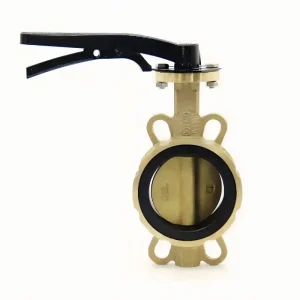
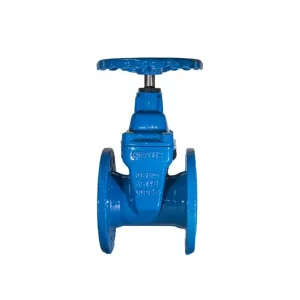
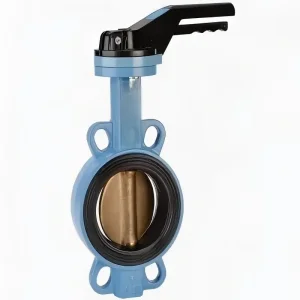
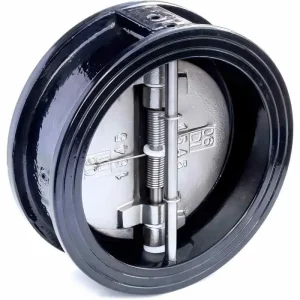
High-Pressure, Metal-Seated & Pipeline Control Range
Explore our heavy-duty industrial valve portfolio engineered for extreme pressures, anti-abrasion duties, and robust backflow prevention.
Frequently Asked Questions: Industrial Procurement & Specification
In-depth answers addressing standards compliance, materials selection, pressure ratings, and operating mechanics.
What are the structural distinctions between concentric, double-offset, and triple-offset stainless butterfly valves?
Concentric butterfly valves feature a centered disc and stem design where the disc seals directly against a resilient elastomer (EPDM, NBR, Viton) or PTFE liner, suitable for low to medium pressure duties (PN10/PN16/Class 150). Double-offset (high-performance) valves displace the stem both behind the disc plane and to one side, minimizing seat rubbing during opening and extending cycle life in higher pressures (up to Class 300). Triple-offset valves (TOV) introduce a third offset: a conical machining angle on the seating axis. This geometry enables friction-free camming action until final closure, permitting all-metal Stellite® seating capable of bi-directional zero-leakage in extreme temperatures (-196°C to +550°C) and high pressures up to Class 600 (PN100).
When should an engineer specify CF8M (316) instead of standard CF8 (304)?
CF8M incorporates 2.0% to 3.0% molybdenum, elevating its Pitting Resistance Equivalent Number (PREN) above 23, compared to approximately 18-20 for CF8. Engineers should explicitly specify CF8M when the fluid contains chlorides exceeding 200 ppm, coastal/marine atmospheric salt spray, sulfuric acid condensates, or industrial solvents. While CF8 is well-suited for general potable water, municipal heating, and mild food & beverage duties, CF8M prevents rapid pitting and crevice corrosion under stagnant fluid conditions or high-temperature operating cycles.
How does in-house rubber seat manufacturing benefit valve lifespan?
Most valve assemblers procure rubber seats from third-party suppliers, which can introduce variations in polymer batches, vulcanization densities, and durometer hardness. Because our parent group operates Tianjin Dongfang Rubber Factory (established in 1987), we control polymer formulation, carbon black dispersion, and sulfur curing in-house. This ensures precise Shore A hardness (typically 70 ± 5) and compression set (≤18% after 70 hrs at 100°C), preventing the seat tearing, swelling, or premature compression fatigue that causes internal line bypass.
What international flange drilling standards can your factory accommodate?
Tianjin Top Valve manufactures multi-standard and dedicated universal body castings compatible with EN 1092-1 PN6/PN10/PN16/PN25, ASME B16.5 Class 125/150/300, BS 10 Tables D and E, as well as JIS B2220 10K/16K. Wafer bodies incorporate locating lug holes to streamline pipeline centering, while full-lug and double-flanged patterns feature drilled or tapped threads meeting project-specific engineering documentation.
Why is a pinless disc design superior to traditional pinned disc shafts?
Traditional butterfly valve discs use taper pins driven through both the disc and stem to transmit torque. In corrosive environments, vibration and galvanic potential differences cause pins to loosen, corrode, or shear. The resulting pin holes introduce internal leak paths through the disc core. Our pinless designs utilize internal square, double-D, or splined shaft connections completely isolated from the line media, ensuring clean fluid contact, zero pin leakage, and significantly simplified seat maintenance.
What certifications support your valves for potable water and European installations?
Our municipal and commercial water range holds formal WRAS approval (Water Regulations Advisory Scheme) verifying compliance with BS 6920 for non-metallic components contacting drinking water. Furthermore, all pressure-retaining bodies conform to the European Pressure Equipment Directive (CE-PED 2014/68/EU Module H) and ISO 9001:2015 quality assurance frameworks. Full material test reports (MTR) according to EN 10204 3.1 accompany every export batch.
Can PTFE-lined butterfly valves handle full vacuum service conditions?
Standard loose PTFE liners can collapse inward under severe vacuum. For full vacuum duties (down to 0.1 mbar abs), Tianjin Top Valve manufactures mechanically energized liners where the virgin PTFE or PFA is anchored directly to the casting via internal dovetail body grooves or cast-in retention ribs. Coupled with a resilient silicone or Viton backing energizer, our lined valves maintain complete dimensional stability across full thermal and negative-pressure cycles.
What is the standard manufacturing lead time for project-scale valve batches?
Standard wafer and lug butterfly valves (sizes DN50 to DN300 in CF8/CF8M) maintain a steady production schedule of 15 to 25 calendar days, supported by our extensive raw casting inventory. Large-diameter valves (up to DN2000), special alloys (2205 Duplex, Hastelloy), or custom-actuated assemblies requiring automated testing and third-party inspection (SGS, TÜV, Lloyd's Register) are typically delivered within 30 to 45 business days via Tianjin Port.
