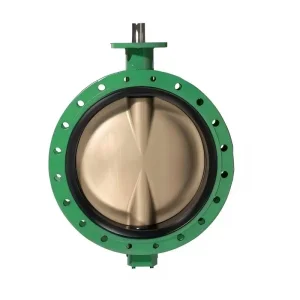
Engineered Valve Solutions (Part I)
Explore high-integrity isolation and flow-control assemblies manufactured in accordance with strict international pressure equipment directives and municipal quality approvals.
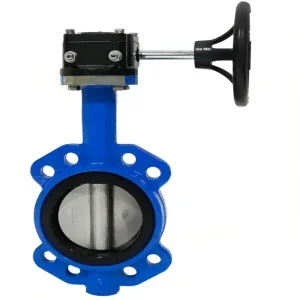
CE Certification Wafer Butterfly Valve, Water Usage Butterfly Valve Suppliers, Factories
Explore Valve Specifications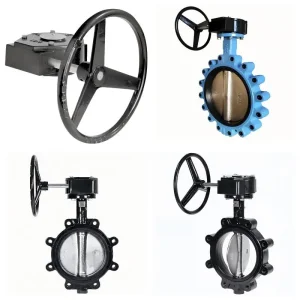
Wholesale WRAS Approved Lug Type Butterfly Valve 4325G Supplier, Factories
Explore Valve Specifications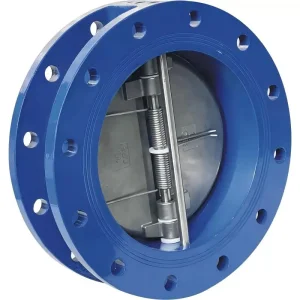
CE Certification Dual Plate Check Valve, Reliable Backflow Prevention Device Suppliers, Manufacturer
Explore Valve Specifications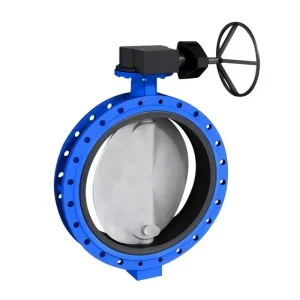
Wholesale High-Quality U Section Butterfly Valve for Reliable Flow Control Suppliers, Manufacturer
Explore Valve Specifications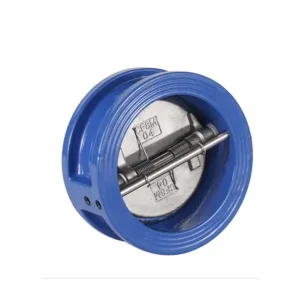
High-Quality High - Performance Dual Plate Wafer Check Valve for High - Flow Pipeline Systems Manufacturer, Factory
Explore Valve Specifications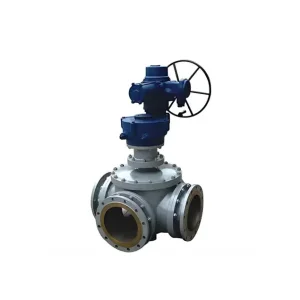
CE Certification Quick - Opening Three - Way Flange Ball Valve for Emergency Fluid Diversion Supplier, Factory
Explore Valve Specifications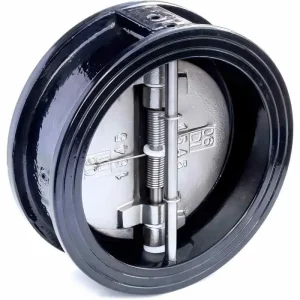
High-Quality High-Quality Wafer Check Valve for Secure Fluid Control Suppliers, Factories
Explore Valve Specifications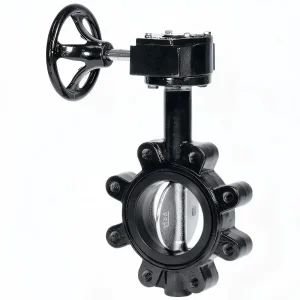
CE Certification Gear Operated Butterfly Valve - Durable & Reliable Supplier Supplier, Factory
Explore Valve SpecificationsEngineering Architecture of Socket Weld Connection Globe Valves
A rigorous examination of design codes, weld joint mechanics, fluid dynamics, and metallurgical boundaries governing ASME B16.11 and API 602 forged steel globe valves.
In critical fluid transfer circuits where pipe diameters range between DN15 and DN50 (NPS 1/2" to 2") and operational pressures exceed ANSI Class 800, Class 1500, or Class 2500, flanged connections introduce inherent mechanical vulnerability. Flanged joints require regular gasket replacement, bolt torque recalibration, and present potential leak paths under severe thermal transients. The Socket Weld (SW) connection globe valve eliminates gasket degradation entirely by fusing the valve body directly to the high-pressure pipeline via circumferential fillet welds executed in accordance with ASME Section IX.
Unlike quarter-turn valves that exhibit steep parabolic flow characteristics, socket weld globe valves feature a linear motion disc configured perpendicular to the fluid flow path. This geometry provides superior flow-throttling resolution, repeatable fine regulation, and reliable high-differential shut-off. Whether deployed in superheated steam boiler feed loops, high-pressure hydrogen desulfurization circuits, or volatile chemical transport, the structural rigidity of forged steel (such as ASTM A105N, A182 F22, or A182 F316L) ensures exceptional creep resistance and dimensional stability under high cycle loads.
Critical Engineering Components & Sealing Triad
Examining the structural subsystems that guarantee zero seat bypass and prevent catastrophic stem failure under extreme operational environments.
Bonnet Joint Topologies
The boundary between the valve body and bonnet determines long-term containment integrity under thermal cycling:
- Bolted Bonnet (BB): Spiral wound gasket with SS316 + flexible graphite for rapid inline serviceability.
- Welded Bonnet (WB): Full penetration hermetic seal weld completely eliminating fugitive emission leak paths.
- Pressure Seal Bonnet (PSB): Internal system pressure activates the sealing wedge, increasing tightness as pressure climbs.
Trim Metallurgy & Discs
Trim wear resistance is critical to counteract high-velocity fluid erosion and seat wire-drawing:
- Stellite 6 Hardfacing: Disc and integral seat overlay with cobalt-chromium alloy to resist cavitation erosion up to 550°C.
- Plug Disc Profiles: Precision-tapered for linear flow regulation and fine throttling applications.
- Needle & Parabolic Discs: Machined for high-pressure instrument isolation and micro-flow control.
Stem Dynamics & Packing
Precision-ground stems with outside screw and yoke (OS&Y) ensure lubrication isolation from process fluid:
- Acme Threads: Heavy-duty cold-rolled threads prevent thread galling under high-torque manual or motor actuation.
- Integral Backseat: Allows repacking under pressure when the valve is in the full-open position.
- Die-Formed Graphite Rings: High-purity flexible graphite packing rings with anti-extrusion braided carbon end rings.
| Body Material (ASTM) | Working Pressure Class | Temperature Envelope | Seat Hardfacing | Primary Industrial Application |
|---|---|---|---|---|
| ASTM A105N (Forged Carbon) | Class 800 / 1500 | -29°C to 425°C | 13Cr (API Trim 8) / HF Stellite 6 | General Hydrocarbon, Boiler Feed, Steam Mains |
| ASTM A182 F22 (2.25Cr-1Mo) | Class 1500 / 2500 | -29°C to 593°C | Stellite 6 (API Trim 5) | Superheated Steam, Reheat Piping, Power Stations |
| ASTM A182 F91 (9Cr-1Mo-V) | Class 2500 / 4500 | -29°C to 650°C | Full Stellite 6 / Tribaloy | Supercritical Coal & Combined Cycle Power Turbines |
| ASTM A182 F316L (Austenitic) | Class 800 / 1500 | -196°C to 450°C | Stellite 6 / Gr. 316 | Cryogenic LNG, Urea, Harsh Nitric/Organic Acids |
| ASTM A350 LF2 (Low Temp CS) | Class 800 / 1500 | -46°C to 345°C | API Trim 12 (316 / HF) | Arctic Oil Exploration, Sour Gas, Low-Temp Refining |
Global Procurement Needs & Severe Macro Applications
Addressing engineering specifications, fugitive emissions mandates, and cross-industry operational scenarios for Tier-1 EPC contractors and global operators.
Fugitive Emissions: ISO 15848-1
Global environmental legislation mandates severe reductions in volatile organic compound (VOC) emissions. Modern socket weld globe valve procurement requires valves certified to ISO 15848-1 Class AH/BH or API 624. Achieving leakage rates below 50 ppmv across 1,500 mechanical strokes requires CNC-burnished stem finishes (Ra ≤ 0.2 μm) and live-loaded Belleville disc spring assemblies that maintain uniform packing compression during severe thermal shocks.
Sour Gas: NACE MR0175 / ISO 15156
Upstream gas processing and refining units containing wet hydrogen sulfide ($H_2S$) are susceptible to Sulfide Stress Cracking (SSC) and Hydrogen-Induced Cracking (HIC). Procurement specifications mandate that socket weld globe valve forgings, bolting, and internal trims adhere strictly to NACE MR0175/ISO 15156. Body materials undergo vacuum degassing and specialized post-weld heat treatment (PWHT) to guarantee maximum hardness levels not exceeding 22 HRC.
High-Pressure Steam & Bypass Systems
In thermal and nuclear power plants, drain lines, superheater bypass loops, and turbine isolation headers subject globe valves to constant water hammer, flashing, and acoustic cavitation. Socket weld globe valves engineered with solid Stellite 6 trim and contour-guided discs eliminate lateral stem vibration, maintaining zero seat leakage during continuous high-velocity steam throttling without seat washing.
Cryogenic & LNG Liquefaction Loops
Liquefied natural gas (-162°C) and cryogenic liquid nitrogen (-196°C) require socket weld globe valves equipped with extended bonnets (vapor columns in compliance with BS 6364). This extension positions the stem packing gland outside the freezing refrigeration boundary, preventing elastomer embrittlement and graphite icing while retaining bubble-tight shut-off via micro-lapped austenitic stainless steel seats.
Technical Roadmap: Next-Generation Valve Innovation
Strategic advancements shaping socket weld globe valve manufacturing through 2030, from additive generative fluid shaping to predictive digital acoustics.
Additive Flow Shaping & Metal 3D Printing
By leveraging Laser Powder Bed Fusion (LPBF), internal valve tortuosity is optimized directly via computational fluid dynamics (CFD). Complex multi-stage pressure reduction trim geometries, once impossible with conventional 5-axis CNC machining, are directly printed into the socket weld globe valve cage. This reduces localized dynamic turbulence, dampens acoustic noise by up to 18 dB, and mitigates cavitation erosion on high-pressure downstream headers.
Predictive Acoustic Emission Monitoring
Transitioning from schedule-based maintenance to predictive integrity monitoring. Next-generation socket weld valves feature embedded piezoelectric acoustic sensors coupled to low-power industrial IoT nodes. By analyzing ultra-high frequency acoustic emissions (100 kHz - 1 MHz), internal turbulent micro-leakage across the seat face is detected weeks before macroscopic thermal degradation occurs, preventing unplanned outages in critical power lines.
Zero-Emission Bellows Seal Technology
For high-hazard lethal fluid services (such as anhydrous ammonia, chlorine, and toxic hydrogen cyanide), multi-ply hydroformed Inconel 625 or Hastelloy C-276 bellows assemblies completely replace conventional dynamic stem packing. Welded to the valve stem at the bottom and the bonnet neck at the top, the metallic bellows forms a completely hermetic barrier capable of enduring >50,000 full stroke cycles with zero external atmospheric leakage.
Hydrogen Infrastructure & Metallurgy
As the global energy sector pivots toward green hydrogen carrier networks, socket weld globe valves are deployed in high-pressure dispensing lines operating up to 70 MPa (700 bar). To counteract hydrogen embrittlement and sub-surface atomic diffusion, materials undergo rigorous nickel-equivalent alloy balancing, electropolishing to Ra ≤ 0.1 μm, and helium vacuum leak testing down to $1 \times 10^{-9}\text{ mbar}\cdot\text{l/s}$.
Global Commercial Status & In-House Manufacturing Superiority
Discover how Tianjin Top Automation Equipment Co., Ltd. combines four decades of industrial heritage, vertical integration, and world-class quality systems.
The modern supply chain for severe-service industrial valves demands strict traceability, rapid production turnaround, and unwavering quality compliance. Operating from the Wuxia Industrial Park in Dongli District, Tianjin, Tianjin Top Automation Equipment Co., Ltd. (established in 2016) represents the commercial crystallization of two foundational heavy-manufacturing pillars: Tianjin Donglian Valve Factory (producing industrial valves since 1996) and Tianjin Dongfang Rubber Factory (compounding technical elastomers since 1987).
Spanning an advanced 23,000 m² campus with over 12,000 m² of covered precision workshops, our vertically integrated manufacturing facility eliminates reliance on third-party casting foundries and outsourced vulcanization shops. While intermediate trading entities face quality gaps and compounding delays, Tianjin Top Valve exercises total command over the entire product lifecycle:
Captive Foundry & Forging Shop
Complete control over chemical composition via vacuum spectrometer analysis before forging and pouring. Ensures body blanks exhibit pristine grain boundaries, zero internal porosity, and uniform structural density that easily withstands high-pressure hydrostatic tests without weeping.
In-House Rubber Plant (Since 1987)
Proprietary elastomer compounding for resilient valve seats (EPDM, NBR, Viton, and PTFE). Controls hardness, vulcanization curves, tensile resilience, and chemical resistance in-house, ensuring decades of bubble-tight performance without hardening or embrittlement.
Precision CNC Machining Centers
Ultra-rigid horizontal and vertical CNC lathe suites turn forged blanks to micron-level dimensional tolerances. Valve disc seating angles and socket pocket depths are finished with single-setup repeatability to ensure flawless pipeline alignment during field fit-up.
Accredited Testing Laboratory
Dedicated physical and chemical testing labs execute 100% shell hydrostatic testing at 1.5× design pressure and high-pressure gas seat testing at 1.1× design pressure in strict adherence to API 598 and EN 12266-1 standards prior to final export packaging.
Regulatory Compliance & Global Project Assurance
Comprehensive international certifications backed by full documentation, non-destructive testing (NDT), and mill test reports (MTR) ensuring risk-free field deployment.
When engineering procurement teams evaluate valve manufacturers, audit transparency is the ultimate differentiator. Tianjin Top Valve holds multi-system management approvals including ISO 9001:2015 (Quality Management), ISO 14001:2015 (Environmental Stewardship), and ISO 45001:2018 (Occupational Health & Safety). Our products maintain CE Conformity under the Pressure Equipment Directive (PED 2014/68/EU Module H), granting unrestricted access to European Union capital projects.
Every socket weld globe valve order is accompanied by an inspection dossier tailored to exact engineering specifications:
Material Test Certification
Comprehensive EN 10204 Type 3.1 inspection certificates provided standard with every shipment, documenting heat number, chemical composition, tensile yield strength, elongation, and Charpy V-notch impact test values at sub-zero temperatures. Optional EN 10204 Type 3.2 third-party inspection (TUV, DNV, Lloyd's Register, BV) accommodated upon request.
Non-Destructive Examination (NDE)
Qualified Level II / III NDT personnel execute Positive Material Identification (PMI via XRF analyzer) on 100% of alloy bodies and trims. Socket weld ends undergo Liquid Penetrant Testing (PT) or Magnetic Particle Examination (MT) per ASME Section V to guarantee zero surface micro-fissuring prior to bevel prep and shipment.
Localized Project & Logistics Hubs
Strategic geographic location adjacent to Tianjin International Seaport provides low-cost maritime container dispatch and express air-freight corridors. Technical application engineers reply to procurement tenders within 24 hours with complete CAD/3D dimensional drawings, sizing calculations (Cv/Kv values), and custom face-to-face adaptation options.
Frequently Asked Questions on Socket Weld Globe Valves
In-depth technical answers addressing installation requirements, welding procedures, maintenance, and pressure equipment selection.
Why is a 1/16-inch (1.6 mm) gap mandatory when installing a socket weld connection globe valve?
During the field welding process, intense localized heat causes both the valve socket wall and the inserted pipe section to expand rapidly. If the pipe is bottomed out flush against the internal shoulder of the socket, differential thermal expansion between the thinner pipe and the heavier valve body creates severe residual axial stress. This stress frequently manifests as radial cracking through the throat of the fillet weld during cooling or subsequent hydrostatic pressure testing. Maintaining a 1/16" (1.6 mm) clearance allows unrestrained longitudinal thermal movement, ensuring weld integrity compliant with ASME B31.1 and B31.3 codes.
How does a globe valve compare to a gate valve in socket weld pipeline applications?
While gate valves are strictly designed for on/off isolation with minimum fluid flow resistance, globe valves are engineered specifically for precise flow regulation, throttling, and frequent cycling. In a globe valve, the disc travels parallel to the flow trajectory across an annular opening, resulting in a direct correlation between stem rotation and flow rate. Although globe valves induce a higher localized pressure drop (higher head loss / lower Cv), their seat faces are far less susceptible to wire-drawing and erosive wear compared to partially cracked gate valves.
What is the standard socket dimension standard for forged steel globe valves?
Socket dimensions are governed internationally by ASME B16.11 (Forged Fittings, Socket-Welding and Threaded). This standard defines the exact socket internal diameter, minimum socket depth, and body wall thickness for pressure classes Class 800, 1500, and 2500, corresponding to pipe schedules SCH 40, SCH 80, SCH 160, and XXS. High-quality manufacturers finish socket bores with precision CNC machining to maintain H9 or tighter tolerance, guaranteeing seamless insertion and concentric alignment with standard seamless pipe.
Can socket weld globe valves be safely repacked while the pipeline is under pressure?
All API 602 and ASME B16.34 socket weld globe valves produced by Tianjin Top Valve are engineered with an integral machined backseat. When the handwheel is driven to the fully open position, the shoulder of the stem engages tightly against the lower bonnet seat, isolating the dynamic packing chamber from internal pipeline pressure. While this safety feature permits emergency packing adjustments, plant safety guidelines generally mandate depressurizing pipelines prior to complete removal and replacement of packing rings, especially in toxic or volatile hydrocarbon service.
Which body and trim materials are recommended for superheated steam at 540°C (1004°F)?
For service temperatures exceeding 425°C (where carbon steel A105N becomes susceptible to graphitization), chrome-moly alloy steel forgings are required. For steam lines at 540°C, ASTM A182 Grade F22 (2.25% Cr - 1% Mo) or ASTM A182 Grade F91 (9% Cr - 1% Mo - V) is specified. The internal trim must utilize full hardfacing with Cobalt-Base Alloy Stellite 6 (API Trim 5) on both the disc and integral body seat to prevent galling, thermal wire-drawing, and oxidation degradation under high differential pressures.
What documentation and traceability dossier accompanies each valve dispatch?
Our standard quality dispatch package includes: (1) EN 10204 Type 3.1 Material Test Reports for all pressure-containing forgings; (2) Hydrostatic Shell and Seat Pressure Test Certificates per API 598 / EN 12266-1; (3) Positive Material Identification (PMI) chemical verification logs; (4) Declaration of Conformity to CE / PED 2014/68/EU Module H; and (5) Installation, Operation, and Maintenance (IOM) engineering manuals. Complete NDT reports (PT, MT, RT, UT) are provided in accordance with client purchase order requisitions.
Engineered Valve Solutions (Part II)
Browse our extensive selection of industrial valves manufactured in-house with full traceability, premium elastomers, and rigorous shell and seat leakage testing.
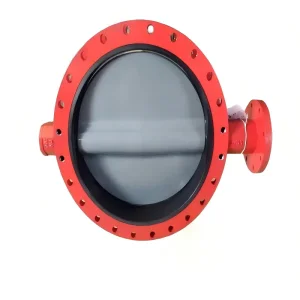
Wholesale Ceramic Disc Wafer Butterfly Valve - Durable & Efficient Design Supplier, Factories
Explore Valve Specifications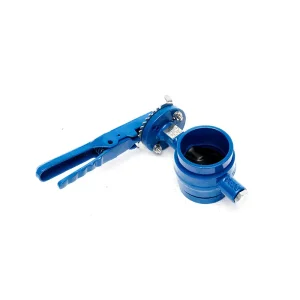
High-Quality Grooved Type Manual Butterfly Valve Suppliers, Manufacturers
Explore Valve Specifications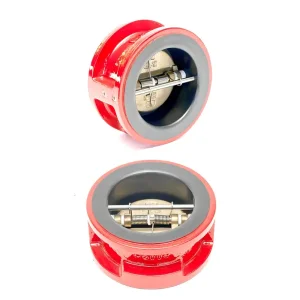
Wholesale Full Rubber Coated Check Valve Supplier, Factories
Explore Valve Specifications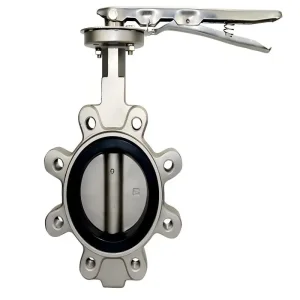
High-Quality LUG Stainless Steel Butterfly Valve - Durable & Reliable Supplier, Manufacturer
Explore Valve Specifications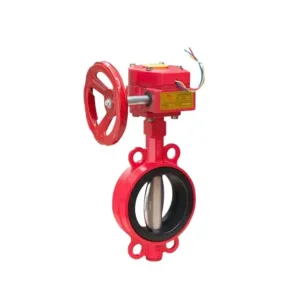
Wholesale Fire-Fighting Wafer Signal Butterfly Valve Supplier, Factory
Explore Valve Specifications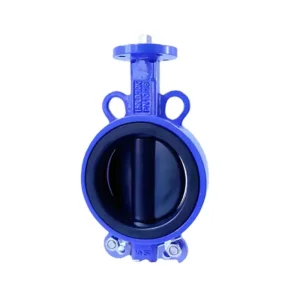
Wholesale Halar Lined Pinless Butterfly Valve Supplier, Manufacturer
Explore Valve Specifications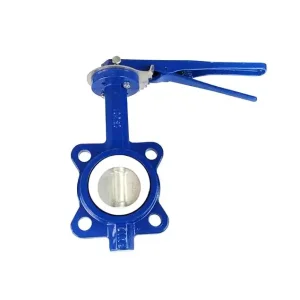
High-Quality PTFE Lined Pinless Butterfly Valve Supplier, Factories
Explore Valve Specifications