
Featured Industrial Valve Series - Phase 01
Premium flow control systems built to international DIN, ASME, and WRAS performance benchmarks.
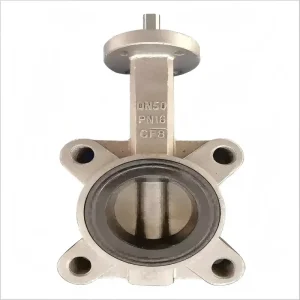
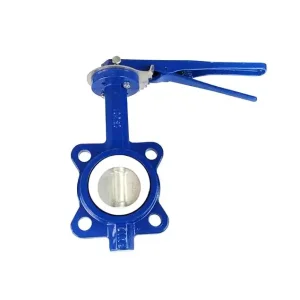
Wholesale Semi Lug Butterfly Valve - Durable & Versatile Flow Control Manufacturers, Manufacturer
View Details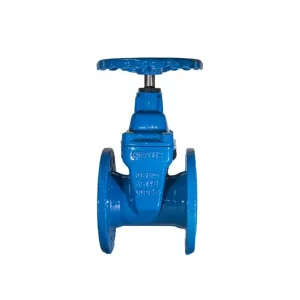
Wholesale Anti - Abrasion Elastic Seat Gate Valve with Reinforced Seat Suppliers, Supplier
View Details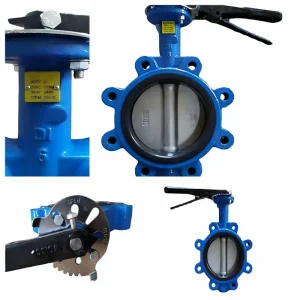
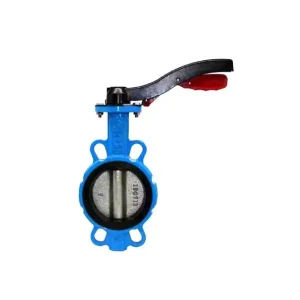
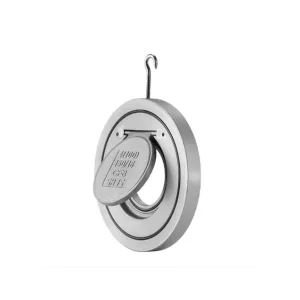
CE Certification Stainless Steel Single Disc Wafer Check Valve with Enhanced Corrosion Supplier, Manufacturers
View Details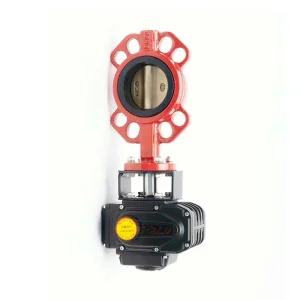
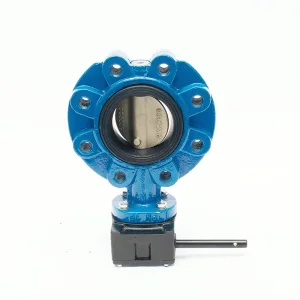
High-Quality Marine Centric Lug type manual operated butterfly valve Manufacturers, Factory
View DetailsGlobal Landscape: Oil Support Ball Check Valve Architecture
Analyzing high-viscosity media dynamics, severe backflow transients, and micro-resistance fluidic principles.
In modern industrial hydraulic and energy transport architecture, the Oil Support Ball Check Valve represents an indispensable mechanical safeguard. Engineered specifically for complex fluid control systems—including raw crude extraction, refining downstream loops, offshore platform support units, and viscous industrial lubricants—the ball check valve eliminates water hammer, mitigates mechanical back-shocks, and offers uncompromising zero-leak isolation. Unlike conventional swing or wafer check systems where hinge pins and pivot joints suffer accelerated shear under pulsating reciprocating pump strokes, the spherical ball design employs a freely rotating closure element. Driven by forward pressure, the ball lifts cleanly into an engineered diversion guide, maintaining an unobstructed, laminar full-bore path that suppresses turbulent friction losses.
Non-Clogging Hydrodynamic Cavity
The internal chamber profile features a generous lateral ball pocket. During sustained forward flow, the ball settles outside the primary flow centerline, avoiding localized cavitation and yielding exceptionally low Cv drag coefficients even in multi-phase oil-water-sand suspensions.
Omnidirectional Ball Rotation
Because the closure sphere rotates continuously along random three-dimensional axes upon opening and seating, seating wear is distributed across 360 degrees. This completely prevents groove cut-through and wire-drawing wear typical of fixed-axis gate and globe discs.
Transient Back-Pressure Sealing
Under reverse pressure transients or line decompression, gravitational descent combined with downstream pressure guides the precision-ground ball instantly back to its vulcanized elastomer seat. This guarantees bubble-tight shut-off down to micro-pressure regimes.
Direct Manufacturing Depth: The Tianjin Integrated Plant Advantage
Total vertical control: In-house foundry metallurgical casting paired with proprietary rubber compounding since 1987.
For international procurement directors, EPC consortiums, and pipeline infrastructure engineers, supplier qualification hinges on authentic quality traceability. While conventional valve trading companies assemble outsourced shells and third-party commercial seals, Tianjin Top Automation Equipment Co., Ltd. operates an integrated industrial complex spanning 23,000 m² (12,000 m² built footprint) in the Wuxia Industrial Park, Dongli District, Tianjin.
Drawing on the legacy of Tianjin Donglian Valve Factory (established 1996) and Tianjin Dongfang Rubber Factory (operating since 1987), our vertical manufacturing ecosystem delivers structural advantages that define tier-one supply reliability:
Foundry Metallurgy Control
Our captive foundry casts ductile iron (QT450-10 / EN-GJS-450-10), WCB carbon steel, CF8M, and nickel-aluminum bronze. Direct spectrographic optical analysis of every heat ensures zero micro-porosity and precise tensile elasticity.
Proprietary Elastomer Plants
Operating our dedicated rubber vulcanization plant since 1987, we compound custom NBR, Hydrogenated NBR (HNBR), Viton (FKM), and EPDM for severe oil immersion, eliminating explosive decompression and excessive swelling.
Multi-Axis CNC Machining
Valve bodies, flange surfaces, guide rails, and ball cores are finished in temperature-controlled CNC centers. Spherical roundness tolerances are held within ±0.02mm, guaranteeing friction-free closure and uniform sealing.
Certified Testing Lab
Our testing lab performs 100% hydrostatic shell testing (1.5x PN rating) and high/low pressure pneumatic seat leakage testing under ISO 5208 Rate A standards before any valve enters export packaging.
Technical Specifications: Oil Support Ball Check Valve
Comprehensive engineering matrix designed for mechanical engineering handbooks and procurement bid tabs.
| Engineering Parameter | Standard Configuration | Petrochemical & Severe Duty Upgrades |
|---|---|---|
| Nominal Diameters (DN) | DN50 to DN600 (2" to 24") | Custom expanded bores up to DN1200 (48") available upon request |
| Pressure Ratings | Class 125, Class 150, PN10, PN16 | ASME Class 300 / Class 600, PN25, PN40, PN64, PN100 |
| Body Materials | Ductile Iron GGG40/50, WCB Cast Carbon Steel | CF8, CF8M, CF3M Stainless Steel, Duplex 2205, Super Duplex 2507 |
| Internal Ball Construction | Carbon steel / ductile core encased in vulcanized NBR | Solid PTFE, hollow 316SS floating ball, or Viton/HNBR coated steel core |
| Elastomeric Seat Liner | High-resilience oil-resistant NBR (-20°C to +90°C) | HNBR, FKM/Viton (-20°C to +200°C), or metal-to-metal Stellite hard facing |
| Flange Compatibility | EN 1092-2 PN10/16, ASME B16.5 Class 150 | ASME B16.47, DIN 2501, BS 4504, JIS B2220 10K/20K |
| Factory Leakage Standard | ISO 5208 Rate A (Zero visible leakage / bubble-tight) | API 598, ANSI/FCI 70-2 Class VI high-pressure gas compliance |
| Protective Exterior Coating | Electrostatic Fusion Bonded Epoxy (FBE) ≥250μm | Corrosion C5-M offshore marine multi-coat polyurethane, fluoropolymer liner |
Localized Applications Across Industrial Sectors
Operational installations where non-return ball valves deliver extended runtimes and zero downtime.
Upstream Crude Wellhead Skids
Wellhead flowlines convey heterogeneous mixtures containing crude oil, associated casing gases, formation water, and abrasive fracturing sand. The self-cleaning motion of the ball check prevents solid fines from settling on the seal, protecting high-pressure multi-phase transfer pumps.
Refining Lube Oil Circulating Loops
Heavy turbomachinery, compressors, and high-velocity gas turbines rely on uninterrupted pressurized oil jackets. Our Class 150/300 ball check valves maintain continuous prime, arrest reversal backwash during power interrupts, and feature low crack-pressures below 0.05 bar.
Industrial Waste Oil Reclamation
Oily sludge pipelines in steel mills, petrochemical plants, and municipal treatment units rapidly foul check valves that rely on internal springs or disc guide bushings. Our full-bore ball design passes up to 40mm solid debris without disc lockup or seat fouling.
Industry Trends: The Evolution of Non-Return Valve Engineering
Market dynamics, composite metallurgy, and lifecycle cost economics reshaping modern pipeline architecture.
Smart Acoustic Diagnostics
Global industrial sites are retrofitting check valves with wireless piezoelectric acoustic vibration monitors. By analyzing the resonant frequency of the ball striking its stop rail and seat, plant operators predict elastomer wear before any leakage occurs.
Decarbonization & Low-Torque Pumping
With corporate carbon emission penalties escalating, pipeline operators demand check valves with absolute minimum hydraulic head loss. Optimized chamber geometry reduces pump energy consumption across long crude lines, yielding significant lifecycle megawatt savings.
Advanced Fluoropolymer Bonding
High levels of hydrogen sulfide (H2S) in sour crude extraction rapidly degrade standard industrial rubbers. The latest manufacturing shift integrates plasma-activated chemical bonding of PTFE and perfluoroelastomers directly onto the ductile sphere core.
Global EPC & OEM Procurement Demands
Key technical criteria reviewed by supply chain managers before qualifying an offshore or industrial valve supplier.
EN 10204 3.1 Material Certificates
Global infrastructure contracts require heat-specific chemical composition and mechanical impact testing logs. Our internal metallurgy labs provide certified 3.1 dossiers along with positive material identification (PMI) data sheets with every crate.
Predictable Lead Times & Port Access
Situated in the Wuxia Industrial Park in Dongli District, Tianjin, our factory sits within minutes of rapid highway transit to Tianjin Xingang Port—one of Asia's premier maritime shipping hubs. This ensures express dispatch for ocean containers and air freight.
Third-Party Inspection Support
We welcome third-party technical inspection agencies—including SGS, Bureau Veritas, DNV, and Lloyd's Register—to oversee mold pouring, shell hydro-testing, dimensional checks, paint thickness verification, and export packing.
Technical Knowledge Base & Buyer FAQ
Engineering answers to common technical, metallurgical, and installation inquiries.
What distinguishes an Oil Support Ball Check Valve from a standard water check valve?
Oil support ball check valves require chemical compatibility with hydrocarbons and aromatics. Standard water check valves use EPDM rubber, which swells and breaks down in petroleum service. Our oil-duty models feature proprietary compounded NBR, HNBR, or Viton (FKM) elastomeric seats vulcanized in-house since 1987, combined with high-density weighted ball cores that seal reliably across varying fluid densities.
Can your ball check valves operate in vertical pipelines?
Yes. The valve operates reliably in vertical orientations with upward forward flow. Forward fluid pressure lifts the ball smoothly into the lateral retention guide. During flow stoppage, gravity assists backpressure in driving the ball immediately onto its conical seat. For horizontal installations, the valve must be positioned with its inspection bonnet positioned upright.
How does your factory ensure bubble-tight zero leakage on low back-pressures?
Conventional swing checks often require 0.5 to 1.0 bar of reverse differential pressure to establish a firm seat seal. Our ball check design utilizes an engineered elastomer profile combined with a precision-weighted spherical core. This achieves bubble-tight ISO 5208 Rate A shut-off with reverse pressures as low as 0.1 bar.
What documentation accompanies an export valve order?
Every industrial shipment includes comprehensive QA/QC dossiers: EN 10204 3.1 Material Test Reports (MTR) covering chemical spectrometry and tensile testing, 100% hydrostatic shell and seat pressure test graphs, dry film paint thickness logs, Certificate of Origin, and international warranty guarantees.
Featured Industrial Valve Series - Phase 02
Complete product spectrum manufactured under ISO 9001, ISO 14001, and CE management protocols.
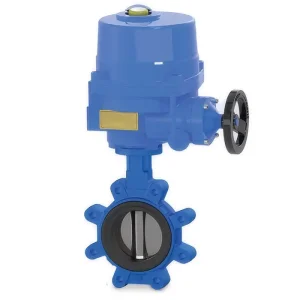
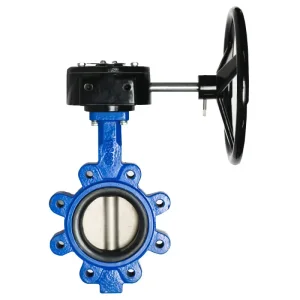
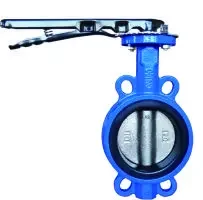
Wholesale Wafer Butterfly Valve - Durable & Efficient Flow Control Solution Suppliers, Factory
View Details
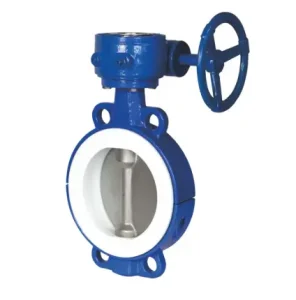
Wholesale PTFE Lined Butterfly Valve - Durable & Corrosion Resistant Manufacturers, Manufacturer
View Details