
High-Integrity Valve Portfolio: Part I
Explore heavy-duty isolation and throttling valves engineered at our specialized group foundries and elastomer manufacturing facilities for extreme fluid dynamics.
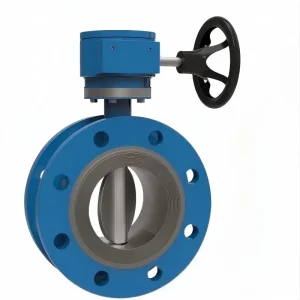
High-Quality Flange Type Butterfly Valve - Durable and Efficient Flow Control Supplier, Manufacturer
Explore Valve Specs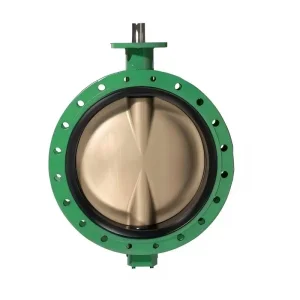
High-Quality Water Used Flanged Butterfly Valve - Durable & Efficient Manufacturer, Factories
Explore Valve Specs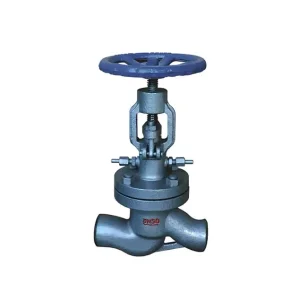
High-Quality Water Seal Globe Valve with Quick - Closing Feature Manufacturers, Manufacturer
Explore Valve Specs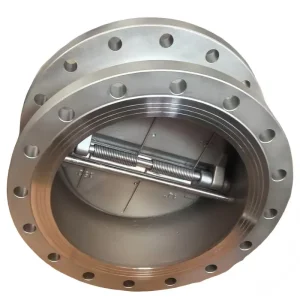
CE Certification Compact Low-Pressure Drop Wafer Lift Check Valve Supplier, Factories
Explore Valve Specs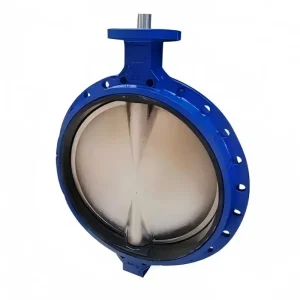
Wholesale Single Flange Butterfly Valve - Durable & Efficient Flow Control Supplier, Manufacturers
Explore Valve Specs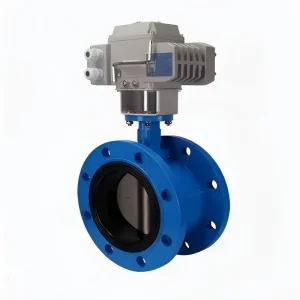
High-Quality High-Performance Electrical Butterfly Valve for Seamless Control Suppliers, Manufacturers
Explore Valve Specs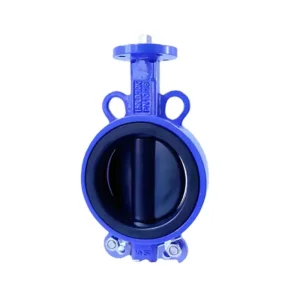
Wholesale Halar Lined Pinless Butterfly Valve Supplier, Manufacturer
Explore Valve Specs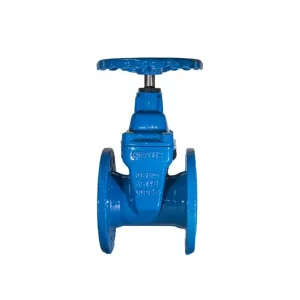
Wholesale Anti - Abrasion Elastic Seat Gate Valve with Reinforced Seat Suppliers, Supplier
Explore Valve SpecsPrecision Flow Throttling in Severe Hydrocarbon Service
Why modern exploration, midstream liquefaction, and refining complexes rely on heavy-duty globe valves for extreme differential pressure drops, cavitation abatement, and tight shut-off.
Tortuous Fluid Geometry & Kinetic Dissipation
Unlike full-bore ball or gate valves engineered primarily for minimal head loss, an oil and gas globe valve directs fluid through an S-shaped flow path. This controlled, multi-stage pressure step minimizes fluid exit velocity, dampens vibration, and prevents catastrophic flashing across the seat assembly during high-differential blowdown cycles.
Stellite Hardfaced Trim & Anti-Erosion
Hydrocarbon gas streams laden with entrained silica, sand, or iron sulfide will immediately score soft-seated valves. Our heavy-wall cast and forged globe valves feature Stellite Gr. 6 or Colmonoy hardfaced seating surfaces, delivering hardness ratings exceeding 40-45 HRC to withstand erosive wire-drawing and micro-fretting under turbulent regimes.
Linear Modulating Control & Quick-Closing
Globe valves provide parabolic, needle, or perforated cage trim designs that grant deterministic control ratios up to 50:1. In critical compressor bypass, fuel gas metering, and water seal isolation duties, our valves provide repeatable linear flow control without hunting or thermal binding in cyclic temperature profiles.
Emerging Technology Trends Reshaping Valve Specifications
Global decarbonization mandates, sour gas field exploitation, and cryogenic LNG projects require advanced materials, precision mechanical tolerances, and real-time operational feedback.
1. Zero-Fugitive Emissions (API 624 / ISO 15848-1)
Methane abatement protocols have made fugitive emissions compliance non-negotiable. Modern globe valves utilize die-formed flexible graphite packing rings with anti-extrusion carbon braided yarn top and bottom, coupled with dual Belleville spring live-loading systems to ensure constant packing gland stress across thermal cycles (-29°C to 450°C).
2. Cryogenic LNG & Deep Sub-Zero Bonnets
For liquefied natural gas liquefaction trains and storage regasification terminal installations operating down to -196°C, globe valves feature extended vapor columns (bonnets per BS 6364). This column keeps the gland packing in a vapor state safely above freezing, preventing ice crystallization and stem seal failure.
3. Metallurgical Resilience for NACE MR0175 / H₂S Sour Service
Exploitation of deep sour reservoirs requires strict limitation of sulfide stress cracking (SSC) and hydrogen-induced cracking (HIC). Castings (ASTM A216 WCC, A352 LCC) and forgings (A105N, A350 LF2) are processed with maximum hardness capped strictly at 22 HRC, backed by nickel-alloy weld overlays (Inconel 625) in critical seating pockets.
Global EPC & Operator Sourcing Criteria
Procurement engineers from Aramco, Shell, ExxonMobil, ADNOC, and Chevron demand verifiable material chemistry, mechanical traceability, and stringent pressure qualification prior to manufacturer onboarding.
| Evaluation Parameter | Industry Standard | Acceptance Criteria & Engineering Threshold | Audit Verification Method |
|---|---|---|---|
| Wall Thickness & Guiding | API 623 / ASME B16.34 | Heavy-wall design; disc guided in body or seat ring to prevent stem deflection under high differential DP. | Ultrasonic thickness gauging, coordinate measuring machine (CMM). |
| Fugitive Emissions | API 624 / ISO 15848-1 | Methane/Helium sniffer leak rate < 50 ppmv across 310 mechanical cycles and thermal shifts. | Helium mass spectrometer detection at room & high temperatures. |
| Sour Gas (NACE) | NACE MR0175 / ISO 15156 | Strict hardness limits (≤ 22 HRC for carbon steel); controlled chemistry with P ≤ 0.020%, S ≤ 0.010%. | 100% Optical Emission Spectrometry (OES) & Brinell hardness testing. |
| Fire Endurance | API 607 / ISO 10497 | Maintains seat and external seal integrity after 30-minute burn exposure at 750°C - 1000°C. | Third-party witness (Lloyd's, DNV, TUV) certified fire test burn records. |
| Material Traceability | EN 10204 Type 3.1 / 3.2 | Full melt-heat serialization from raw ladle pour to finished valve tag; verified Charpy V-Notch impacts. | Original Mill Test Certificates (MTRs) correlated to casting heat tags. |
Vertical Manufacturing Integration & Complete Quality Containment
Global supply chain volatility has made fragmented manufacturing a major risk for mega-projects. Headquartered in the Wuxia Industrial Park, Dongli District, Tianjin, our group operates on a unified 23,000 m² campus integrating an independent casting foundry, specialized elastomer compounding (operating since 1987), and heavy CNC machining.
Because work-in-progress never leaves our quality gates, international clients eliminate the risk of subcontracted casting porosity, unverified elastomer formulations, and unaccountable lead time expansions.
The Vertical Integration Advantage
- Melt Chemistry Rigor: Direct foundry operation enables real-time spectral adjustment of carbon, sulfur, and alloy additions prior to pouring.
- Fast-Track Delivery Cycles: Standard Class 150 - Class 600 globe valves produced in 6-8 weeks versus 24-30 weeks from conventional European tier-1s.
- Total NDT Verification: On-site Radiographic Testing (RT), Ultrasonic Testing (UT), and Positive Material Identification (PMI) on every critical pressure-containing component.
Mission-Critical Hydrocarbon Operating Environments
From deep freeze Siberian gathering networks to equatorial offshore FPSO platforms, each operational envelope requires a customized valve trim, bonnet extension, and metallurgy configuration.
Arctic Sour Gas Gathering
Wellhead choke manifolds subject to sub-zero temperatures and high partial pressures of CO₂ and H₂S. Demands impact toughness at -46°C without brittle cleavage fracture.
- Body Metallurgy: ASTM A352 LCC / LC3
- Trim Type: Stellite 6 Fully Welded Plug
- Packing: Cup-and-Cone PTFE / Live Loaded
FPSO Produced Water Throttling
Seawater and high-salinity brines containing trace dissolved gases require unyielding resistance to pitting, crevice corrosion, and high shear turbulence.
- Body Metallurgy: Super Duplex (UNS S32750 / 2507)
- Trim Type: Multi-Hole Anti-Cavitation Cage
- Design Std: API 623 / ASME B16.34 Class 600
Fluid Catalytic Cracking (FCCU)
Extreme thermal cycling at 550°C combined with erosive catalyst fines. Requires hardfaced seating and heavy guided discs to prevent galling under severe thermal expansion.
- Body Metallurgy: ASTM A217 WC6 / WC9 Alloy
- Trim Hardness: Hardfaced Stellite 21 (>45 HRC)
- Bonnet Style: High-Temp Extended Finned Bonnet
LNG Boil-Off Gas (BOG) Handling
Precise throttling of sub-zero cryogenic boil-off vapors within import terminal compressors. Absolute stem tightness prevents methane loss and cryogenic vapor icing.
- Body Metallurgy: ASTM A351 CF8M (316 SS)
- Bonnet Type: BS 6364 Extended Column Bonnet
- Seat Tightness: Bubble-Tight Class VI (PCTFE Soft Insert)
Supercritical CO₂ Pipeline Transport & Carbon Capture (CCUS)
Transport of dense-phase CO₂ involves massive Joule-Thomson cooling effects during throttling depressurization, generating rapid temperature drops down to -78.5°C with severe decompression stresses. Our specialized globe valves incorporate explosive-decompression-resistant (AED) elastomeric seals and solid solution alloy bodies to resist carbonic acid formation and ensure bubble-tight shut-off across high differential drops.
- Body Metallurgy: 316L / Inconel 625 Clad Carbon Steel
- Pressure Class: ASME Class 900 to Class 2500 Heavy-Wall
- Testing Standard: High-Pressure Dry Gas Shell & Seat Verified (API 598)
Engineering Questions Procurement & Process Teams Ask
Detailed technical clarification on globe valve standards, trim mechanics, and sourcing procedures.
What is the critical mechanical difference between an API 623 globe valve and a standard BS 1873 / ASME B16.34 globe valve?
API 623 was specifically developed by the American Petroleum Institute to eliminate field failure modes commonly observed in standard BS 1873 valves operating in severe refinery and midstream environments. Key mandates under API 623 include:
1. Mandatory Guided Disc: The disc must be fully guided into the body seat or guide ring to prevent stem deflection, seat chatter, and vibration under high differential pressure throttling.
2. Heavier Stem Diameters: API 623 mandates substantially thicker stems to prevent buckling under high packing-gland torque and dynamic actuator loads.
3. Standardized Hardfacing: Seating surfaces must be hardfaced with Stellite 6 or equivalent as standard baseline, rather than treated as a premium optional add-on.
4. Fugitive Emissions Compatibility: The stuffing box dimensions are strictly calibrated to house low-emission packing certified to API 624.
How do you prevent cavitation damage in high differential pressure (DP) hydrocarbon throttling?
Cavitation occurs when vena contracta pressure dips below the vapor pressure of the hydrocarbon fluid, creating vapor bubbles that violently collapse upon pressure recovery, eroding metallic seating surfaces. We prevent this by implementing multi-stage tortuous flow trims, such as multi-hole drilled anti-cavitation cages. These cages divide the main flow into discrete, turbulent radial jets that impinge upon one another at the center of the cage, dissipating kinetic energy within the fluid mass away from the metallic body wall and seating boundaries.
Can your globe valves be certified for hydrogen and low-molecular gas containment?
Yes. Pure hydrogen and syngas present acute escape liabilities due to ultra-small molecular dimensions and risks of high-temperature hydrogen attack (HTHA). We offer bellows-sealed globe valve bonnets featuring multi-ply Inconel 625 or Hastelloy C-276 hydroformed metallic bellows, hermetically sealing the stem leak path. This is reinforced with an auxiliary secondary packing gland certified to ISO 15848-1 Class AH, delivering helium leakage rates below $1 \times 10^{-6} \text{ mg}\cdot\text{s}^{-1}\cdot\text{m}^{-1}$.
What documentation is provided with every valve shipment for international EPC handovers?
Every dispatch includes a comprehensive Quality Dossier containing: Certified EN 10204 Type 3.1 Material Test Reports (MTRs) for pressure-containing castings and forgings, Positive Material Identification (PMI) spectral logs, NDT inspection reports (Radiographic RT, Liquid Penetrant PT, Magnetic Particle MT), Hydrostatic and High-Pressure Pneumatic Test Certificates per API 598 / ISO 5208, Fire-Safe Certificates (API 607), Painting & Coating Dry Film Thickness (DFT) verification, and Certificate of Compliance to NACE MR0175/ISO 15156.
High-Integrity Valve Portfolio: Part II
Complete your pipeline flow control loops with our precision gate, check, globe, and specialized process butterfly valves, completely manufactured to stringent global norms.
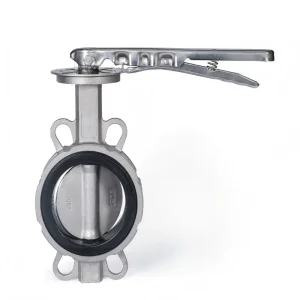
Wholesale Stainless Steel Butterfly Valve - Durable & Corrosion-Resistant Suppliers, Manufacturer
Explore Valve Specs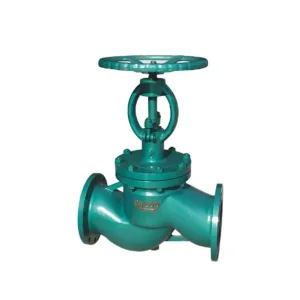
High-Quality High - Temperature - Vacuum Isolation Globe Valve for Vacuum Heat Suppliers, Factory
Explore Valve Specs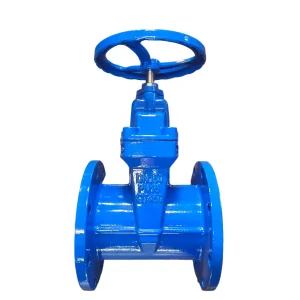
Wholesale High-Quality Gate Valve for Reliable Flow Control Manufacturer, Factories
Explore Valve Specs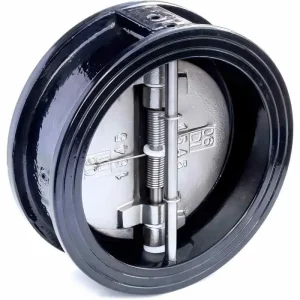
High-Quality High-Quality Wafer Check Valve for Secure Fluid Control Suppliers, Factories
Explore Valve Specs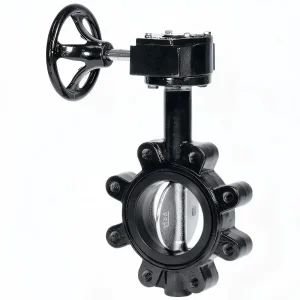
CE Certification Gear Operated Butterfly Valve - Durable & Reliable Supplier Supplier, Factory
Explore Valve Specs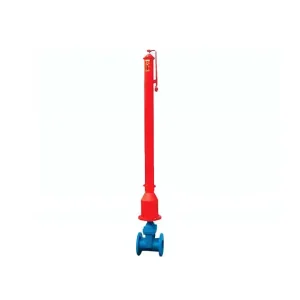
High-Quality Buried Elastic Seat Gate Valve for Reliable Flow Control Supplier, Factories
Explore Valve Specs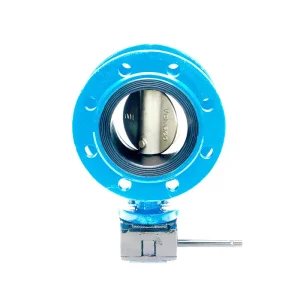
High-Quality Marine flange type manual operated butterfly valve Supplier, Manufacturers
Explore Valve Specs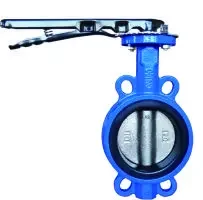
Wholesale Wafer Butterfly Valve - Durable & Efficient Flow Control Solution Suppliers, Factory
Explore Valve SpecsEquip Your Upstream & Downstream Projects with Direct Factory Assurance
Collaborate directly with our valve engineering division in Tianjin. Whether you require customized API 623 globe valves for high-pressure separation or WRAS-approved flow systems, our engineers review datasheets, pipeline isometrics, and severe-service trim calculations within 24 hours.
