
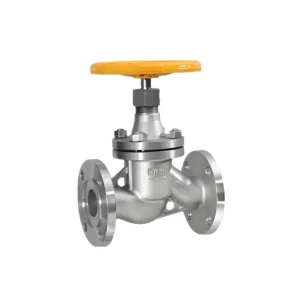
Precision Fluid Control Systems
Featured Industrial & Fireline Valve Solutions
Factory-direct pipeline isolation and throttling equipment produced across our vertically integrated manufacturing complex in Tianjin, China. Each unit undergoes full mechanical stress verification and pressure seat testing.
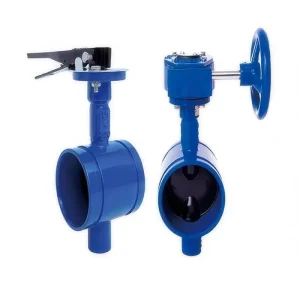
High-Quality Grooved End Butterfly Valve - Durable & Reliable Flow Control Suppliers, Supplier
Explore Specifications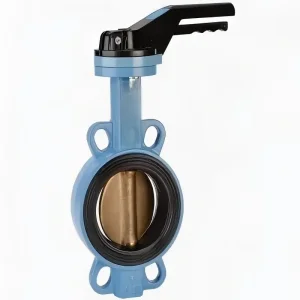
CE Certification Bronze Disc Wafer Butterfly Valve - Durable & Efficient Manufacturers, Factory
Explore Specifications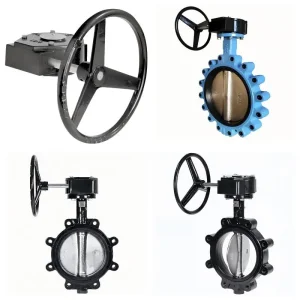
Wholesale WRAS Approved Lug Type Butterfly Valve 4325G Supplier, Factories
Explore Specifications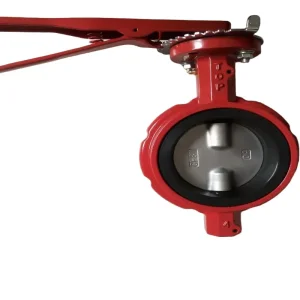
Wholesale Lugless Semi-Shaft Wafer Butterfly Valve - Durable & Reliable Manufacturer, Factory
Explore Specifications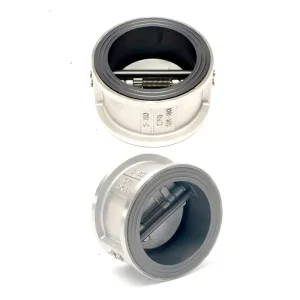
CE Certification Compact Wafer Lift Check Valve with Low - Pressure Drop Supplier, Manufacturers
Explore Specifications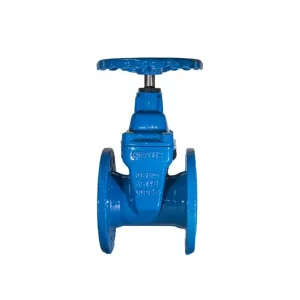
Wholesale Anti - Abrasion Elastic Seat Gate Valve with Reinforced Seat Suppliers, Supplier
Explore Specifications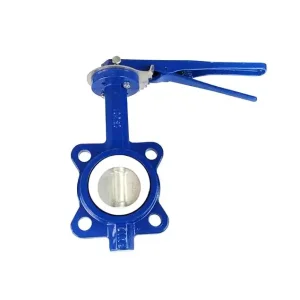
High-Quality PTFE Lined Pinless Butterfly Valve Supplier, Factories
Explore Specifications
Industry Intelligence & Whitepaper
Global Landscape: Why Wafer Butterfly Valves Dominate Fire Suppression Infrastructure
Modern municipal fire safety codes, industrial risk mitigations, and EPC engineering benchmarks demand strict reliability. Compact wafer butterfly valves represent the optimal confluence of hydraulic efficiency, space savings, and critical operational reliability.
Total Cost of Ownership (TCO)
Compared to cumbersome OS&Y (Outside Screw & Yoke) gate valves, wafer-style butterfly valves achieve up to a 60% reduction in installation weight and an 80% reduction in physical face-to-face dimensions. This dramatically reduces structural support engineering, seismic bracing requirements, and contractor labor overhead in commercial high-rises and data center risers.
Anti-Water-Hammer Dynamics
Sudden pressure surges in high-capacity deluge and automatic sprinkler systems can compromise pipe joint integrity. Our fire-protection butterfly valves utilize high-ratio precision slow-close worm gearboxes. By enforcing an intentional slow closure cycle (minimum 16 seconds to fully seat), destructive transient hydraulic shocks and cavitation are eliminated.
Supervised Electrical Monitoring
Unintentional valve closure is the leading cause of fire sprinkler failure globally. Modern wafer fire butterfly valves feature integral, factory-wired dual supervisory microswitches (SPDT). These feed real-time electrical telemetry back to the Fire Alarm Control Panel (FACP) immediately upon even a fraction of handle rotation away from the open state.
100%
Hydrostatic Tested
PN16/PN25
Pressure Ratings
250+ µm
Epoxy Barrier (RAL 3000)
0 ppm
Bubble-Tight Class A
Field Deployment Architecture
Localized Application Scenarios in Modern Fire Safety Systems
Engineered wafer butterfly valves provide fail-safe isolation across diverse mechanical room layouts, industrial facilities, and demanding marine vessels.
High-Rise Sprinkler Risers & Sectional Isolation
In ultra-dense commercial skyscrapers and residential towers, vertical service chases present space constraints. Wafer butterfly valves fit snugly between standard EN 1092-2 PN10/PN16 or ASME Class 150 flanges. Installed at every floor takeoff, they allow maintenance contractors to safely isolate single sprinkler zones without depressurizing the entire municipal building riser.
Fire Pump Station Suction & Discharge Manifolds
NFPA 20 and EN 12845 pump houses rely on high-integrity isolation. Our wafer butterfly valves feature hydrodynamic ductile iron discs coated in anti-microbial, mirror-polished ductile iron or stainless steel. The contoured disc edge reduces turbulence and downstream vortexing, ensuring optimal net positive suction head (NPSH) for electric and diesel fire pumps.
Petrochemical & Industrial Deluge Networks
Refineries, LNG transfer terminals, and offshore platforms operate under harsh atmospheric exposure. Outfitted with electrostatically bonded fusion-bonded epoxy (FBE) rated to ASTM B117 salt spray criteria, or bronze disc configurations for saline fire-water lines, our valves withstand corrosive coastal conditions while offering instant emergency readiness.
Design Note for Fire Engineers: Wafer valves require through-bolt sets spanning both opposing pipeline flanges. For dead-end service downstream of pumps or terminal zone draining, ensure full-lugged configurations or downstream check-valve integration to avoid line disconnection hazards during pressurized operations.
Vertical Integration Excellence
Tianjin Manufacturing Cluster: In-House Casting & Rubber Compounding
Unlike assembling intermediaries who source cast parts and elastomer seals from fragmented sub-tier job shops, our Tianjin industrial group maintains complete, end-to-end custody over the critical valve elements.
In-House Foundry (Since 1996)
Direct foundry control guarantees precise metallurgical composition. Our ductile iron (QT450-10 / EN-GJS-450-10 / ASTM A536 65-45-12) undergoes spectral chemistry verification, ensuring tensile strength greater than 450 MPa and an elongation rate above 10% to resist hydraulic shock loads.
Rubber Compounding (Since 1987)
Operating our own specialized elastomer facility (Tianjin Dongfang Rubber), we blend virgin EPDM compounds with superior compression set resistance and anti-aging agents. This eliminates the premature seat hardening, cracking, and tearing that typically degrades third-party resilient-seated valves.
Automated CNC Machining
High-precision multi-axis horizontal CNC centers mill the disc sphericity, upper gland bush bores, and wafer face-to-face dimensions to tight micro-tolerances. Symmetrical spherical disc edges minimize initial seating torque, increasing actuator and gearbox operational lifespan.
Tianjin Port Maritime Speed
Situated strategically in the Wuxia Industrial Park with dedicated freight corridors to Xingang/Tianjin Port, our factory delivers multi-container project consignments with rapid customs dispatch, providing procurement stability against geopolitical and shipping bottlenecks.
Engineering Whitepaper Matrix
Comprehensive Valve Engineering Specifications & Testing Benchmarks
Comparing standard utility water butterfly valves with mission-critical fire protection wafer butterfly valves highlights key engineering requirements for life safety infrastructure.
| Technical Parameter | Commercial Utility Water Butterfly Valve | Mission-Critical Fire-Fight Wafer Butterfly Valve |
|---|---|---|
| Governing Design Standards | EN 593 / ISO 10631 / GB/T 12238 | EN 593 / NFPA 13 / NFPA 24 / UL 1091 / FM 1112 / ISO 5208 |
| Body Metallurgy & Tensile | Grey Cast Iron (GG25) or Standard DI (QT400) | Ductile Iron EN-GJS-450-10 / ASTM A536 65-45-12 (>450 MPa Tensile) |
| Internal & External Coating | Standard Epoxy Liquid Paint (80–120 µm) | Fusion Bonded Epoxy (FBE) Electrostatic Coating ≥250 µm (Fire Red RAL 3000) |
| Actuator & Gearbox Mechanics | Standard Quarter-Turn Lever or Worm Gear | Slow-Close Anti-Surge Worm Gearbox (min 16 sec travel to prevent hammer) |
| Supervisory Telemetry | None (Manual visual position index plate) | Dual Internal SPDT Supervisory Switches (Factory pre-wired for FACP integration) |
| Seat Elastomer Performance | Commercial reclaimed EPDM / NBR | Vulcanized High-Resilience Virgin EPDM / EPDM+Polymer Seal Liner |
| Shell Pressure Test (Factory) | 1.5 × PN (Cold water 15 sec) | 2.0 × Working Pressure (Hydrostatic holding time exceeding EN 12266-1) |
| Seat Leakage Standard | ISO 5208 Rate B / C | ISO 5208 Rate A (Bubble-Tight Zero Leakage under bi-directional hold) |
R&D Innovation Horizon
Technical Roadmap: Next-Generation Smart Valve Technologies
Our engineering division continues to redefine fluid mechanics, integrating sensor-driven predictive diagnostics, intelligent telemetry, and advanced metallurgy.
Wireless IoT Supervisory Integration
Transitioning from hardwired mechanical switches to low-power wireless modules (LoRaWAN / Zigbee). These self-powered supervisory heads report real-time valve position, ambient temperatures, and pipe vibration patterns back to central Building Management Systems (BMS), alerting teams prior to mechanical failure.
Advanced Anti-Cavitation Disc Trim
High-pressure fire suppression networks encounter significant differential pressures during system testing. Our computational fluid dynamics (CFD) team is refining serrated disc profiles and peripheral energy-dissipating trims that mitigate localized vapor pocket collapse, preserving seat elastomeric geometry over thousands of test cycles.
Graphene-Enhanced Elastomer Formulations
Leveraging our in-house rubber R&D center, our engineers are deploying nano-graphene dispersed EPDM matrix blends. This technology boosts tear strength by 38% and significantly minimizes compression set under sustained PN25 line clamping pressures, extending zero-maintenance life to over 25 years.
Audit-Ready Compliance
Localized Regulatory Support & Quality Assurance Architecture
Navigating regional building safety mandates requires comprehensive documentation, certified manufacturing procedures, and rigorous batch traceability.
Complete EN 10204 3.1 Material Traceability
Every production run provides full mechanical and chemical mill test certificates (MTCs). Our spectrographic lab validates carbon, silicon, manganese, phosphorus, and sulfur content, ensuring client project submittals sail through civil defense, municipal authority, and EPC engineering scrutiny.
Regional Fire Code Alignment
Our design engineers accommodate multi-standard drilling compatibility. Wafer bodies match EN 1092-2 PN10/PN16, ANSI/ASME B16.1 Class 125/150, BS 10 Table E, and JIS B2238 configurations. This cross-standard capability enables global distributors to service diverse regional pipeline standards with streamlined SKUs.
Bespoke OEM / Private Label Manufacturing
We empower premier international valve brands with turnkey OEM production. From custom cast-in logo tooling and custom gear-operator color matching (Safety Red, Industrial Yellow, Chrome Finish) to specialized nameplates and individualized barcode packaging, we ensure seamless brand continuity.
Engineer Knowledgebase
Frequently Asked Technical & Procurement Questions
Detailed answers to critical technical questions asked by mechanical engineers, fire safety consultants, and procurement managers.
What distinguishes a fire-fight wafer butterfly valve from a standard HVAC or waterworks butterfly valve?
Fire-protection wafer butterfly valves differ in three critical areas: actuation mechanics, supervisory monitoring, and material certifications. Fire service butterfly valves must incorporate a slow-close handwheel gear operator engineered to take at least 16 full seconds to complete a 90-degree close, eliminating destructive fluid water hammer. Second, they feature integrated, factory-sealed dual SPDT supervisory switches to communicate tamper alarms to the central fire panel. Third, they feature heavy-duty ductile iron bodies coated in high-build, corrosion-resistant fusion-bonded epoxy (RAL 3000 Fire Red) certified for continuous contact with stagnant fire water.
Why is vertical supply chain integration (in-house foundry & rubber compounding) crucial for valve reliability?
Over 80% of butterfly valve failures in the field stem from poor elastomer compounding (premature seat hardening, cracking, or plastic deformation) or internal casting porosity (blowholes, slag inclusion) leading to body weeping under pressure. By running our dedicated foundry (operational since 1996) and rubber manufacturing facility (operational since 1987), we control every chemical variable. We compound our own virgin EPDM with customized plasticizers and anti-oxidants, cast ductile iron bodies with controlled nodularity, and verify metallurgical chemistry in our own physical/chemical laboratory prior to machining.
Can wafer butterfly valves be utilized for dead-end pipe service?
Standard wafer-style butterfly valves are clamped securely between two companion flanges via long continuous all-thread studs. Consequently, removing downstream pipework for servicing relieves clamping pressure on the valve body, destroying the elastomeric seat seal. For applications requiring terminal service or downstream line isolation while maintaining upstream pressure, our fully threaded Lug-Type Butterfly Valves or Grooved-End Butterfly Valves are strongly recommended. Alternatively, a downstream companion blind flange setup must be specified.
How do the dual supervisory switches function within the valve gearbox?
The weatherproof worm gearbox houses two microswitches (Switch 1 for the Fire Alarm Control Panel supervisory zone, Switch 2 for local auxiliary signaling or horn strobes). When the valve is in its fully open position, the internal cam depresses the switch contacts. As soon as the handwheel is turned even a fraction of a turn (typically between 1/5th to 1/2 revolution from open), the cam disengages, changing electrical continuity and triggering a supervisory trouble condition on the fire alarm panel, notifying personnel before water delivery is compromised.
What pressure testing routines are applied before shipment from your Tianjin plant?
In accordance with ISO 5208 and EN 12266-1 standards, 100% of manufactured valves undergo individual hydrostatic and pneumatic batch testing. Shell pressure tests are conducted at 1.5 to 2.0 times the designated working pressure (e.g., 24 bar to 30 bar for PN16 rated valves) to ensure structural body integrity. Following shell testing, dual bi-directional seat leakage tests are executed at 1.1 times working pressure. Our stringent acceptance threshold mandates Class A Zero Leakage (no visible air or water droplet penetration).
Catalog Portfolio
More Heavy-Duty Industrial Flow Control Equipment
Discover our complementary product families, from elastic seat gate valves and dual plate non-return check valves to specialized fire-safe ball valves.
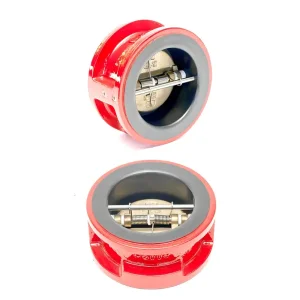
Wholesale Full Rubber Coated Check Valve Supplier, Factories
Explore Specifications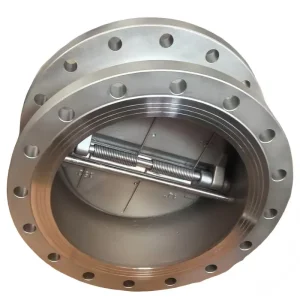
CE Certification Compact Low-Pressure Drop Wafer Lift Check Valve Supplier, Factories
Explore Specifications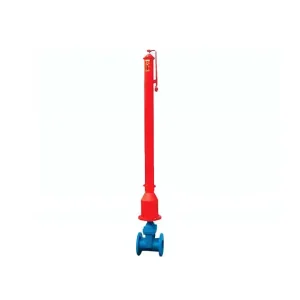
High-Quality Buried Elastic Seat Gate Valve for Reliable Flow Control Supplier, Factories
Explore Specifications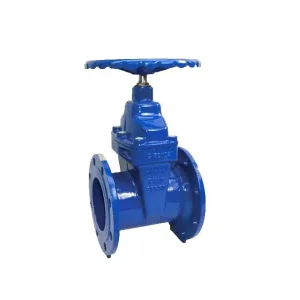
High-Quality Non-Rising Stem Elastic Seat Sealing Gate Valve Manufacturer, Factory
Explore Specifications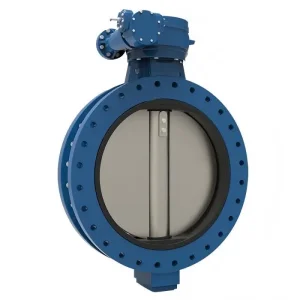
CE Certification Flanged Butterfly Valve - Durable & Efficient Flow Control Suppliers, Supplier
Explore Specifications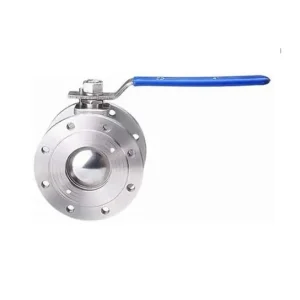
Wholesale Stainless Steel Ultra - Thin Ball Valve with Fire - Safe Design Supplier, Factories
Explore Specifications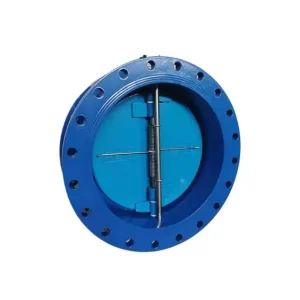
Wholesale Dual Plate Flange Type Check Valve Factories, Factory
Explore Specifications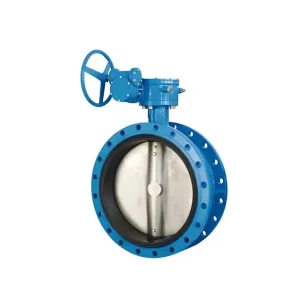
Wholesale Low - Torque Flange Type Butterfly Valve Supplier, Factory
Explore SpecificationsProcure Directly from China's Leading Valve & Rubber Foundry
Connect directly with our engineering and project estimation team in Tianjin. We provide CAD dimensional drawings, material inspection sheets, hydraulic Cv calculations, and competitive OEM factory quotes within 24 hours.
